"Kyle Roof, Chris Martinez, and Chase Buckner: AI-Proof SEO, Selling Your Agency, and the Growth Flywheel"
"Three Day 1 talks: Roof on LSI as an AI-content filter and being your own LLM source, Martinez on the math of selling your agency, and Buckner on HighLevel's Growth Flywheel."
On this page
This is the second block of Day 1, three back-to-back talks. Kyle Roof (on-page SEO, PageOptimizer Pro) argues that Google uses LSI (Latent Semantic Indexing) to cheaply detect and discount mass-produced AI content, and shows an on-page method for picking terms you can win quickly and for becoming your own citation source inside LLM answers. Chris Martinez (agency M&A, Bloom Partners) delivers a condensed version of his six-hour "3 Must-Dos to Prepare Your Agency for Sale" talk, walking through the math of a real exit and the three areas buyers scrutinize. Chase Buckner (HighLevel, Senior Director of Product Marketing) closes with the "Growth Flywheel" and the case that agencies who only sell traffic are dangerously replaceable.
Main takeaways
- Google likely turned up LSI as a cheap mass-AI-content filter, and almost no one passes it. Roof theorizes Google does not need to detect "human vs AI" directly; it can just discount pages whose contextual (LSI) term coverage is far below expectation, then discount the rest of the site. A 10,000-page audit showed 99.4% missing LSI and word counts averaging about 1,500 against a roughly 2,200 target.
- Stack Avalanche Theory, KGR, and a keyword-difficulty cap to win 70 to 80% of terms with minimal SEO. Used as a filtering system (not as standalone tactics), this surfaces low-competition terms Google already trusts you for, lifting whole-site authority and building a moat.
- Become your own source for LLMs. By building content that satisfies the query fan-out, you can get inserted into ChatGPT and similar engines and cite yourself, which Roof reframes as a new, higher-priced SEO package rather than a new discipline.
- A CEO's one job is to increase enterprise value year over year. Martinez frames everything else (team, financials, acquisition) as serving that single metric, and says to hold yourself to the same standard you would hold a hired CEO.
- An exit is a math equation built on EBITDA, and the headline number is not what you keep. Cut the enterprise value in half (cash at close vs earn-out), then reduce about 40% for taxes, then survive a non-compete of up to five years. Martinez reframes the real goal as a retirement number (annual need divided by 5.5%) the agency income should reach independent of any exit.
- To be sellable you need clean financials (3 to 4 years), a US-based W2 leadership team with an operator, and no client over 20% of revenue. Buyers want about 80% recurring revenue, about 20% YoY growth, and low churn; missing these costs you "a turn" on the multiple.
- Agencies that sell only traffic are dangerously replaceable; the Growth Flywheel is what clients actually want. Buckner's five stages (Capture, Nurture, Close, Evangelize, Reactivate) cement clients into higher-ticket, longer-term, recurring revenue, which also happens to be what acquirers want to see.
- Speed and AI win the lead game: the five-minute shot clock vs the 3 hour 26 minute average human response. Voice AI answers the roughly 53% of calls humans miss, chatbots nurture and book appointments, and SMS (98% open rate vs about 20% email) makes reactivation campaigns "sales on demand."
Key points
Kyle Roof (on-page SEO, PageOptimizer Pro / POP)
The AI-content penalty theory (LSI)
- Recurring pattern in consultations: sites "humming along" with about 5 million impressions fall off a cliff; top pages were built with "plain AI" and owners bragged about their "money prompt."
- Theory: Google found a "very elegant, very inexpensive way to find mass-produced AI content." Instead of detecting human vs AI, Google "turned up the dials on LSI" because LLMs are "awful out of the box on LSI" and people are not prompting properly.
- Mechanism: if a page is significantly lower than expected on LSI, Google discounts that page, then discounts the rest of the site.
- Of twelve consultations on hit sites: ten admitted to "pure AI"; two claimed handwritten but their counts "looked exactly the same" as AI.
Term-selection method (three filters)
- Filter 1, Avalanche Theory (search volume): over a three-month span, take low clicks per day and high clicks per day and average them to derive the search volume Google will trust you to target. A QR code on the slide links to a free course (URL not stated in source).
- Filter 2, KGR (Keyword Golden Ratio): both Avalanche Theory and KGR were "really hot" then "fizzled" because alone they are incomplete; combined as a filter they are "extremely effective."
- Filter 3, Keyword difficulty: any keyword-difficulty tool, "medium or lower."
- Result: a "powerful set of terms" you can launch with minimal SEO and win about 70 to 80% of. "Win" means page one or page two within about a month.
- Benefits: gets clicks and impressions, raises whole-site authority, "builds a moat," targets terms competitors overlook.
Be your own source for LLMs
- Weight the selected terms (a method he has "taught for years," "worked for a decade," and "even better" in the last two years).
- This satisfies two things: Google immediately trusts the terms (all boats rise), and the content satisfies query fan-out for AI engines, so "you can become your own source."
- POP examples where his own pages are the cited source in ChatGPT: "eChecker for SEO" and "best LLMs for SEO."
- Reframe: GEO work is "basically just an SEO package that's slightly tweaked, but you can charge more for it."
- Built a proprietary keyword score plus a "one-click silo" tool that outputs a content plan in about 5 minutes.
The 10,000-page audit (last 10,000 unique POP pages, about one week of first-run data)
- 45.4% had no schema.
- 99.4% were missing LSI.
- Word count averaged about 1,500 per page; the target was about 2,200.
- Conclusion: people over-rely on AI, which does not give them structure or contextual terms and brings "a knife to a gunfight" on word count.
Closing metaphor: the "Checkmate" painting (late 1700s, hung in the Louvre); a man plays Satan for his soul and appears in checkmate, but about 100 years later a grandmaster found not just an escape but a path to victory. Roof's point: with AI overwhelming you, there is an escape, and it is a path to victory.
Chris Martinez (agency M&A, Bloom Partners)
The "real" number math
- Step 1: write down the price at which you become a seller (enterprise value).
- Step 2: cut it in half (typically half cash at close, half in earn-out; missed targets can forfeit the second half).
- Step 3: reduce by about 40% (worst-case taxes on the cash at close).
- Step 4: imagine living on that for five years under a non-compete (usually about 3 years, up to 5).
- Retirement number reframe: annual need divided by 5.5% (divide by 0.055). Example: $200K per year gives about $3.64M. The agency income should reach this independent of an exit; an exit just gets you there faster.
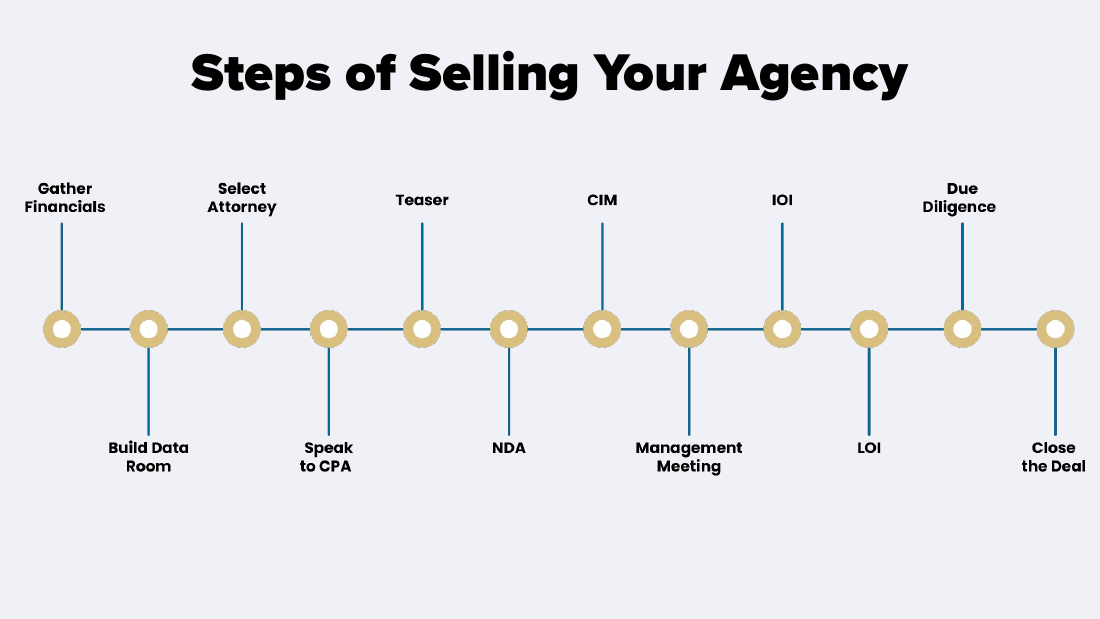
Selling process, in order: gather financials (minimum 3 years, likely 4); valuation estimate (often before signing a rep); build a "data room" (a "fancy Google Drive," expensive); select an attorney; engage your CPA and start a tax plan (ideally a year-plus before exit); anonymous 1 to 2-page teaser shopped to the network; NDA from interested buyers; CIM (Confidential Information Memorandum, a data-heavy PowerPoint); management meeting(s) (your team preps you "like preparing a witness"); IOI (Indication of Interest, aim for multiple); exclusive LOI (Letter of Intent, 90-day window, one buyer); then about 3 months of due diligence where missing a forecast drops the price. The buyer network is small ("like forty people"); reputable reps shop teasers privately. Partner named Reuben "has lunch with these people."
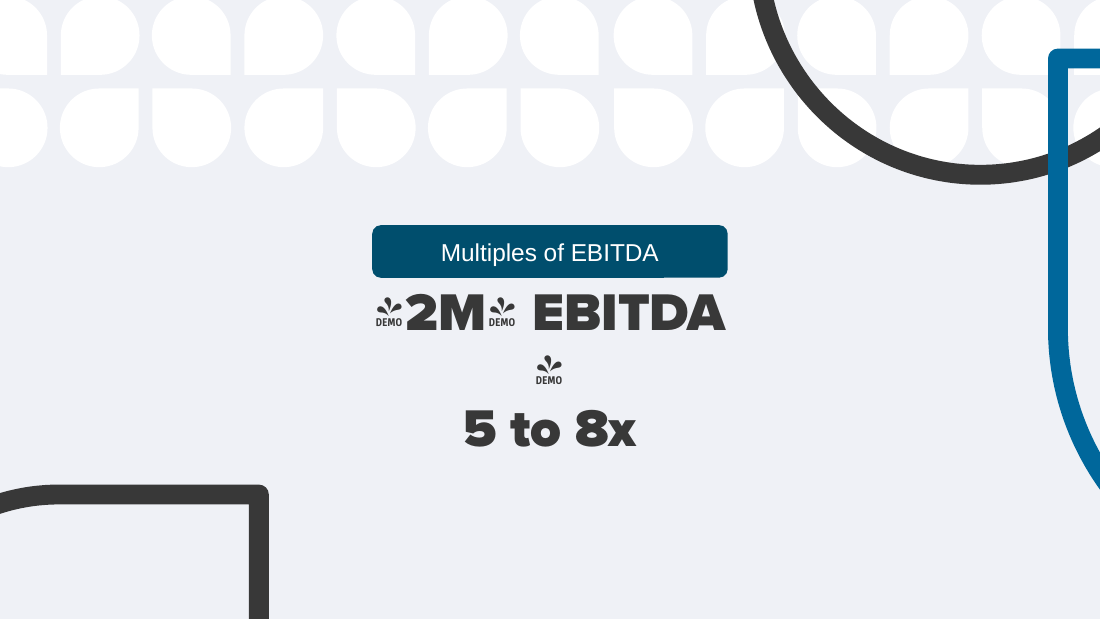
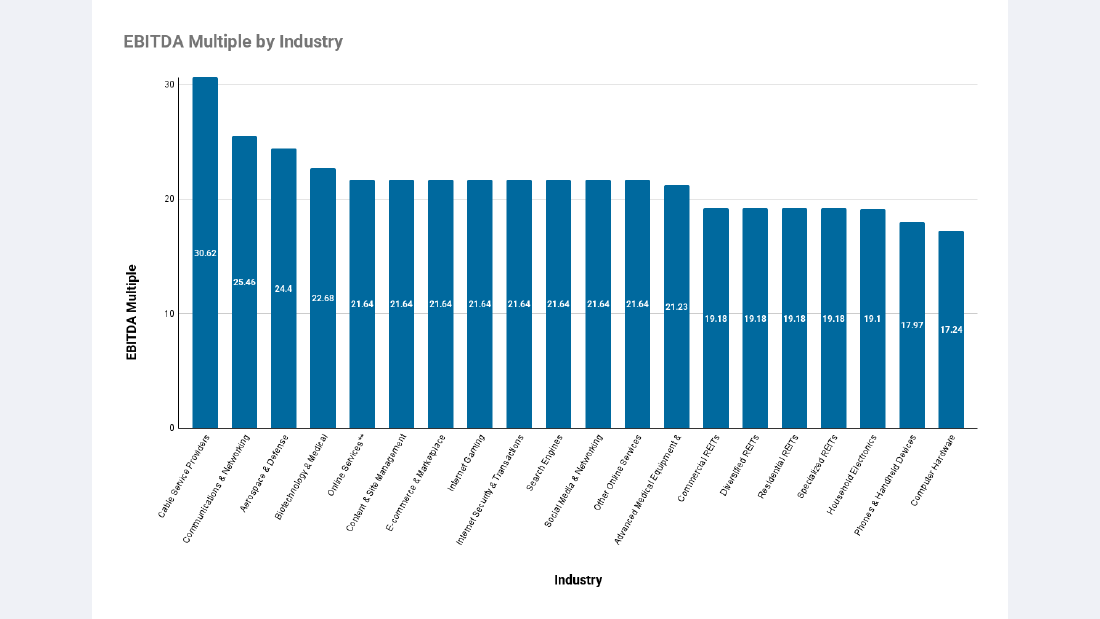
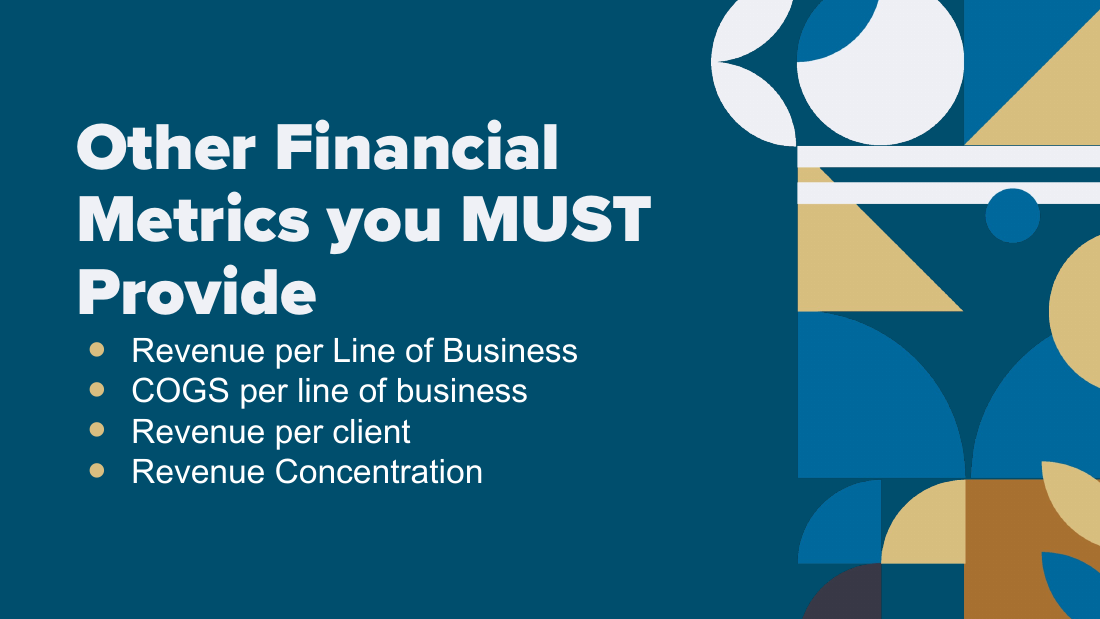
Must-do 1, Financials (EBITDA multiples): a sophisticated buyer cares about EBITDA, not revenue. Under $1M EBITDA: 2 to 4x (most likely 3). $1M to $2M EBITDA: 3 to 5x. $2M+ EBITDA: 5 to 8x ("I know somebody that got 12" as an exception). Also required: revenue per line of business, COGS per line of business, revenue per client, revenue concentration. No single client over 20% of revenue or you lose "a turn" (a 3x becomes a 2x). Growth about 20% YoY ideal; under 10% loses a turn. Recurring revenue about 80% monthly or better; project work is very hard to sell. CAGR is more a buyer-side verification metric.
Must-do 2, Team: "Nobody wants to buy a job." You must have an operator (your number two) to run the business after you leave. Buyers look at org chart, key people, tenure, salaries, profit share or equity, and raise/training history over about the last 4 years; they often interview the team. De-risk by financially incentivizing key people (a "kiss goodbye" bonus, plus tying the earn-out to them staying). Leadership team must be US-based, full-time, and W2; production labor (freelancers, VAs) is more flexible.
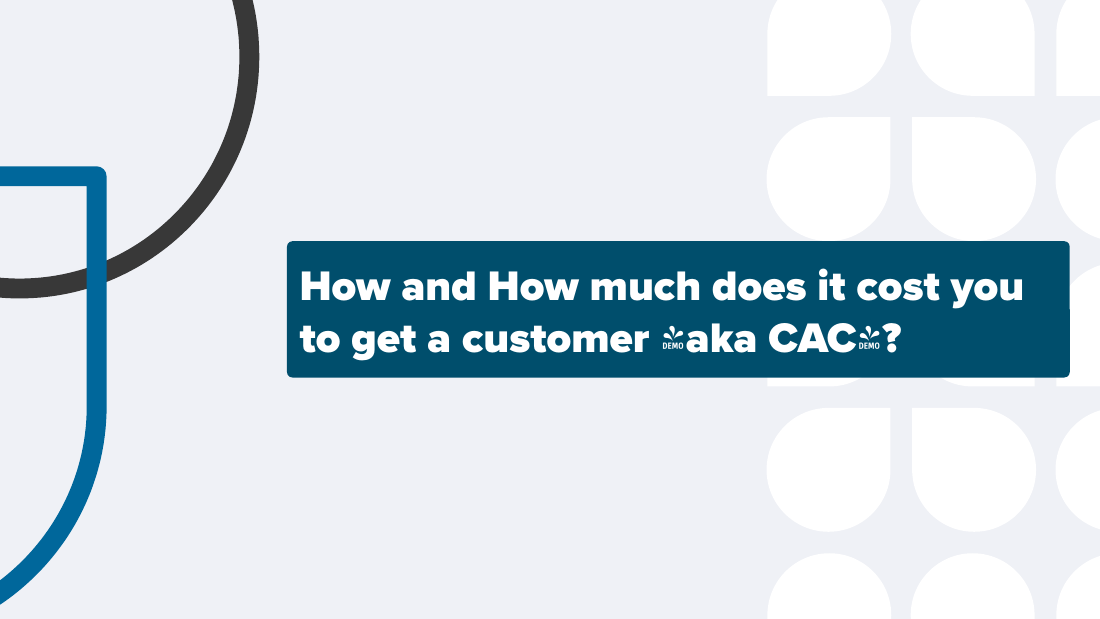
Must-do 3, Customer acquisition and retention: know your CAC; all-referral acquisition is harder to value, so have a strategy. Track churn (percentage of clients lost per month) per line of business ("it's never been worse"). LTV formula: (1 divided by churn rate as a decimal) gives months a client stays, multiplied by average revenue per month. Example: 3% monthly churn gives 1 / 0.03, about 33.33 months, times average monthly spend.
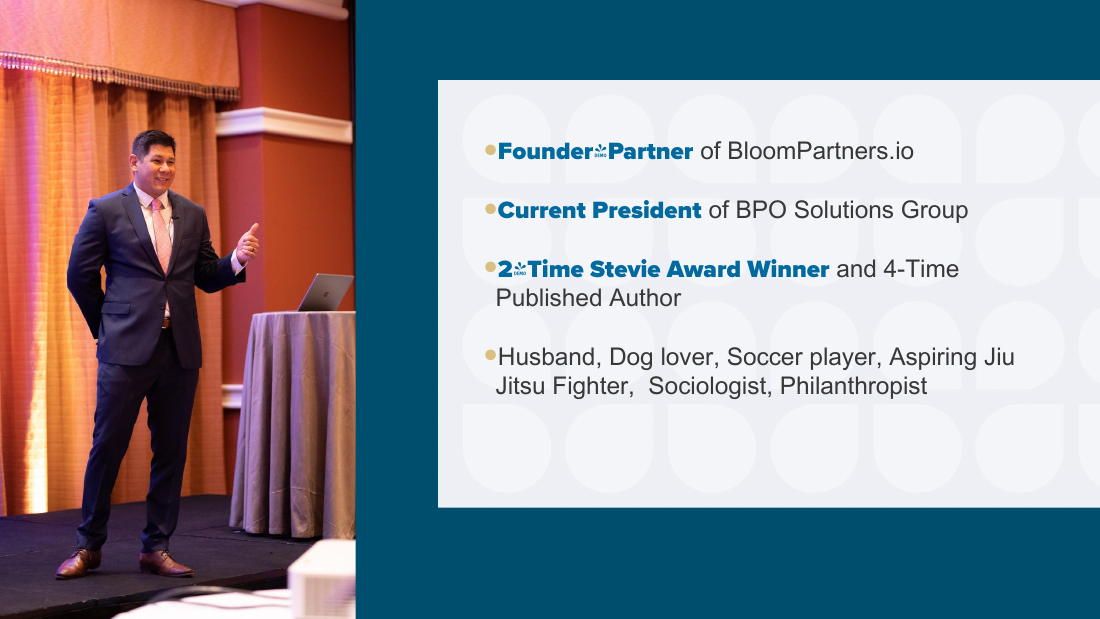
Other points: "Revenue is vanity, profit is sanity; all that matters is what you keep." Mid-market squeeze: agencies charging about $1,000 to $3,000 per month "are getting squeezed." Sellers who are not financially ready end up shutting their doors for nothing or taking a bad seller-financed deal from "vultures." Bloom Partners' team has done $700M+ total M&A and $200M+ in agency M&A (spoken figure; the deck speaker-notes say $250M). Martinez is now President (moving to CEO) of BPO Solutions Group, targeting a $100M valuation in three years. Credentials: 2-time Stevie Award winner, 4-time author (last book "Facts Not Feelings"). Contact given on stage: Chris@BloomPartners.io, cell 310-920-0431.
Chase Buckner (HighLevel)
Framing: self-described "failed agency owner" (first agency died in a year because both founders were operators and neither sold); later grew a seven-figure SEO-heavy agency; joined HighLevel early (employee about #20). HighLevel is an AI-powered all-in-one sales/marketing CRM with 180,000+ customers and powering 2M+ businesses per day (many via white label). Thesis: clients want "the house" (money, growth), not the tool (traffic), so selling only traffic leaves you replaceable.
The Growth Flywheel (five stages): Capture (capture leads into a CRM), Nurture (turn leads into conversations and bookings), Close (least friction in the sales process), Evangelize (turn customers into reviews and recommendations), Reactivate (reach back out to the past database). More leads compounds into more sales, more reviews, more visibility and referrals, more leads.
Capture, four levers:
- Modern website: HighLevel's new AI builder produced a schema-optimized site in about 5 minutes. Customer "Martin" (Germany) posted near-perfect page-speed scores from it.
- Trackable/textable number: Google Business Profile has a "Chat" field; adding a phone number there shows a Chat button in the search preview. Example: "Joe Jack's Restaurant" in Puerto Vallarta got 40 conversations in December from that button, a one-time setup.
- Chat widget: use one that redirects into SMS/WhatsApp. HighLevel data: locations using a chat widget generate 38% more contacts.
- Voice AI: 53% of inbound calls across HighLevel go unanswered. Voice AI can book appointments mid-call. In March, HighLevel voice AI answered 1.5M+ calls and booked 40,000+ appointments.
Nurture, the five-minute shot clock: an MIT study (professor unnamed) at gohighlevel.com/mit-study cites a five-minute shot clock; engaging a lead within 5 minutes dramatically raises close odds. Average human response time is 3 hours 26 minutes across HighLevel accounts. Anecdote: about 130 Botox leads at $6 per lead for a med spa, and the owner never called any of them. AI chatbots are easy to train (feed Google Sheets, FAQ docs, or a website URL), answer accurately "pretty much every time" (he estimates about 10% "weird out" moments), book appointments, and run on all channels. March: 20M+ messages sent by AI bots; 200,000+ appointments booked by AI bots.
Close: make it mobile-friendly, automated (stop chasing invoices), and e-signature enabled. Audit clients for businesses still asking you to print, sign, and fax.
Evangelize: most businesses just "don't ask." Benchmark: about 100+ positive Google reviews to be "in the ball game"; the average local business has only 39 Google reviews. Automate review requests via calendar trigger or a tag-triggered sequence (up to about 3 asks). Ask for recommendations to turn one customer into 3 to 5 referrals. AI review replies: replying may help rankings and psychologically nudges more reviews; prompt the AI to seed keyword-rich replies.
Reactivate: reactivation campaigns are "sales on demand machines." Send conversation-starters, not promotions ("Slide or no slide?" for a pool company). Email open rate considered good is about 20%+; SMS open rate is 98% (do not abuse it). HighLevel stats: bulk-email accounts generate 3x more contacts and 6x more won deals; SMS-using locations see 6.8% more opportunities and close 8.5 more than accounts that don't.
Host/MC name is inferred, not confirmed, in the source (the host's own agency story implies the name "Carius"). The MIT study professor's name was not given. The "tax-talk Kyle" Martinez referenced is a separate, unnamed-detail speaker, not Kyle Roof.
Slides
Only Chris Martinez supplied a deck export. Kyle Roof and Chase Buckner presented on-screen slides, but no deck files were provided for them.
Slides (49)








































Source
Synthesized from the SEO Spring Training 2026 conference recording (Day 1, Part 2) and the Chris Martinez deck, "Martinez FINAL 3 Must-Dos to Prepare Your Agency for Sale SEO Spring Training 2026." No deck files were provided for the Kyle Roof or Chase Buckner talks. Some details (host name, study attributions) are marked as inferred or unknown where the source did not confirm them.