"Mitch, Joy Hawkins, Ben Fisher - Day 1 Roundup and GBP Q&A"
"The Day 1 wrap-up: Mitch recaps every talk, then Joy Hawkins and Ben Fisher field a live Google Business Profile Q&A on reviews, CTR manipulation, and what actually moves rankings."
On this page
This is the Day 1 closing session. Mitch (host; last name not given in the recording) recaps each Day 1 talk and pulls one actionable idea from each, then hands off to a live Google Business Profile (GBP) Q&A panel with two local SEO specialists: Joy Hawkins (Sterling Sky) and Ben Fisher (Steady Demand). The panel takes audience questions on review removal, CTR manipulation, fake engagement signals, the Local Guide trust score, name keyword-stuffing, services and justifications, when SaaS and national brands should be careful with a GBP, recovering deleted listings, and diagnosing a struggling listing. The throughline running across all of it: anything you directly control inside a GBP is mostly ignored for ranking, Google enforces its guidelines inconsistently, and the real levers are reviews, categories, and your organic site.
Main takeaways
- Anything you directly control inside a GBP is largely ignored for ranking. Ben Fisher's "UDC" rule: if a field is fully under your control (Q&A, description, geotagged EXIF), Google tends to discount it. There are only about four or five real internal levers, and reviews are the main one.
- Review removal services run on fake engagement signals and can get you suspended or de-indexed. Joy and Ben describe flagging from many accounts or bribing Googlers. One merchant who paid an offshore service got the review removed and was suspended within 15 minutes, plus a six-month review block.
- CTR manipulation (driving phones to a location, mass flagging) works briefly, then collapses. It can work for roughly 24 hours, but sudden spikes get flagged as fake engagement, and stopping then restarting re-triggers the danger. The same tactic is sold as a negative-SEO weapon against competitors.
- Name keyword-stuffing is rarely penalized because Google classes it as data integrity, not fraud. Joy: "Google doesn't give a crap" about keyword-stuffed names, and enforcement is wildly inconsistent. Google reserves strict action for fake or fraudulent listings that can cause real (sometimes physical) harm, for example fake locksmiths.
- Reviews, new categories, and your organic website are where the time should go. Joy tracks new GBP categories monthly (for example dumpster rental) because getting them first gives a ranking boost. Otherwise GBP is "set it and revisit," and organic feeds local while local does not feed organic.
Key points
Mitch (Day 1 recap)
- Marty's presentation: Two onboarding / information-gathering documents (held up physically) are excellent for teaching an AI a client's writing persona so generated articles "sound like something I would say." Mitch grabbed about ten copies for his backpack.
- Marty's courses: described as six to eight webinars, each planned for an hour but running three to four hours.
- Kyle Ruth talk (LLMs): Mitch mentions a tool he calls "Quinn" (unclear; possibly a model name, not verified). He praises Kyle as the best storyteller at the conference, calling it "a master class in presentations."
- Avalanche Theory plus KGR: Avalanche Theory = for a given amount of site traffic, here is the set of keywords to target, and as traffic rises you can target harder keywords. KGR (Keyword Golden Ratio) is similar math to judge whether a keyword is obtainable for your site's strength. (KGR creator's first name guessed as "Mike," unsure.) Idea: feed both into an AI to generate a Python script that does the keyword-difficulty math automatically.
- Chris Martinez (agency sales): prepare financials, team, and customer get/keep systems early even if a sale is years out. Mitch's own company is 14 years old with "three-plus years of work to do" before it is sale-ready. Applies to SaaS exits too (grow subscribers, keep the growth, do not let it shrink).
- Chase (the GoHighLevel speaker) lifecycle wheel: capture leads, consistently nurture, close, evangelize, reactivate. Mitch argues a sixth stage, "deliver," is missing (it is hard to get evangelists, reactivation, or reviews without delivery).
- Andrew Nancy (AI room, first speaker): slides published online at "seost-2026.dormant.ai" (domain transcribed phonetically; verify). Key takeaway: give skill / command files and folders specific names (not generic coding labels) so the AI locates them instantly instead of hunting, which saves money.
- Elias: showed tiers-of-link-structure diagrams. The anchor-text tier framework Mitch teaches: tier 1 = brand anchors (Mitch's default brand word is "bread"), tier 2 = exact-match domain, tier 3 = entity-related (via conversational or entity anchors). Warning against over-optimizing anchor text.
- Brian (audience case study): "negative SEO'd himself." His entire Google Maps manager account and all attached listings were suspended; he is presenting a separate talk the next day.
- "Mr. Richard" / account-holder story (told within the recap): had many GMBs on one email account; a former client never renewed their domain, someone bought it and turned it into a gambling site, which triggered suspension of everything attached to that email. Eventually recovered. Lesson: never put many GMBs on one email.
- Dan Kurtz (newsjacking for leads): uses in-page push / native ad networks (Taboola, Outbrain named) styled as advertorials ("you read this article, it turns out to be an ad"). Roughly half-cent clicks (about 100 clicks for six dollars). Mitch ties it to a theory (attributed to Lee Wycher, unverified) that traffic from multiple sources can influence ranking. Ad-network links to landing pages are typically 301 / 302 / 307 redirects, creating possible short-lived cheap-backlink opportunities while pages get indexed and build trust.
Joy Hawkins (Sterling Sky)
- Runs a local SEO and PPC agency in Canada and the US ("all things Google"). The agency is Sterling Sky.
- Review removal methods she has heard of: (1) literally bribing Googlers; (2) flagging from many different Google accounts. Flagging only really works if the review is recent; after about two to three weeks, the likelihood of removal is "next to none."
- Q&A feature: never made a noticeable ranking dent in her testing; she has ignored it for years.
- Geotagged image EXIF: does not work. She cites a recent in-depth test by SEO Jake Hendley (uploading to GBP and to the website); both showed nothing measurable. Her own older tests agree.
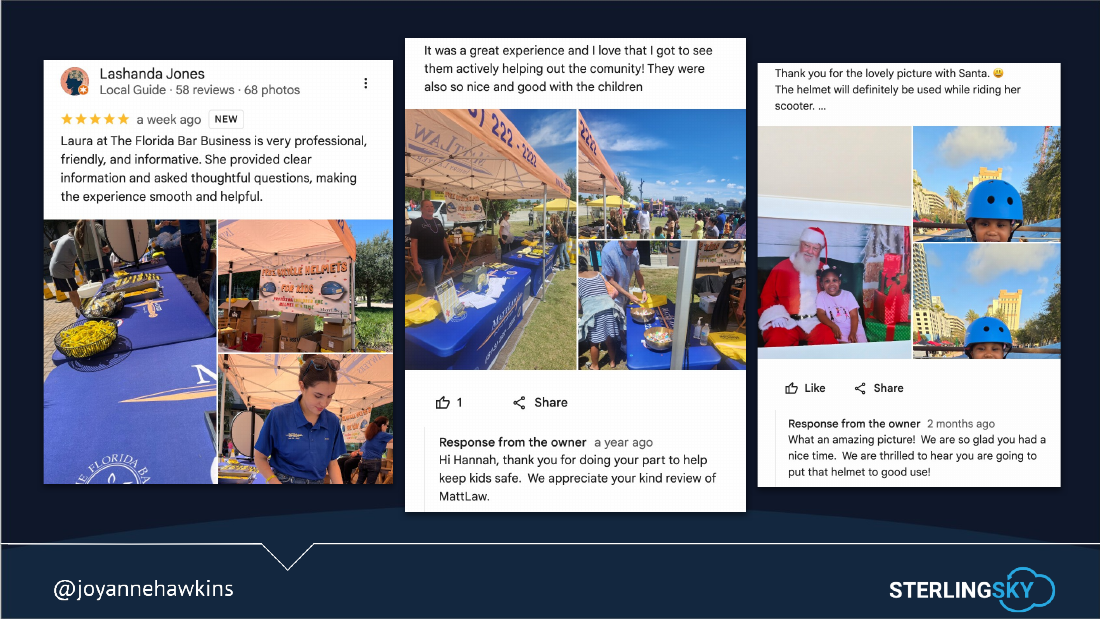
- Burying a negative review: negative reviews stick at the top because they are long and people engage with them. Fix: get a new review with a photo, or email past reviewers asking them to update their review and add a photo, which pops the negative one down fast. Video is even better (Ben agrees).
- Name keyword-stuffing: "Google doesn't give a crap." It is not considered spam; it is classed as "data integrity," not fraud. Enforcement is very inconsistent (some get dinged, many do not). Strict enforcement is reserved for fake or fraudulent listings (for example a fake locksmith who could rob you). Mantra: "follow what Google does, not what they say."
- Names inside reviews: not worried. She cites Claudia Tamina (review reputation management company; interviewed on Joy's podcast) seeing some very short name-mention reviews removed (for example "Bob was my waiter, he's awesome") because short reviews get filtered generally, with no massive takedowns. She is not advising clients to change habits.
- Services / justifications: the feature comes and goes but has been around a while. The little web-sourced snippets are called "justifications"; the services justification is the weakest and shows least often. Services are a small ranking factor, worth filling out. Do not put nonsense in front of the service name.
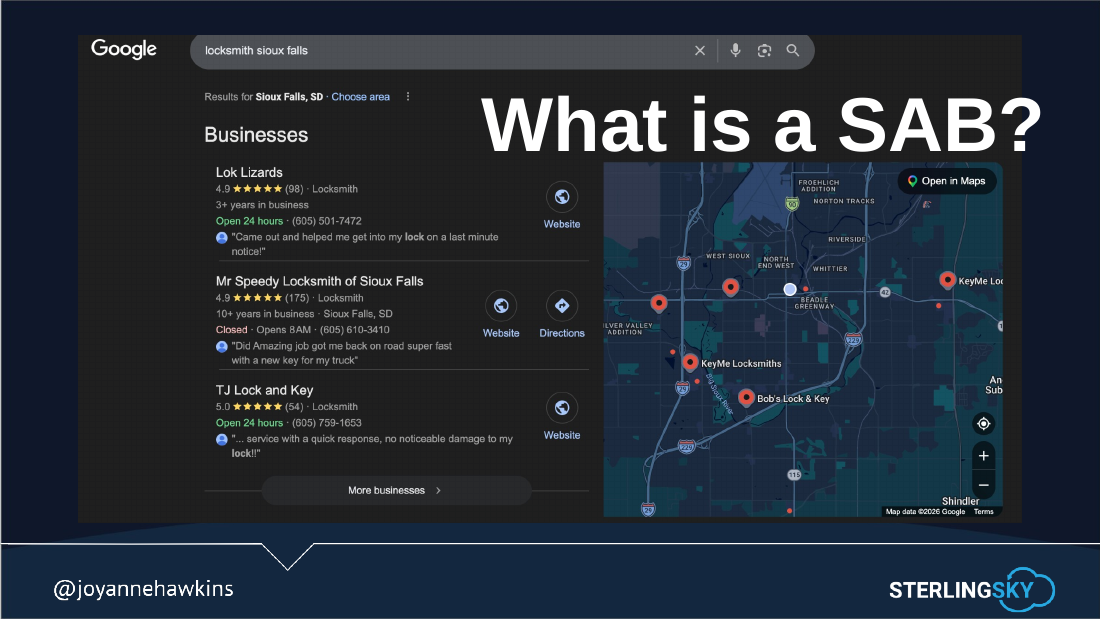
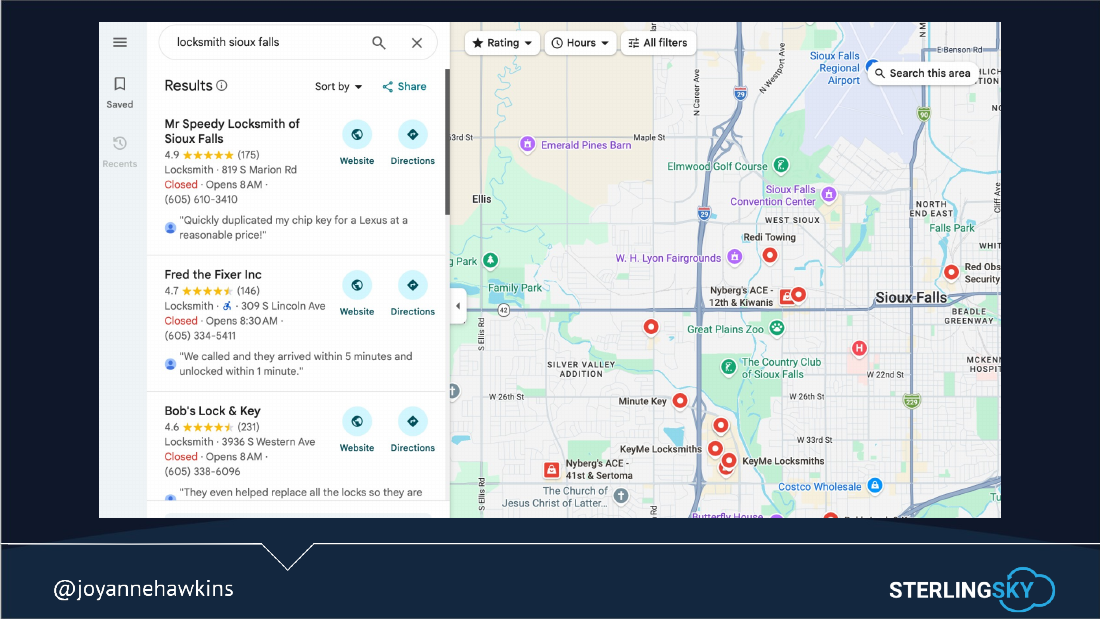
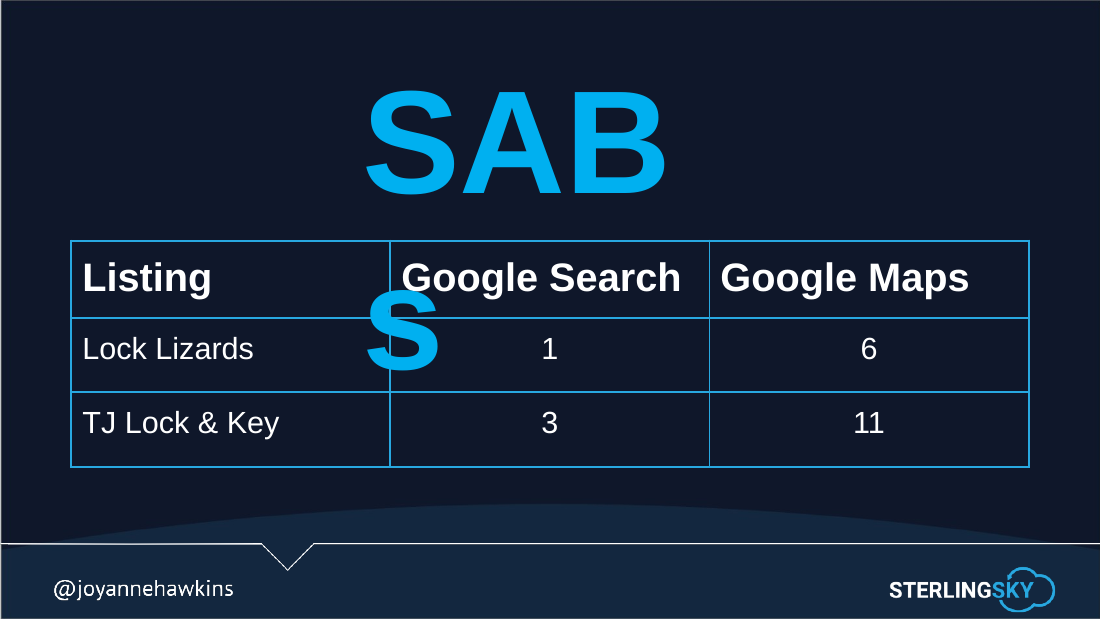
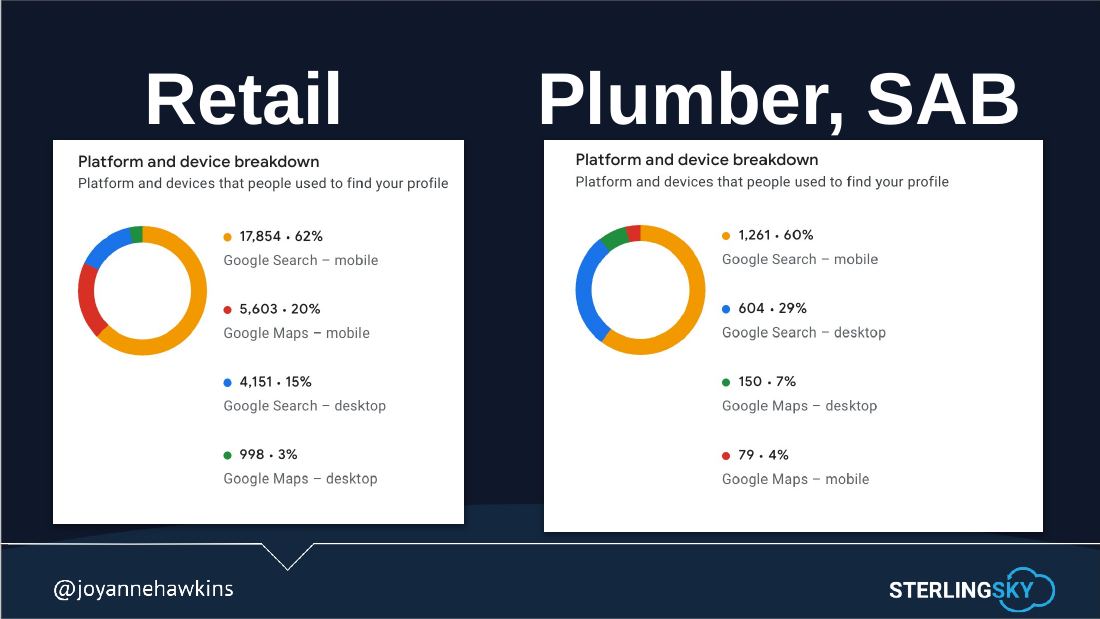
- Service area businesses (SABs): "not dead, but they rank like crap," steadily declining; avoid if you can.
- YouTube posts / new post feature: mainly help the YouTube channel, not GBP ranking. Polls work well for engagement. Optimize for YouTube as its own beast, not as SEO. Joy gets most of her monthly leads from YouTube.
- SaaS / e-commerce GBP rule: decide by "where are they going to leave a review." If you make a GBP, mark on the About page that in-person visits are welcome and embed the GBP. Listings that say "online only, do not contact us in person" are against guidelines and get removed.
- National-brand GBP siphoning organic: a ticketstub.com example (StubHub-style) created a Chicago GBP and national traffic crashed from roughly 50,000 to under 5,000 visits per day, with all traffic becoming Chicago-localized; deleting the GBP restored traffic in a couple of days. Joy has seen this repeatedly. With another national continued-education-for-insurance client, she removed the GBP because it centralized everything to one location.
- Deleted / disappeared listings: Sterling Sky sees at least one every six months. Usual causes: a Google Workspace or Google account being deleted (which deletes the profile); or third-party tools (Yext, SEMrush, BrightLocal) that need GBP access deleting it on disconnect. A big automotive company accidentally deleted roughly 4,000 dealership listings via an API feed last year. There is a short time limit to get a listing restored; act fast. The best recovery channel is an email that contains the business link (for example a review notification). Worst case, Google transfers the reviews to a new profile. Keep backups: store the CID, save Google email alerts (they contain hexadecimal identifiers), and screenshot all reviews.
- What is worth time on GBP: tracking new categories (she is "obsessed"; Google added a dumpster-rental category about a year ago, and getting new categories first gives a ranking boost). She publishes a monthly-updated category list on the "Stones Guy" website (name as heard, likely a mis-transcription; verify). Otherwise: reviews are one of the biggest ranking factors, most of her work is website-oriented, she does not do posts, and services and similar are "one and done." Method / grid-driving and similar tricks: "none of it works."
Ben Fisher (Steady Demand)
- Runs Steady Demand, focused on GBP, LSA, and AI; framed as "we help protect your brand presence online." He is a Google product expert (PE).
- Fake engagement signals: a merchant paid an offshore (Singapore) service to remove a review; it was removed, but the listing was suspended within about 15 minutes because mass accounts "banging on one" listing is a fake engagement signal. Bad enough infractions can de-index ("de-poll") the listing entirely. That same merchant also got a six-month review block.
- Negative-SEO market: a company advertising on Reddit runs CTR manipulation for negative SEO; another similar company is in Scottsdale. Severe cases have led to Google deleting the entire Gmail account and suspending everything in it.
- CTR manipulation (driving phones to a business): works. Product expert Tim Cabrey (UK) cites a hotel client who loaded up phones and drove them back and forth; it worked for 24 hours. Manipulation only holds with continuous concentrated effort; stop-start re-triggers fake engagement signals and danger.
- Third-party-app cleanup: if a profile keeps reverting (phone / website / name), go to accounts.google.com, find connected third-party apps (for example BrightLocal, Yext), and terminate the connection. In one attendee's case the offending API belonged to a previous person's account, so it did not appear under the current owner. Whenever in doubt, remove all users from the GBP except your agency for full control. (One attendee had 16 people on the GBP.)
- Trust score / Local Guide level: the Google account trust level is one of the strongest signals and can be gamed. Local Guide 6+ = high trust; 9-10 risks the account being compromised or banned. He recommends staying in the 6-to-8 range. Not all point-earning actions are equal: edits matter most for trust score (the same system Map Maker used; human-approved edits matter more), while photos, ratings, and yes/no answers matter much less. Make the right kinds of edits; a bad edit (for example removing a city name at Walmart) will not be approved and dings the account, lowering the trust level even while the point number rises. Arguing as a local guide is also a negative signal.
- Services 72-hour bump: Google-suggested services give a ranking bump usually within about 72 hours; Ben's multi-year testing shows custom services give the same roughly 72-hour effect. Just make sure they make sense, because they show publicly now. Tip: check Google Maps (or Chrome on mobile) first to see whether a feature will roll out; the services feature was on mobile a year or two before desktop.
- Guidelines are gray: as a new PE, Ben read the full guidelines every weekend (about 5 hours) for over a year. Product experts "yell at Google all the time," and Googlers often agree they do not always know what they are doing on spam / guidelines. Google's goal is protecting consumers and merchants from fake or fraudulent listings that cause harm (monetary or physical, for example locksmith fraud). Name spam usually is not fake or fraudulent because the caller still reaches a real business. He cites a PI firm attacked by roughly 100 sock-puppet accounts (identical text across listings): Google removed all from one profile, left all on another. Inconsistent.
- Support reality: tier-one support is volunteers (product experts who care), then AI beyond that.
- Name keyword-stuffing enforcement: an attendee (Caleb) reported a "[Business] - a local [city] SEO company" name that reverted within two to three days each time it was re-edited; after about 20 edits the reporting account was suspended. Ben's framing: the name game is nearly impossible to enforce programmatically, and the rule was likely a knee-jerk guideline change after a legal or PR threat. His only real advice: keep review velocity consistent (not up, not down) to avoid losing reviews.
- SaaS / corporate-office GBP: to reinstate online-but-reputable businesses, file as a "corporate office" (employees need a place to go, customers can sometimes visit, within guidelines). For a local-irrelevant SaaS, "ask forgiveness later": set it up as a software company, get suspended, then fix as a corporate office; it is a place to house reviews.
- National-brand overshadowing organic: a national sofa chain set up a GBP that ranked across the US on brand power; the GBP overshadows organic and users get the phone number and call, so it is more a zero-click effect than true traffic siphoning. (Contrasts with Joy's "delete it" remedy for the same observed problem.)
- Diagnostic principle: organic feeds local; local does not feed organic. If GBP checks come back clean, look at organic, links, and website structure / integrity. Everything outside GMB can hurt GMB, but GMB does not necessarily affect everything else.
Audience and cross-talk specifics
- Mitch's note: he has an exact-match GMB he refuses to touch because it is so spammy that any edit would likely trigger immediate suspension, yet it still produces leads.
- Multiple operators reported third-party API tools (BrightLocal, Yext, SEMrush) silently editing or deleting profiles.
- An attendee found address-related schema issues mattered; the panel agreed the relationship is one-directional (off-GMB factors can break GMB).
How-to procedures stated by the panel
- Diagnose a struggling GBP (Joy): (1) find who ranks best in town = the ceiling; (2) if not ranking for city-inclusive terms (for example "pest control Chicago"), check whether the business is inside city limits via the knowledge-panel line just above the address (lists city / county, not editable; a billing address in the city does not count if the business sits physically outside it); (3) look for duplicate listings; (4) any same-category business within 200 feet can filter you out; (5) compare business-name keywords (yours vs competitors); (6) compare opening hours (9-to-5 vs a competitor's 24-hours can mean you do not rank); (7) if GBP is clean, move to organic (links, structure, integrity).
- Bury a negative review (Joy): identify the long, high-engagement negative review pinned near the top; generate a new positive review with a photo, or email past reviewers to update theirs and add a photo (video is better); the photo/video review pushes the negative one down quickly.
- Stop a profile that keeps reverting from a hidden third-party tool (Ben): go to accounts.google.com; open connected third-party apps and find tools with GBP access (BrightLocal, Yext, SEMrush); terminate the connection; if the API belongs to a previous owner's invisible account, remove all users except your agency.
- Recover a disappeared (non-penalized) listing (Joy): act fast within the short restore window; contact support through an email that contains the business link (for example a review-notification email); if two listings existed, request a merge to preserve some reviews; back up future listings by storing the CID, saving Google email alerts (they carry hexadecimal identifiers), and screenshotting every review.
- Capture new GBP categories early (Joy): monitor Google's new categories monthly; when a new one fits a client (for example dumpster rental), add it as early as possible to capture the temporary ranking boost.
- Merge Google-created duplicate listings (Joy): confirm the duplicate shares the same address, then merge (merging passes ranking benefits; deleting loses them); never ask Google support to merge listings at different addresses.
Slides
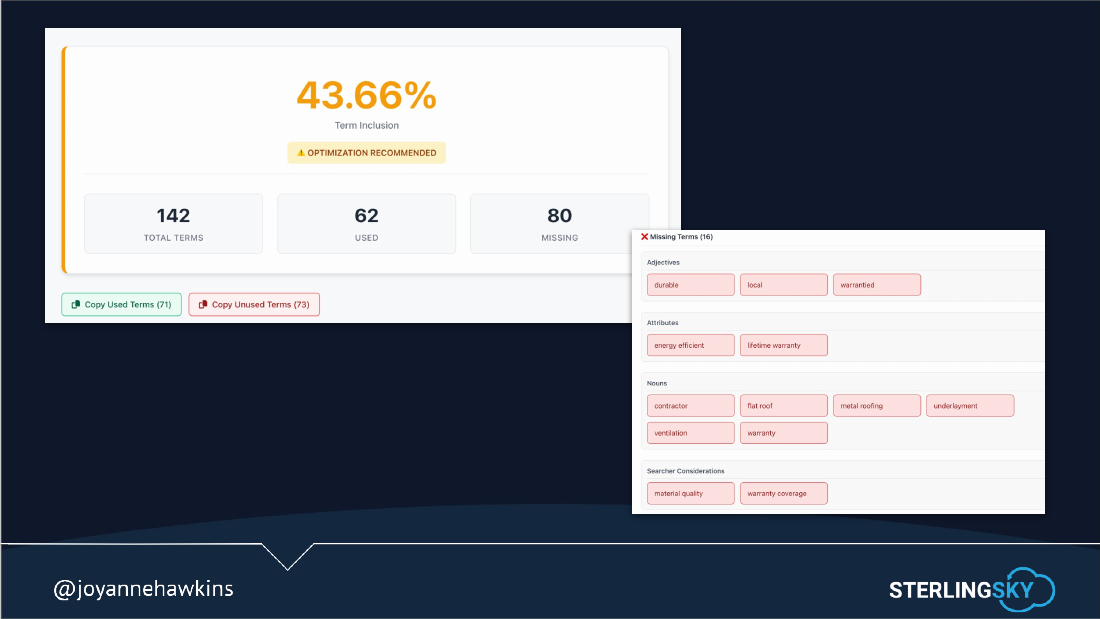
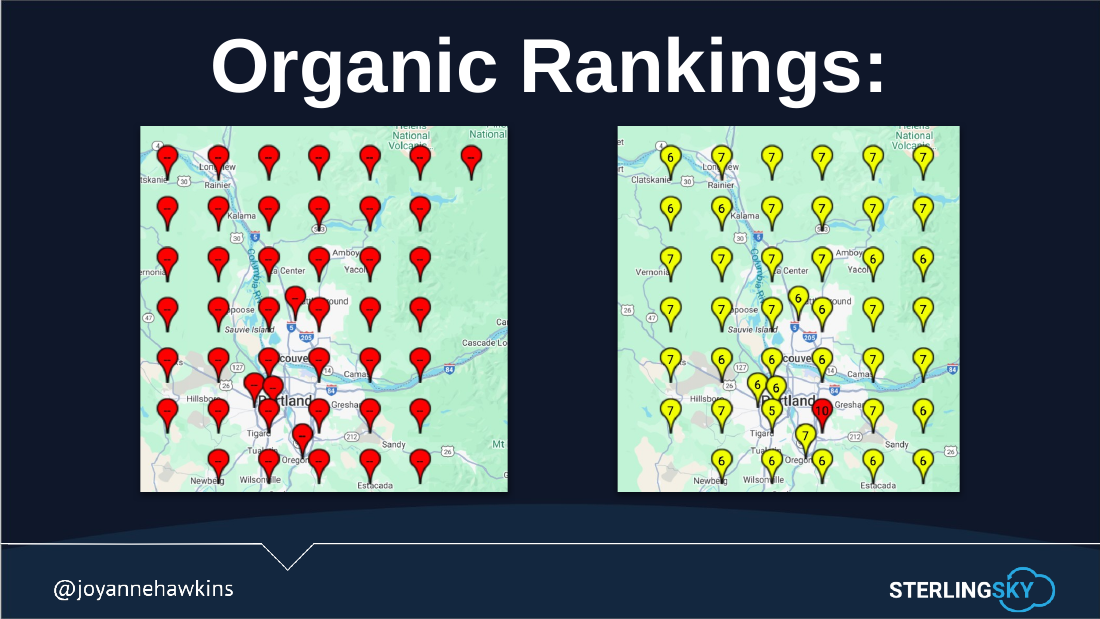
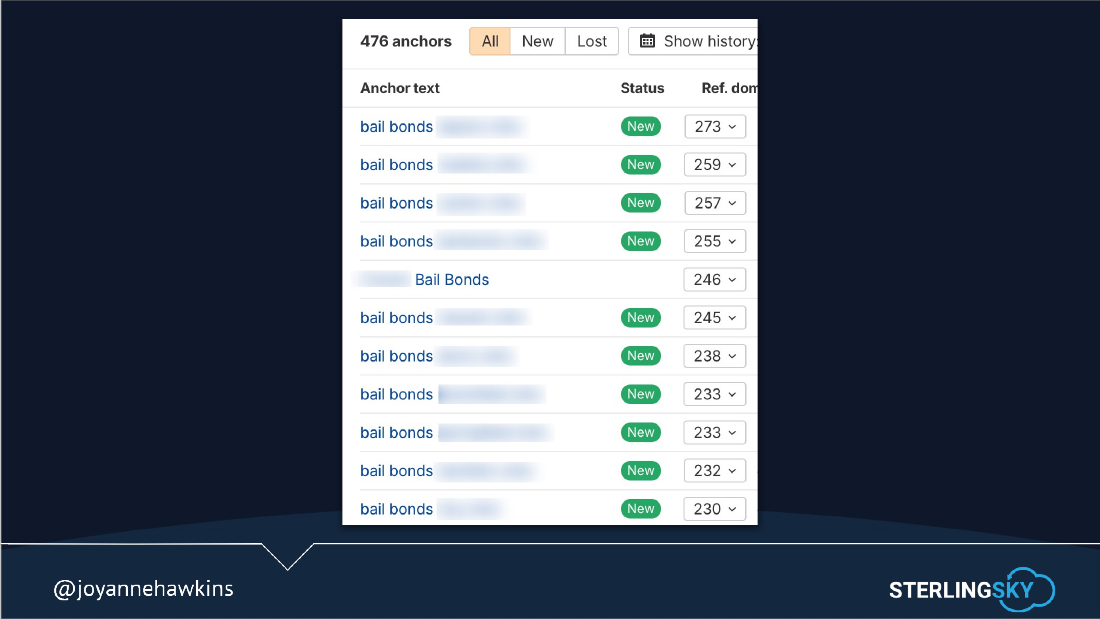
The one deck attached to this session is Joy Hawkins's standalone Day 1 talk, "5 SEO Mysteries That Secretly Kill Your Rankings (Solved)" (Sterling Sky). It is a separate talk from the Q&A panel above, but it is the only deck on file for this session.
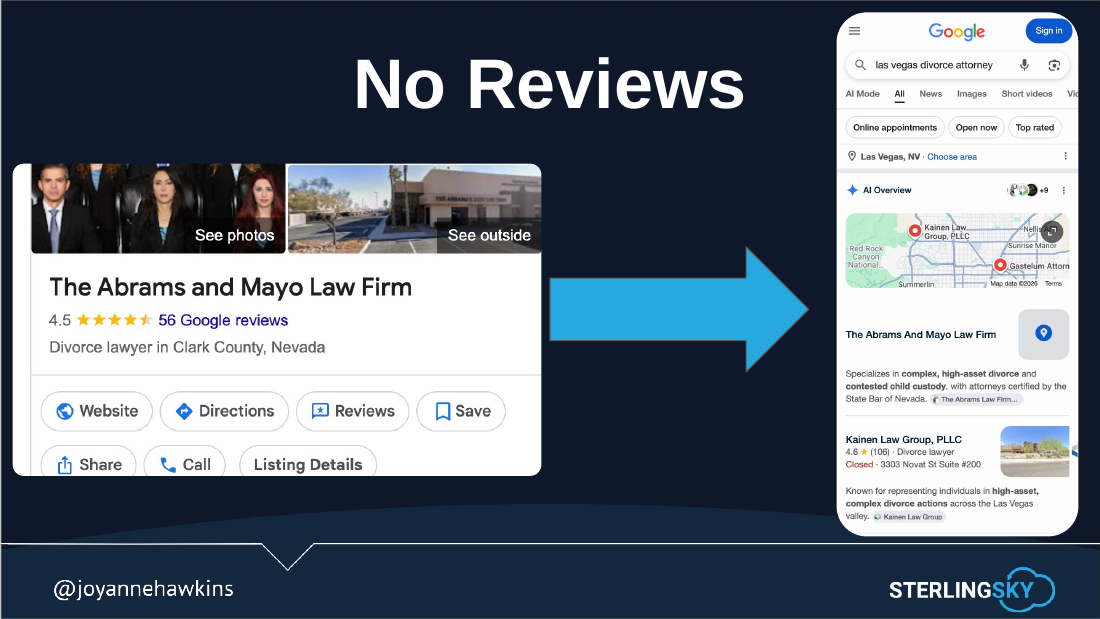
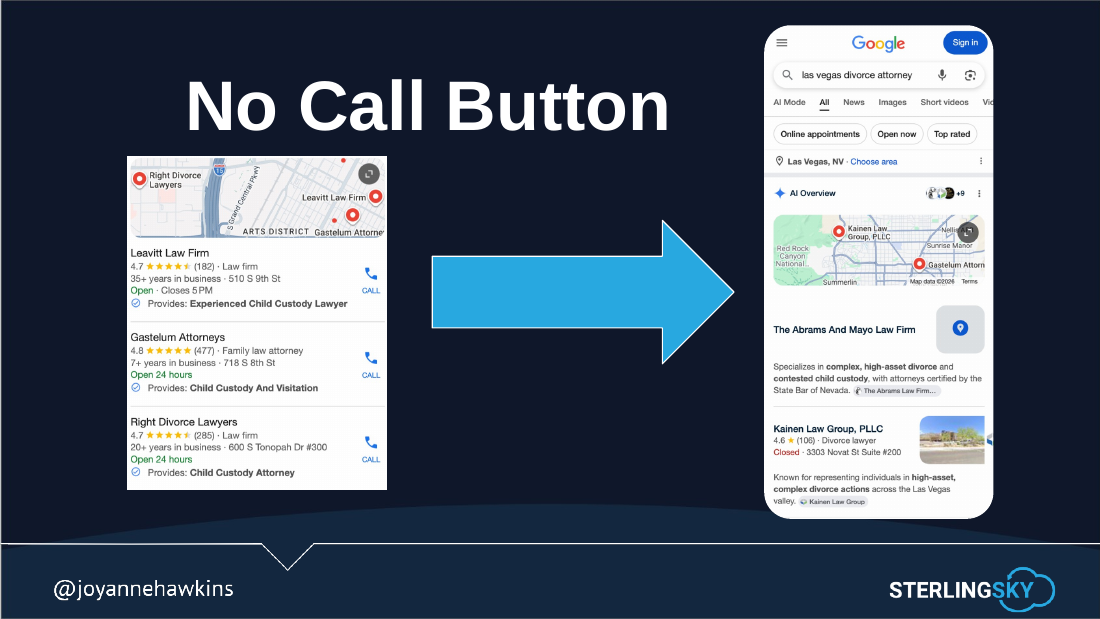
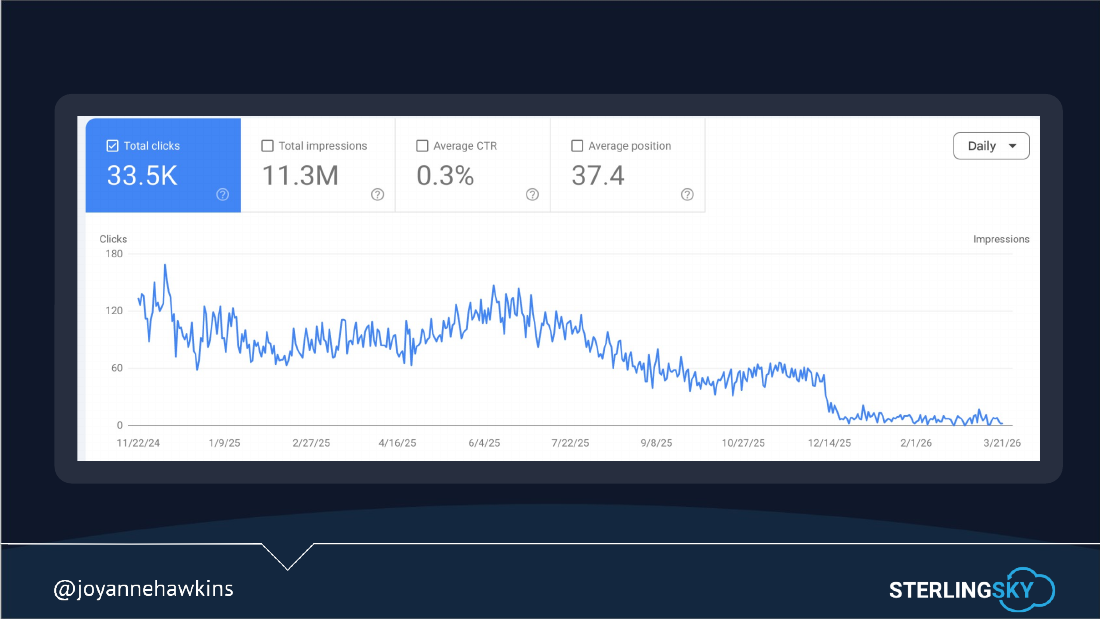
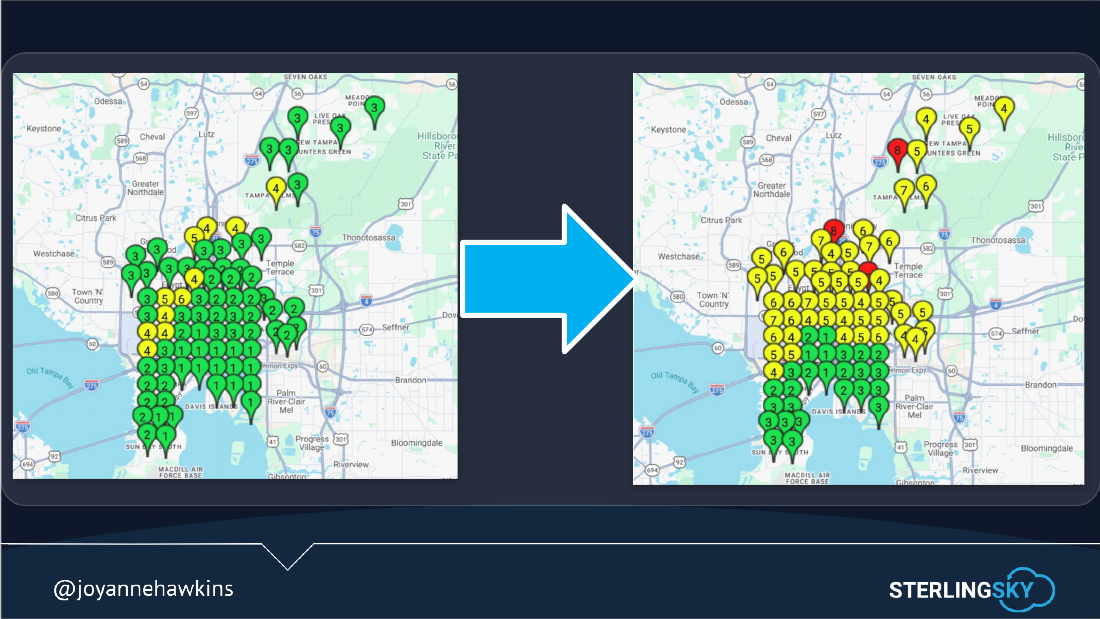
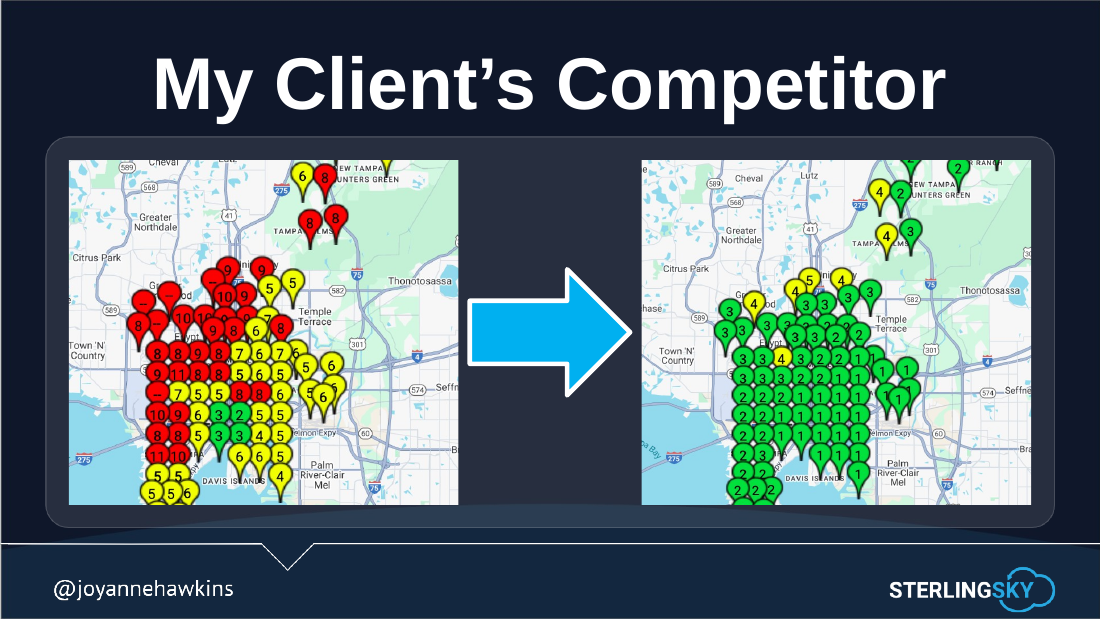
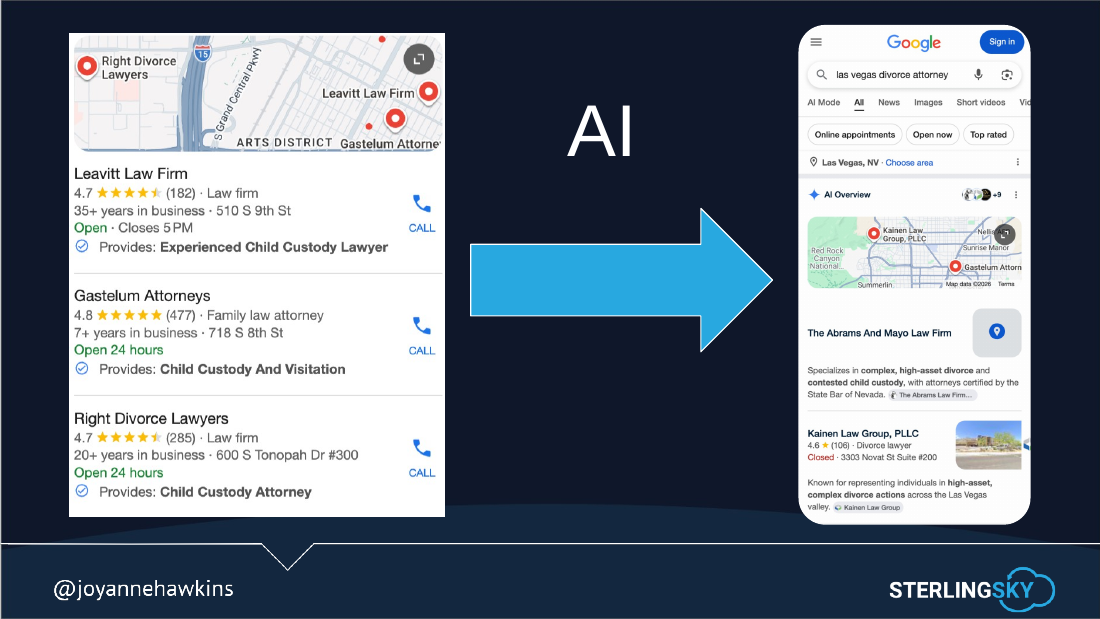
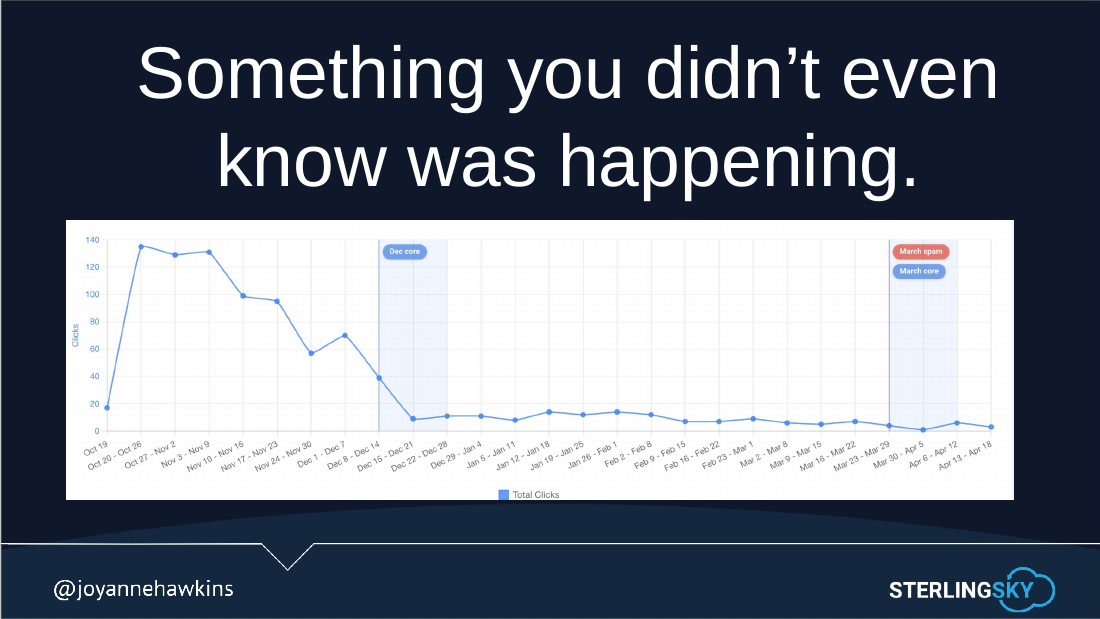
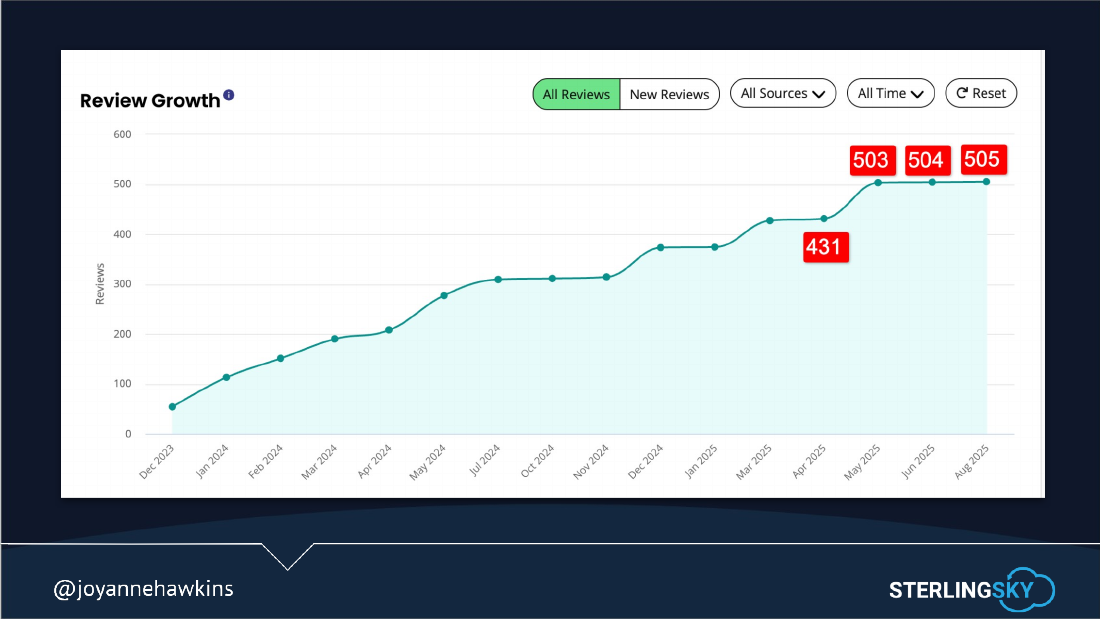
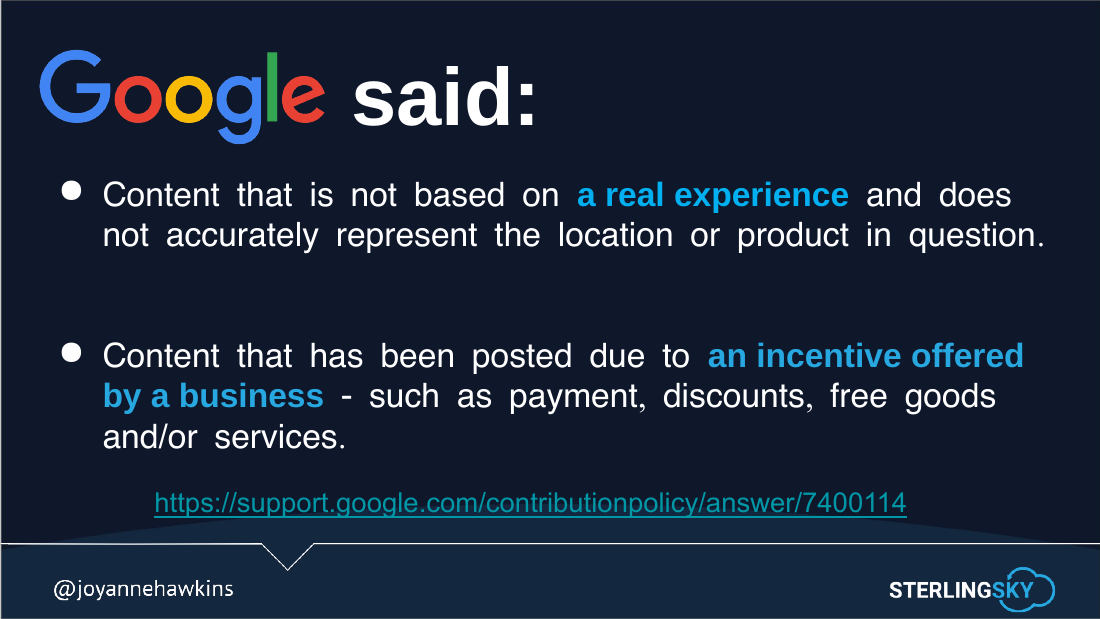
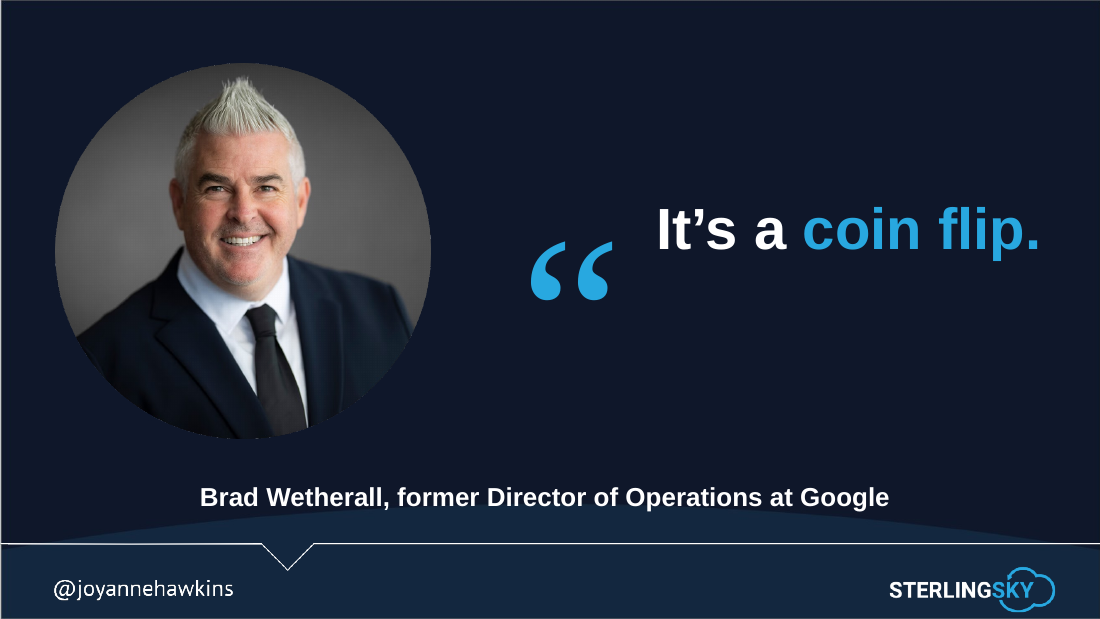
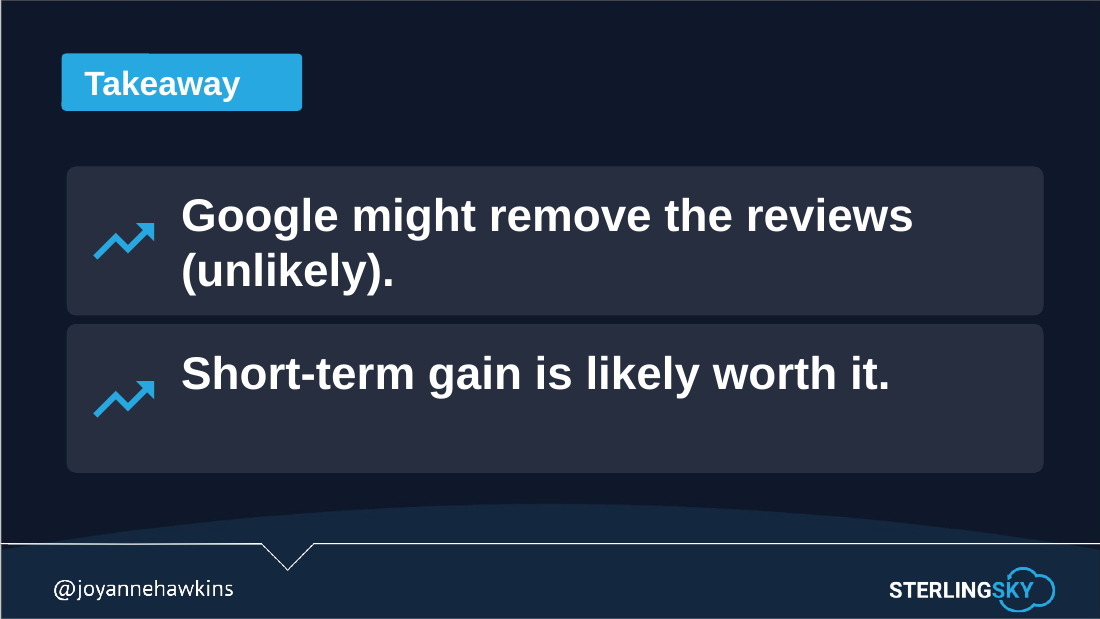
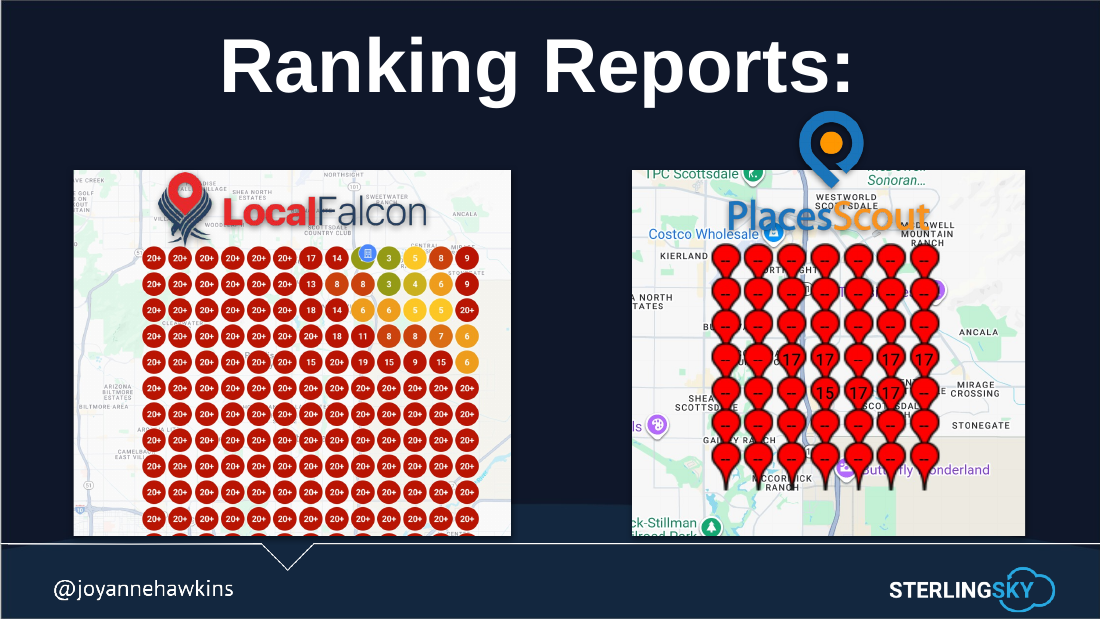
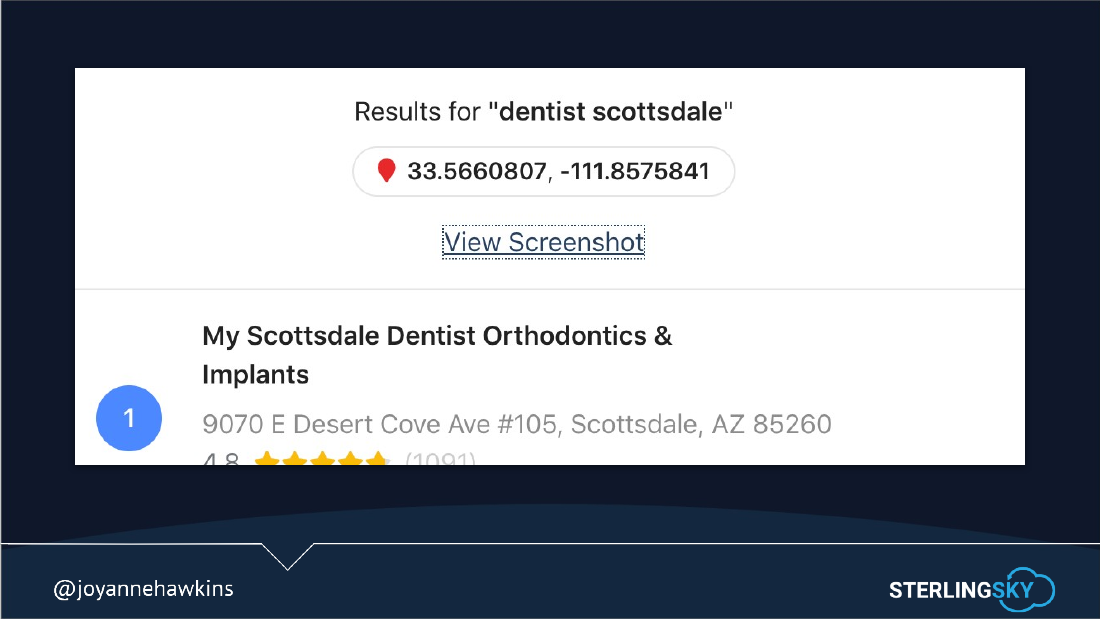
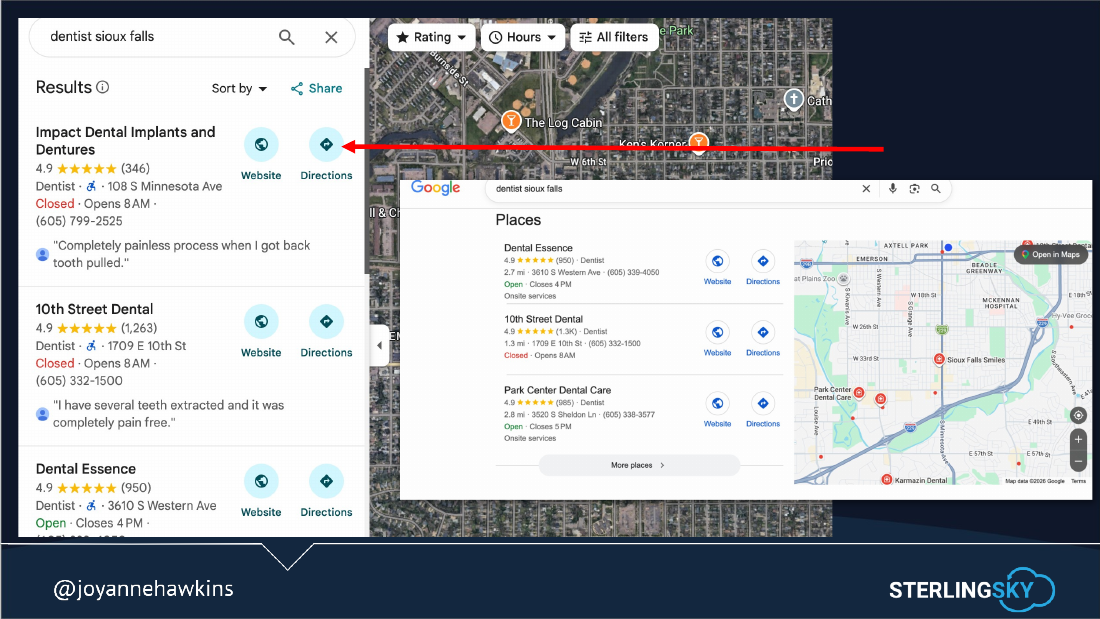
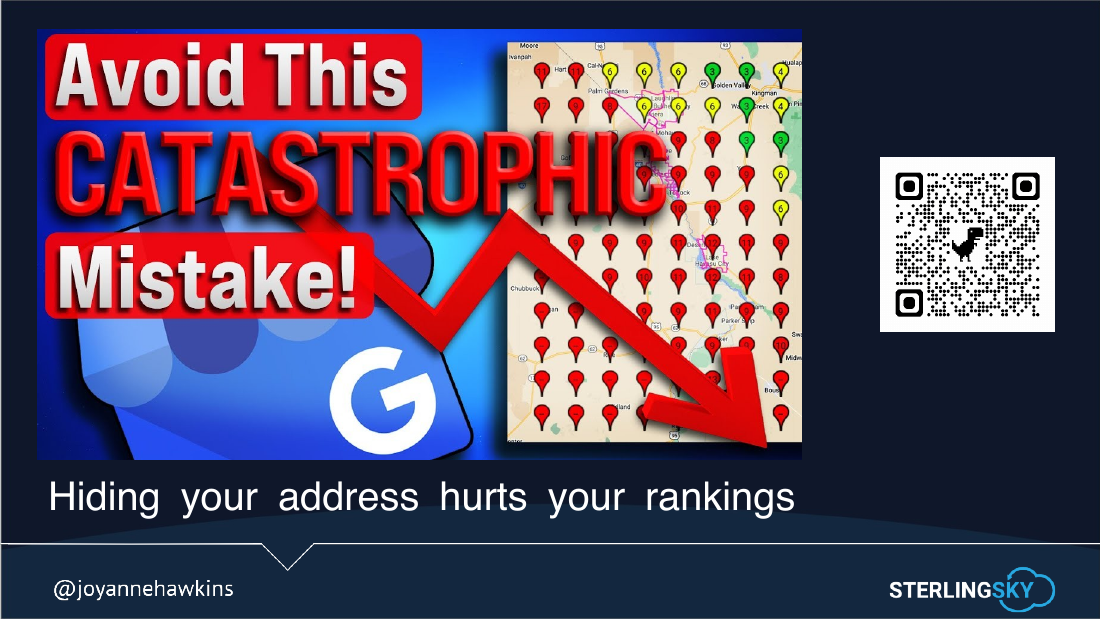
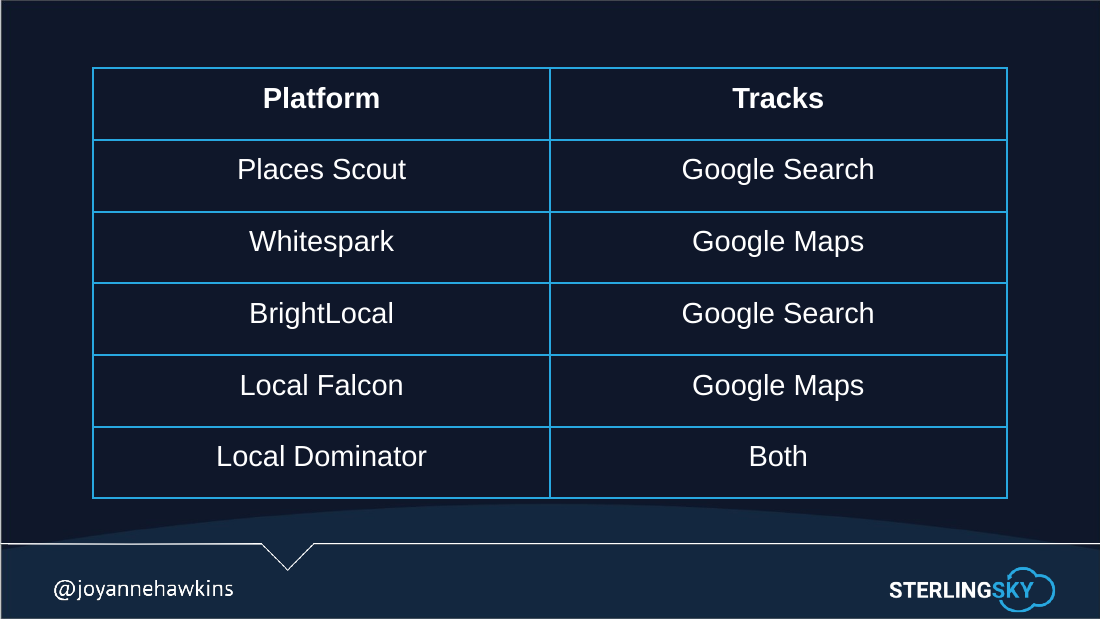
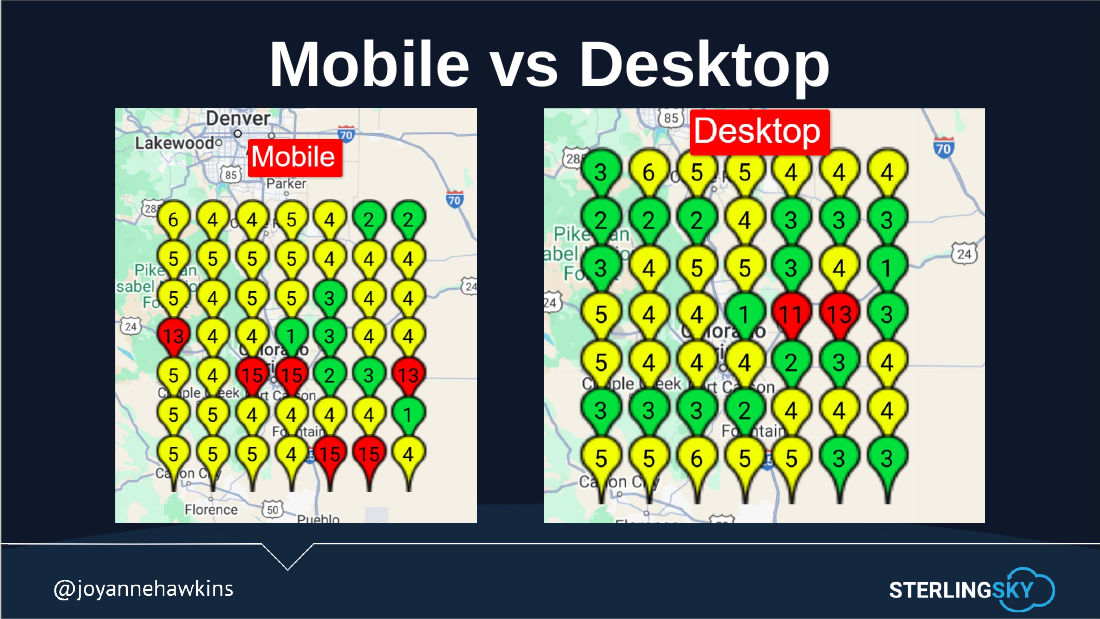
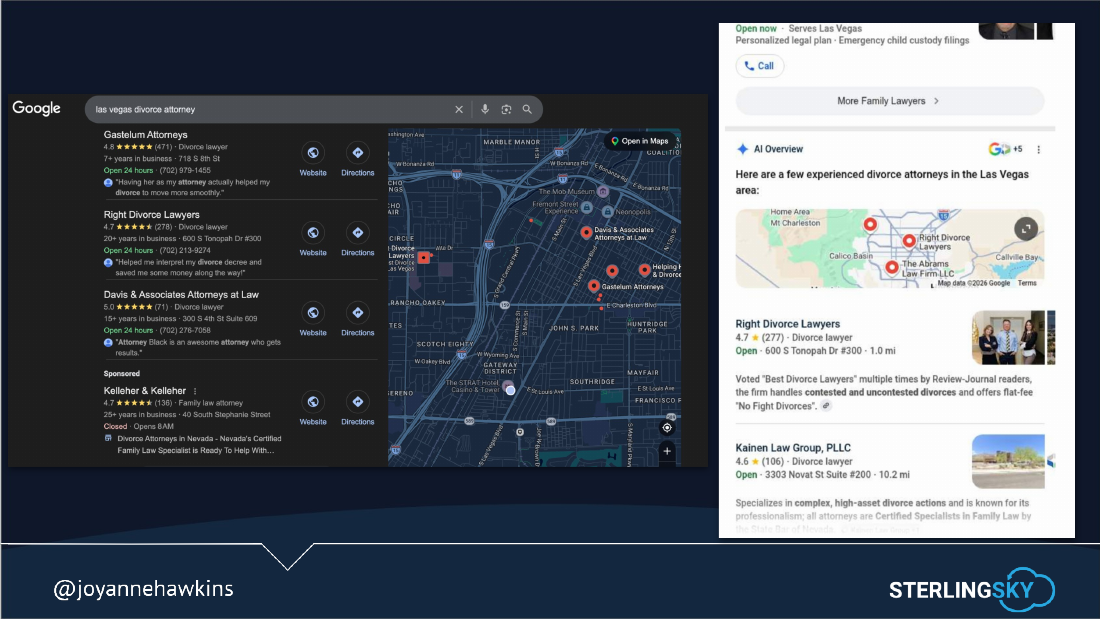
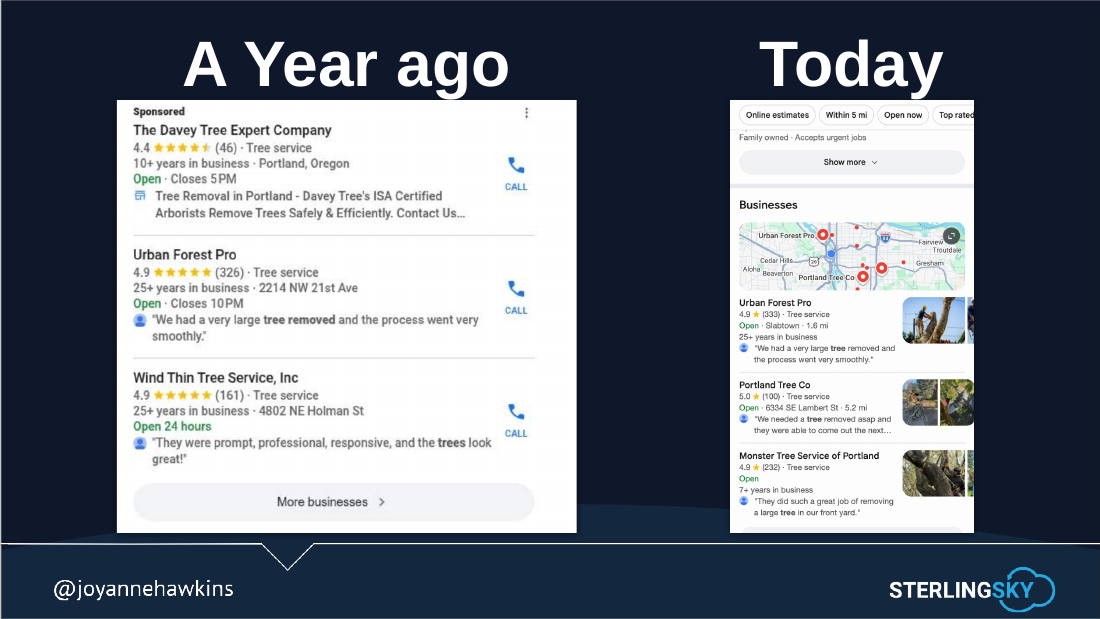
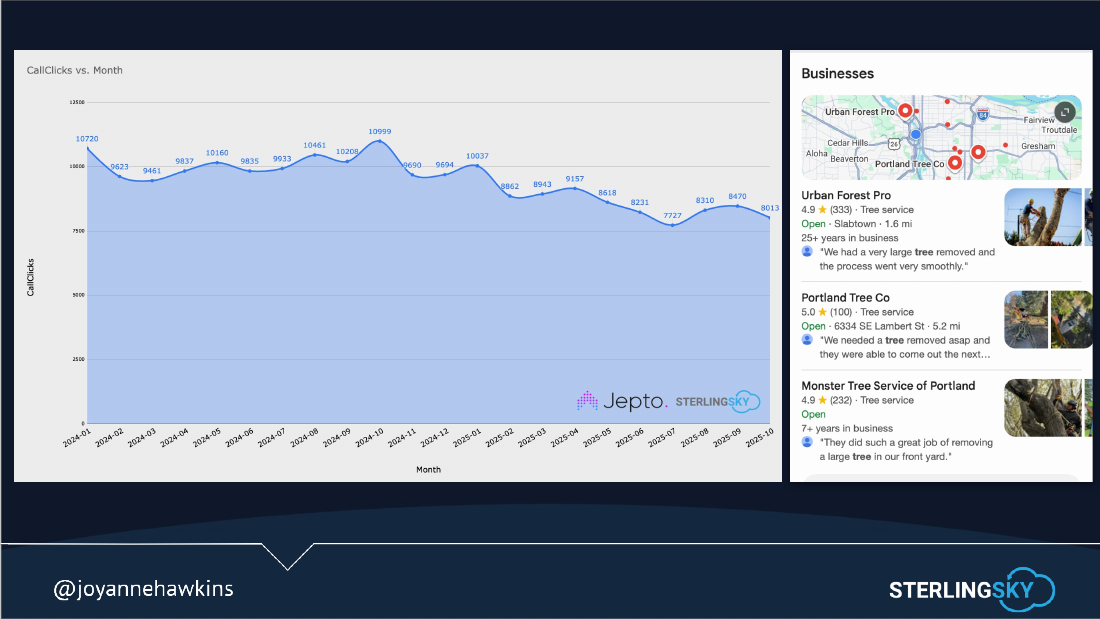
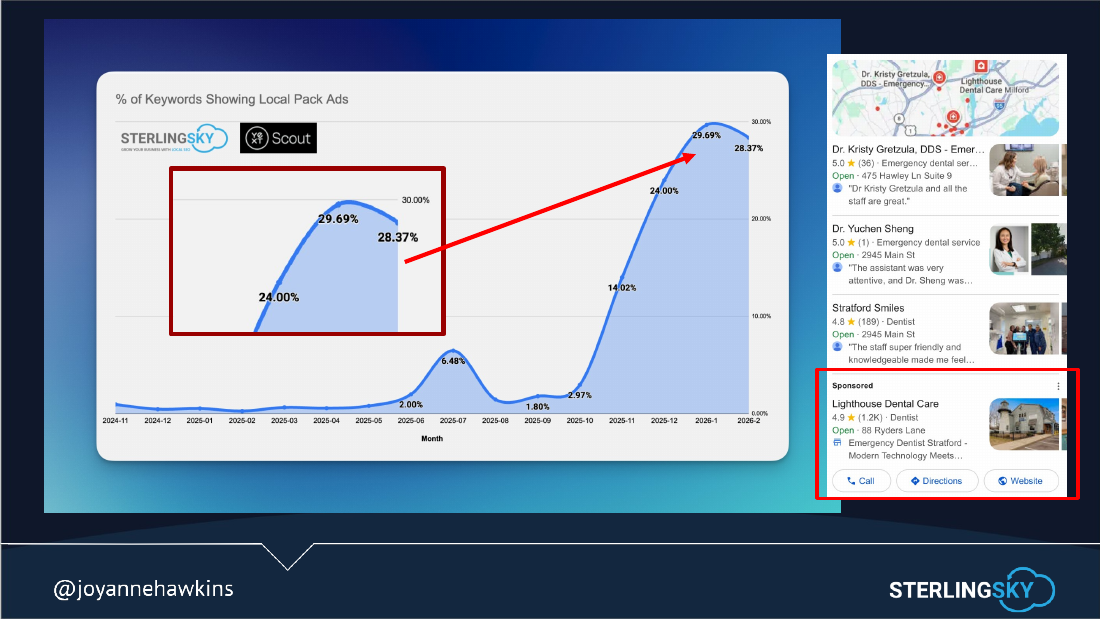
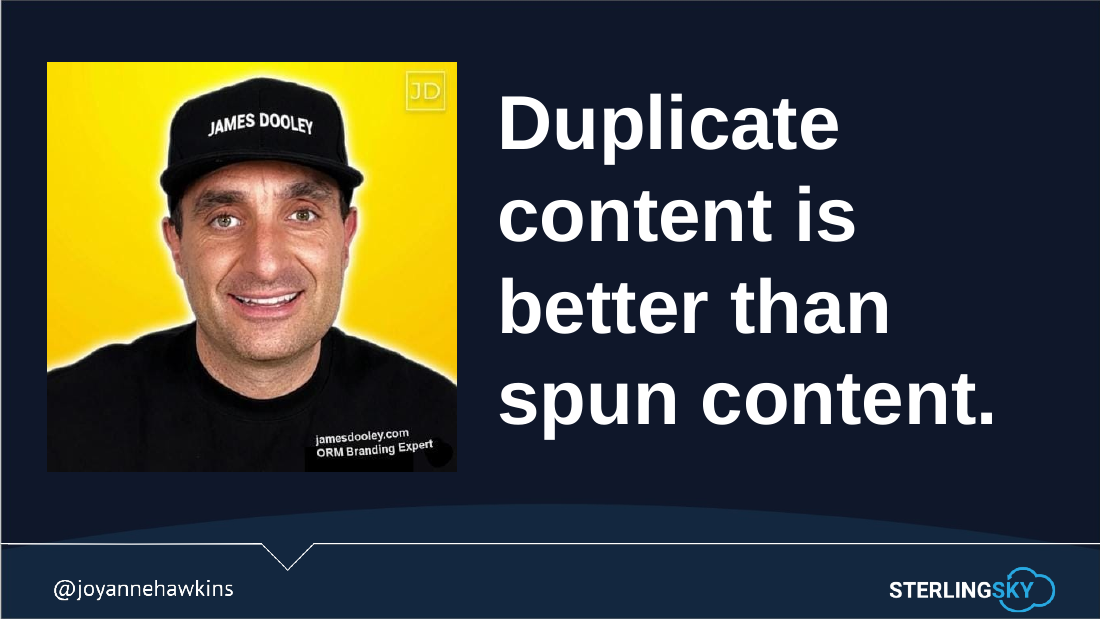
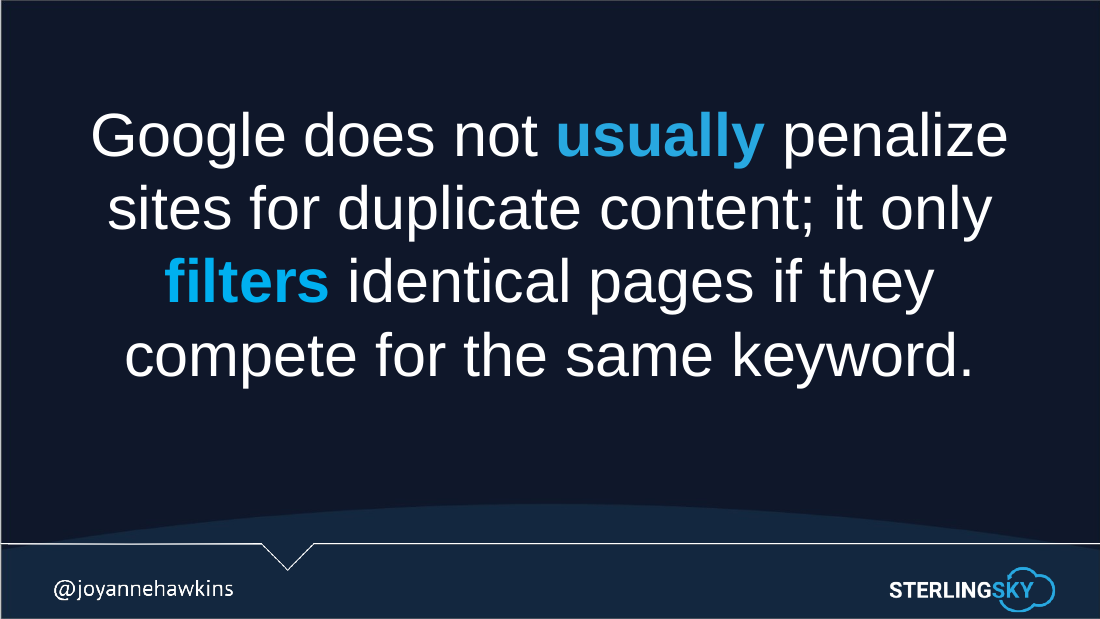
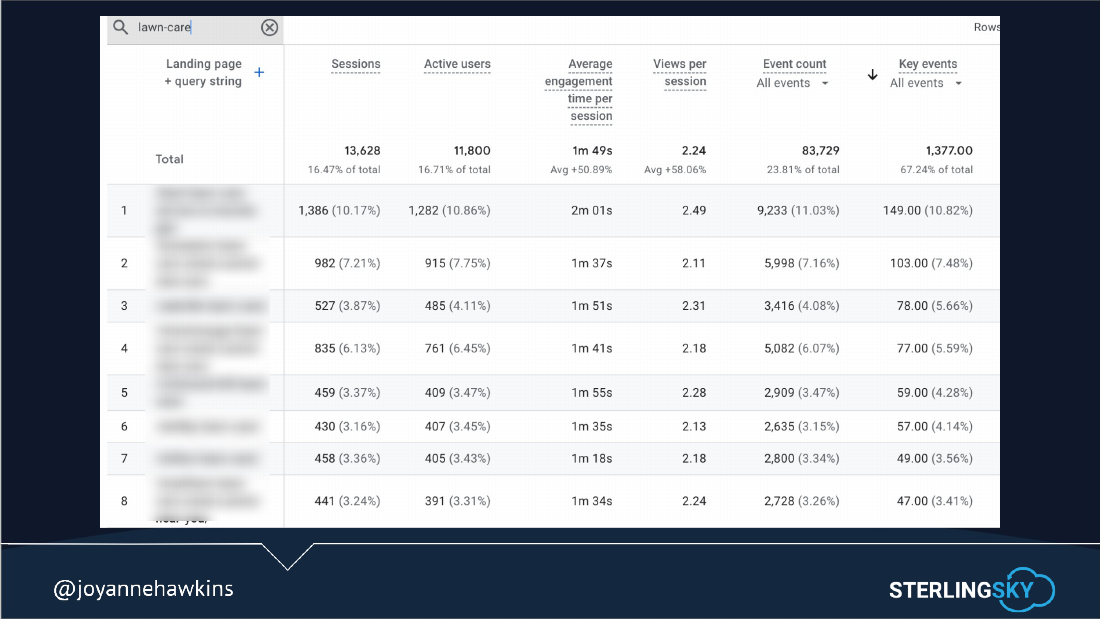
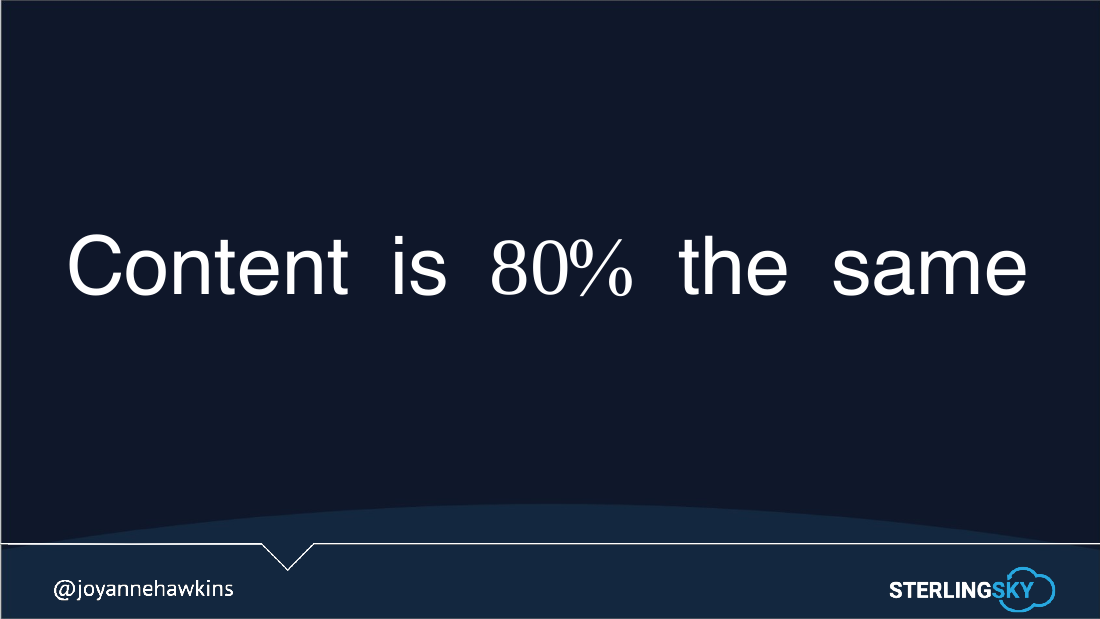
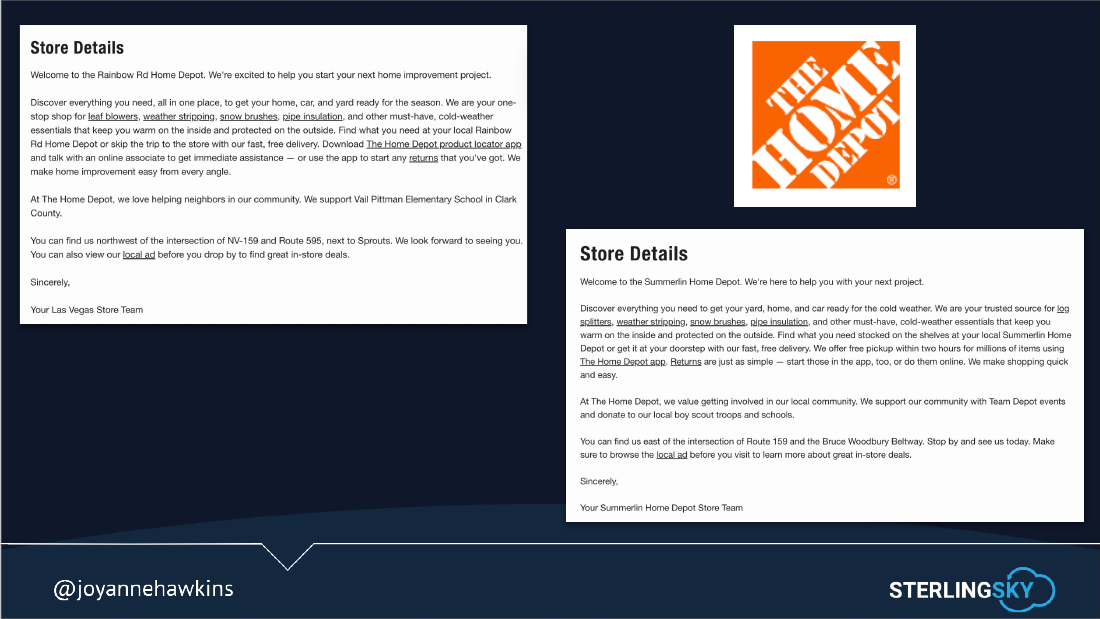
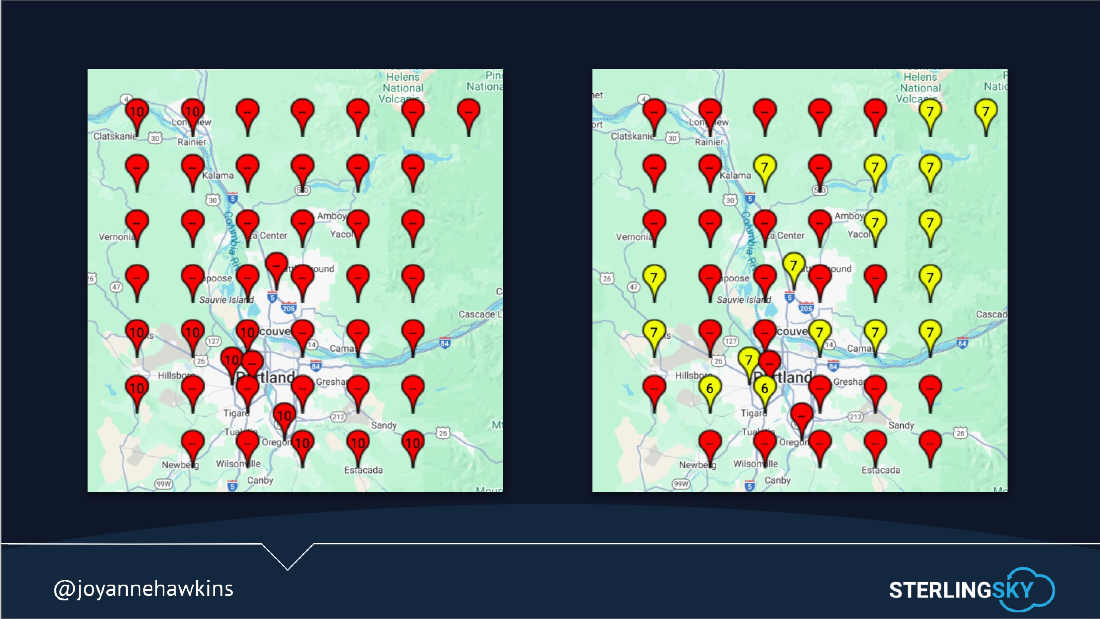
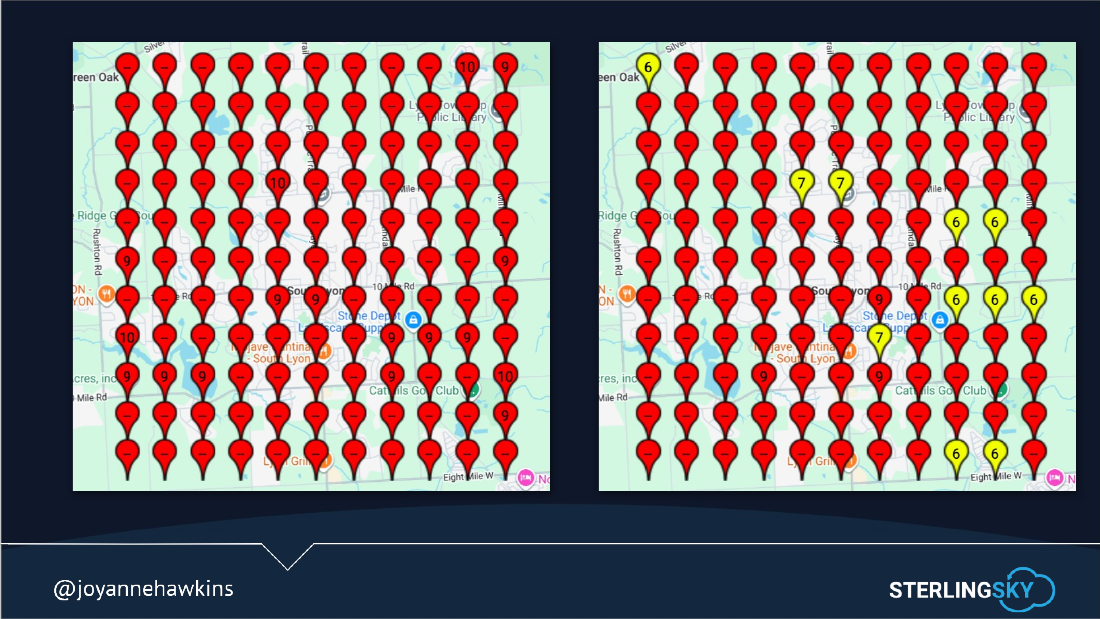
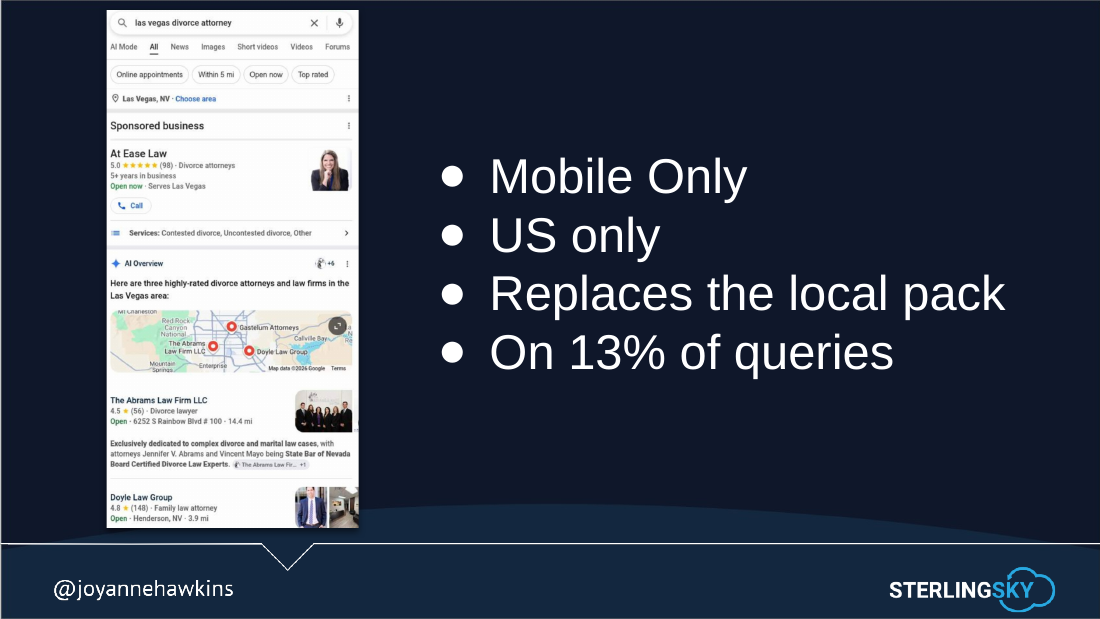
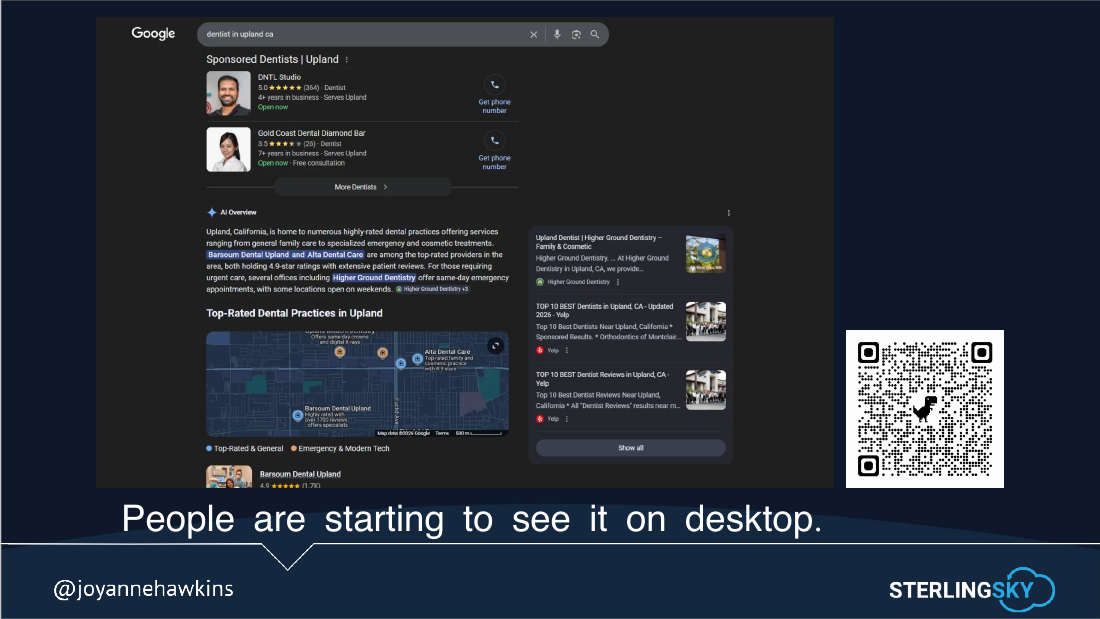
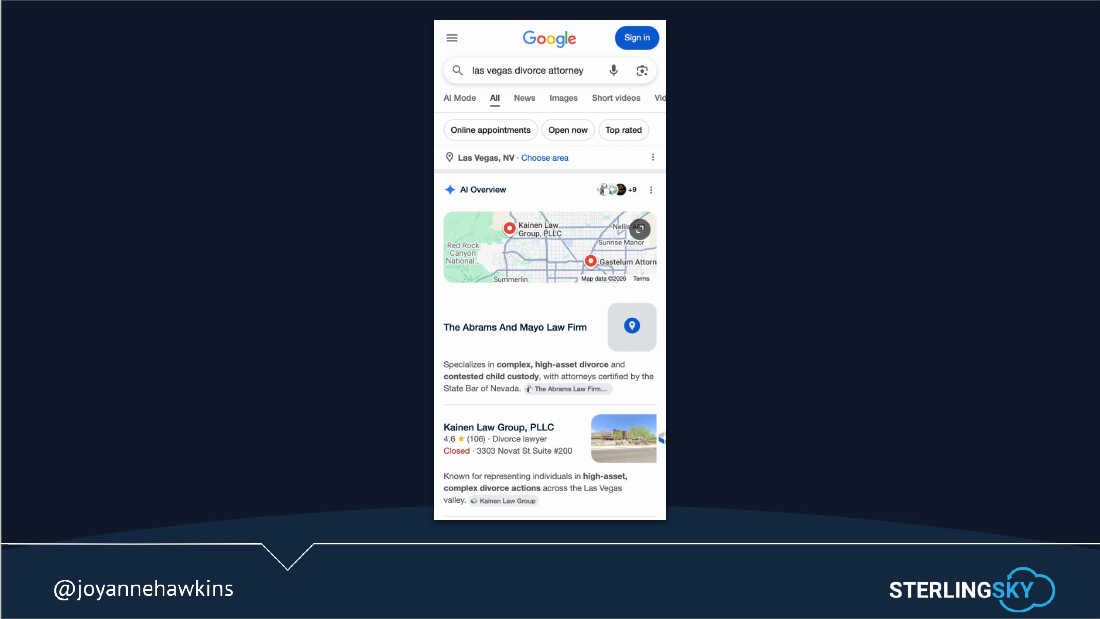
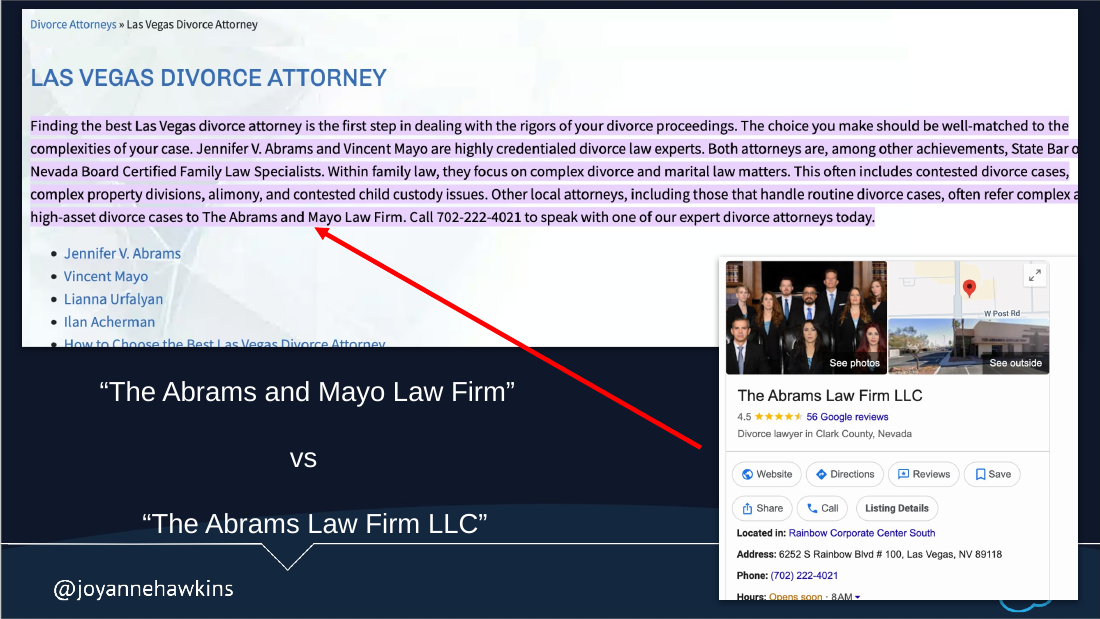
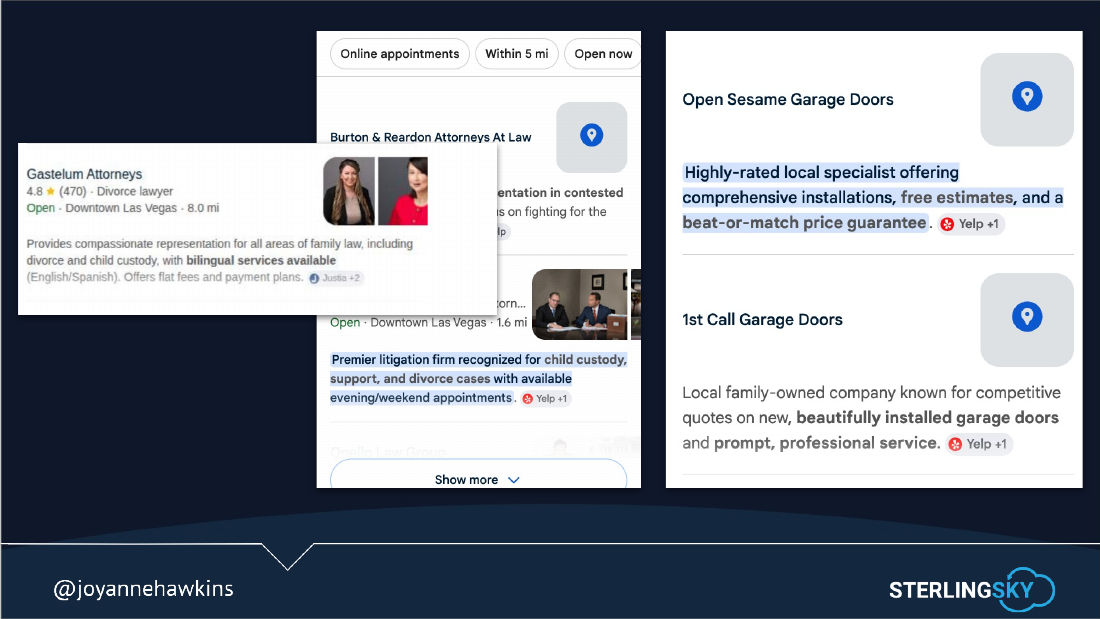
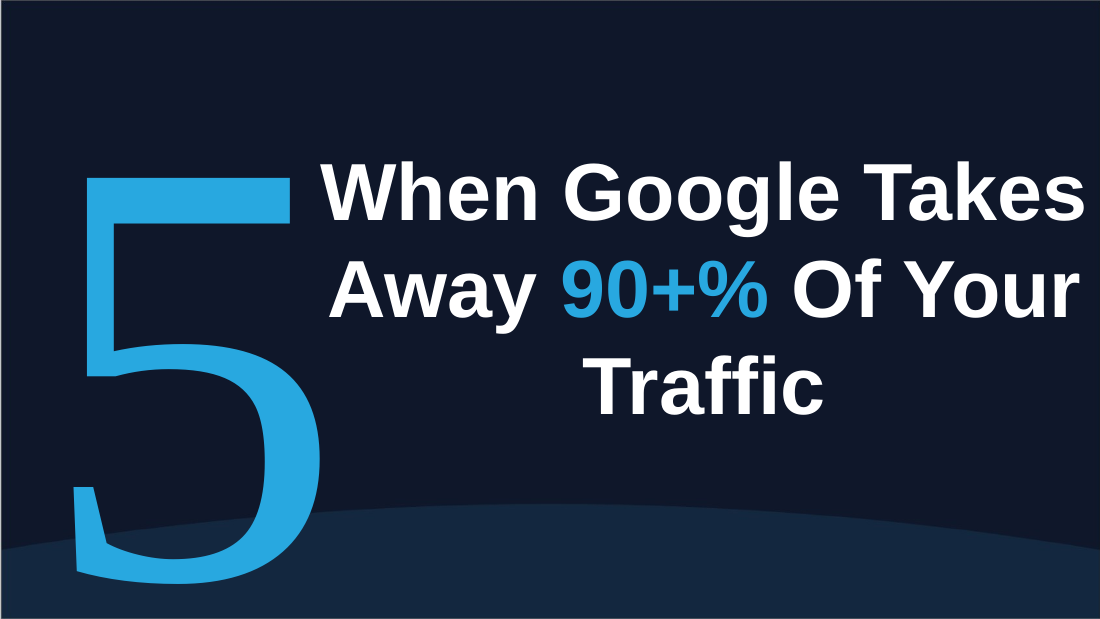
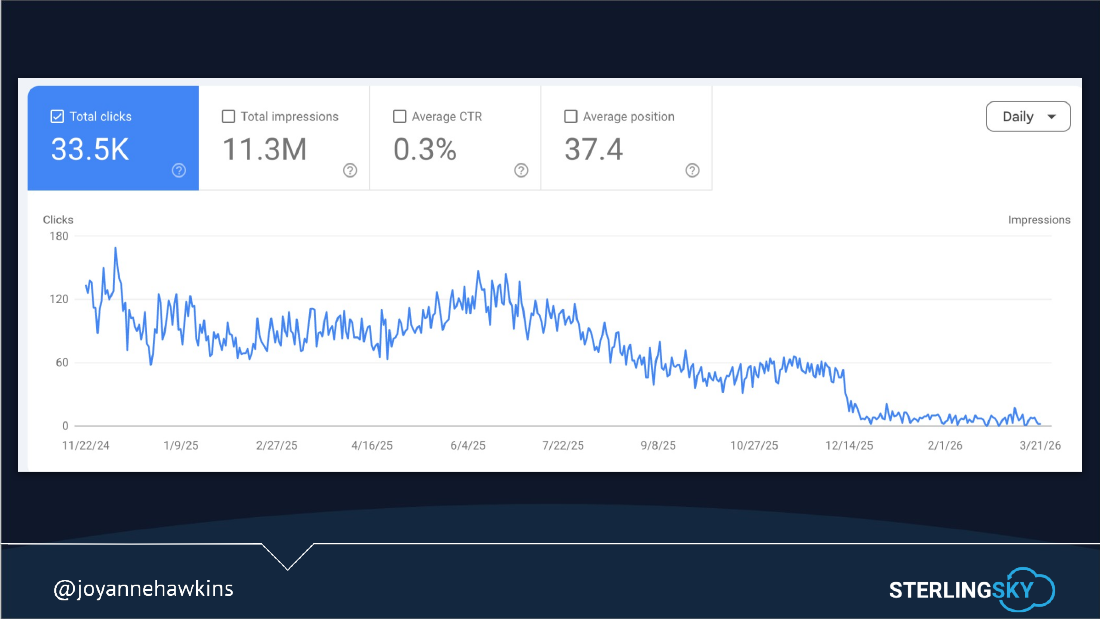
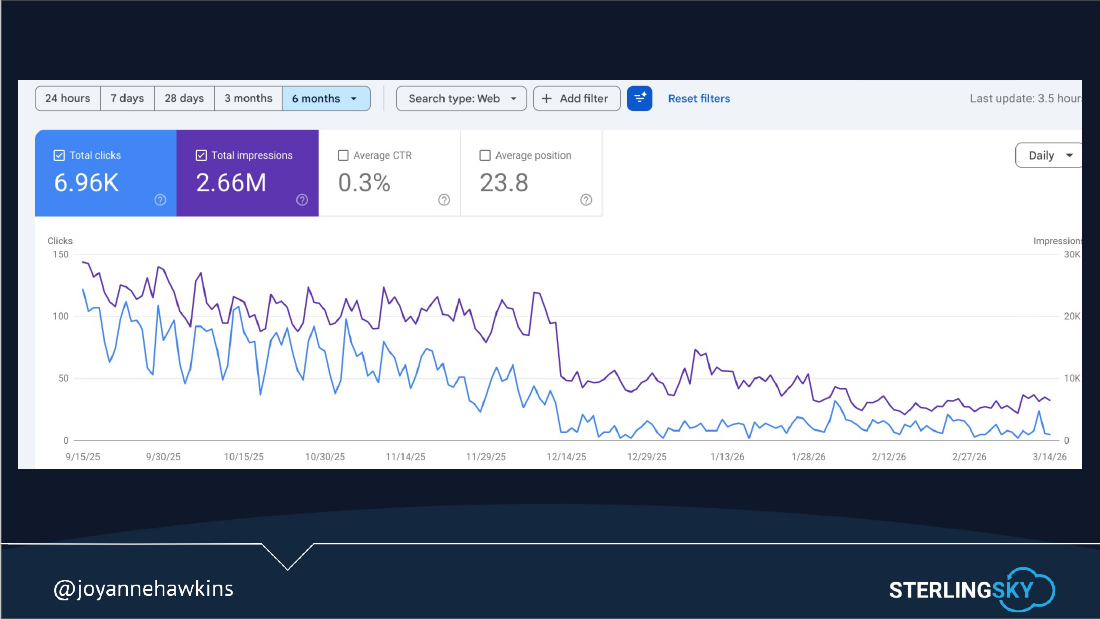
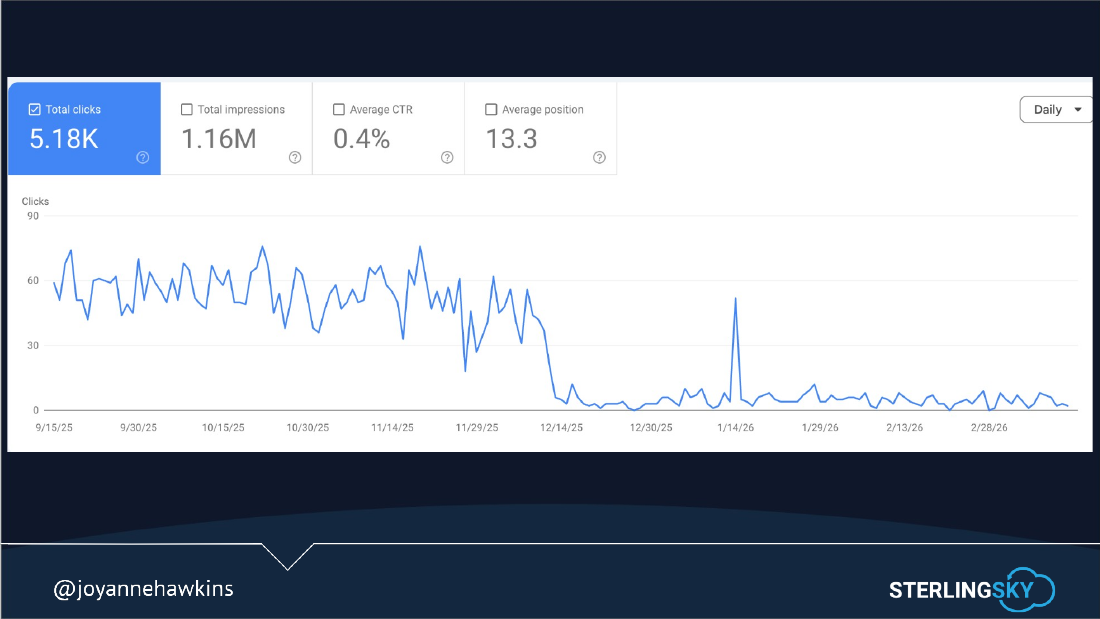
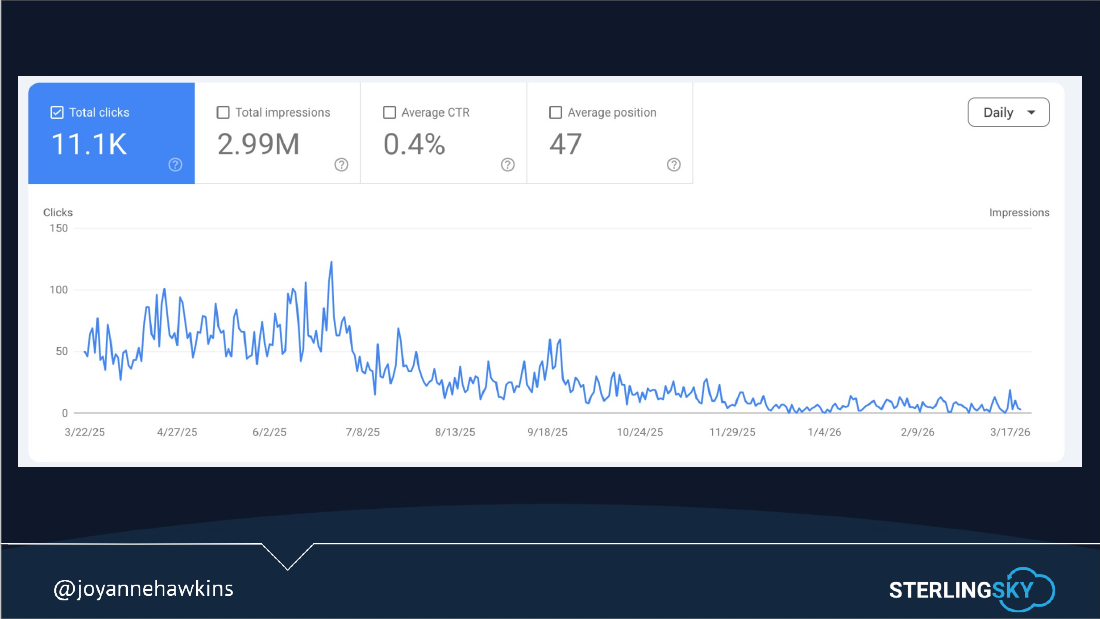
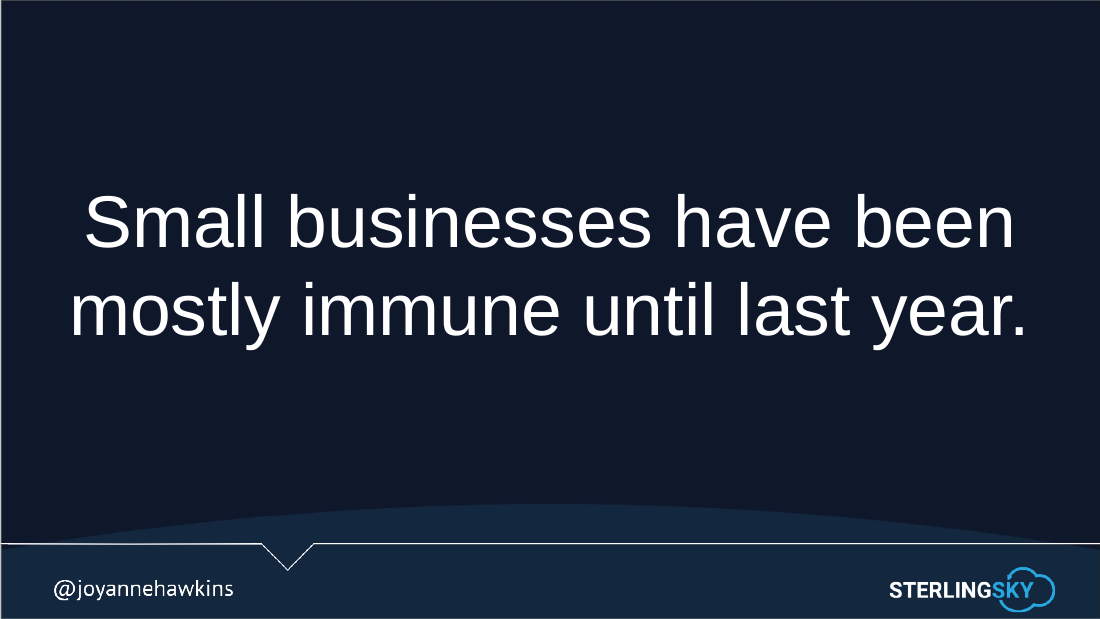
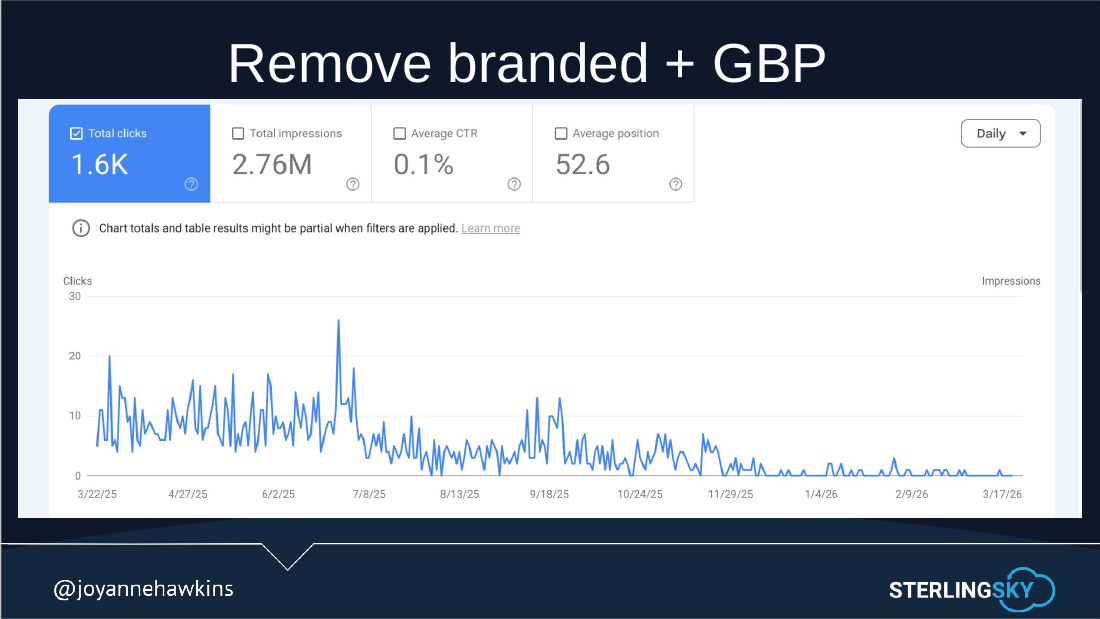
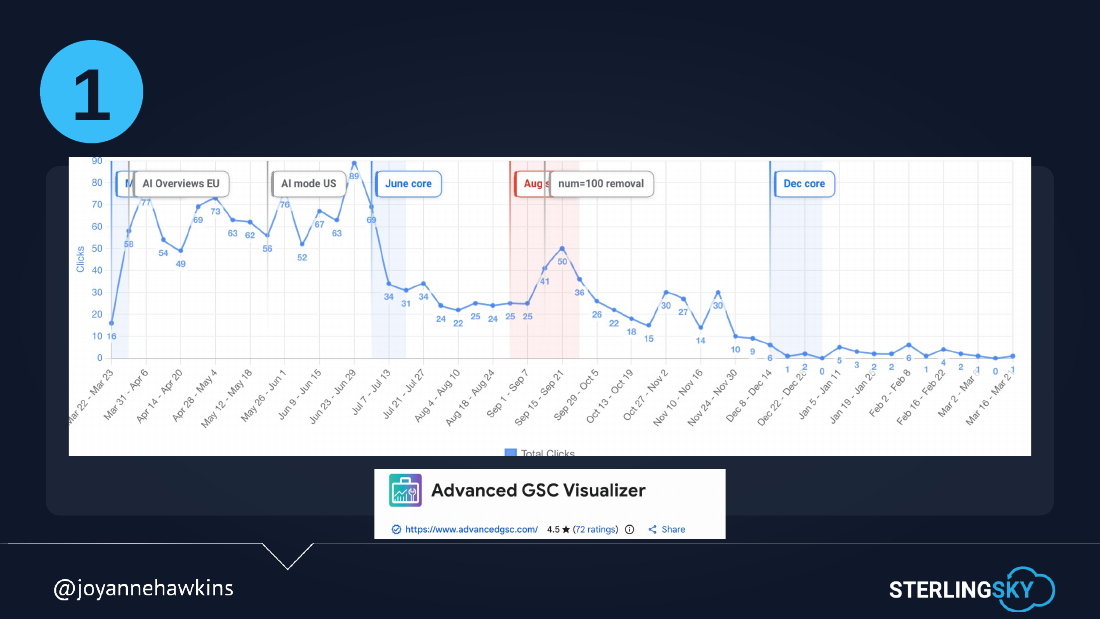
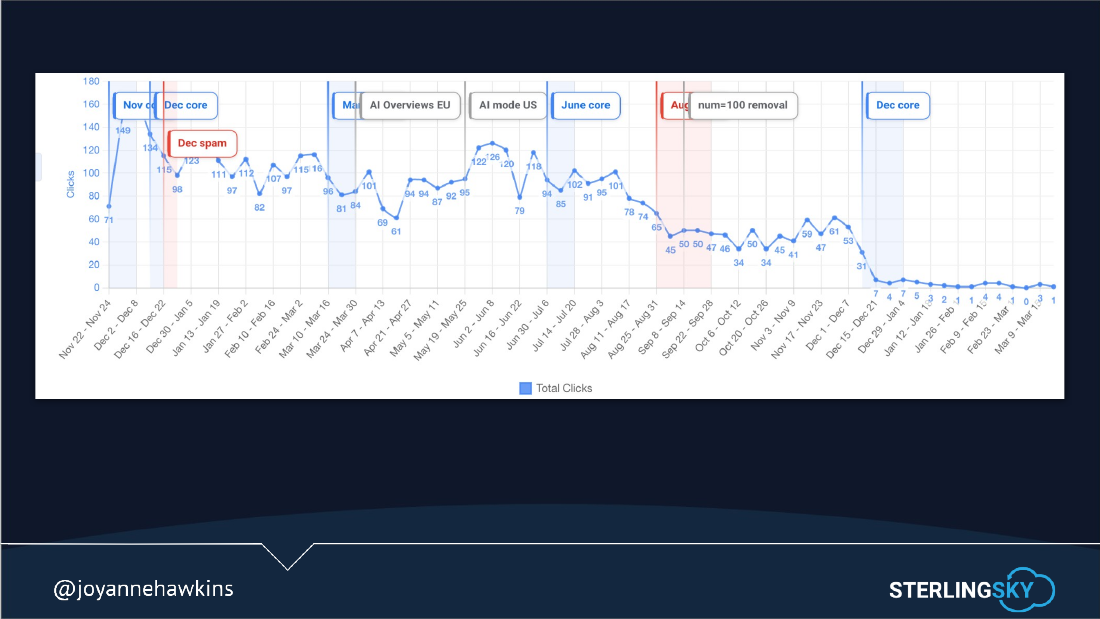
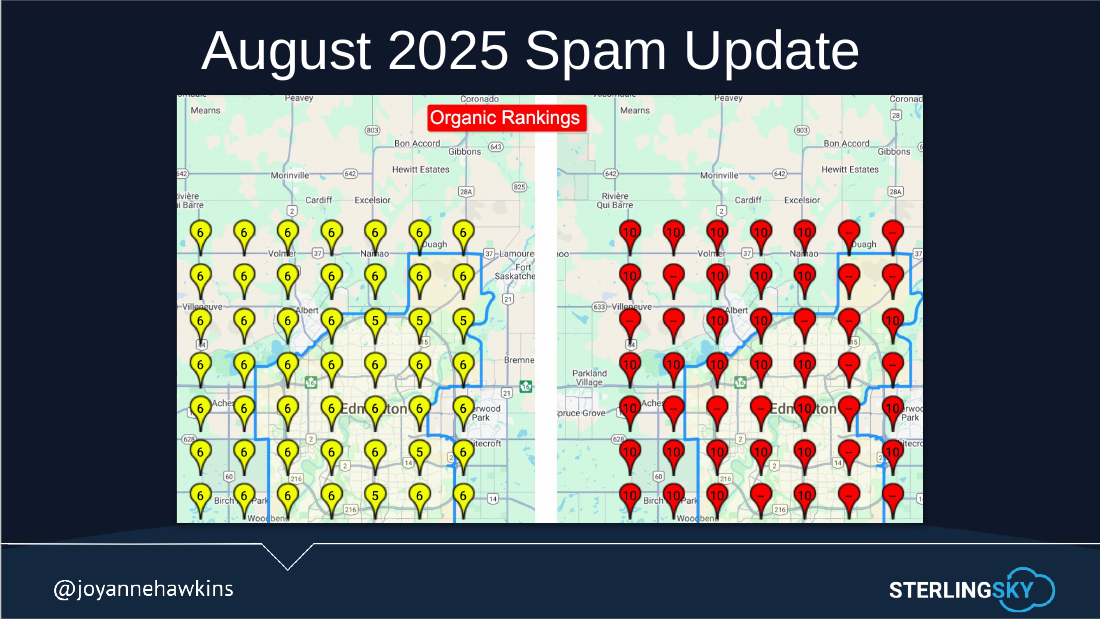
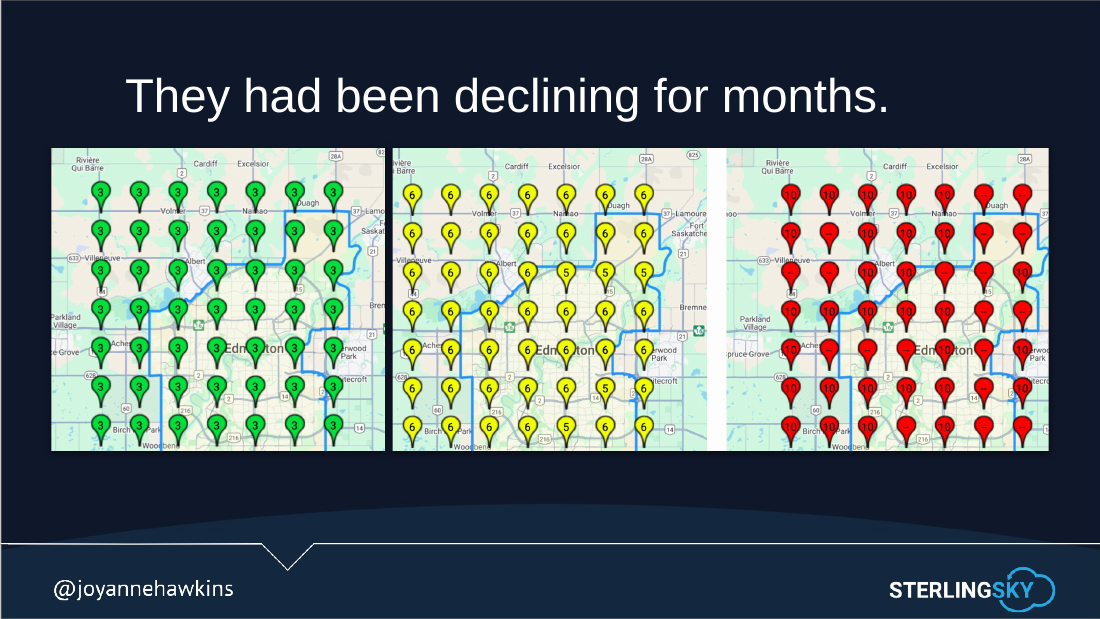
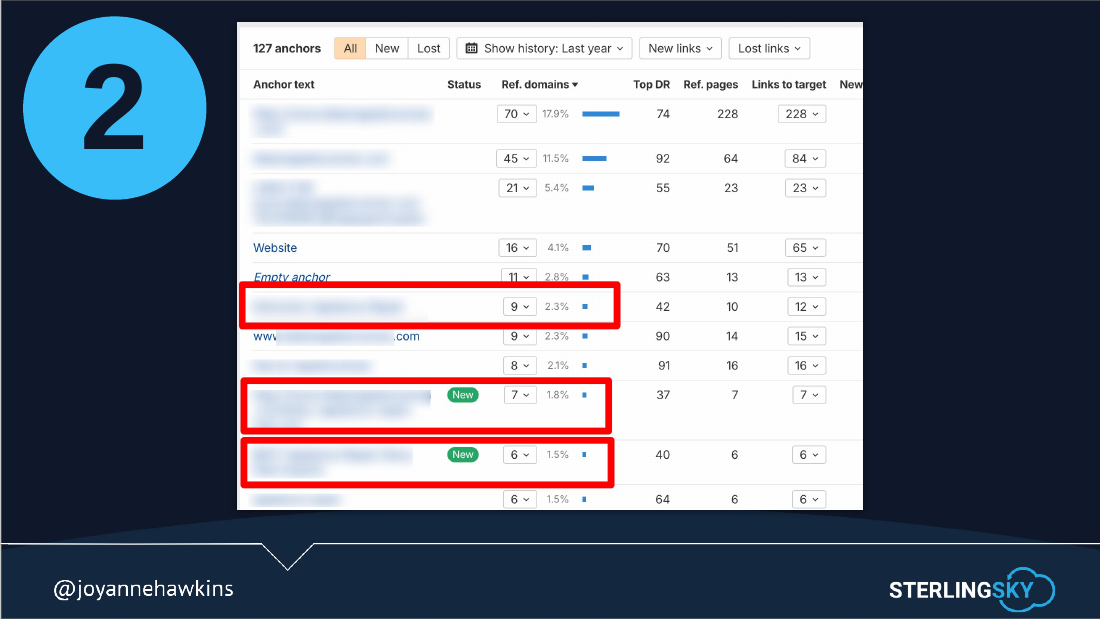
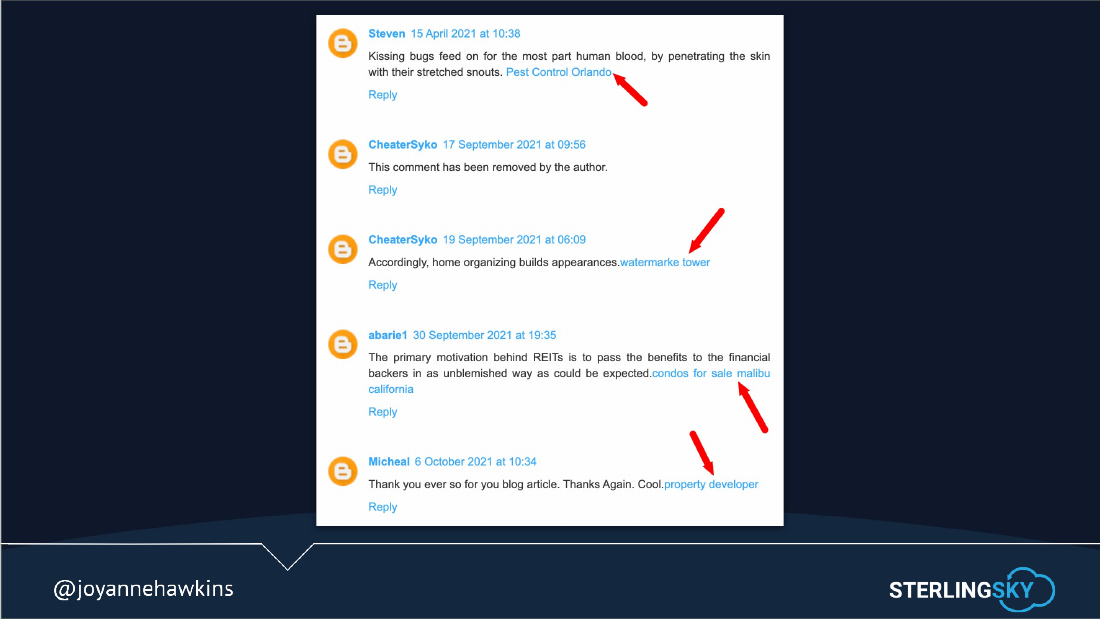
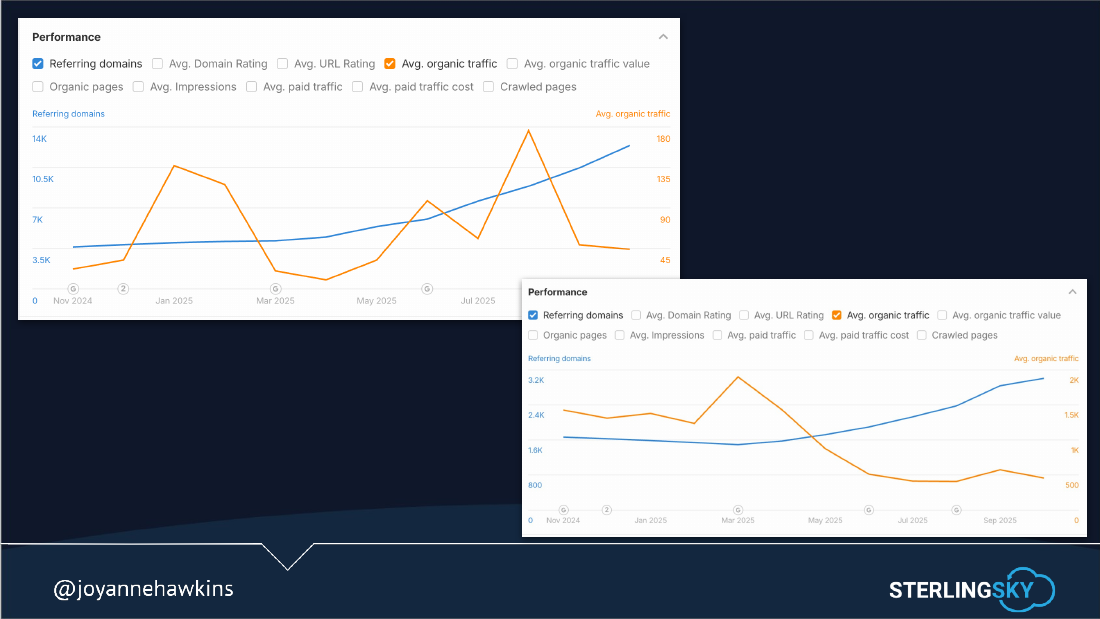
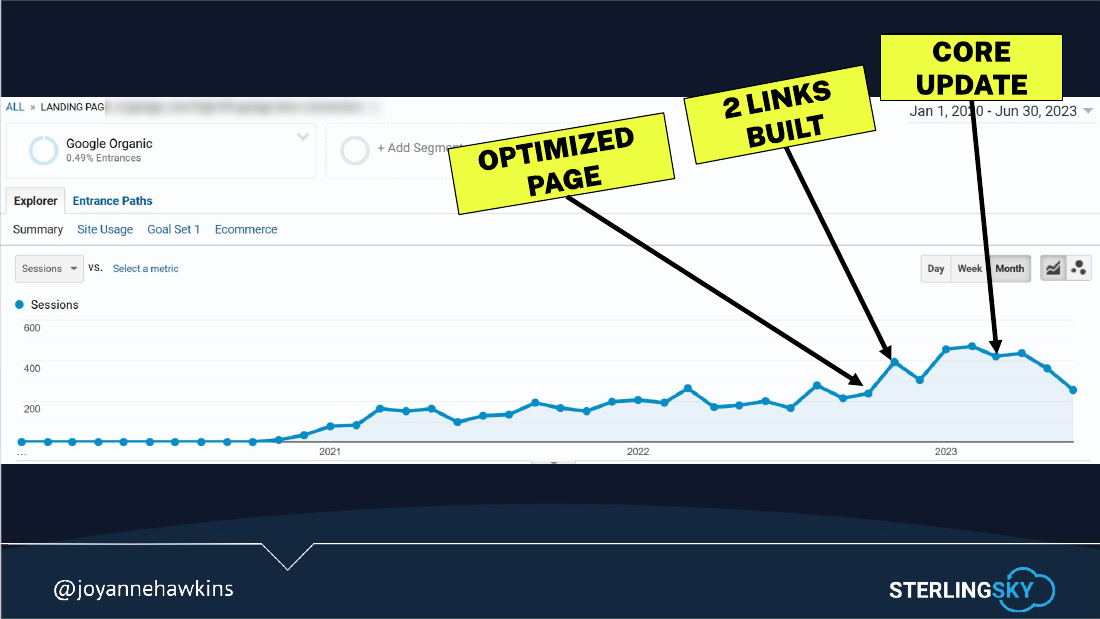
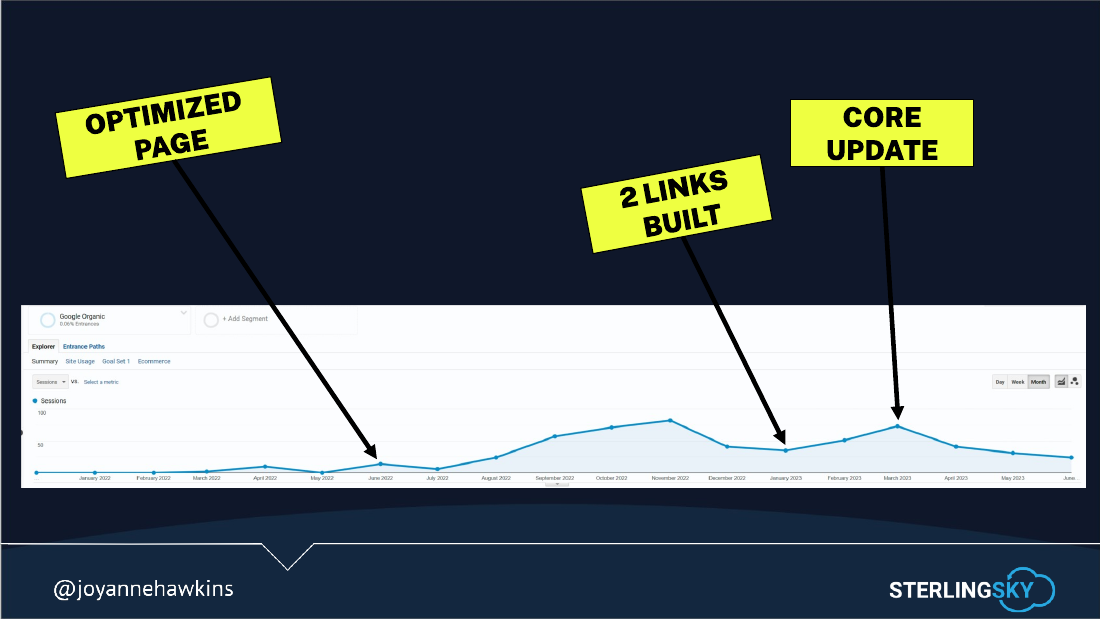
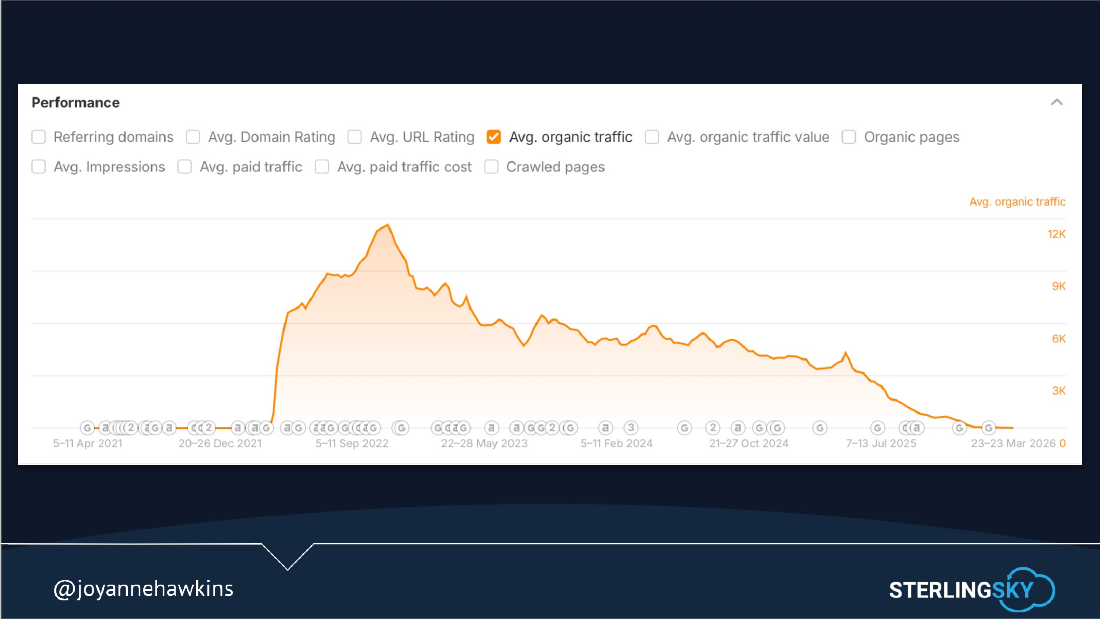
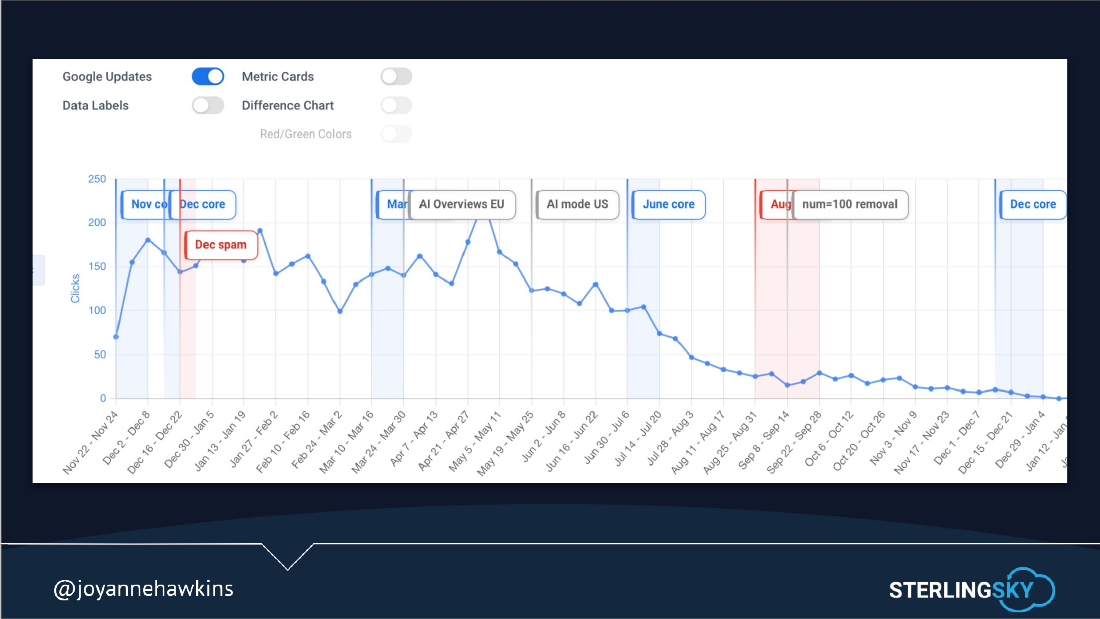
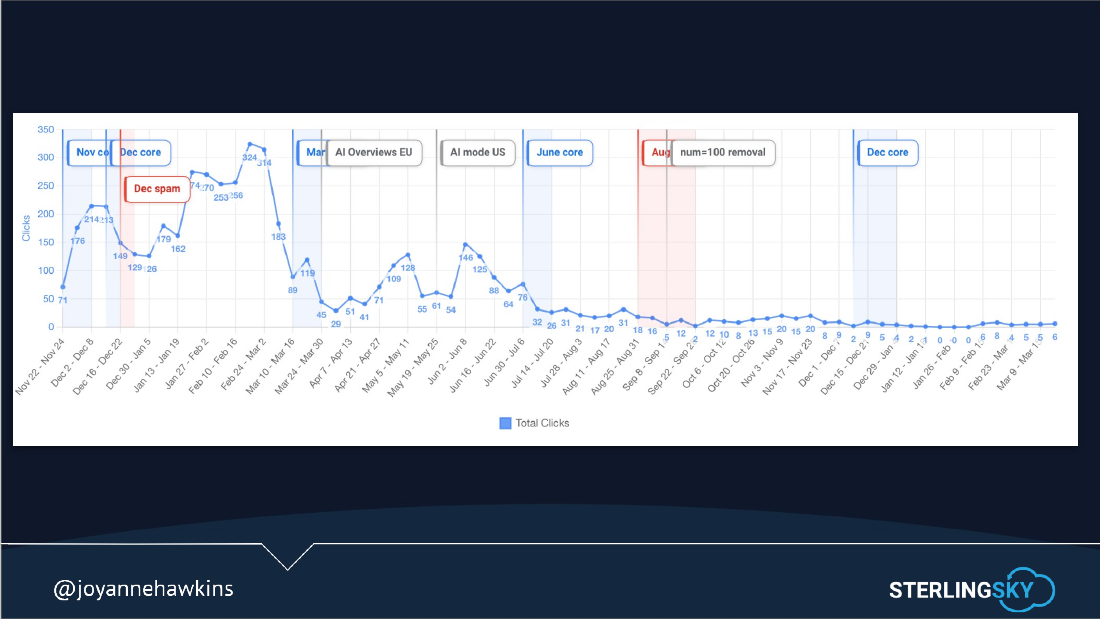
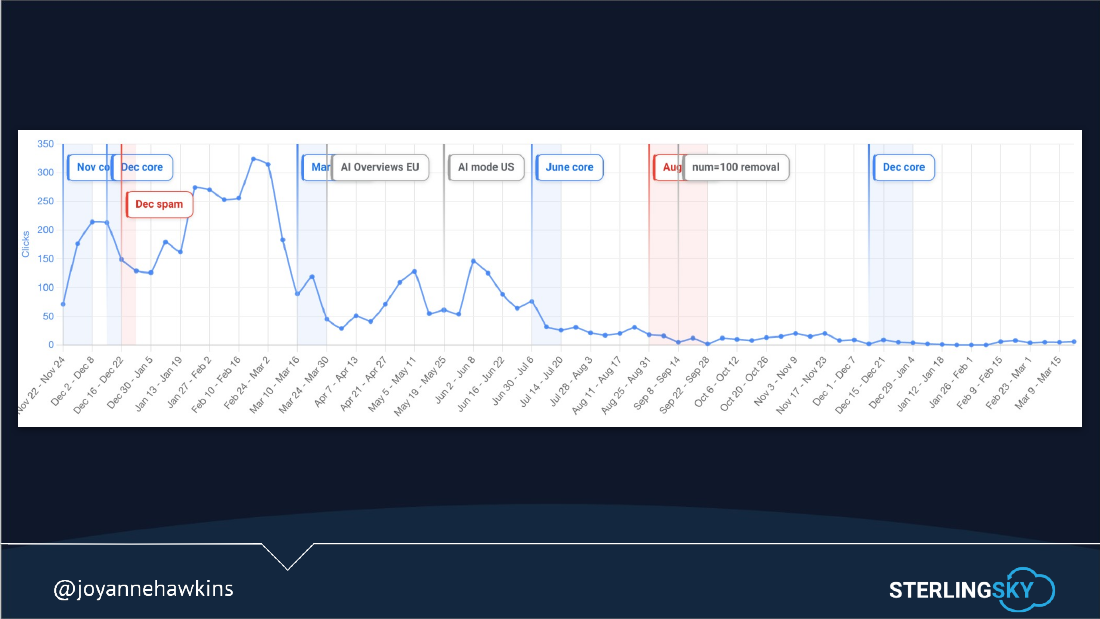
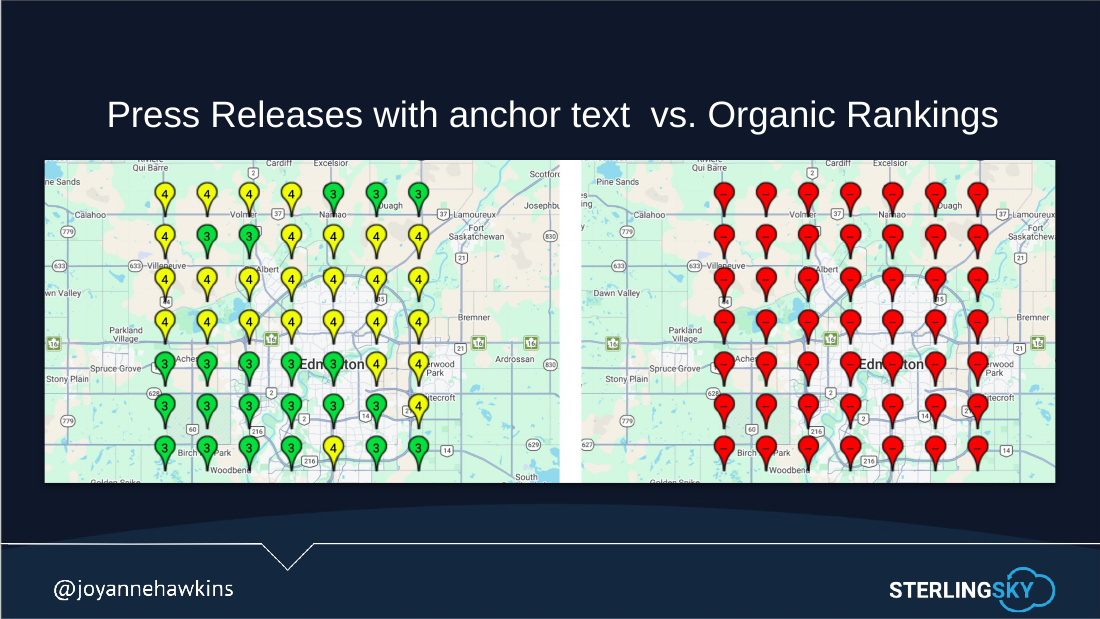
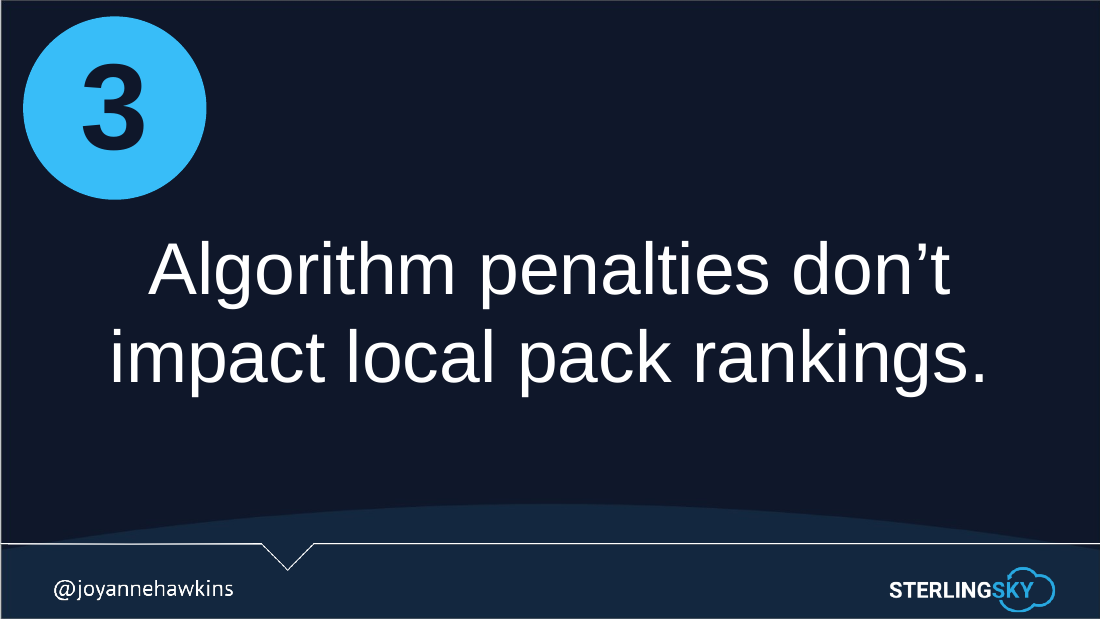
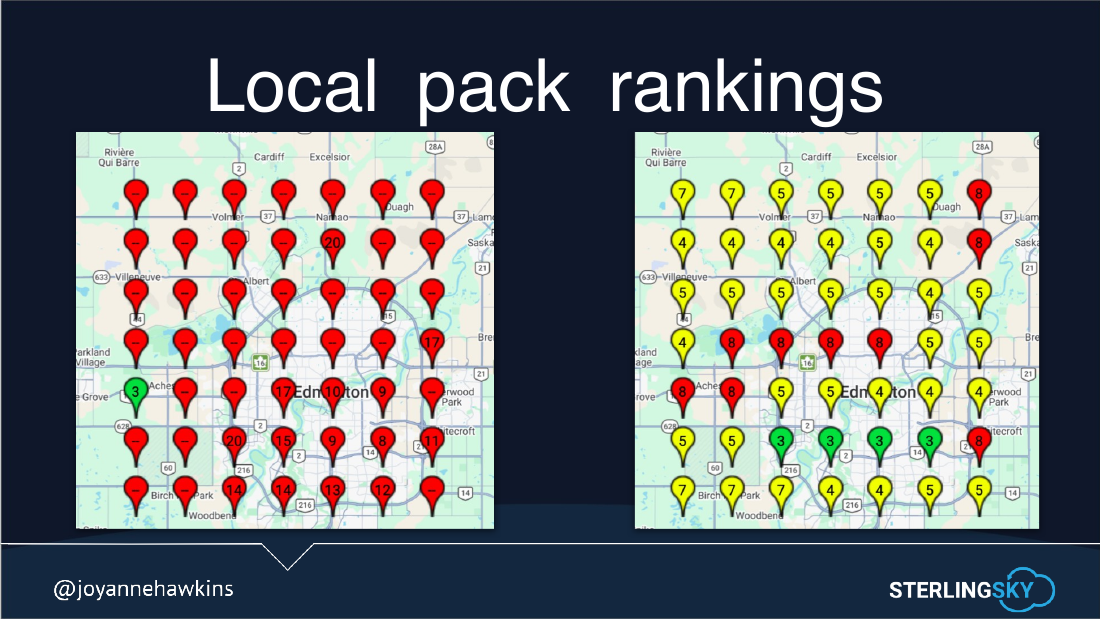
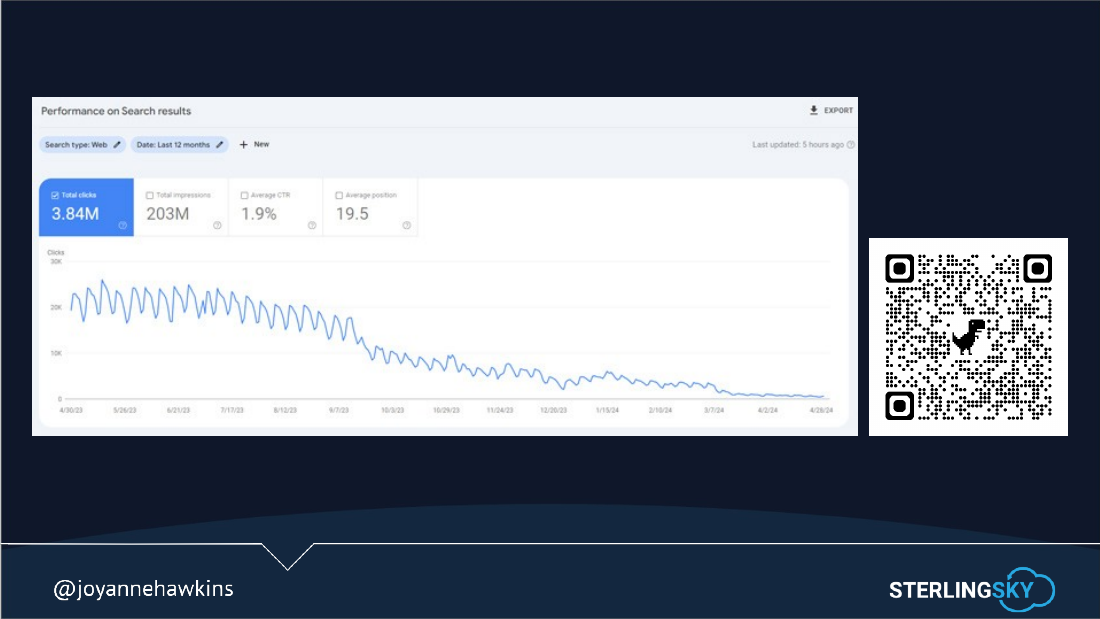
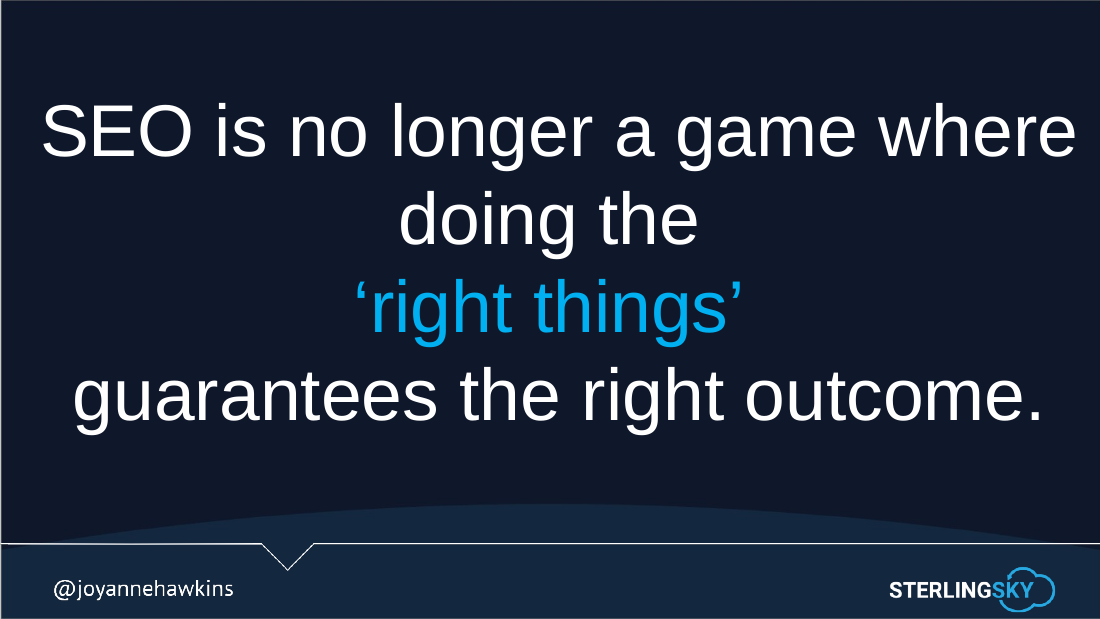
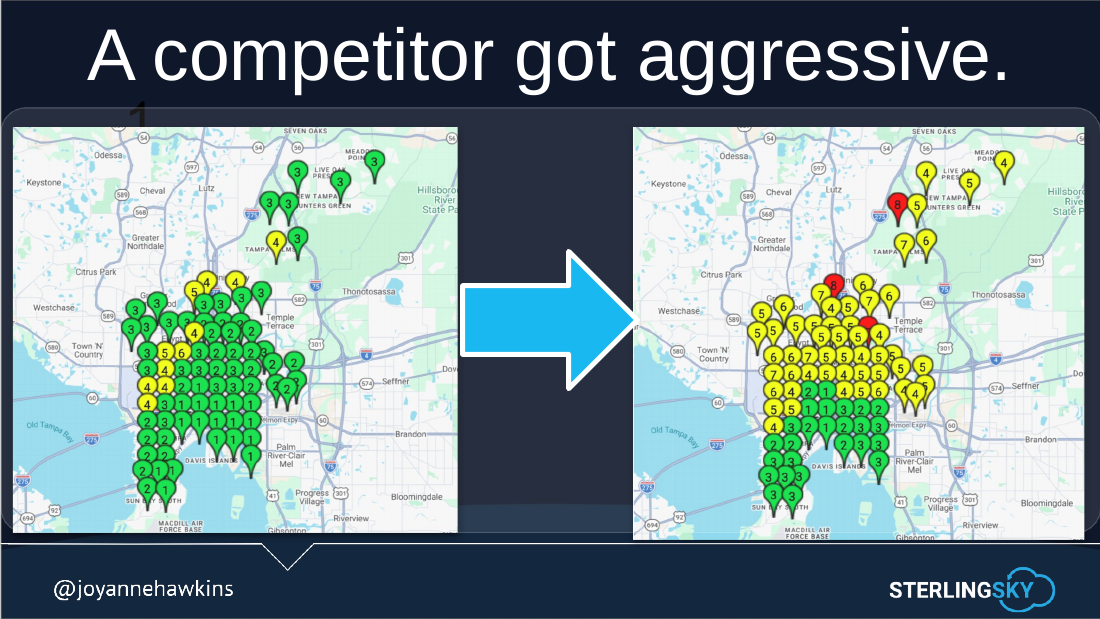
Highlights from the deck: a framing hook ("What would you do if tomorrow morning Google quietly erased your business?") and five "mysteries." Mystery 1: your rank tracker shows everything down, often because a competitor spiked on incentivized or fake reviews ("It's a coin flip," attributed to Brad Wetherall, former Director of Operations at Google). Mystery 2: sometimes nothing dropped and you are measuring wrong (hiding your address hurts rankings; different rank trackers track Search vs Maps; track mobile or miss trends). Mystery 3: AI-generated content can hurt you ("Duplicate content is better than spun content"). Mystery 4: AI local packs (mobile only, US only, on 13% of queries) can make reviews and call buttons disappear. Mystery 5: core and spam updates can take 90%+ of your traffic, with the August 2025 spam update cited and the note that "Algorithm penalties don't impact local pack rankings." Closing: "SEO is no longer a game where doing the 'right things' guarantees the right outcome."
Slides (108)











Source
Synthesized from the SEO ST 2026 Day 1 roundup and GBP Q&A conference recording, plus the attached deck "5 SEO Mysteries That Secretly Kill Your Rankings (Solved)" by Joy Hawkins (Sterling Sky). Some names and a domain were transcribed phonetically and are marked for verification in the text above.