"Beyond Rankings: Building Brand Visibility in the Age of AI (Dawood Bukhari)"
Why Google ranks pages while AI ranks entities, the NARC consensus method, and a viral digital PR playbook with a ten-point readiness scorecard.
On this page
- Main takeaways
- Key points
- Dawood Bukhari (speaker and company facts)
- SEO vs AI SEO
- Product page structure (e-commerce)
- AI traffic and revenue test
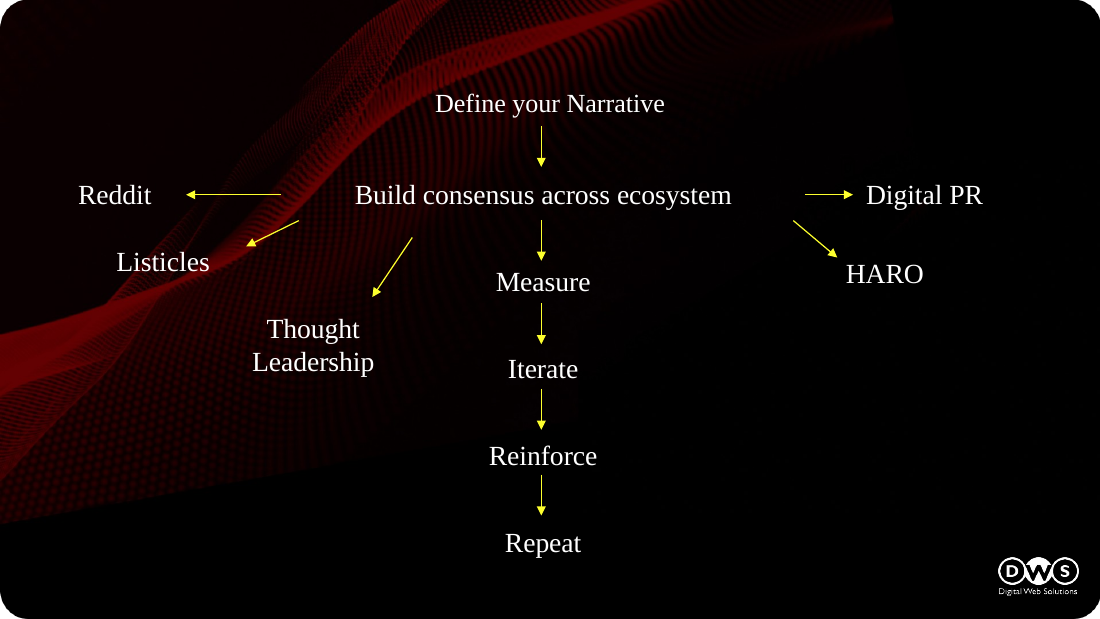
- NARC methodology (winning AI consensus)
- AI Consensus Ecosystem
- Why digital PR is the engine
- Three digital PR levers
- Case Study 1 - HR software platform
- Case Study 2 - Luxury villa rental in Cabo
- Case Study 3 - Personal injury law firm
- Viral Digital PR approval framework
- Viral readiness scorecard
- HARO / expert commentary
- Tooling and operations
- Data-driven digital PR vs HARO (Q&A)
- Closing offer
- Moderator (Chris) and audience
- Companion handout note
- Slides
- Source
On Day 3, Dawood Bukhari (CEO of Digital Web Solutions) delivered the session, introduced by moderator Chris. The talk argues that ranking #1 on Google no longer guarantees visibility inside LLMs, because Google ranks pages while AI builds consensus from what the web repeatedly says about a brand. Dawood lays out the NARC methodology, positions digital PR as the engine of AI consensus, and walks through three case studies and a ten-point viral readiness scorecard, closing with an SEO Spring Training HARO subscription offer.
Main takeaways
-
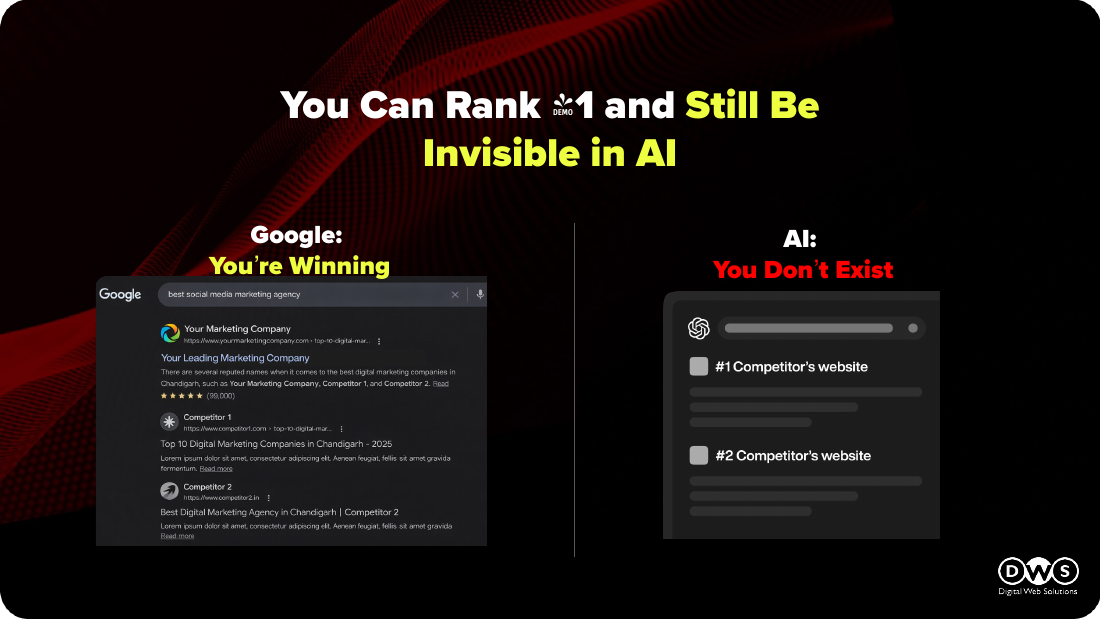
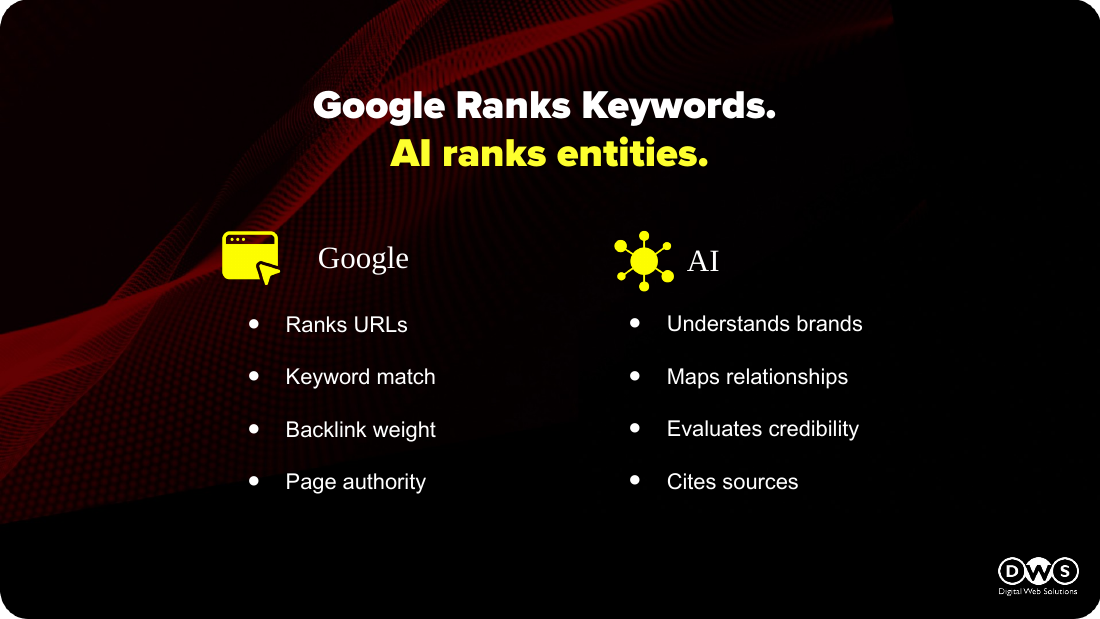
Google ranks pages; AI ranks entities. Ranking #1 on Google does not mean you dominate LLMs, which have memory and personalize results by user context (a track runner and a cross-country runner get different shoe recommendations), so you must define your entity and narrative consistently.
-
Answer three questions everywhere: who you are, who you serve, what you solve. Consistency across all surfaces is how you win AI consensus and get the LLM to associate your brand with the problem it solves.
-
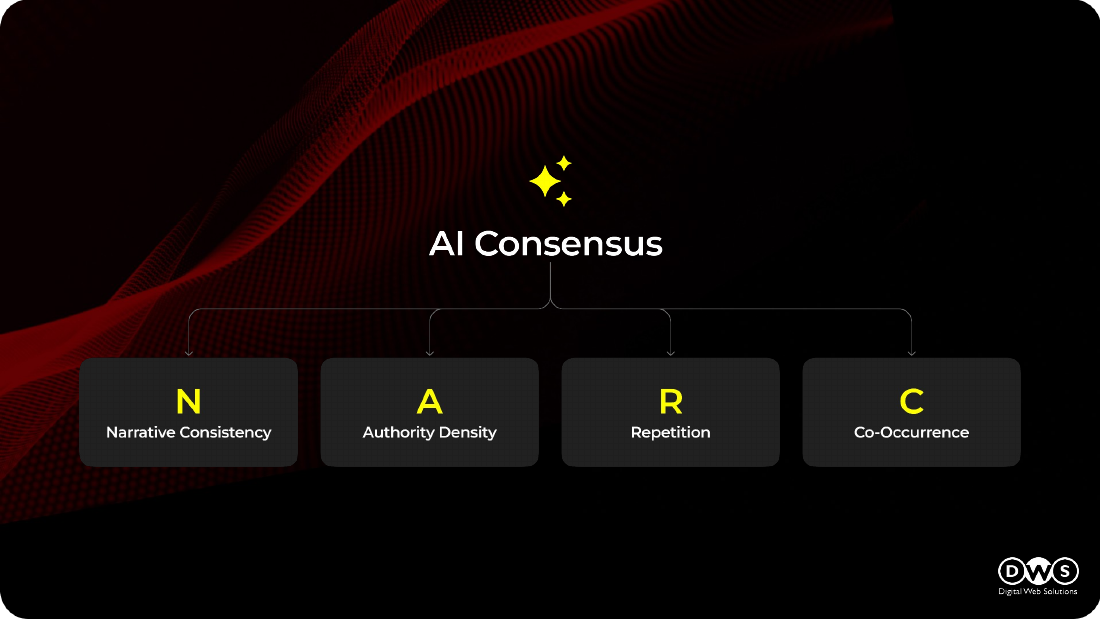
NARC is the consensus methodology. Narrative consistency, Authority density (mentions on high-trust domains, expert quotes, cited data), Repetition across publications and prompts, and Co-occurrence (brand appearing alongside the problem it solves). Consensus beats raw authority: a lower-DR brand doing NARC out-ranks a higher-DR brand that is not.
-
85% of AI brand mentions come from earned media, not brand-owned content. The two most effective earned tactics are data-led content (digital PR) and expert commentary (HARO-style), which is why digital PR sits at the center of the AI consensus ecosystem.
-
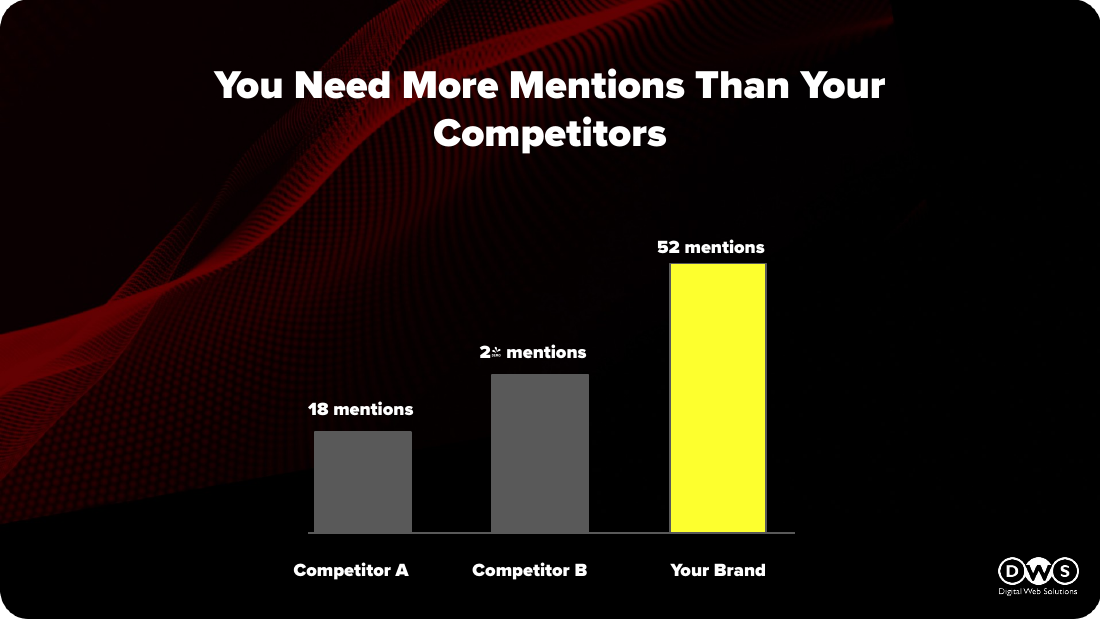
Three digital PR levers: more mentions than competitors, spread, and authority distribution. You need more mentions than competitors (link/mention velocity logic carries over), spread across many unique domains, and a mix that includes high-authority placements. Every placement is training data teaching the LLM about your brand.
-
Local angles get picked up the most. One national dataset becomes ten or fifty localized stories sent to journalists in each state; these convert best and even earn local TV video mentions. Dawood now targets at least one video mention per ten links.
-
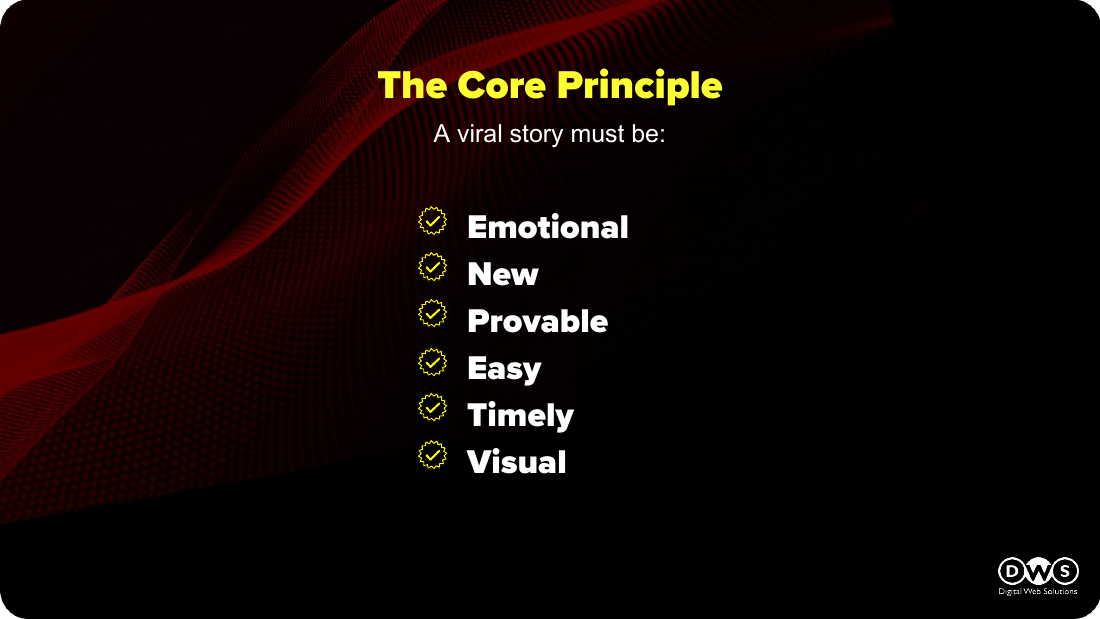
A viral story must be emotional, new, provable, easy, timely, and visual. Every idea is scored on a ten-point viral readiness scorecard; minimum eight passes and no more than one fail before it goes to distribution.
-
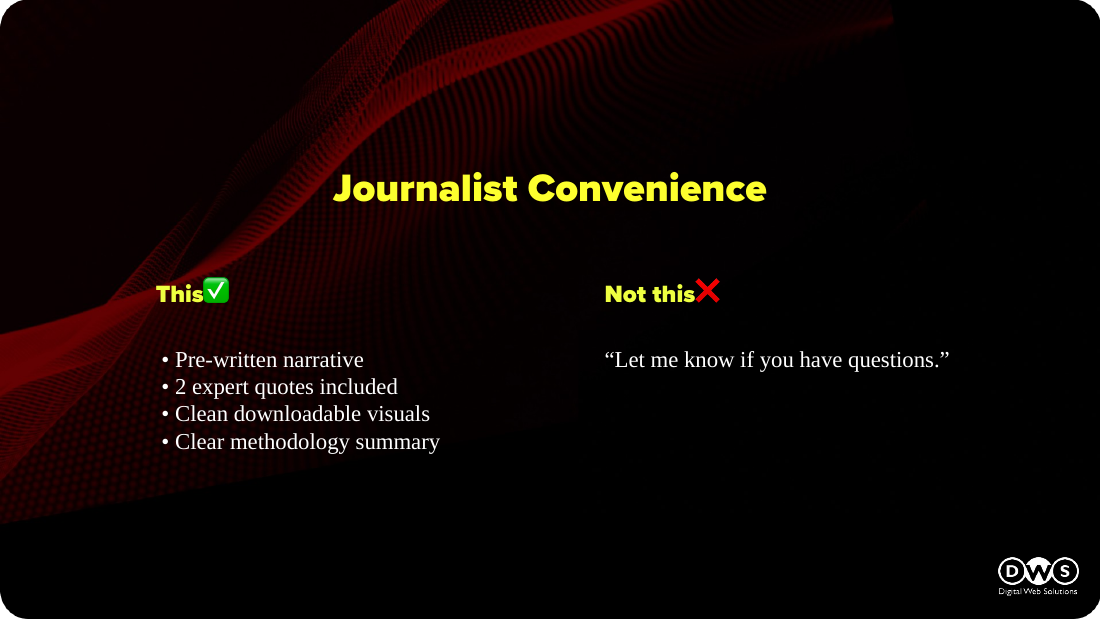
Make the journalist's job take under fifteen minutes. Ship the original dataset, clear methodology, three-plus quotable stats with specific numbers (not ranges), downloadable visuals, and a pre-written narrative with two expert quotes so the journalist can defend the story if challenged.
Key points
Dawood Bukhari (speaker and company facts)
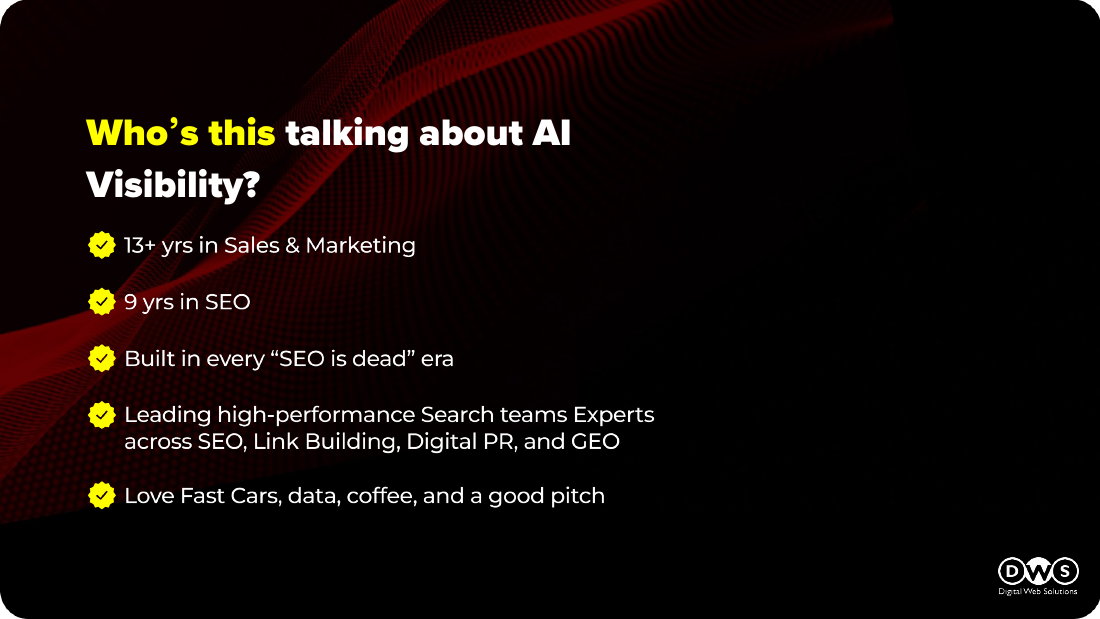
- CEO of Digital Web Solutions (DWS), with a background in telecom sales before SEO. Introduced to SEO about 10 years ago by Vaibhav Kakkar (now business partner; known from SEO Rockstars).
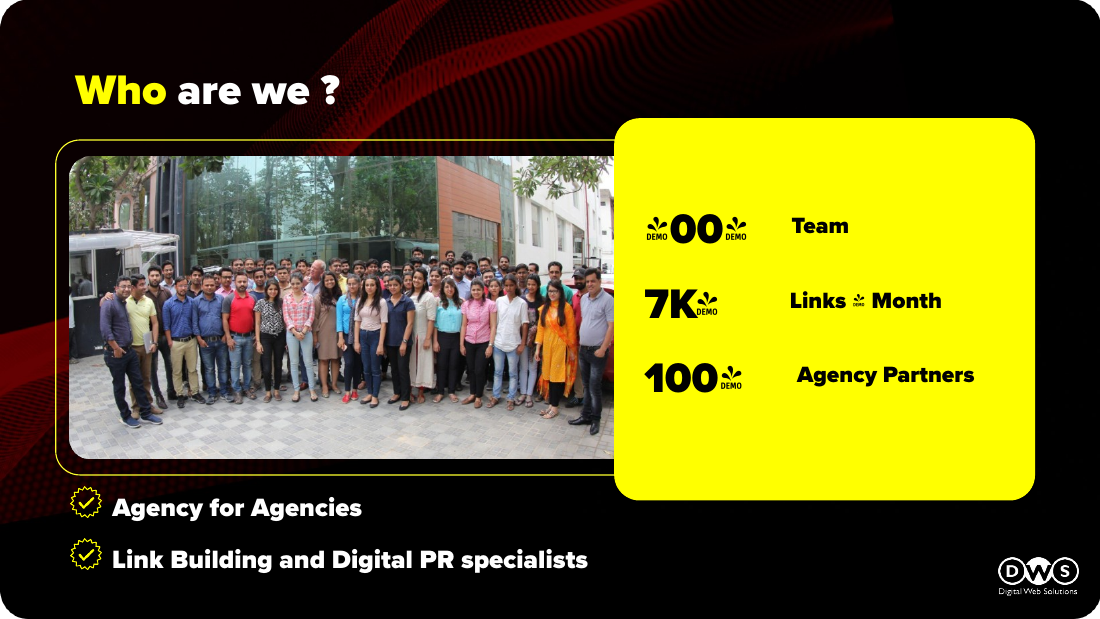
- Team of 400 people; does more than 7,000 links per month (digital PR, traditional, combined) for 100-plus agencies and some in-house teams. Services: SEO, digital PR, and GEO/AEO.
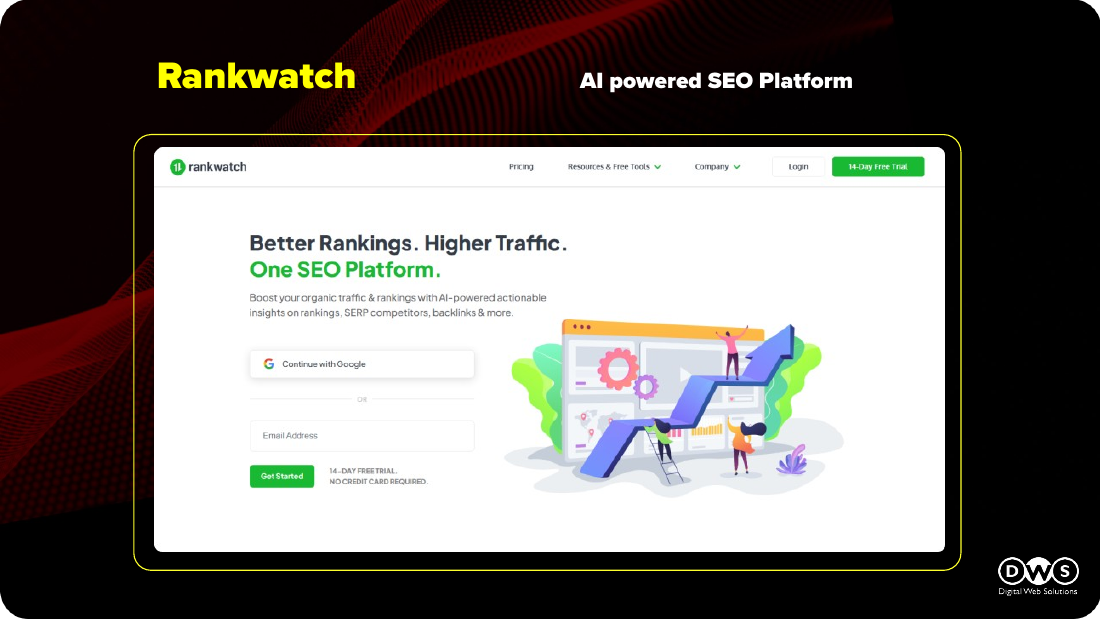
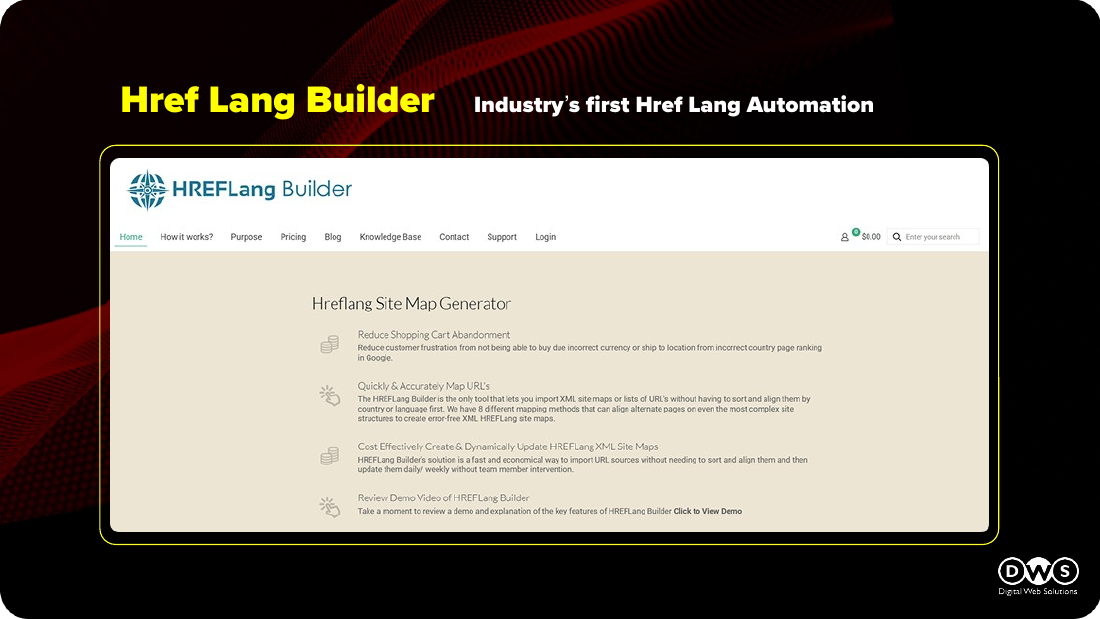
- Owns RankWatch (deck calls it an "AI powered SEO Platform") and Hreflang Builder (deck: "Industry's first Href Lang Automation"; automates hreflang through XML sitemaps).
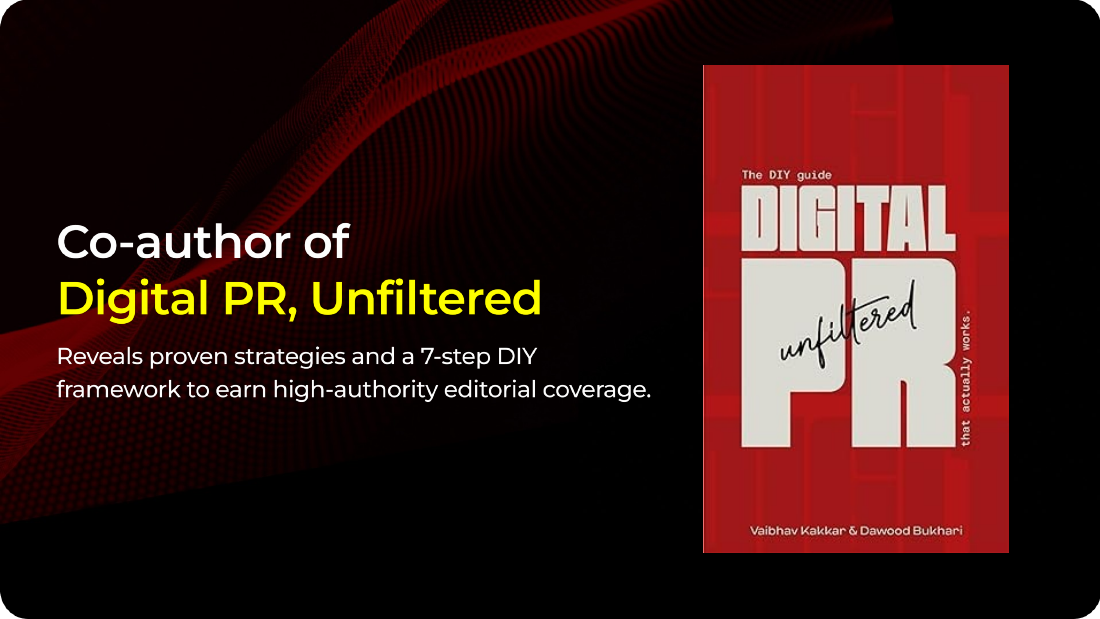
- Co-authored (with Vaibhav) the book "Digital PR Unfiltered," a step-by-step DIY of their digital PR process. Runs the company on EOS; has spoken at 15-plus conferences in the last 12 months. DWS uses an AI robot mascot at events for brand recognition.
SEO vs AI SEO
- Ranking #1 on Google does not guarantee winning on LLMs; basics overlap but with no guarantee. The gap is framed as an opportunity: brands dominant on Google but weak in LLMs can be beaten on the AI game.
- Google ranks pages (deck: URLs, keyword match, backlink weight, page authority). AI ranks entities (understands brands, maps relationships, evaluates credibility, cites sources).
- LLMs have memory and personalize. The three defining questions to answer consistently everywhere: who you are, who you serve, what you solve.
Product page structure (e-commerce)
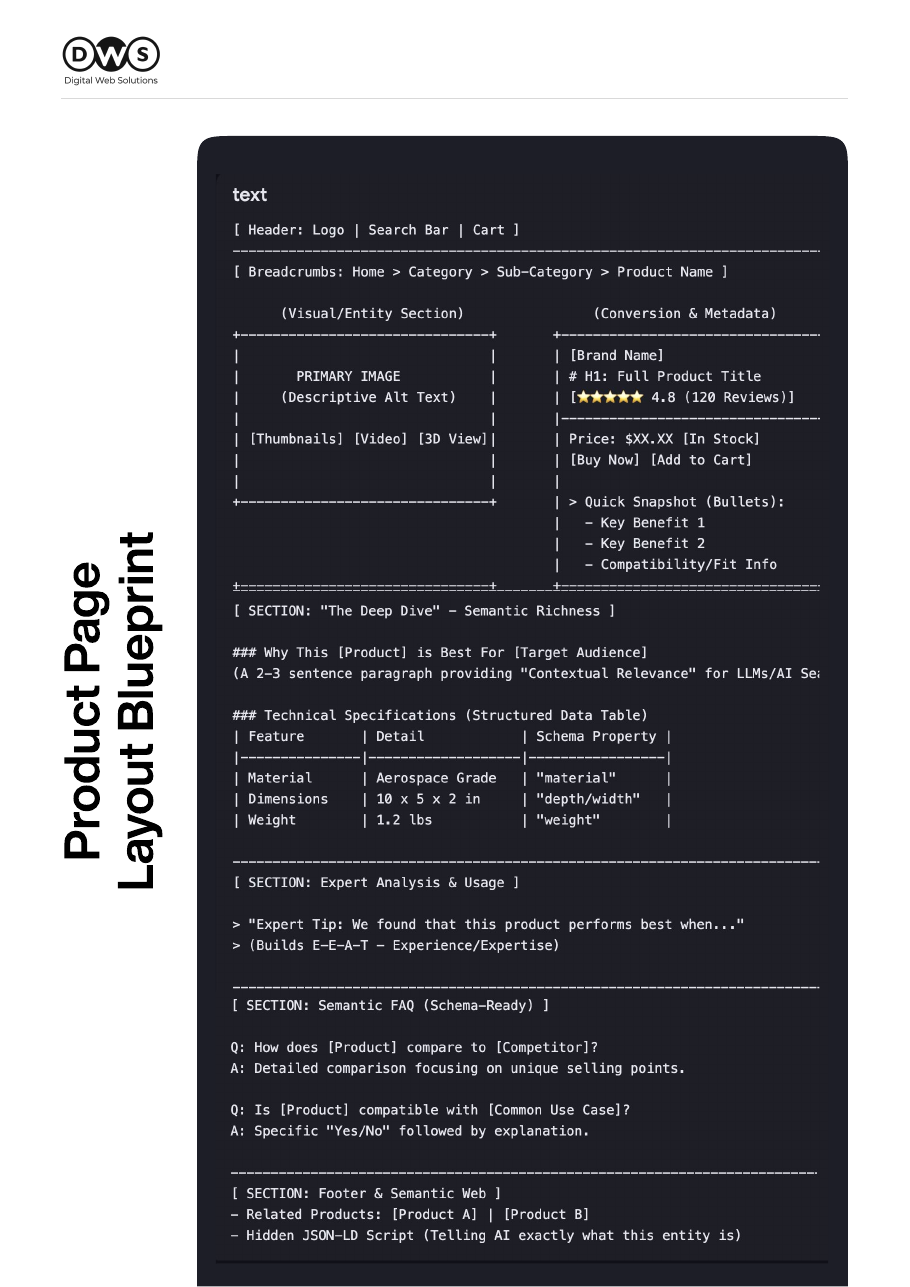
- A/B page structure derived from working across 500-plus e-commerce stores. Best-performing layout: state who/what the product is best for (target audience), reviews at the TOP (tested top vs bottom; top wins), bullet-point key benefits.
AI traffic and revenue test
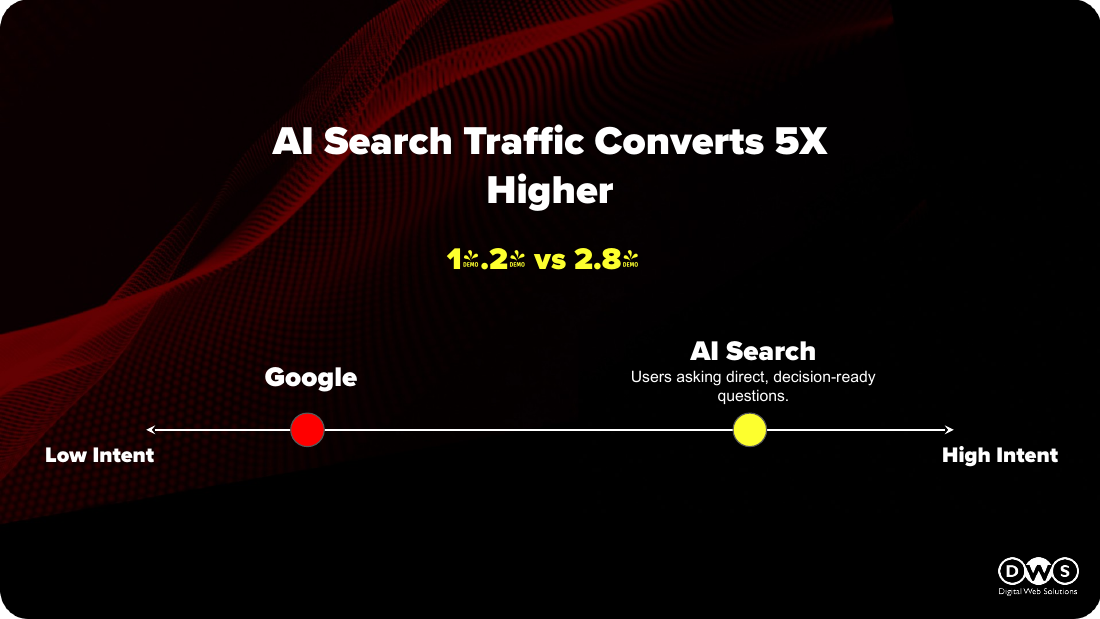
- AI traffic is high intent because the user has already searched or decided; attribution is hard (people see you on AI, then do a direct or branded search).
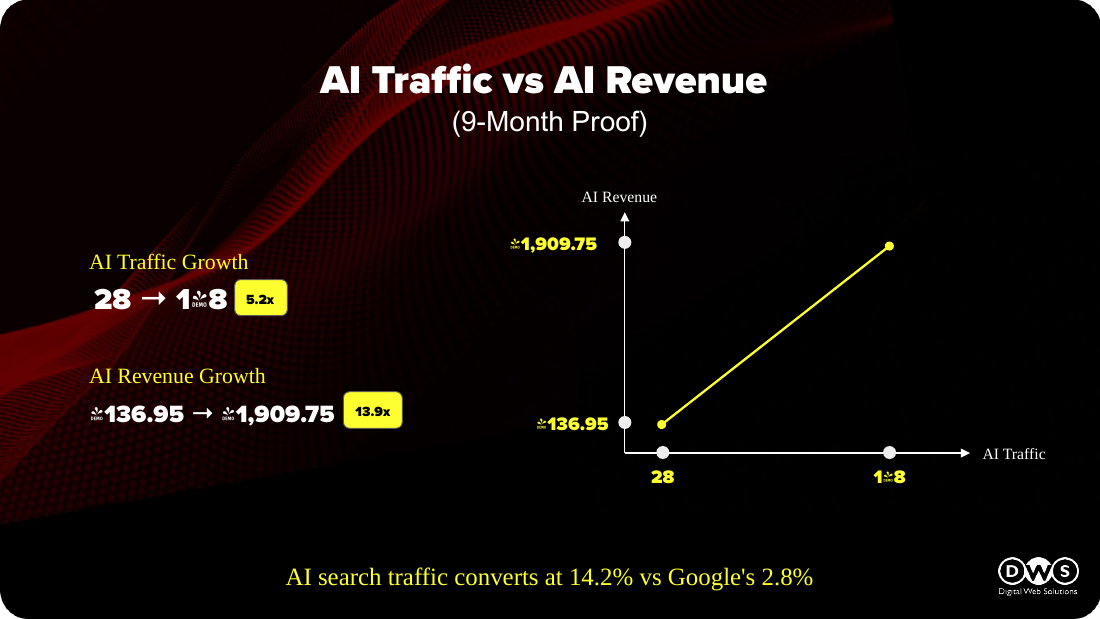
- E-commerce test (small products, small dollar values): AI traffic increased from 28 to 148; AI revenue growth was more than 13x (revenue grew much faster than traffic).
- Deck-only figures (not spoken in the talk): AI search converts 14.2% vs Google 2.8% ("5X Higher"); a 9-month proof slide shows AI Traffic 28 to 148 and AI Revenue $136.95 to $1,909.75.
NARC methodology (winning AI consensus)
- N = Narrative consistency: same positioning, expertise signals, and brand story everywhere.
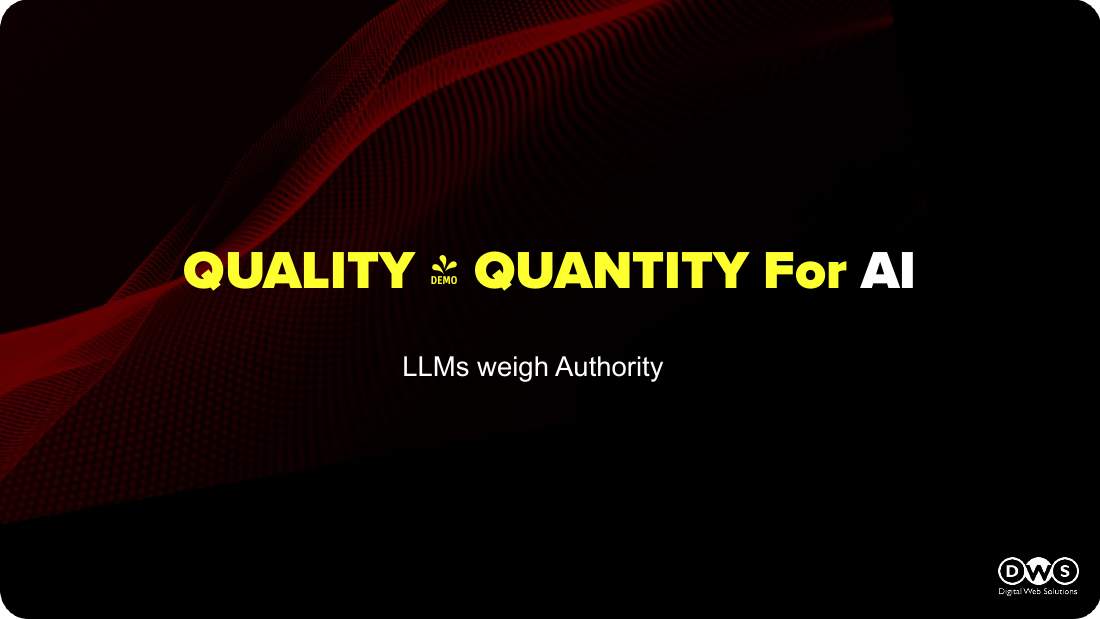
- A = Authority density: mentions on high-trust domains, expert quotes, cited data. "AI doesn't want to be wrong"; if 500 mentions say X is the best, that is what LLMs repeat. Dawood warns that LLMs will soon weigh source quality, so vet the sites mentioning you.
- R = Repetition: brand mentioned repeatedly across publications and across prompts.
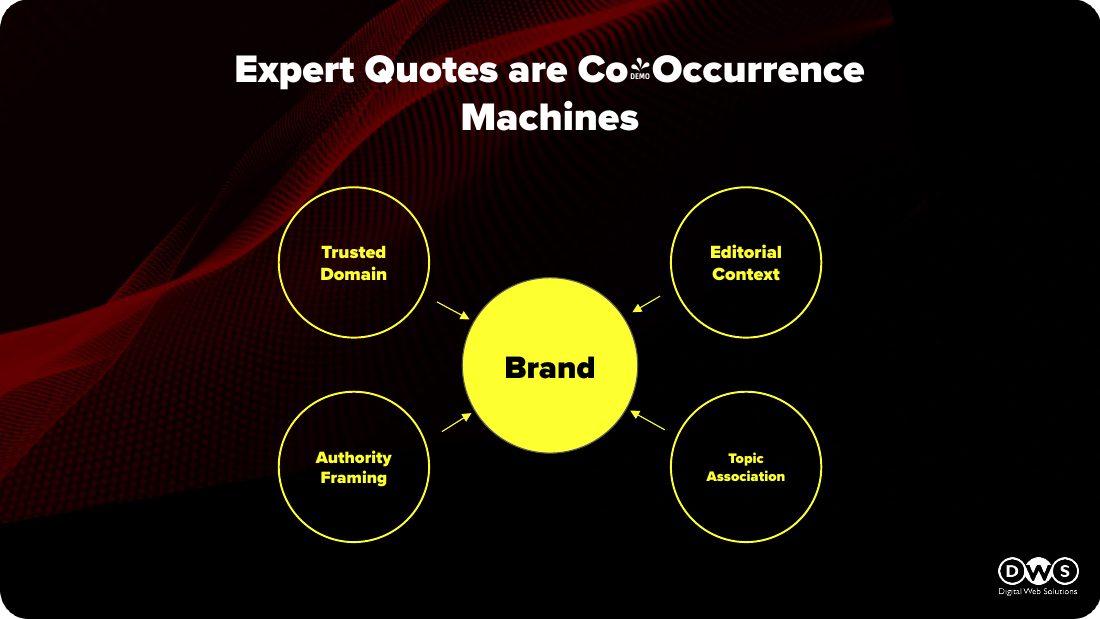
- C = Co-occurrence: brand must coexist with the problem it solves; associated with problems and solutions, linked to industry entities.
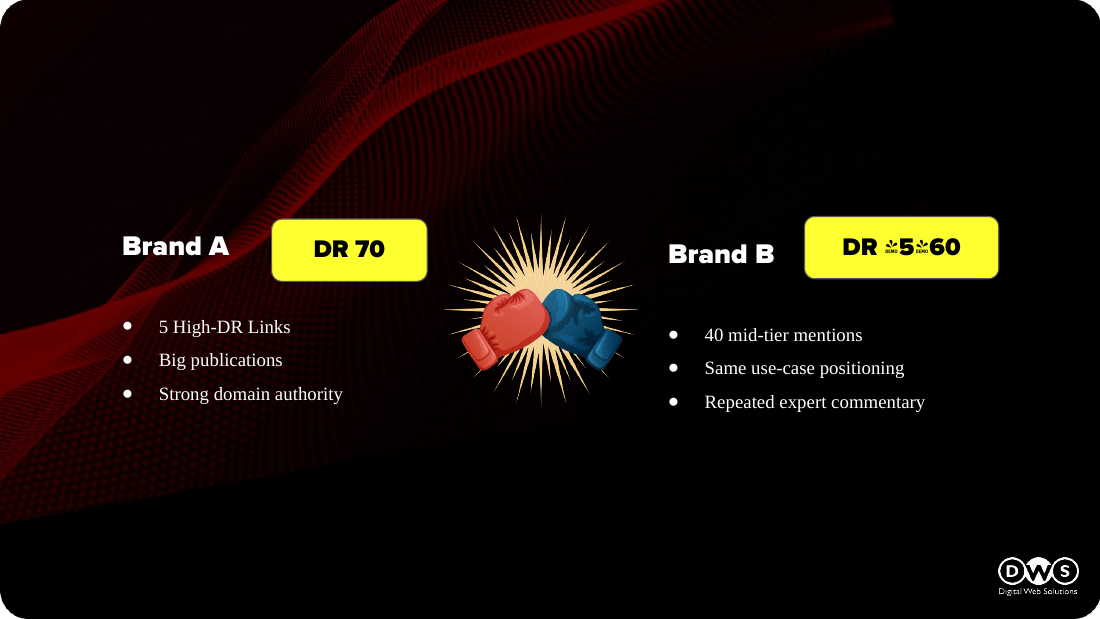
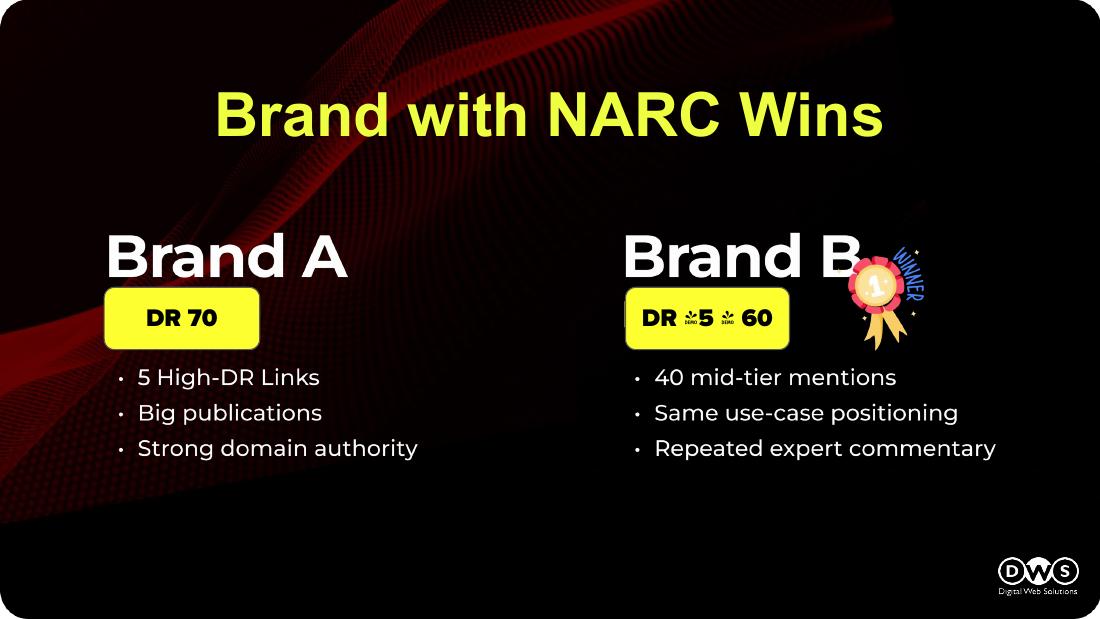
- Consensus beats authority alone. Deck example: Brand A (DR 70, 5 high-DR links, big publications) vs Brand B (DR 45-60, 40 mid-tier mentions, same use-case positioning, repeated expert commentary). Brand B with NARC wins.
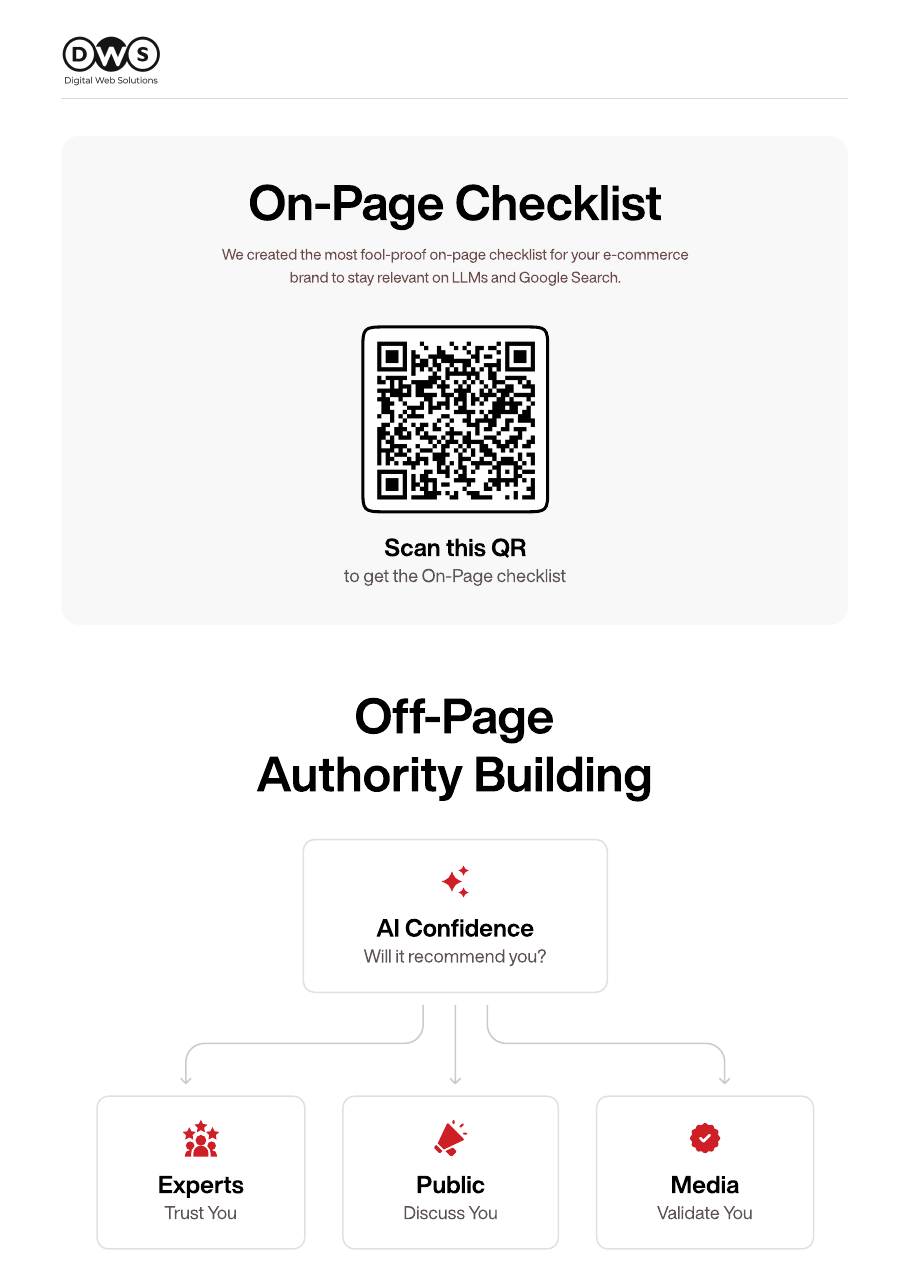
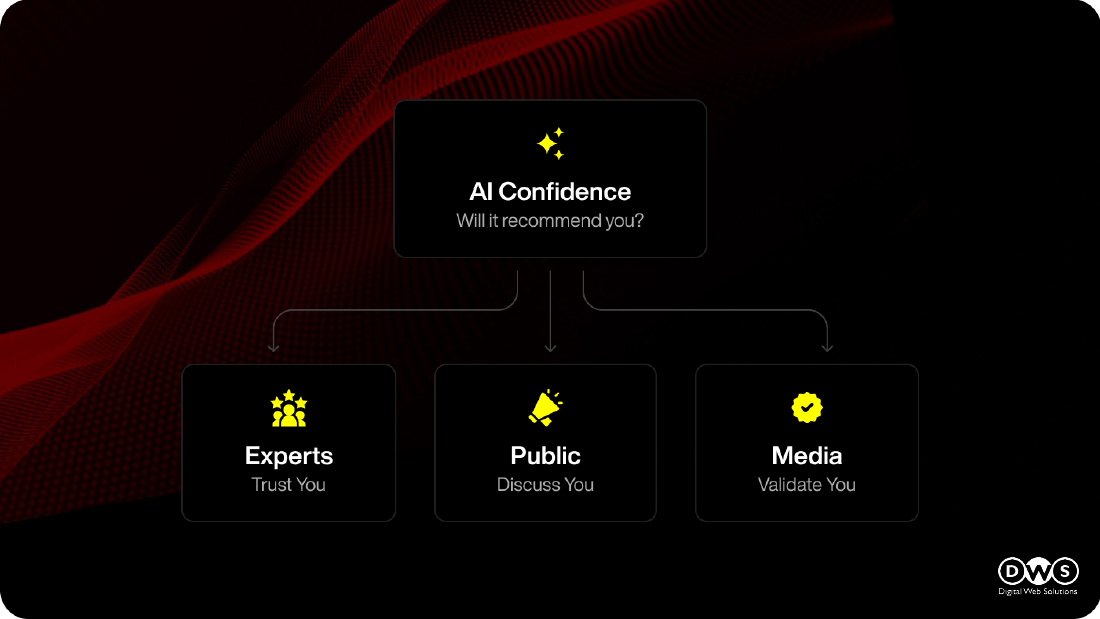
- "To win AI confidence: experts need to trust you, public needs to discuss you, media needs to validate you."
AI Consensus Ecosystem
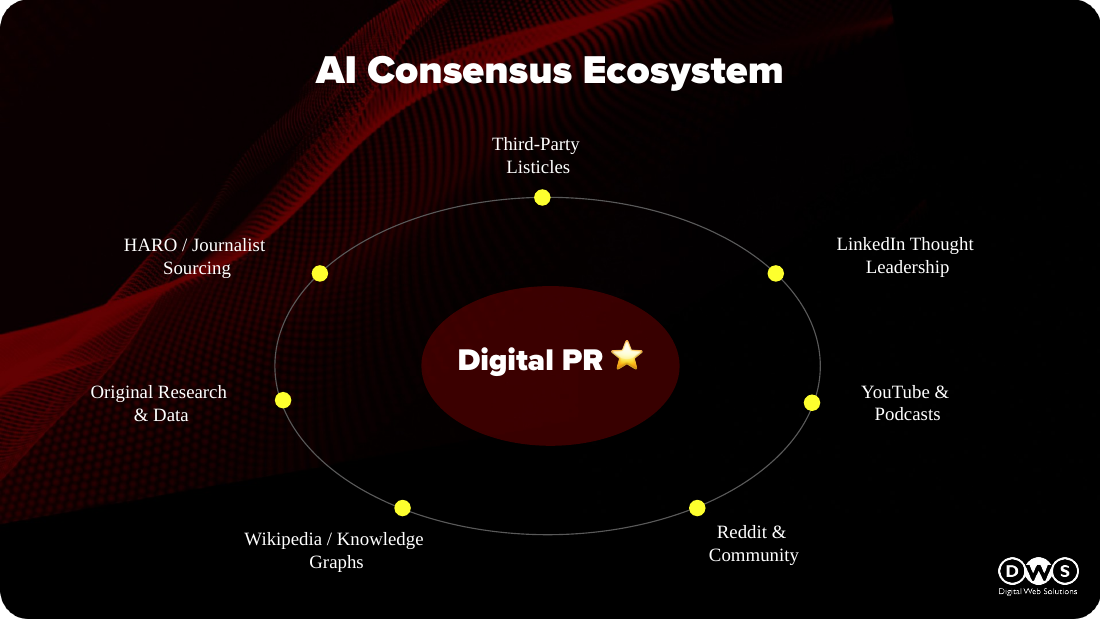
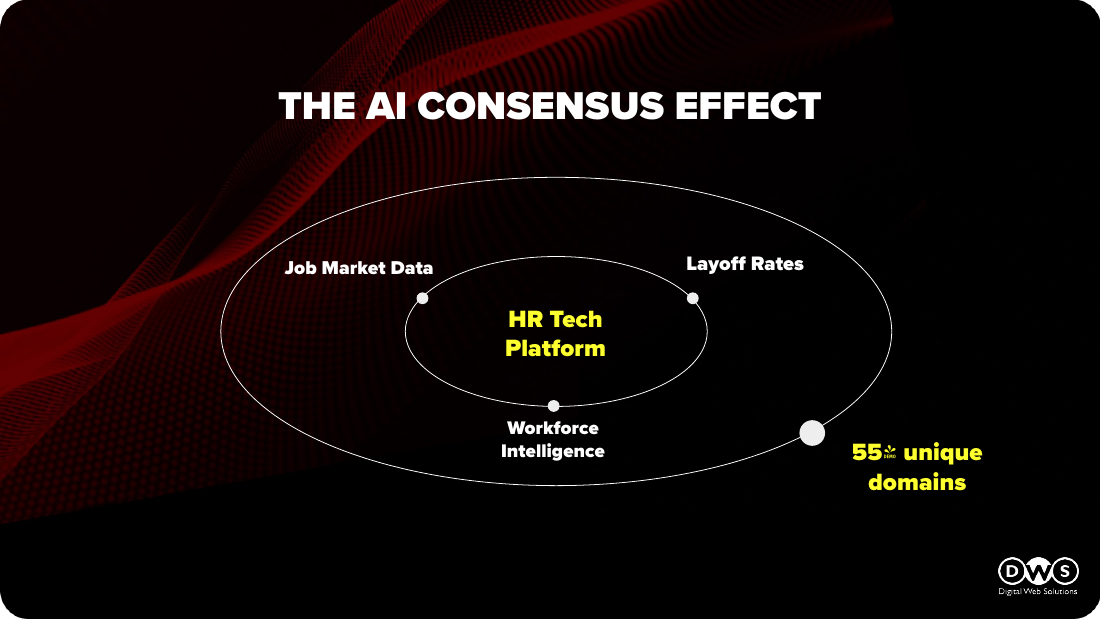
- Digital PR sits in the middle (the star). Surrounding nodes (deck): HARO / journalist sourcing, original research and data, Wikipedia / knowledge graphs, Reddit and community, YouTube and podcasts, LinkedIn thought leadership, third-party listicles.
- Doing only digital PR or only brand mentions will not lift LLM presence; you must be present everywhere. In B2B, LinkedIn, YouTube, and Reddit perform very well. DWS's best-performing digital PR tactics: data research and HARO.
Why digital PR is the engine
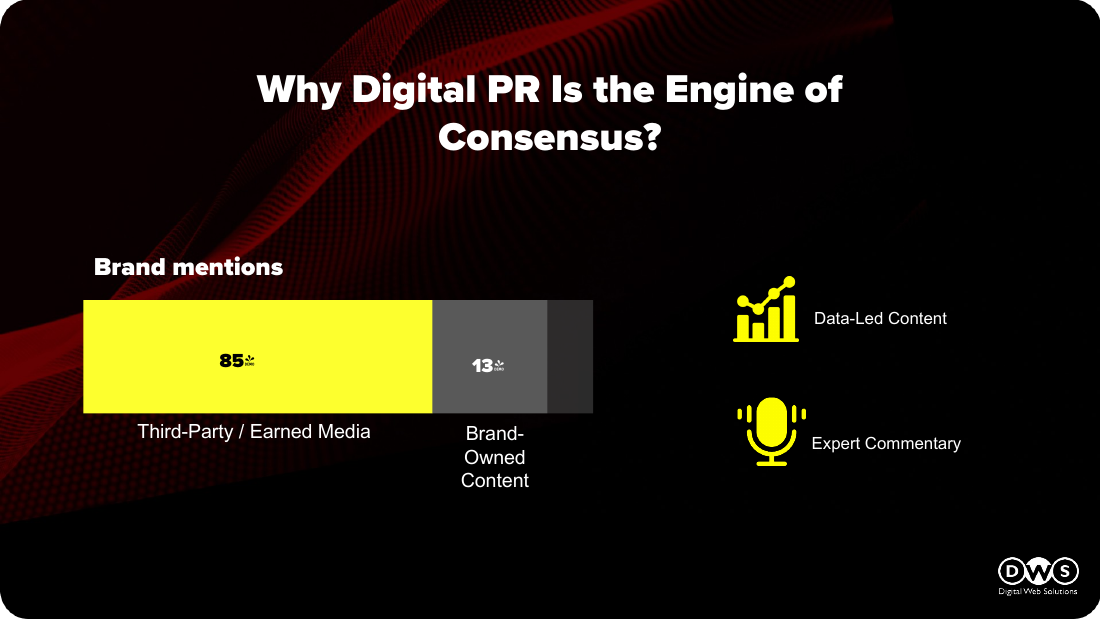
- 85% of AI mentions come from earned media vs brand-owned content. Deck notes: 85% third-party vs 13% brand-owned across GPT-5, Claude, and Perplexity; the two most effective tactics are data-led content (95%) and expert commentary (93%).
Three digital PR levers
- More mentions than competitors. You need more mentions than your competition (same logic as old link-velocity calculations), across the same narrative and same problems. Deck example: Competitor A 18, Competitor B 24, Your Brand 52 mentions.
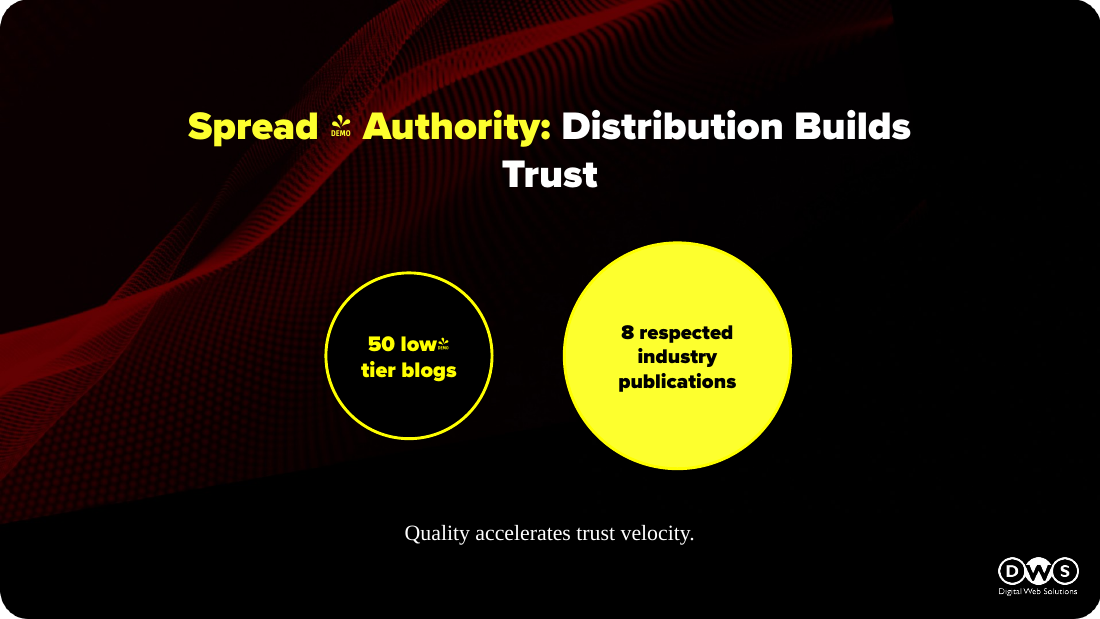
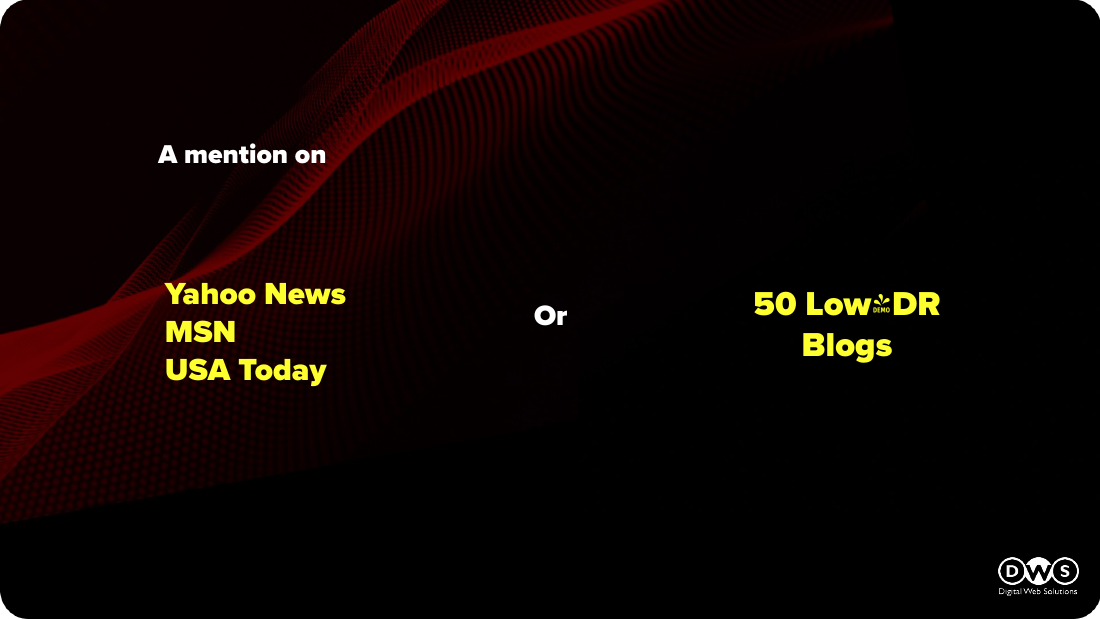
- Spread. 100 links from the same domains do not hamper you (each is a unique trust/training signal), but spread across many diverse, high-quality domains is essential. Deck contrast: 50 low-tier blogs vs 8 respected industry publications; "Quality accelerates trust velocity."
- Authority distribution. Include high-DR placements in the mix alongside spread.
Case Study 1 - HR software platform
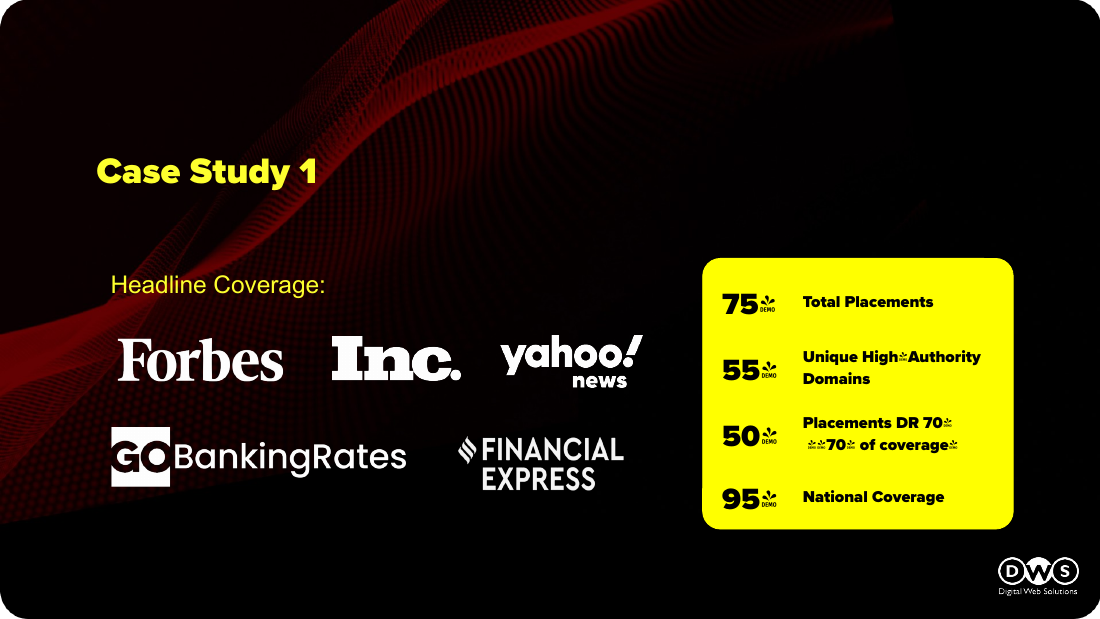
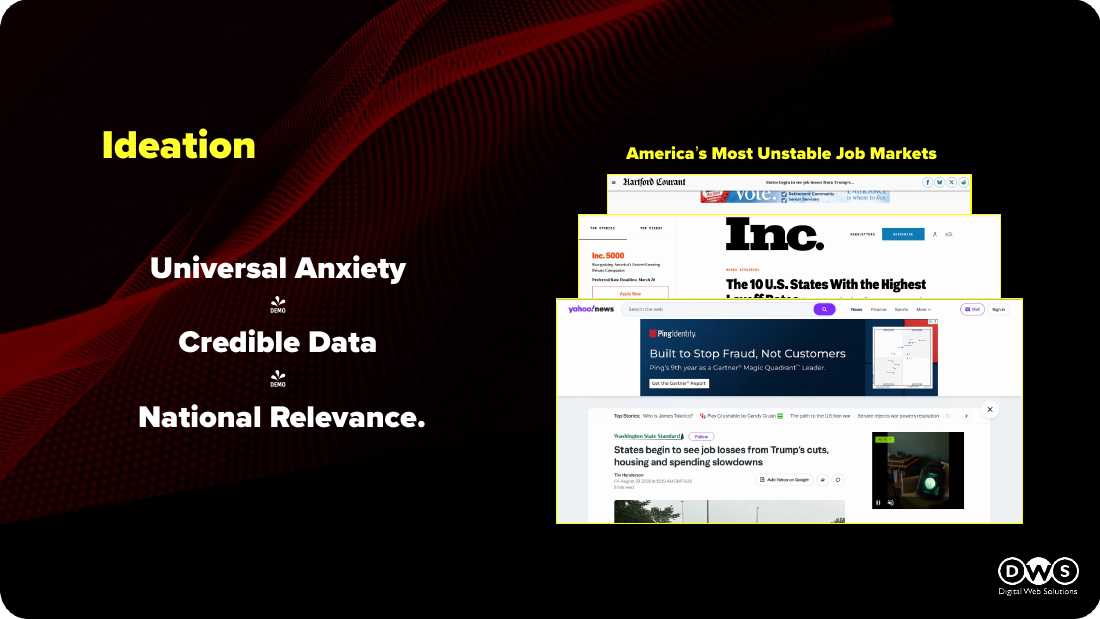
- Not ranking well on Google. Story: "America's Most Unstable Job Markets" (job security is emotional).
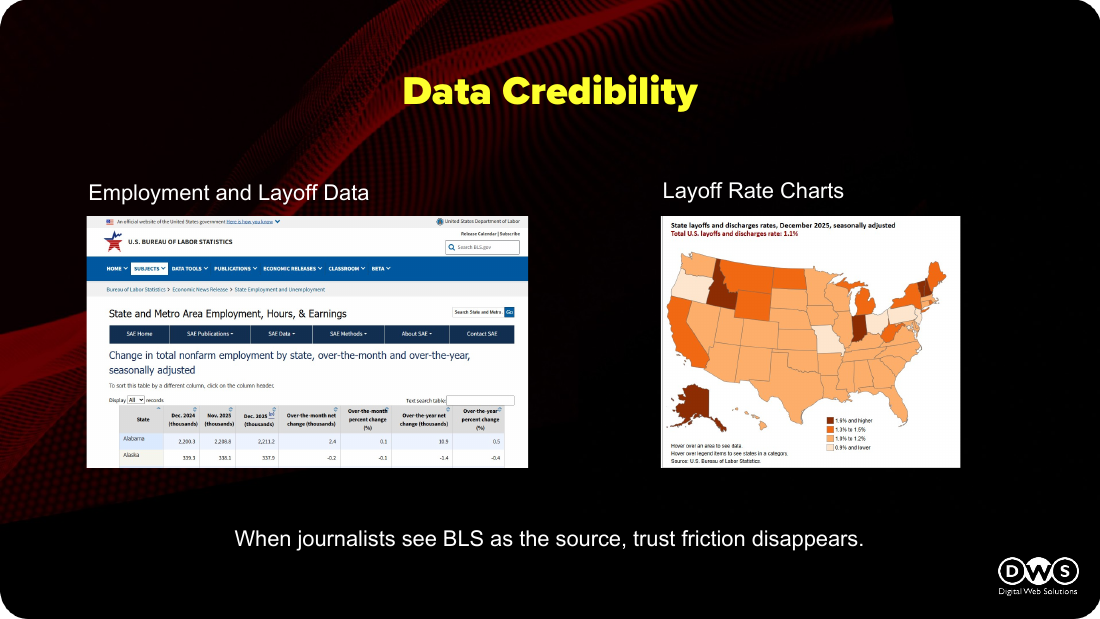
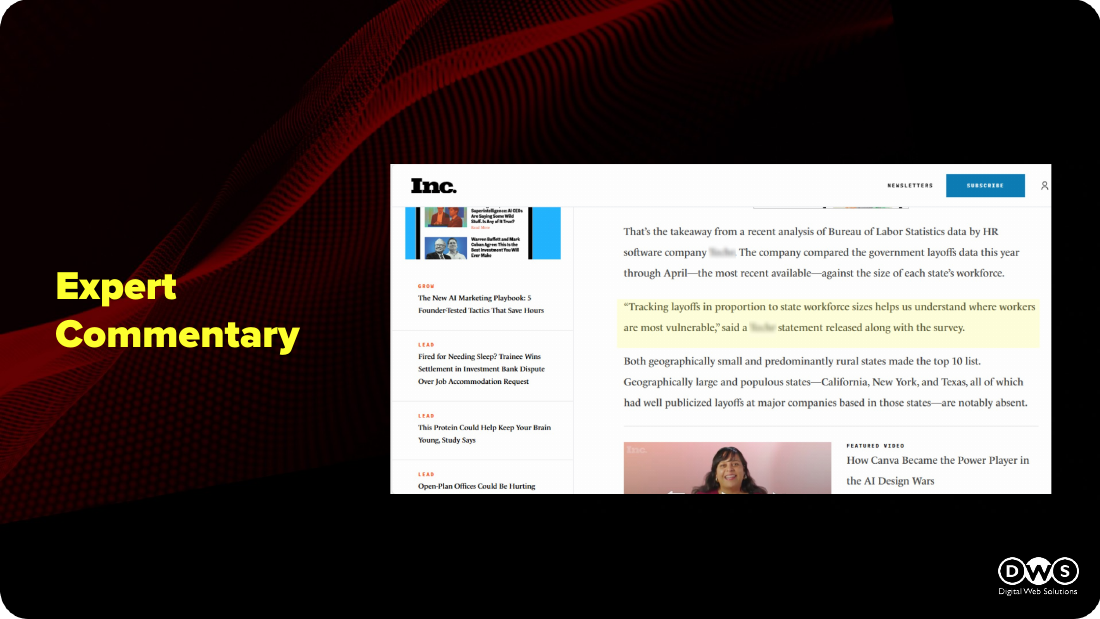
- Result: 75-plus placements, 55 on unique domains, 50-plus on DR 70-plus sites. Used credible data sources (deck: BLS, Bureau of Labor Statistics) plus expert comments.
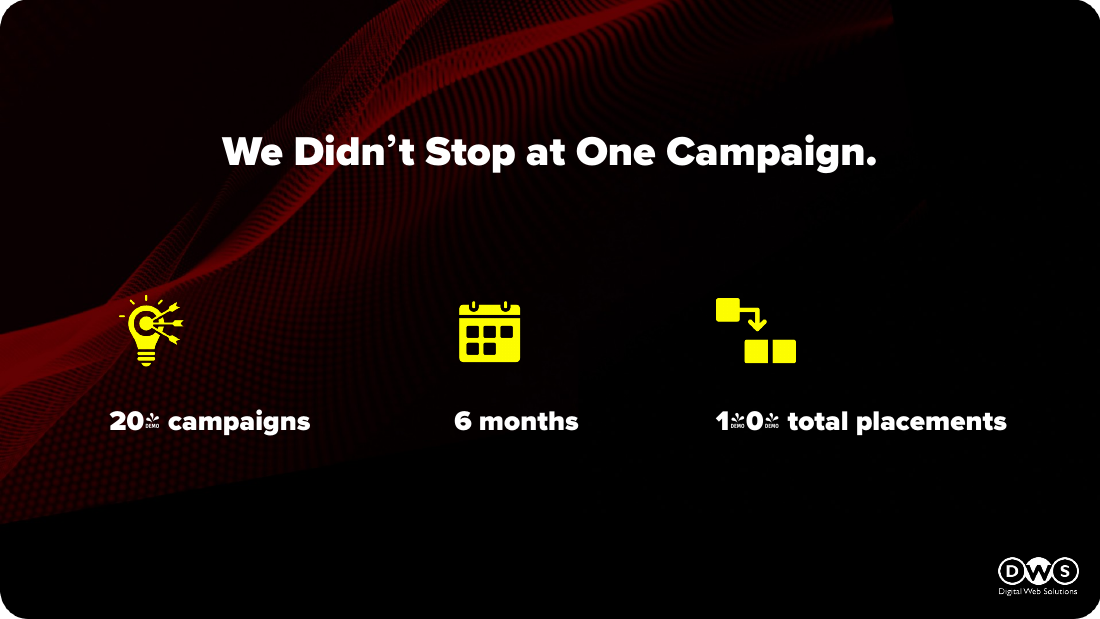
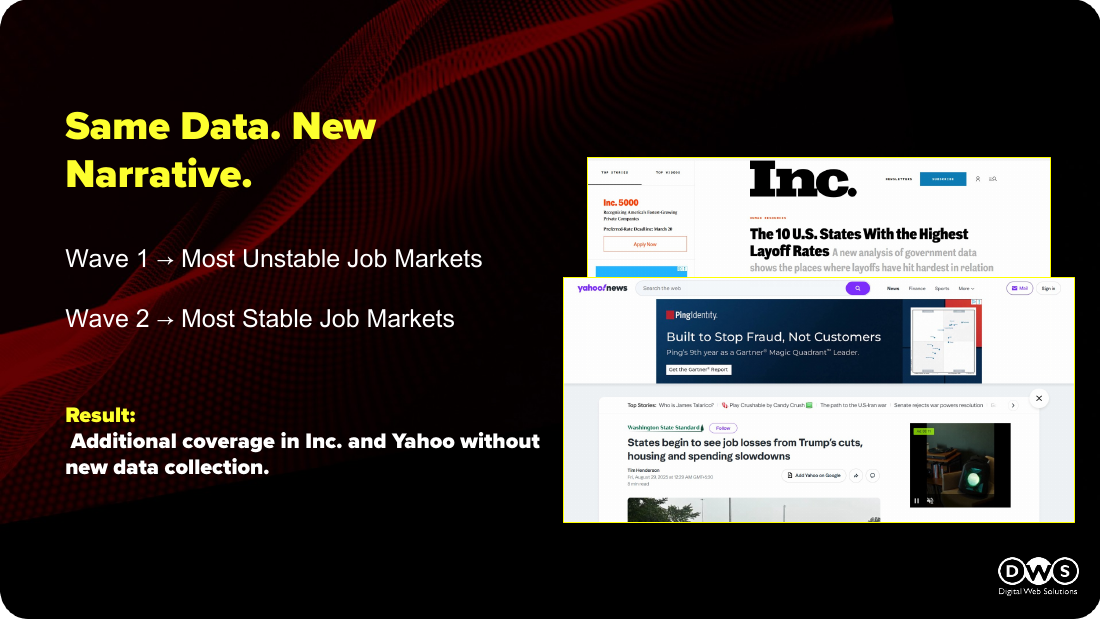
- Did not stop: 20-plus campaigns in 6 months, 140-plus total placements. Same data, new narratives (Wave 1 Most Unstable Job Markets, Wave 2 Most Stable Job Markets).
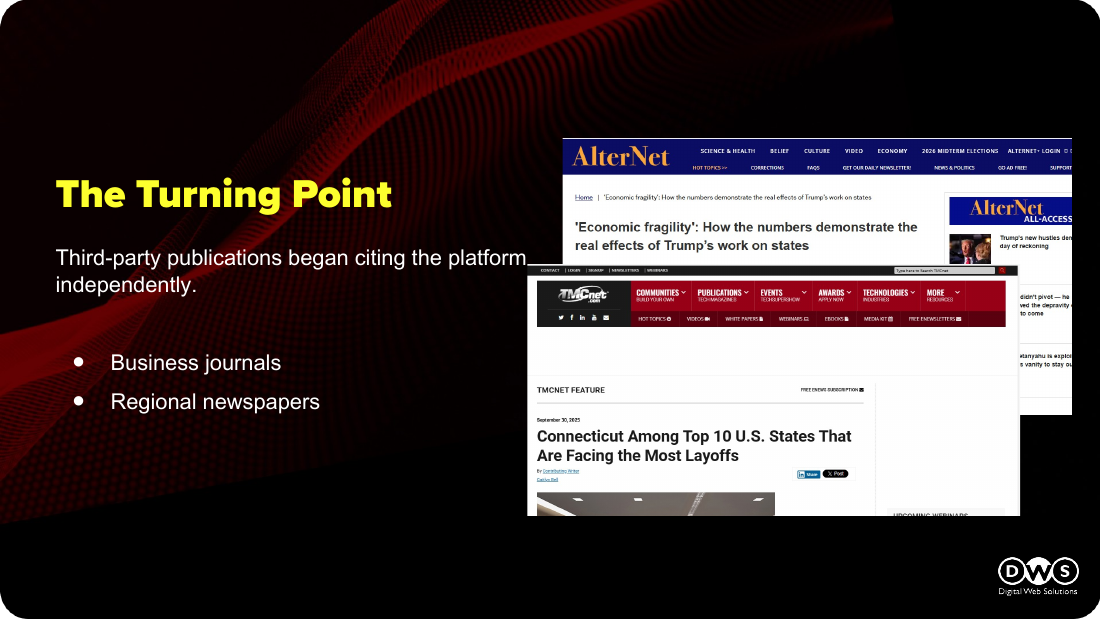
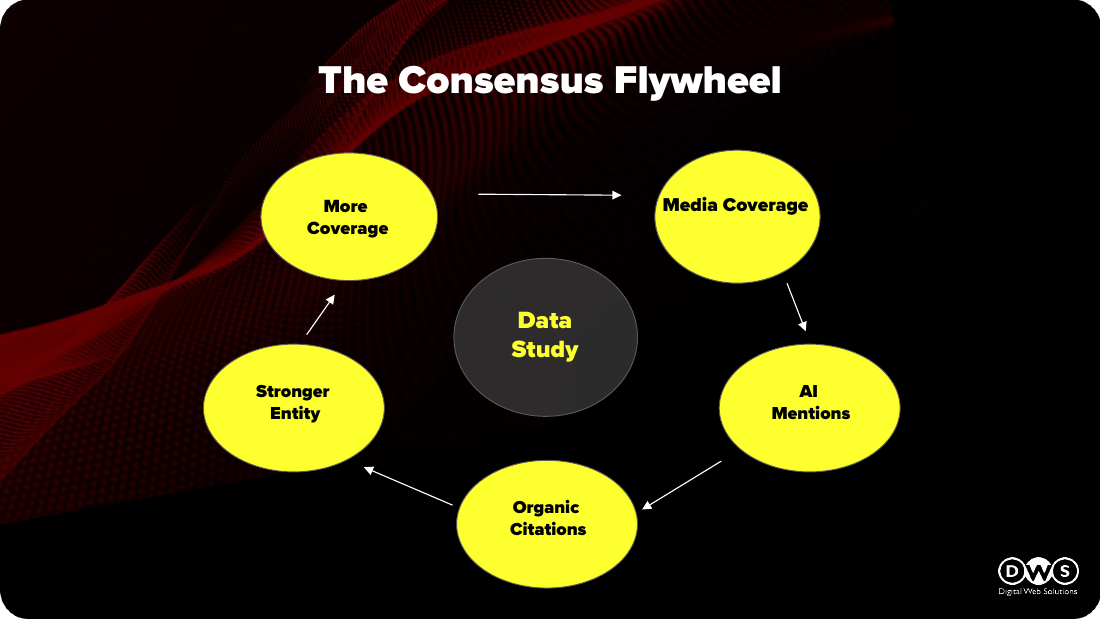
- Additional coverage in Inc. and Yahoo without new data collection; third parties began citing the platform independently (AP wire pickup per deck). The consensus flywheel: media coverage to stronger entity to organic citations to AI mentions.
Case Study 2 - Luxury villa rental in Cabo
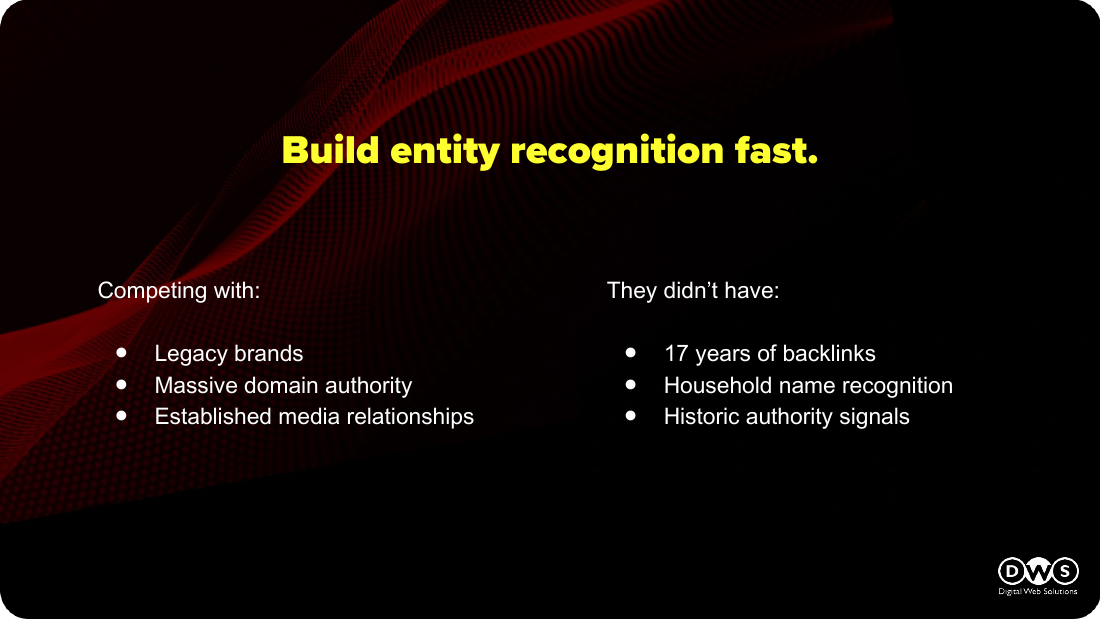
- Brand-new business, no website, getting business via referrals, competing against big brands without 17 years of backlinks or household-name recognition.
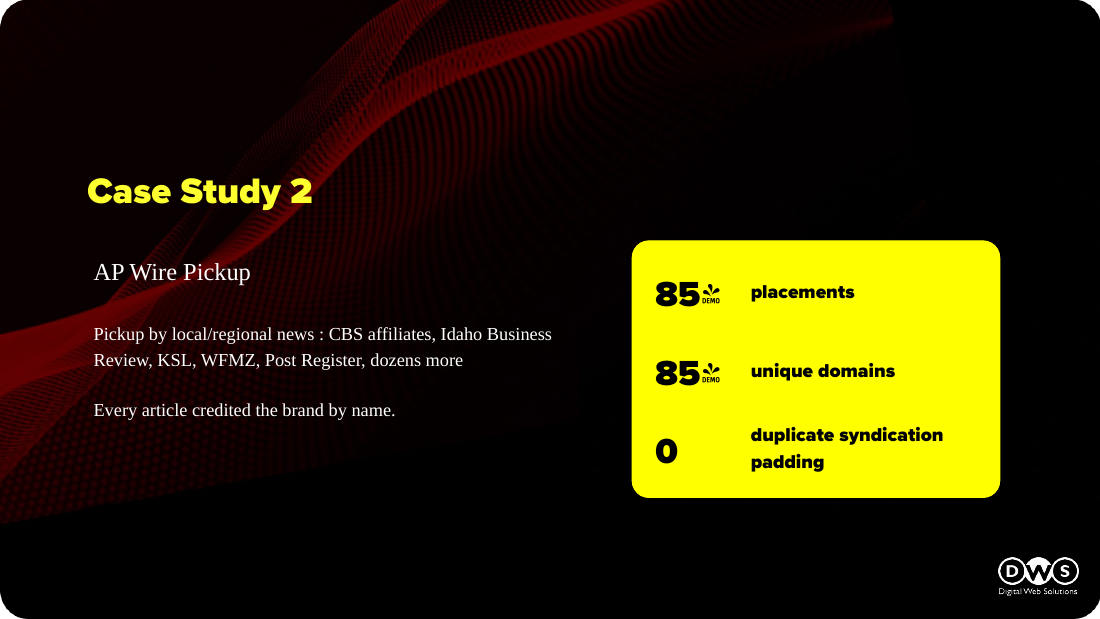
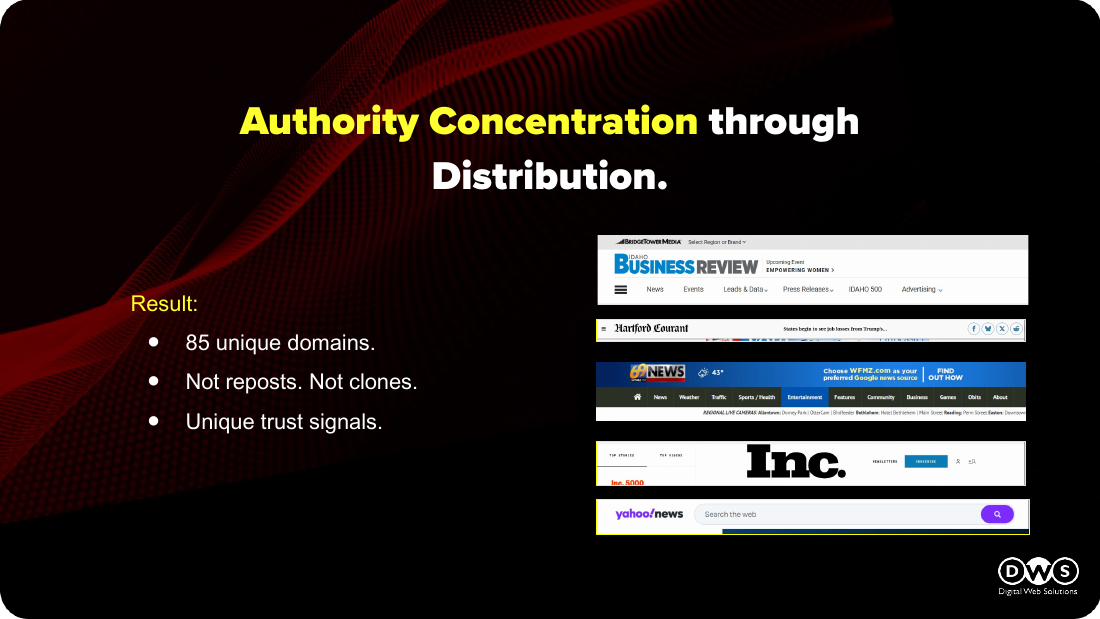
- Two moves in the first 3 months: bought a partial-keyword-match domain; blasted digital PR focused on SPREAD, reaching 85-plus placements on unique domains.
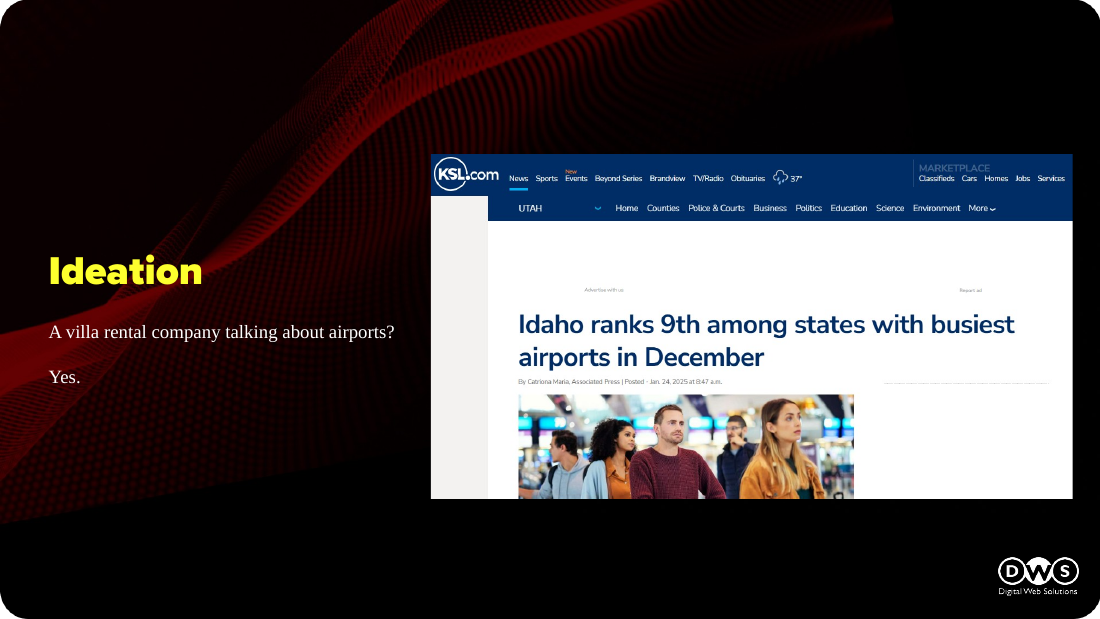
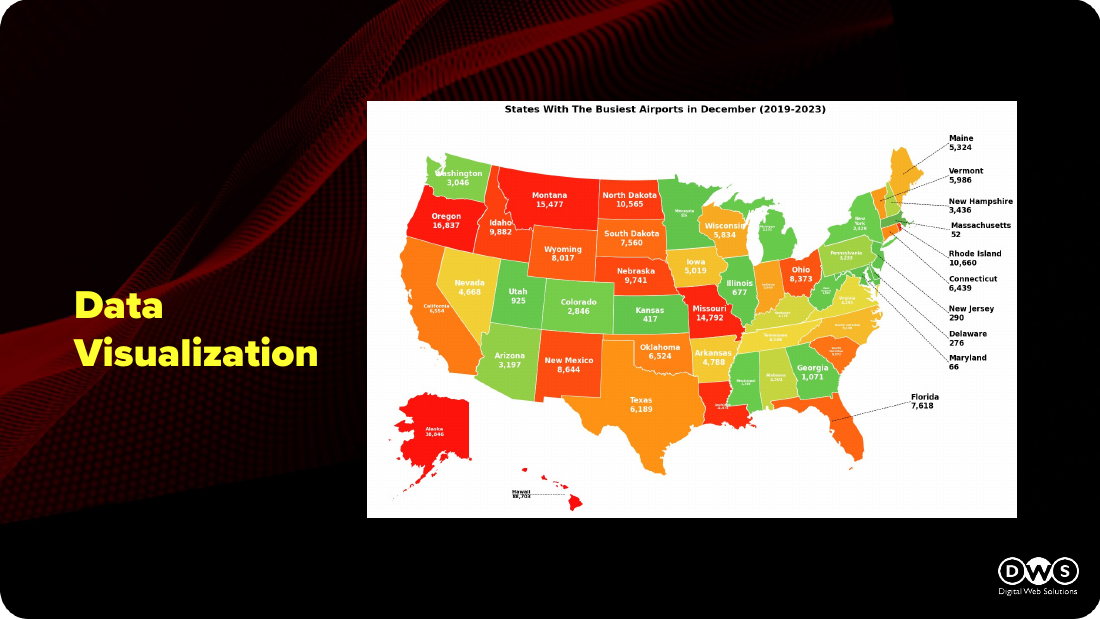
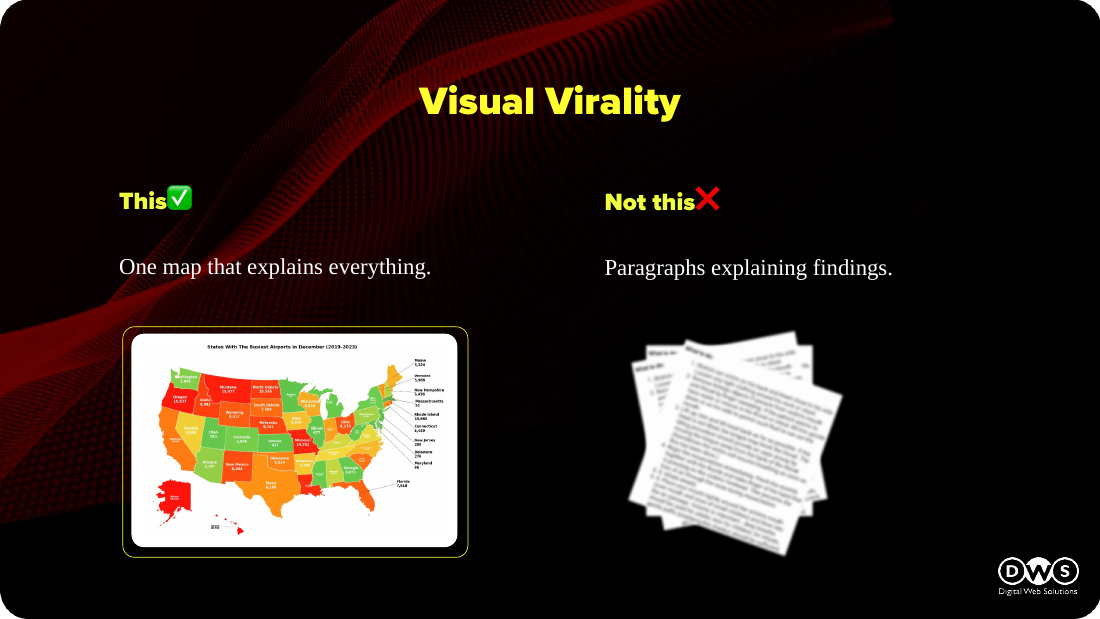
- Story that hit: "States With the Busiest Airports in December" (bridge: holiday travel surge to airport spikes to travelers needing accommodation to booking early; tied to TSA news and the December busy season).
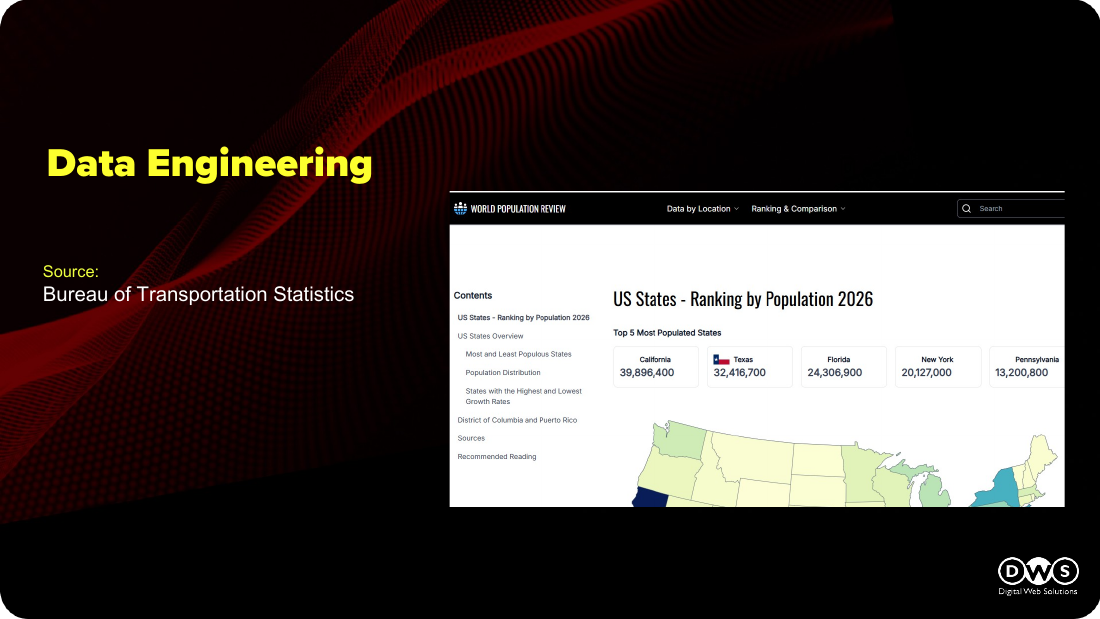
- Data source (deck): Bureau of Transportation Statistics; 5-year December average 2019-2023; normalized passengers per 100,000 residents.
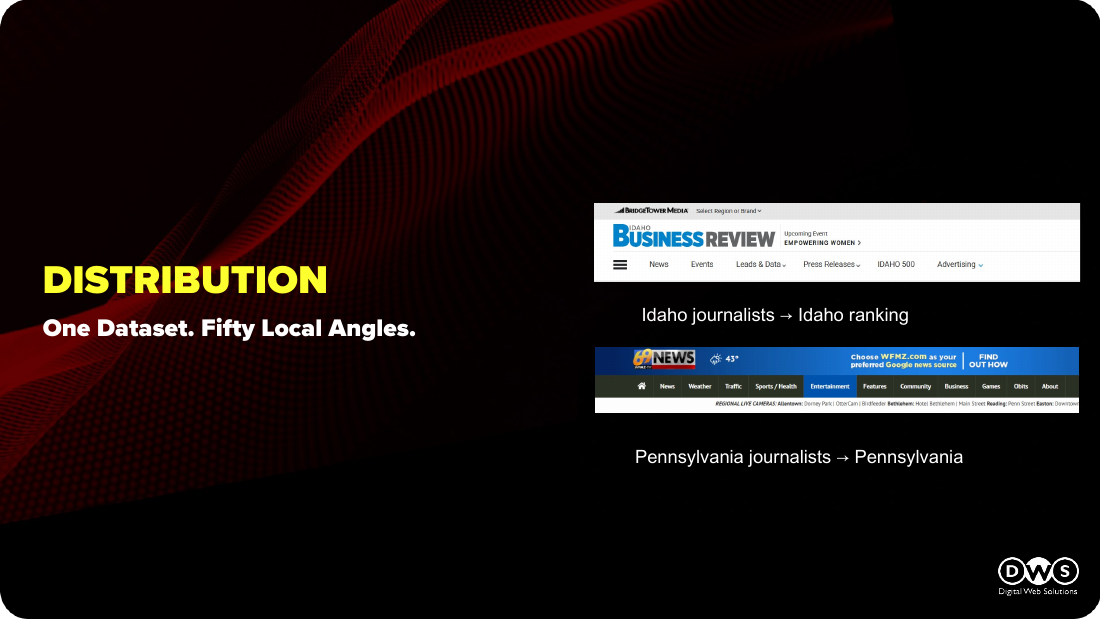
- Gave 50 local angles (Idaho journalists get the Idaho ranking, etc.). AP picked it up; CBS affiliates, Idaho Business Review, KSL, WFMZ, Post Register, and dozens more covered it, every article crediting the brand by name. Outcome: started getting cited on LLMs for a luxury villa in Cabo.
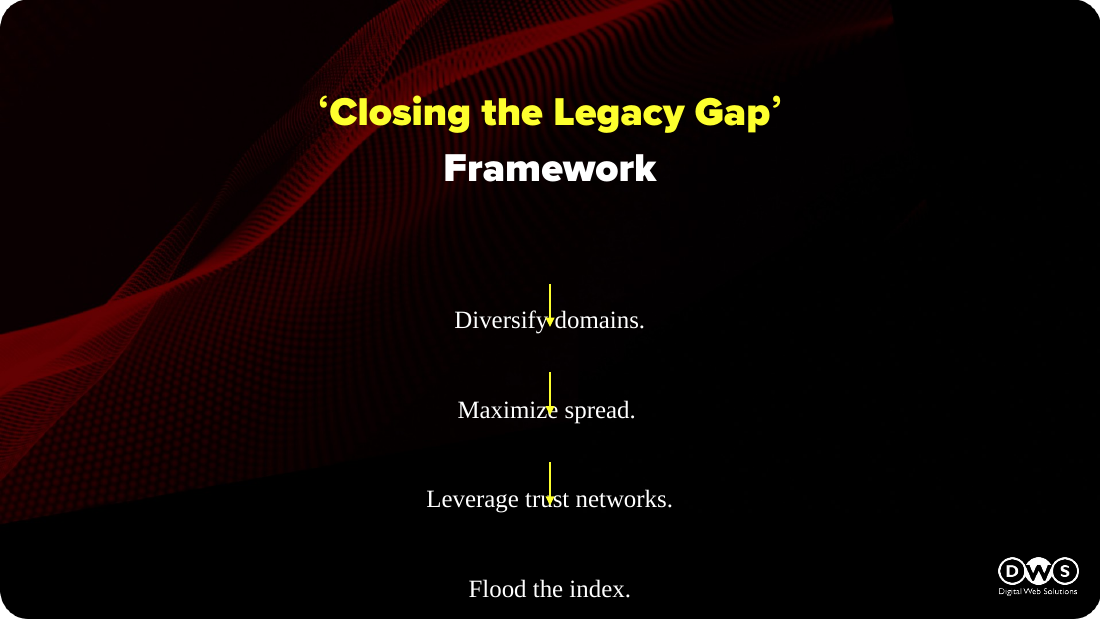
- "Closing the Legacy Gap" framework (deck): diversify domains, maximize spread, leverage trust networks, flood the index.
Case Study 3 - Personal injury law firm
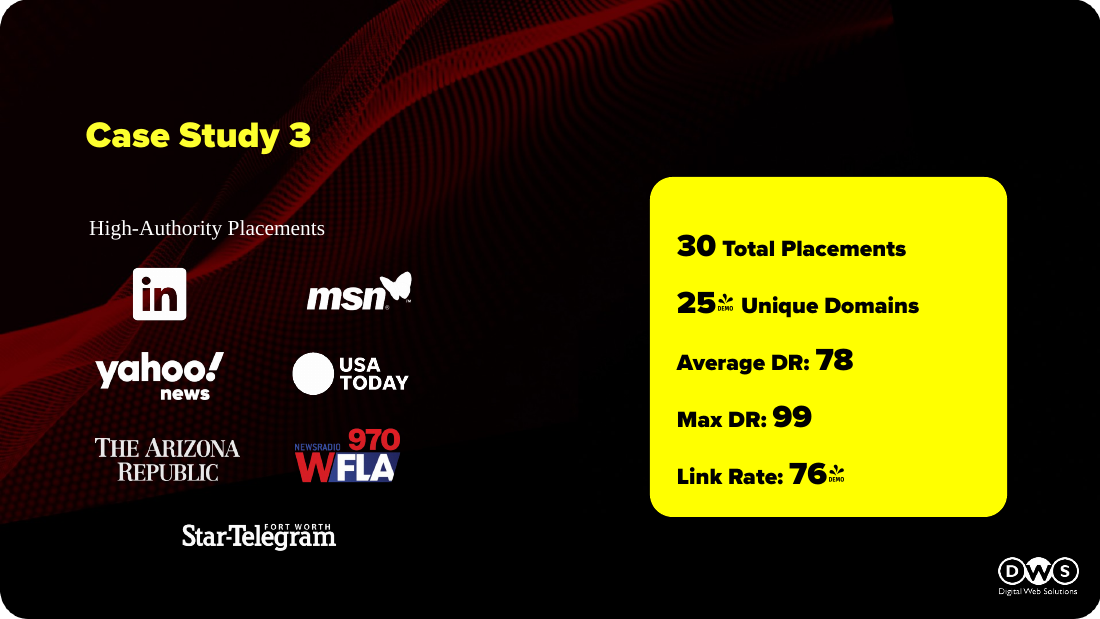
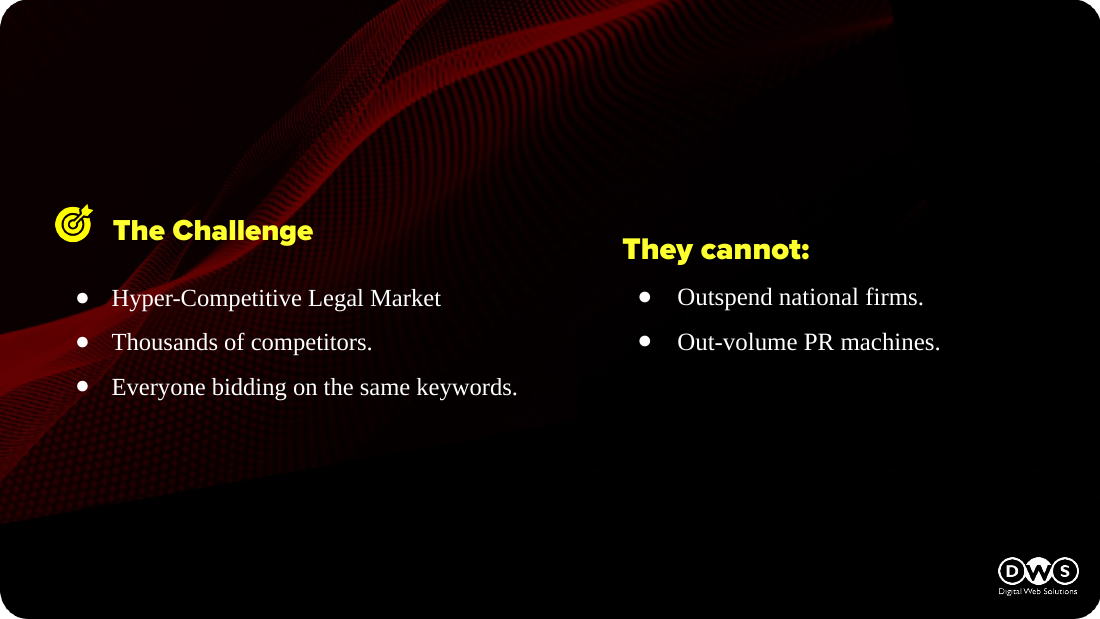
- Already had some LLM citations; goal was quality, not volume. About 30 placements, 25-plus unique, average DR around 78 (deck: max DR 99, link rate 76%).
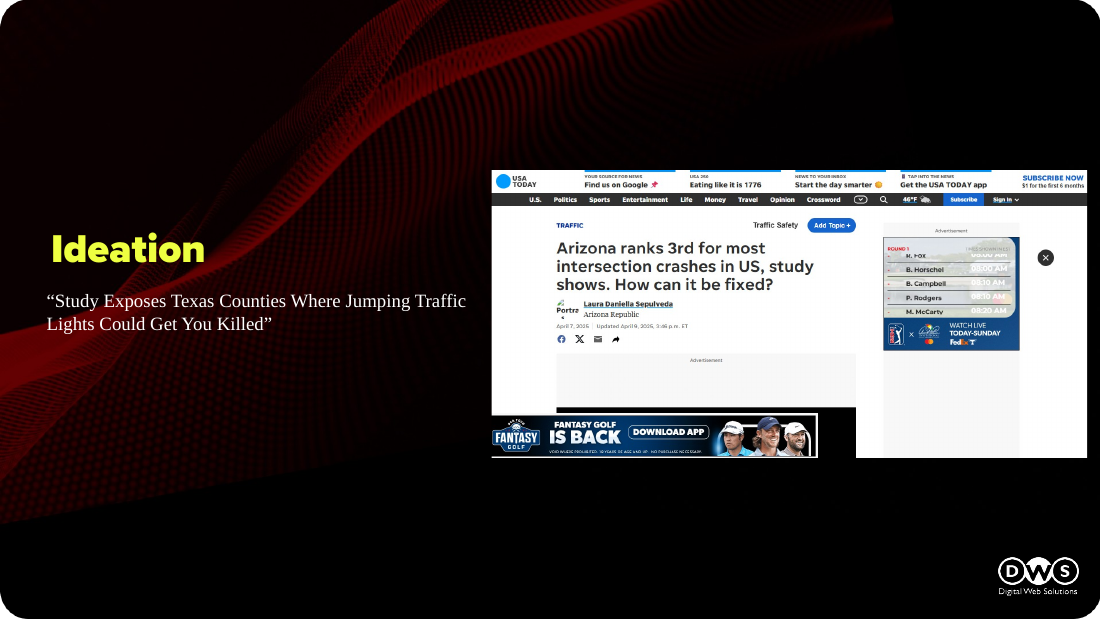
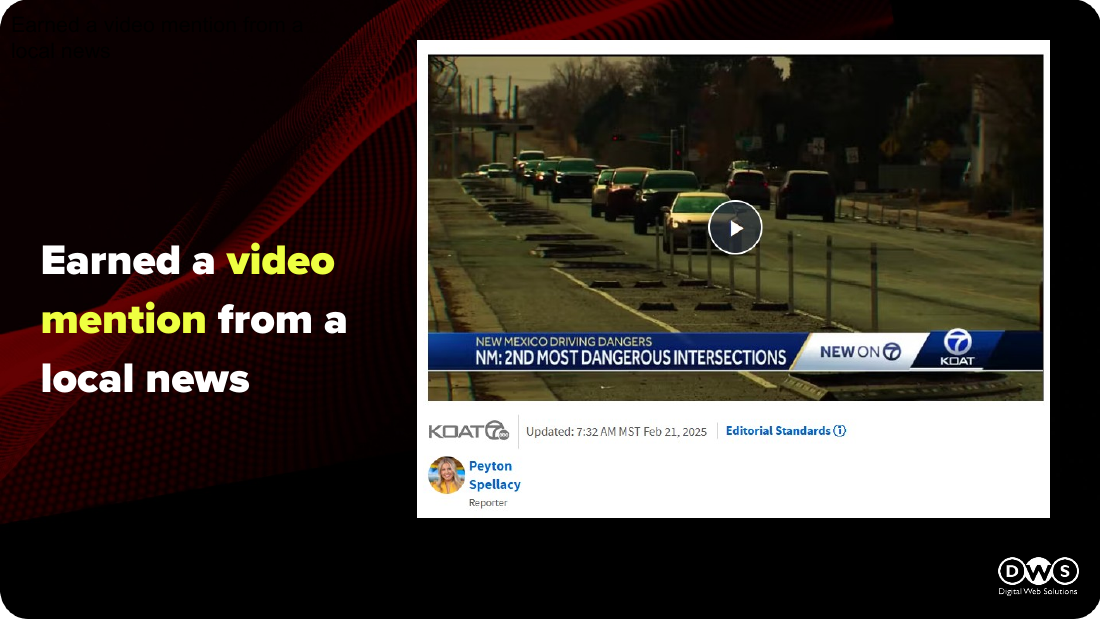
- Story: most dangerous intersections in the US (deck: "Study Exposes Texas Counties Where Jumping Traffic Lights Could Get You Killed"). Works because everyone drives through intersections and everyone has "that one" they avoid.
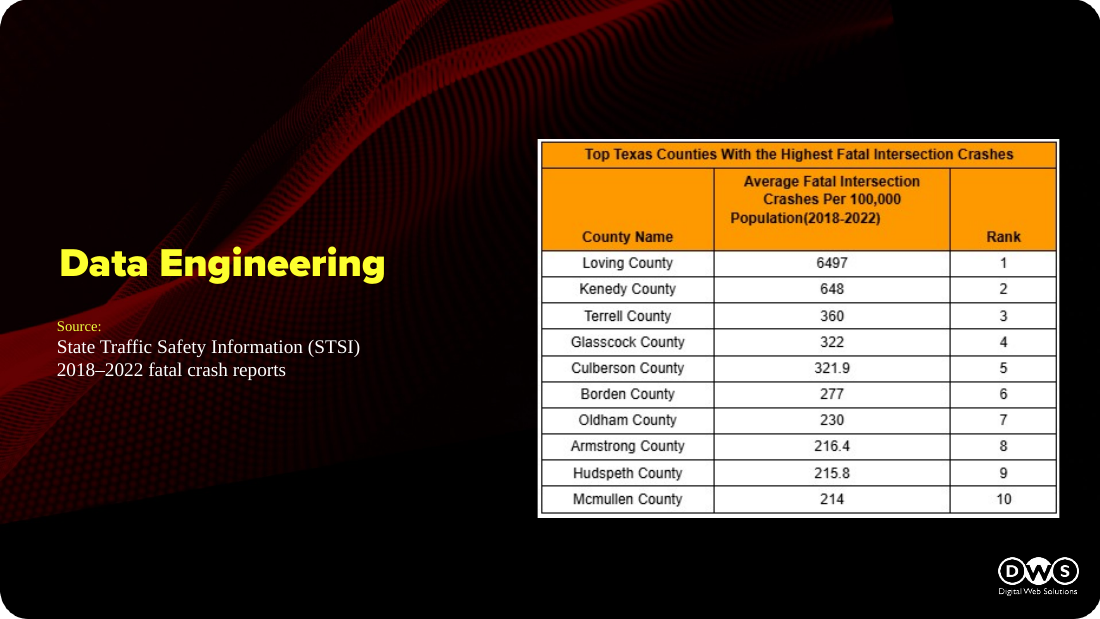
- Data source (deck): State Traffic Safety Information (STSI), 2018-2022 fatal crash reports, normalized fatal intersection crashes per 100,000 residents.
- Earned video mentions on local news. Dawood now targets at least 1 video mention per 10 links by pushing local angles.
Viral Digital PR approval framework
- Applied before research, before design, before outreach. If an idea fails, it is not sent to distribution.
- Core principle: a viral story must be Emotional, New, Provable, Easy (to understand), Timely, Visual.
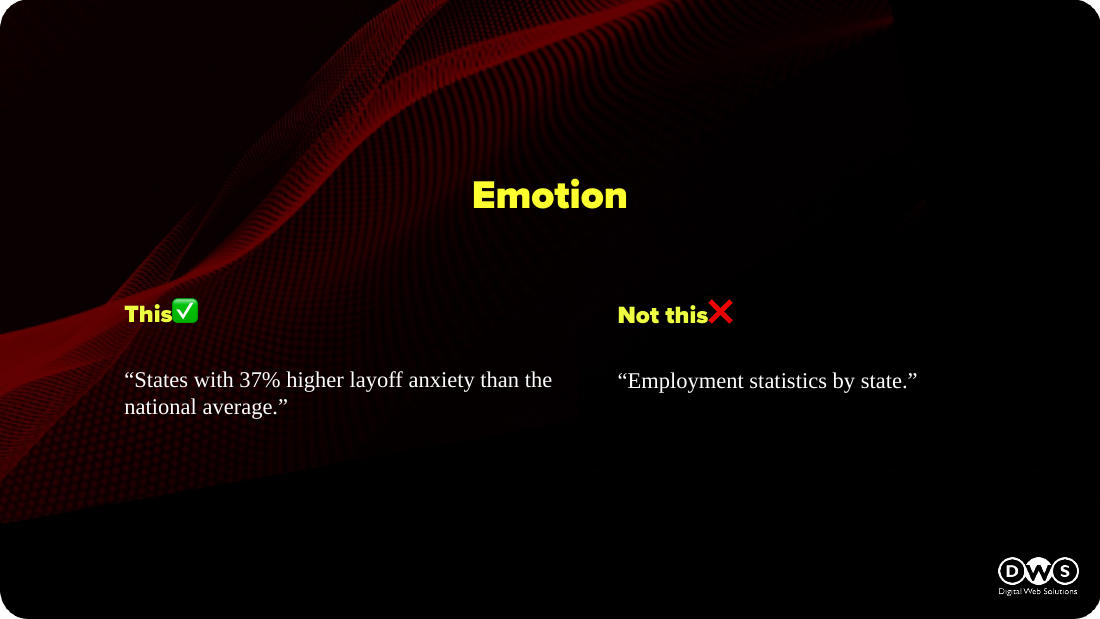
- Emotion test: "Do people actually care?" High-arousal wins (surprise, fear, outrage, pride, shock). Good: "States with 37% higher layoff anxiety than the national average." Bad: "Employment statistics by state."
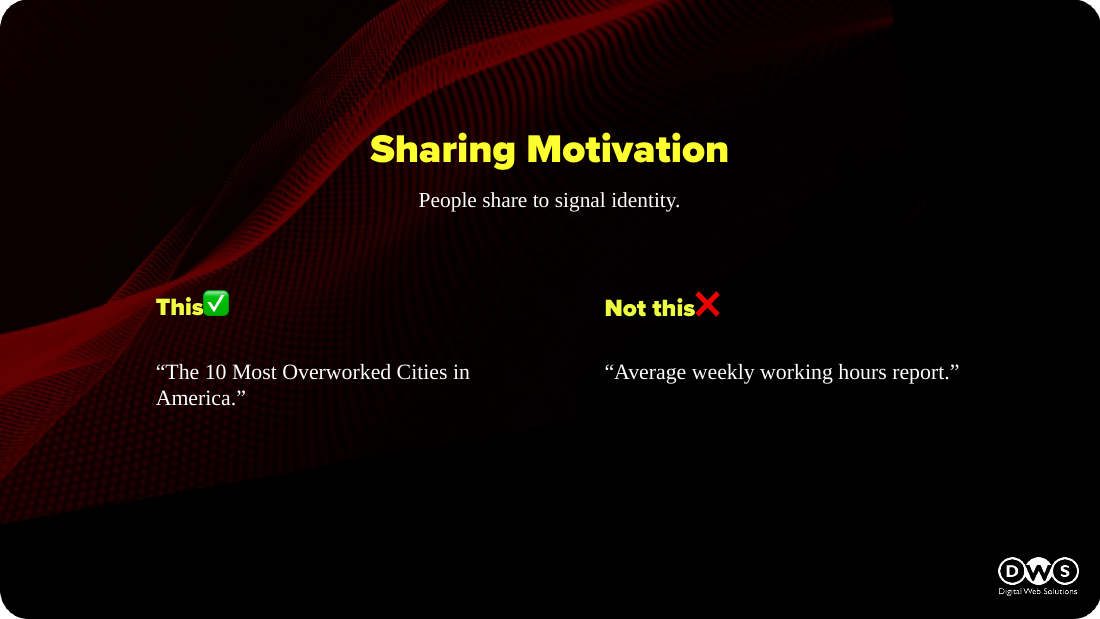
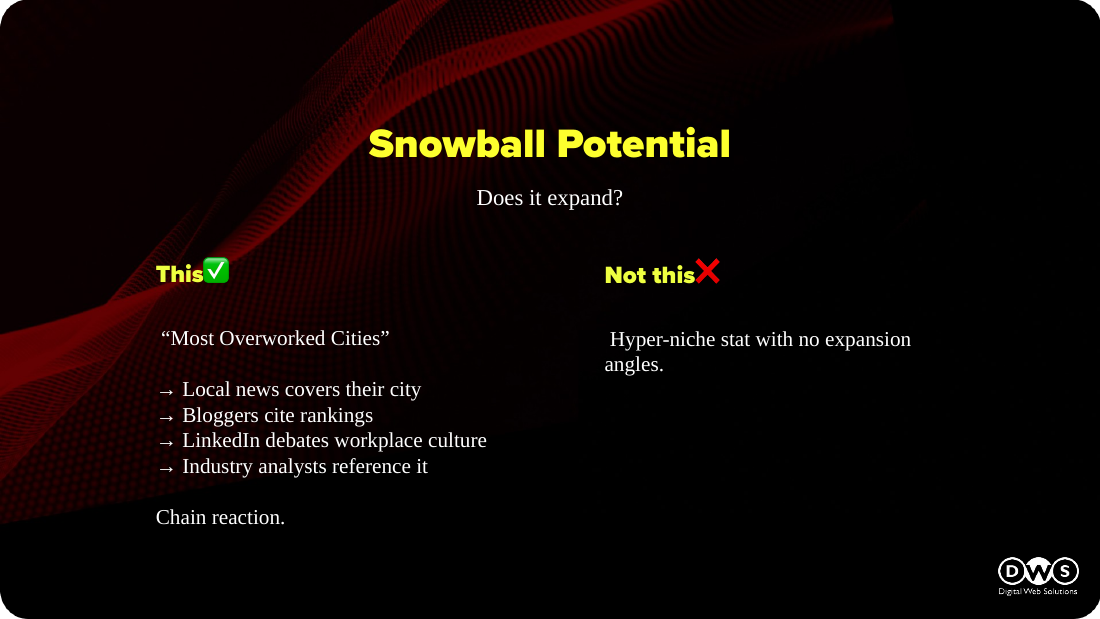
- Sharing motivation: people share to signal identity. Good: "The 10 Most Overworked Cities in America."
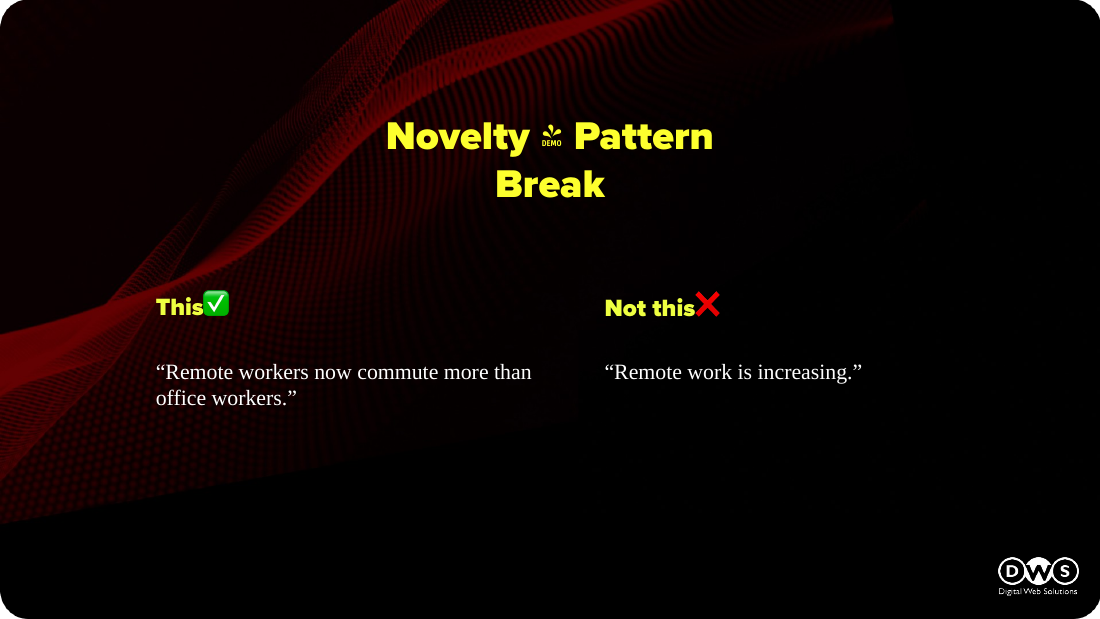
- Novelty / pattern break: if you can predict the story from the title, it fails (movie-spoiler analogy). Good: "Remote workers now commute more than office workers."
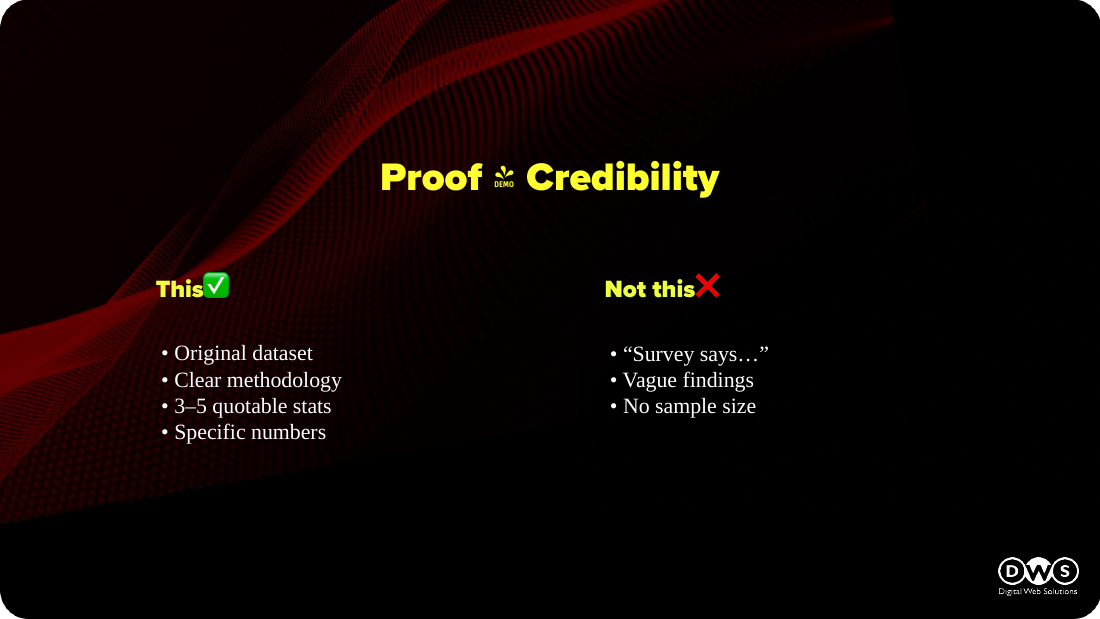
- Proof and credibility: original dataset, clear methodology, 3-5 quotable stats, specific numbers (not ranges). Journalists ask "Can I defend this if challenged?"
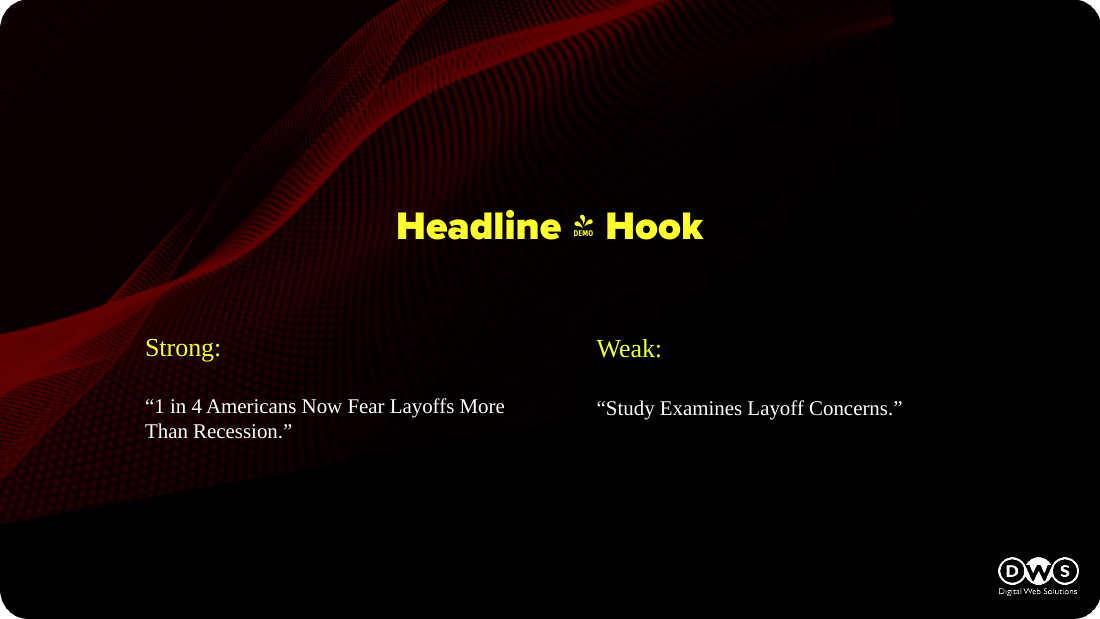
- Headline and hook: "stop the scroll." Good: "1 in 4 Americans Now Fear Layoffs More Than Recession." Weak: "Study Examines Layoff Concerns."
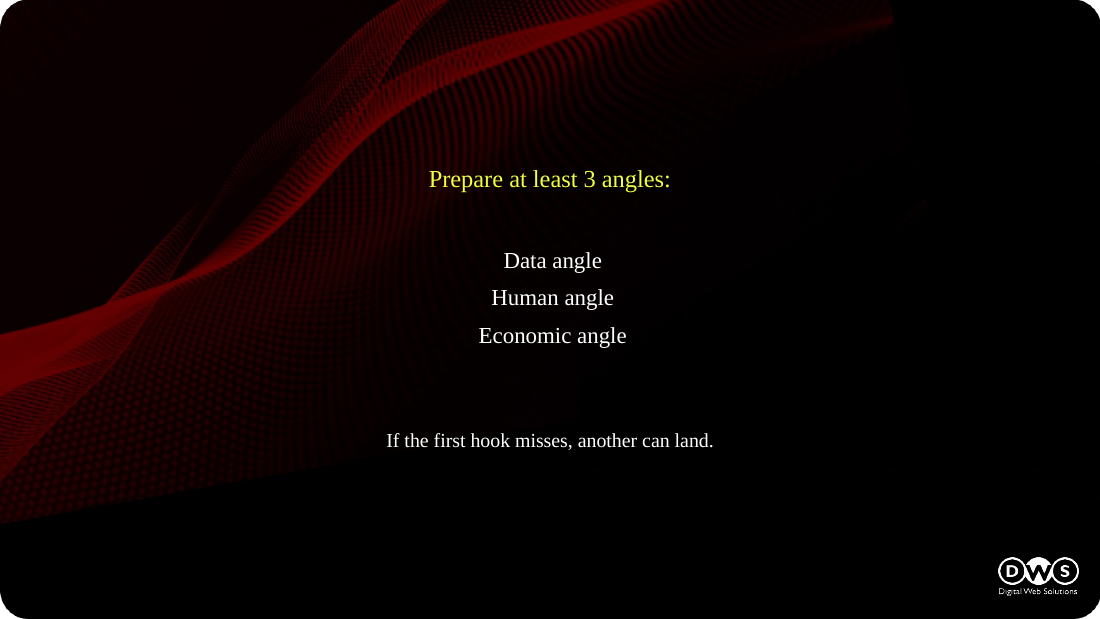
- Three angles per story: data angle (core, used in all stories), human angle, economic angle.
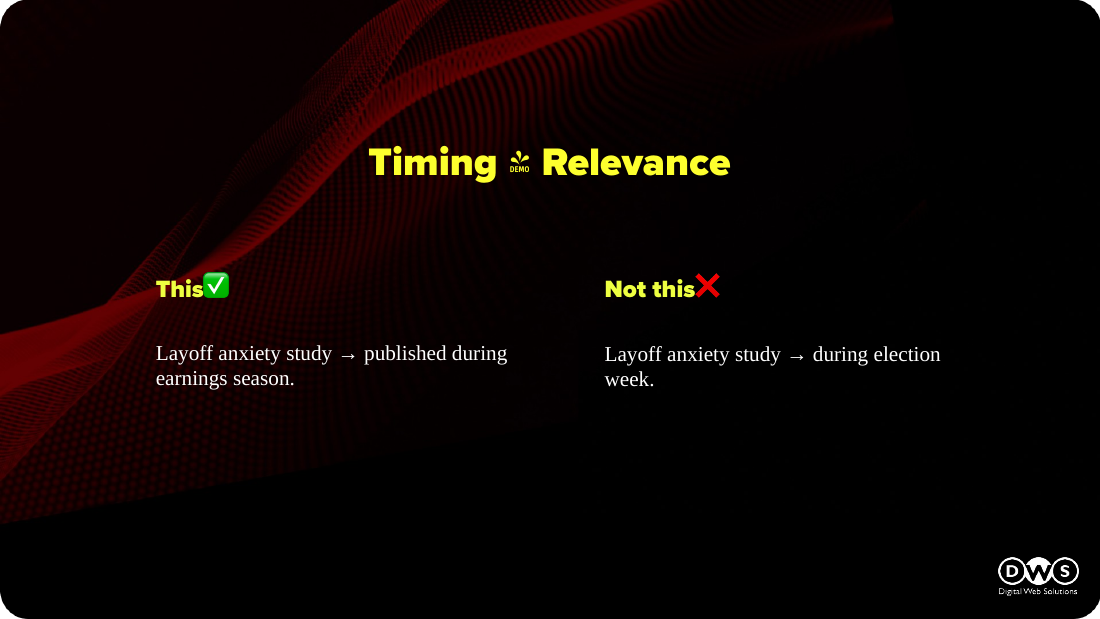
- Timing and relevance: be first; do not compete with a major news cycle. Deck: layoff study published during earnings season (good) vs during election week (bad).
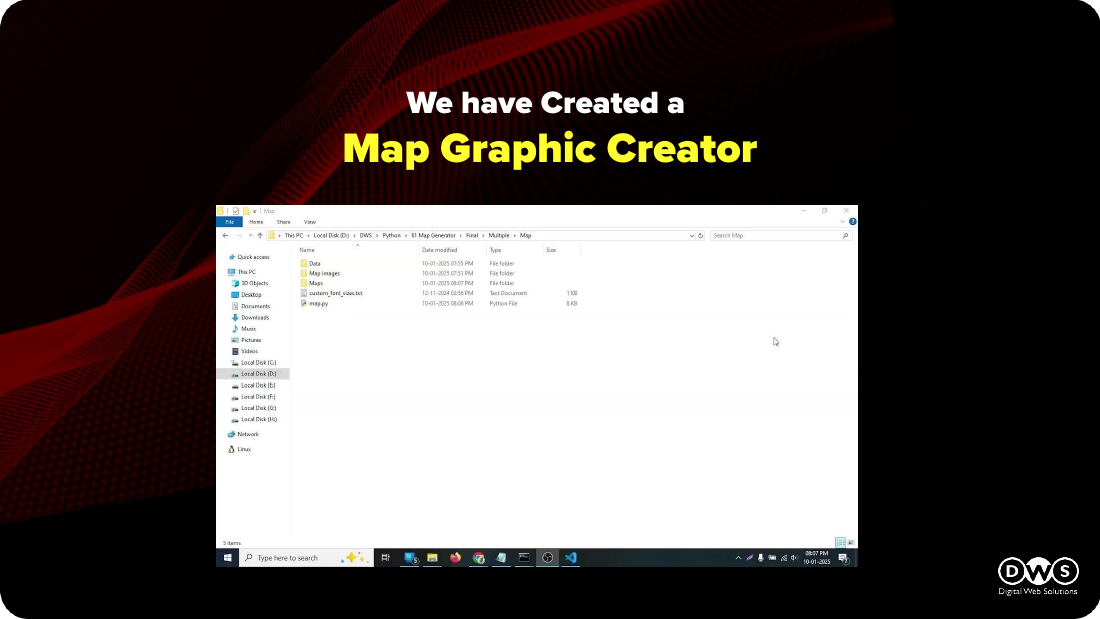
- Visual virality: one map or graph that explains the whole story, understandable in about 5 seconds on mobile. DWS built a Map Graphic Creator automation (maps used to take 3-4 hours).
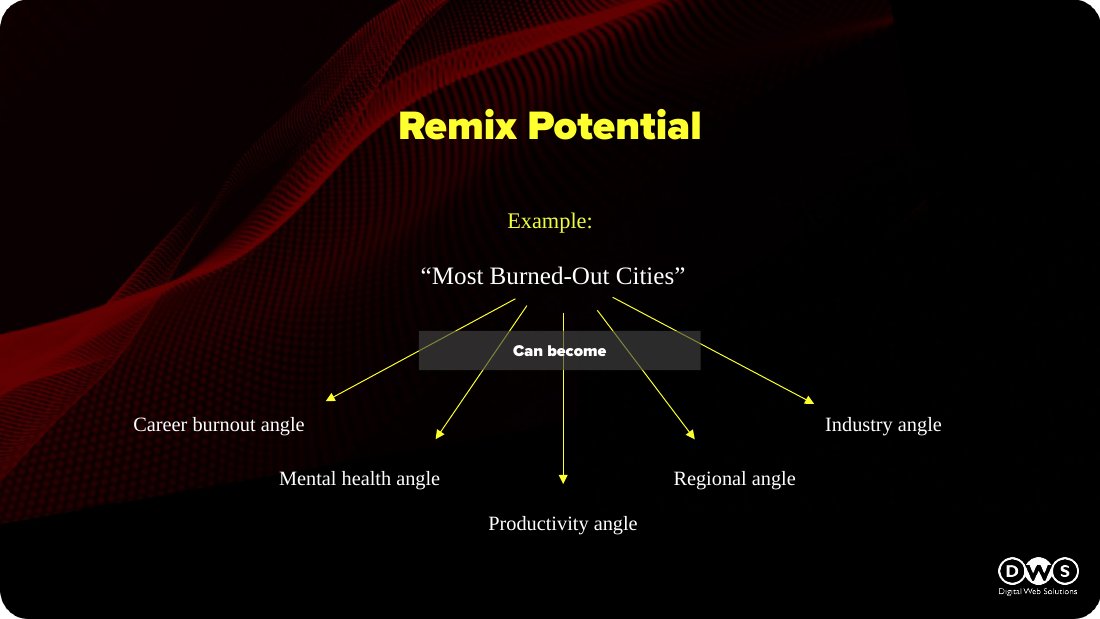
- Remix potential (his favorite): pre-plan multiple angles before launch. Deck: "Most Burned-Out Cities" becomes industry, regional, productivity, mental health, and career burnout angles.
- Journalist convenience: a journalist should be able to write the story in 15 minutes; DWS QC writes the story as a test. Deliverable: clean method, downloadable visuals, two expert quotes, pre-written narrative.
- Snowball potential: can it be niched, localized, or trigger a debate.
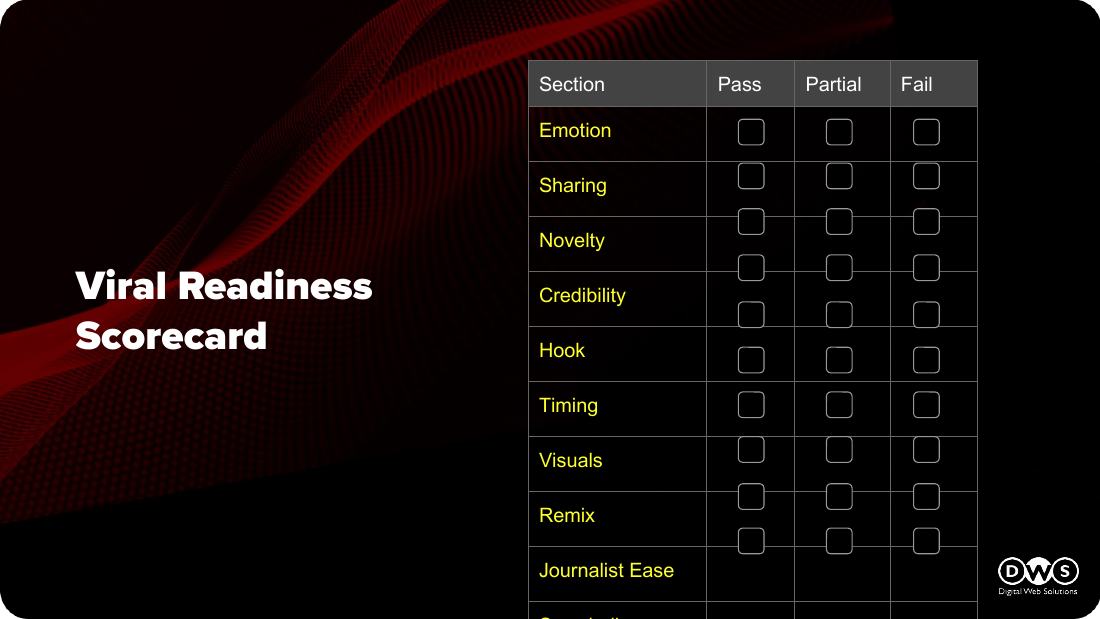
Viral readiness scorecard
- Ten sections: Emotion, Sharing, Novelty, Credibility, Hook, Timing, Visuals, Remix, Journalist Ease, Snowball. Each scored Pass / Partial / Fail.
- Rule: minimum 8 passes, no more than 1 fail; only then sent to distribution.
HARO / expert commentary
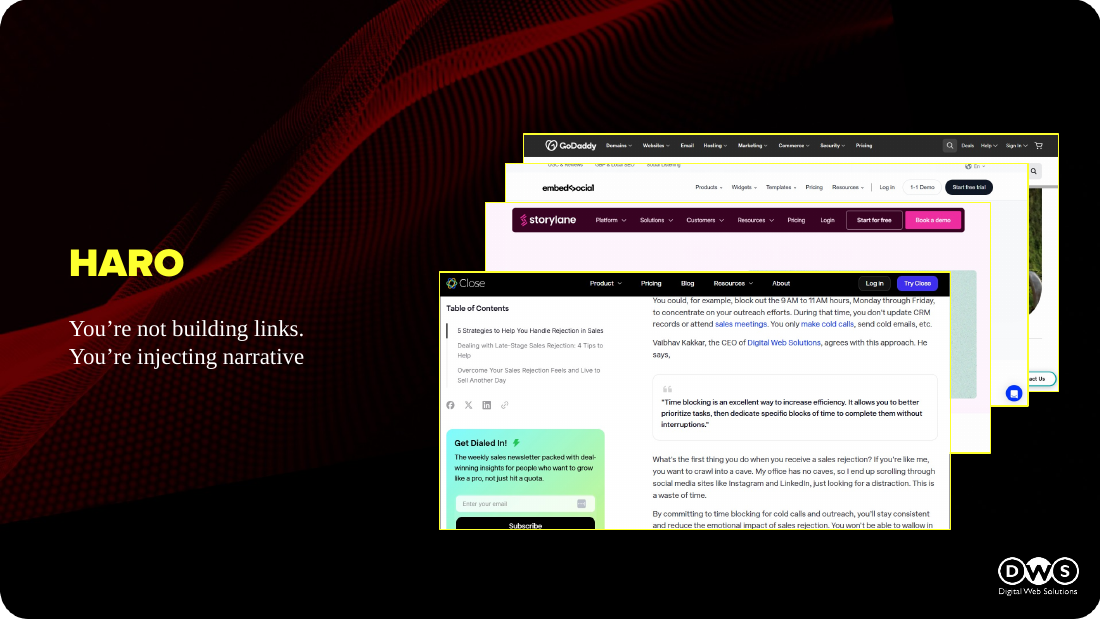
- "You're not building links. You're injecting narrative." Every mention is a training signal; LLMs learn from articles, quotes, structured context, and co-occurrence patterns.
- Must have co-occurrence with the problem you solve. Do not answer 100 questions across unrelated niches; answering the same problem everywhere drives AI visibility, while scattering it hurts.
- DWS process: filter each client's relevant niches; only answer questions in those niches, plus a few general categories (entrepreneurship, marketing), but not too broad.
Tooling and operations
- Built their own outreach/sending software; no longer uses BuzzStream or Instantly, because volume requires a custom system. All client links go live in 3 months maximum.
- Scrape trending news hourly; route by category filter to the relevant PR team. Use trends only as inspiration, never copy-paste reword.
Data-driven digital PR vs HARO (Q&A)
- Data-driven digital PR: a brand mention crediting the study to the brand (for example, "Arizona ranks #9 in intersections, study by digitalwebsolutions.com"), often plus an expert quote. You own and get credit for the story.
- HARO: you are one of many answers (for example, one of 20) in a roundup-style article; a pure expert-comment placement.
Closing offer
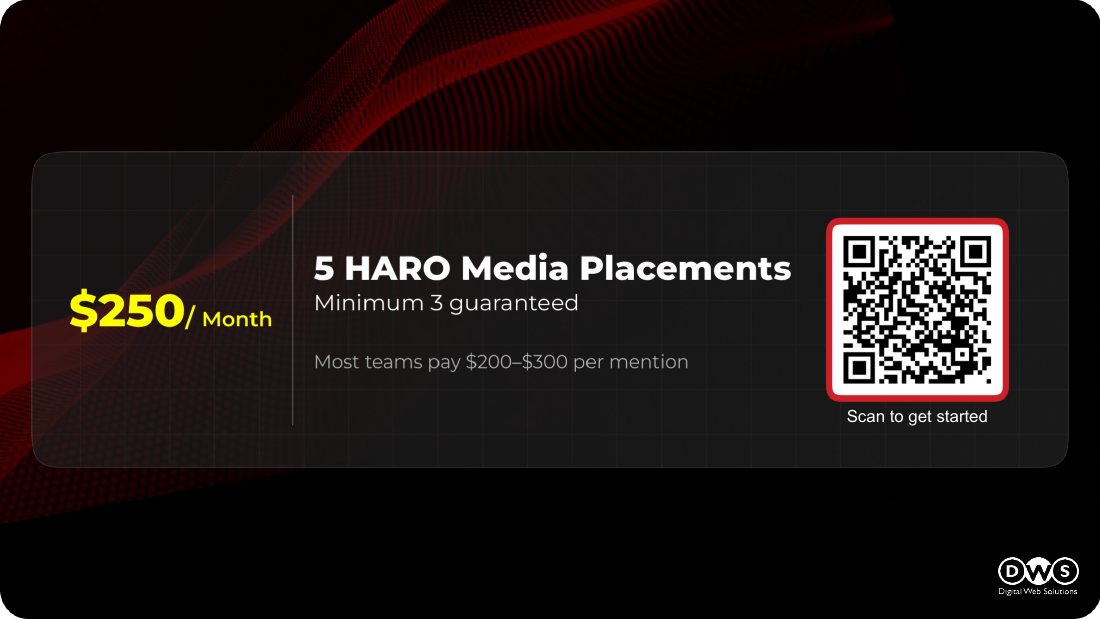
- SEO Spring Training exclusive: $250/month flat subscription for unlimited HARO. Guaranteed minimum 3 mentions/month; typical range observed 5-15-20 mentions/month. Framing: some people pay $200-$300 for a single mention.
- Shared his LinkedIn; invited questions on digital PR, brand visibility, and scaling agencies.
Moderator (Chris) and audience
- Chris introduced the final conference day, thanked the organizers (Terry, Elizabeth, Clint), and stressed that a brand must be in front of people or they will not choose you. Intro only.
- An audience member (name not given) noted synergies across speakers and proposed a tool that drops these talks into an LLM to scan Google Trends and auto-draft PR stories. Dawood confirmed his team already scrapes trending news hourly and routes it by category, but only as inspiration, never copy-paste.
Companion handout note
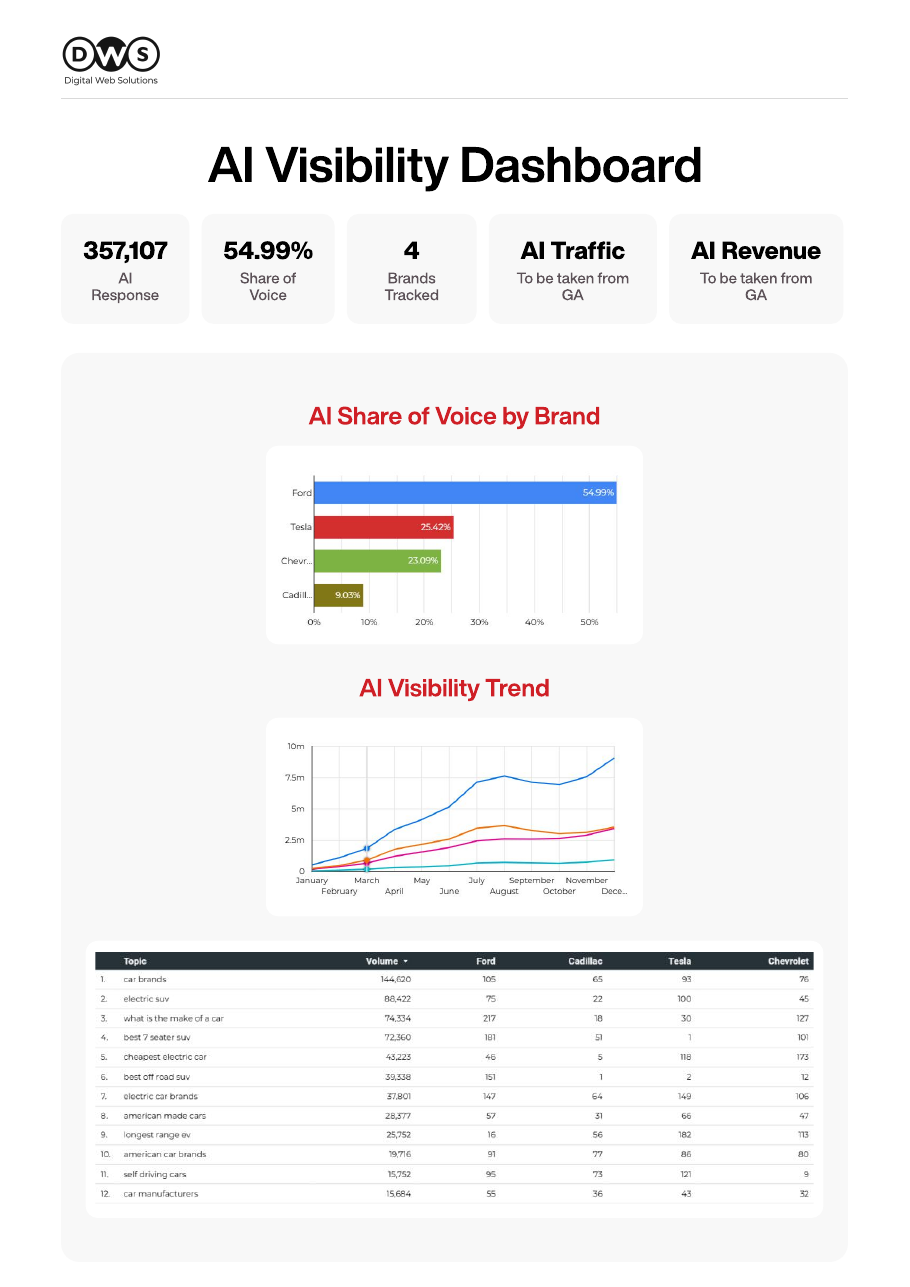
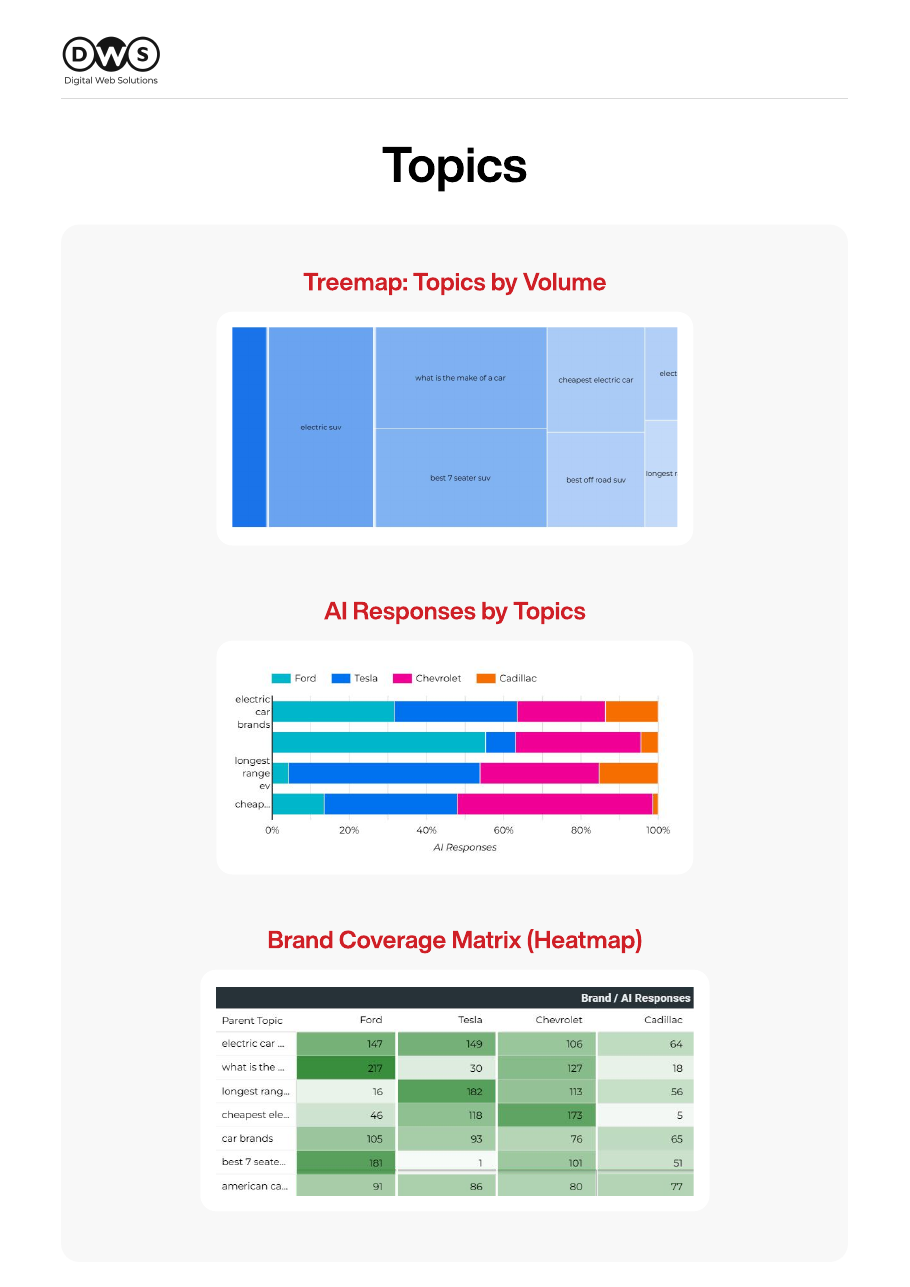
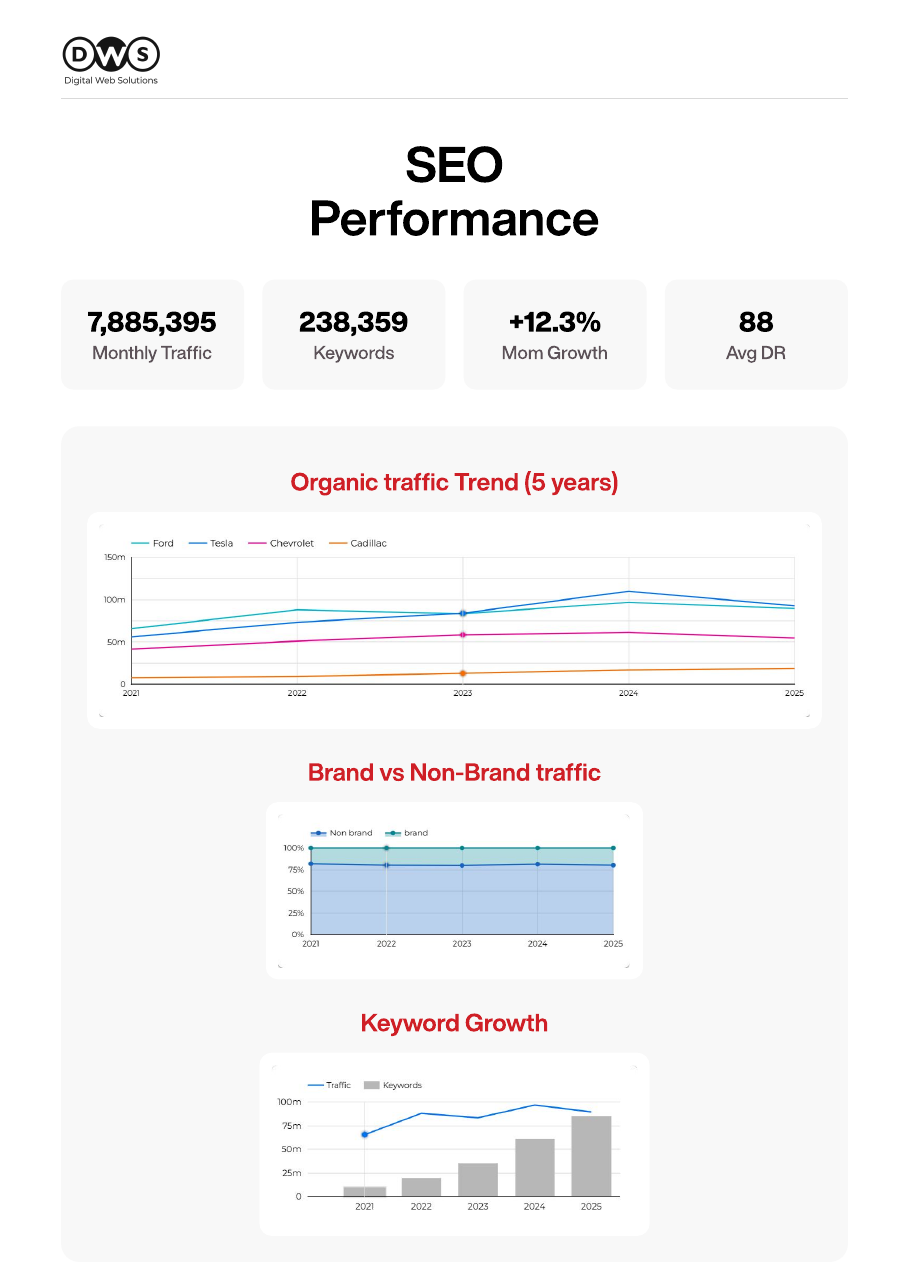
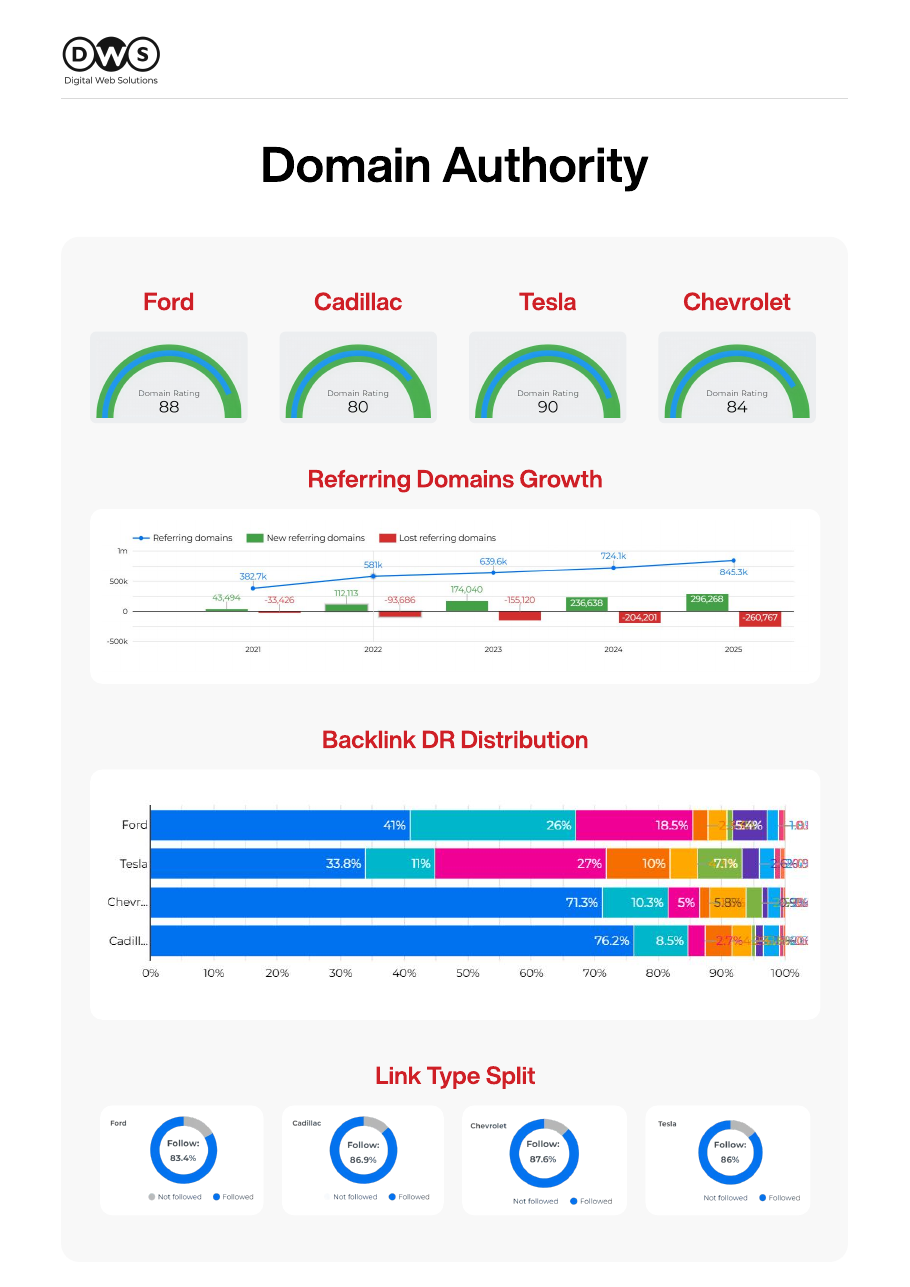
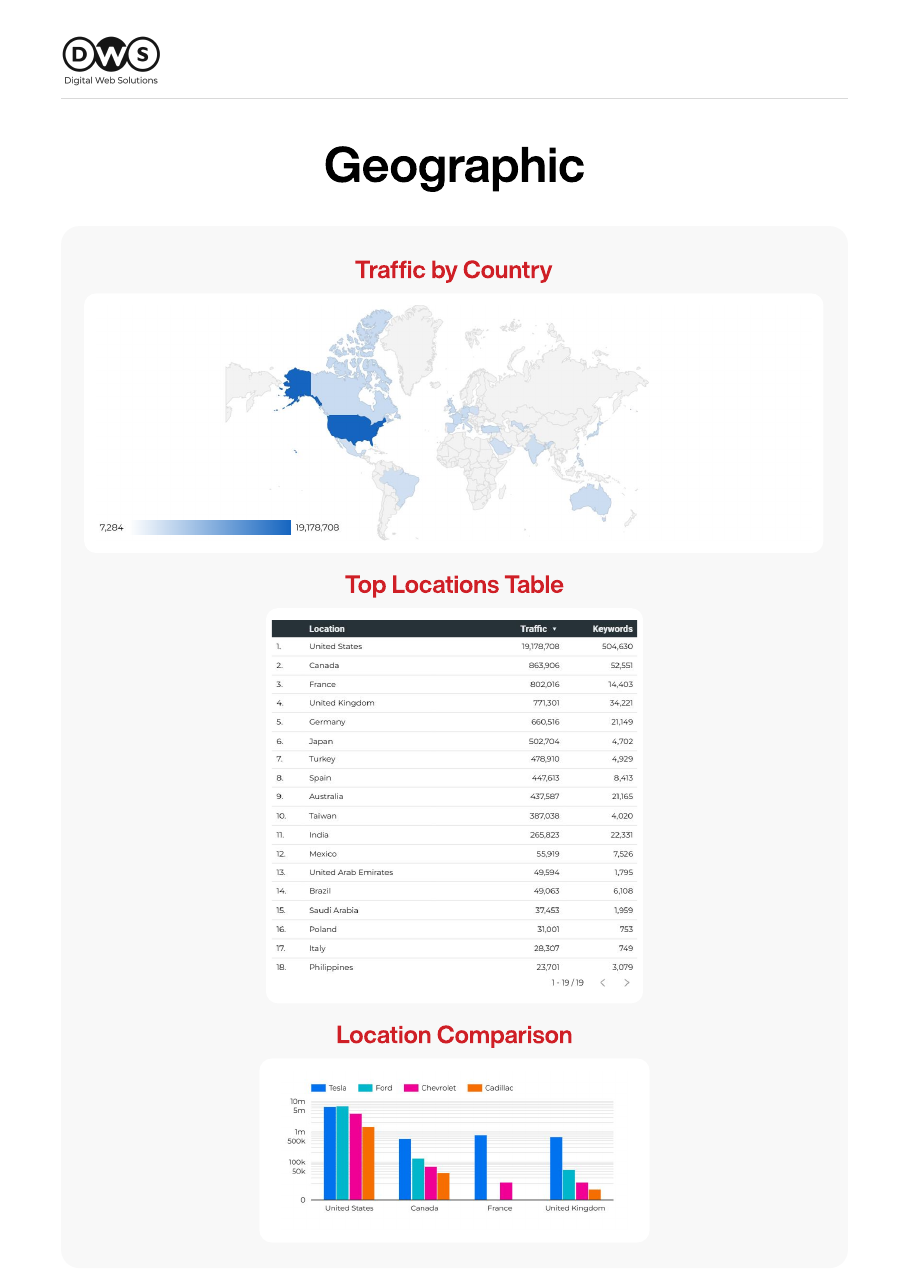
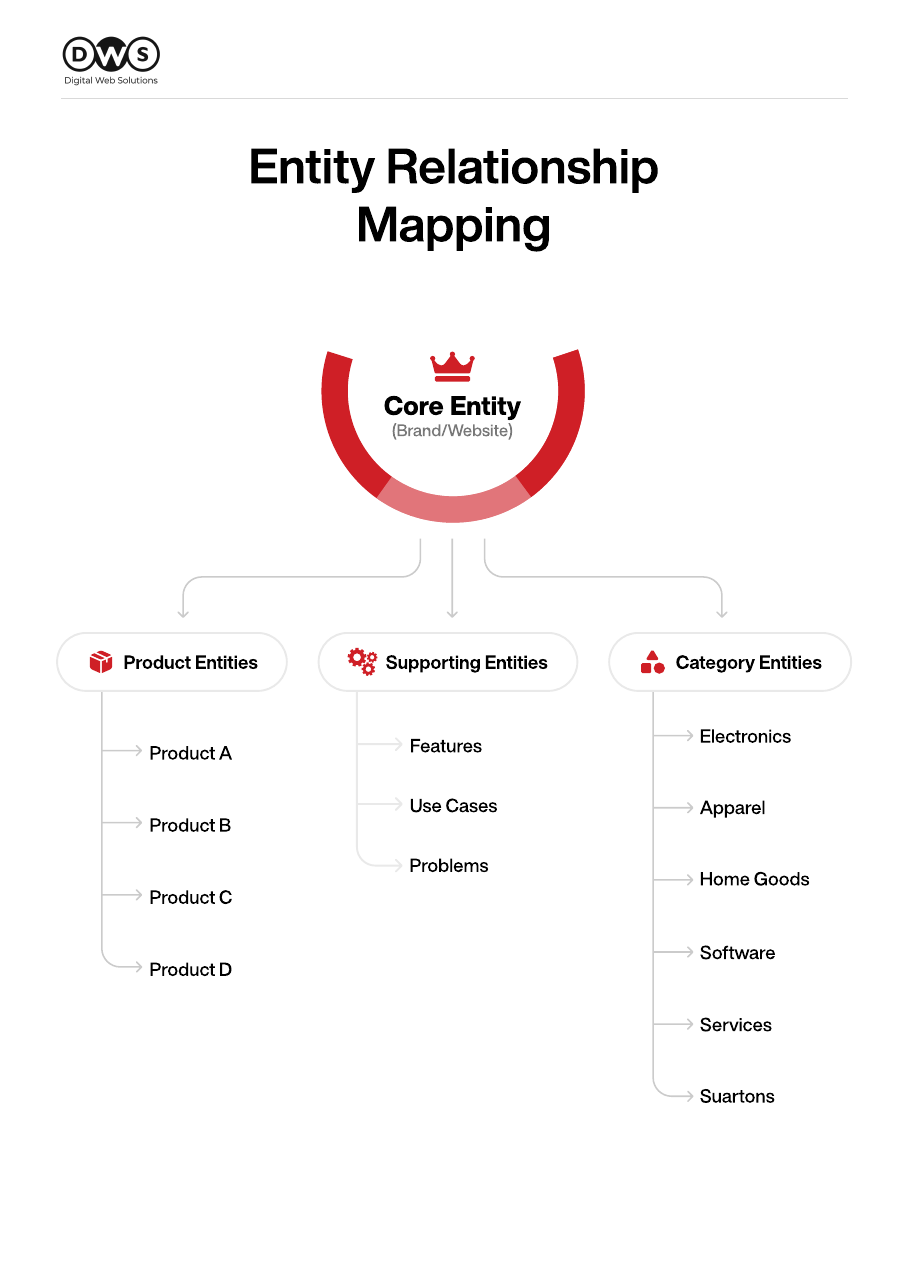
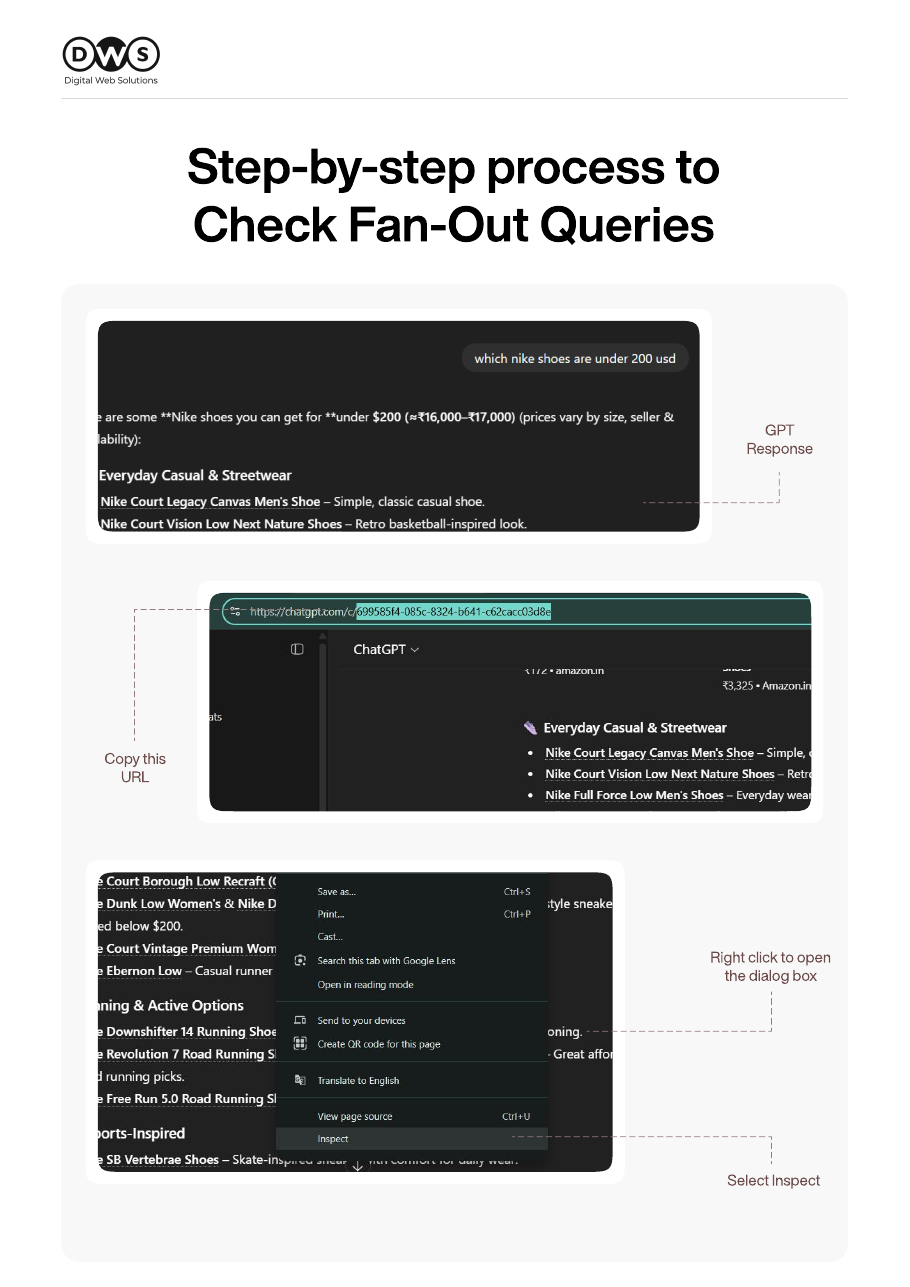
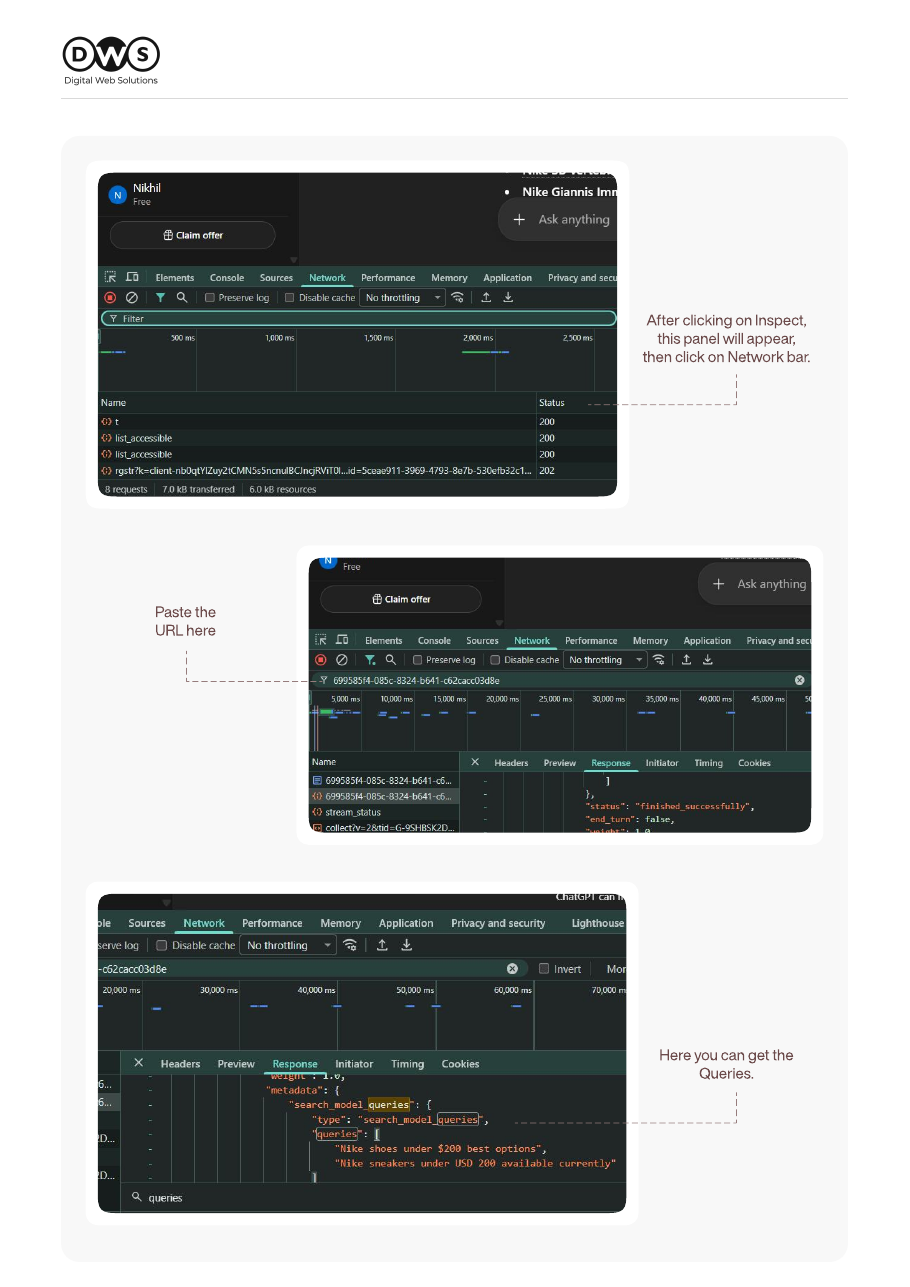
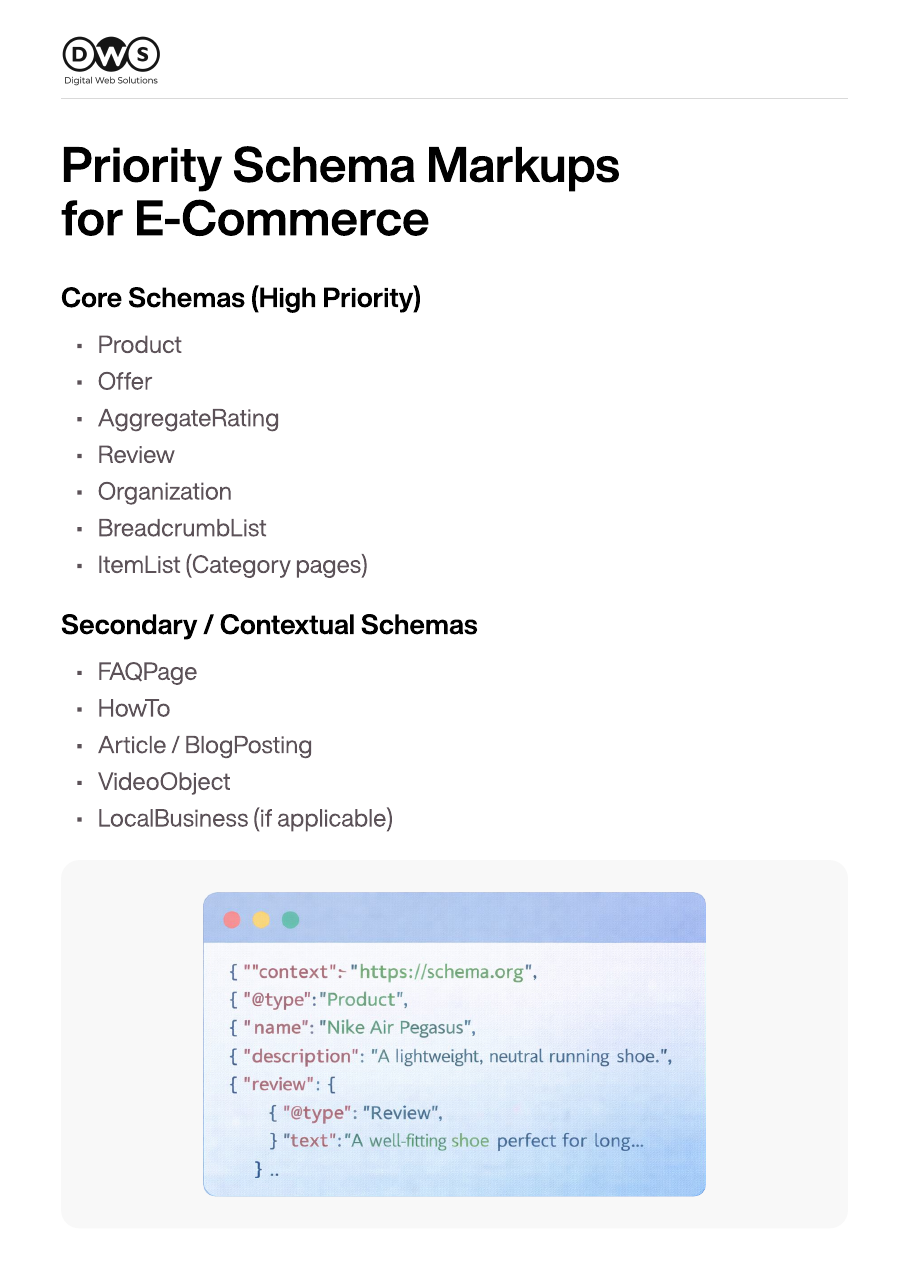
- The handout deck ("Copy of DawoodHO.pdf") is themed "Retail Visibility in 2026: What Google and AI Really Want," with automotive brand examples (Ford, Cadillac, Tesla, Chevrolet), an AI Visibility Dashboard mockup, an e-commerce schema priority list, an entity relationship map, and an on-page checklist. This material was not walked through verbally and appears to be a separate companion handout.
Slides
Slides: Copy of DawoodHO handout (13)
Slides: SEO ST 2026 Dawood main deck (72)

Source
Synthesized from the SEO Spring Training conference recording and decks for Dawood Bukhari's Day 3 session ("Copy of DawoodHO.pdf" handout and "SEO ST 2026 Dawood.pptx" main slides). Some deck figures (for example, the 14.2% vs 2.8% conversion and "5X Higher" stats) appear on slides but were not spoken in the talk; the speaker's name is rendered "Dewood" in the transcript intro but confirmed as Dawood Bukhari.