"Joy Hawkins - Local Ranking Mysteries, AI Local Packs, Duplicate Content, and Link Penalties"
"Joy Hawkins's solo talk on five local SEO mysteries: review surges Google ignores, why ranking reports diverge from reality, why duplicate content beats spun content, broken AI local packs, and stricter domain-wide link penalties."
On this page
This is Joy Hawkins's solo talk, "Five SEO mysteries that secretly kill your ranking," delivered with her data-first ethos (the Sterling Sky slogan: "My data doesn't care about your opinions"). She has done local SEO since 2006 and runs Sterling Sky and Local U. The session walks through five real-client patterns where doing the right things no longer guarantees good outcomes. (Hawkins also fielded a live Google Business Profile Q&A on the Day 1 closing panel; see Day 1 Roundup and GBP Q&A.)
Main takeaways
- Ranking reports increasingly lie because Google's surfaces have split. Maps vs Search, mobile vs desktop, and a tool's methodology (scraping vs Maps API vs Search) all return wildly different results, so a Maps-based tracker can make you look like you are losing when you are winning.
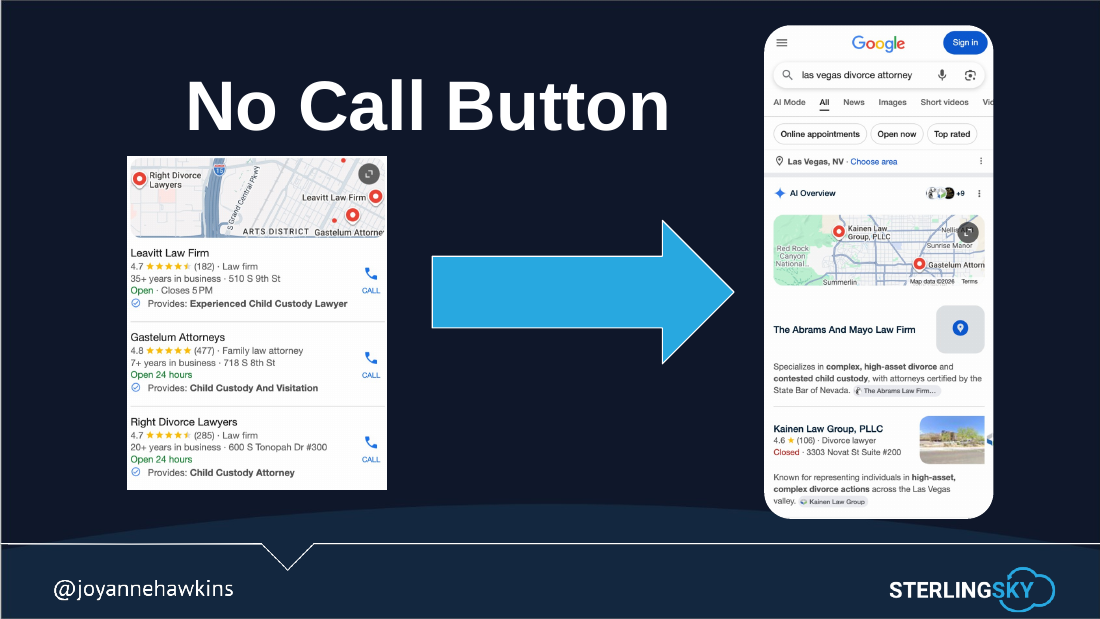
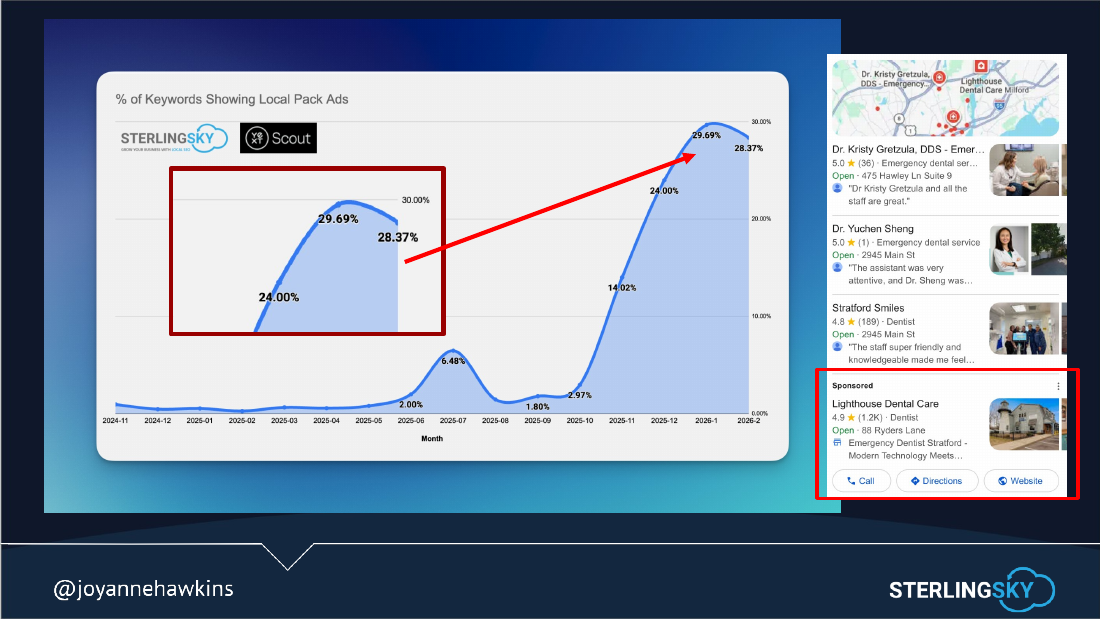
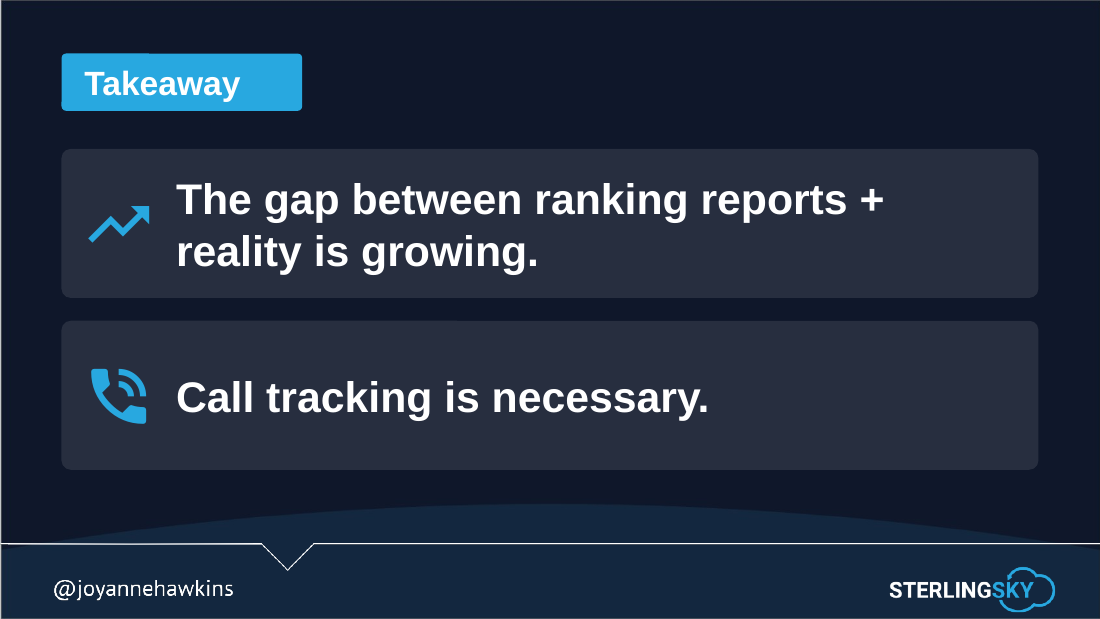
- Google is replacing call buttons with Local Services Ads in the local pack. Clicks-to-call have steadily declined while ads in the local pack have climbed fast, so call tracking, not visibility, is the metric that matters.
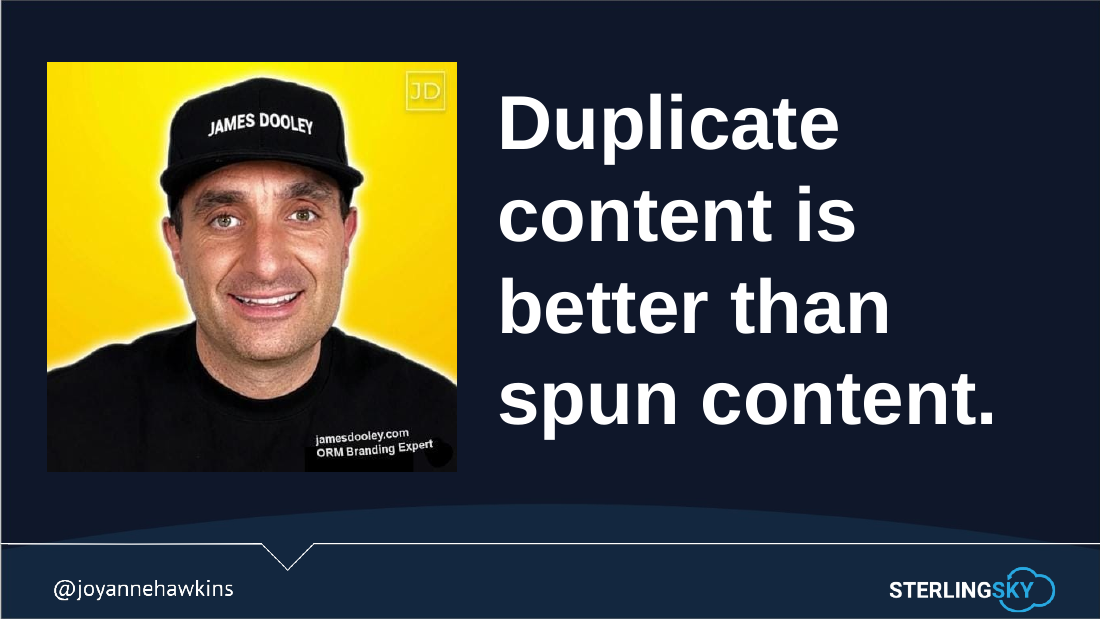
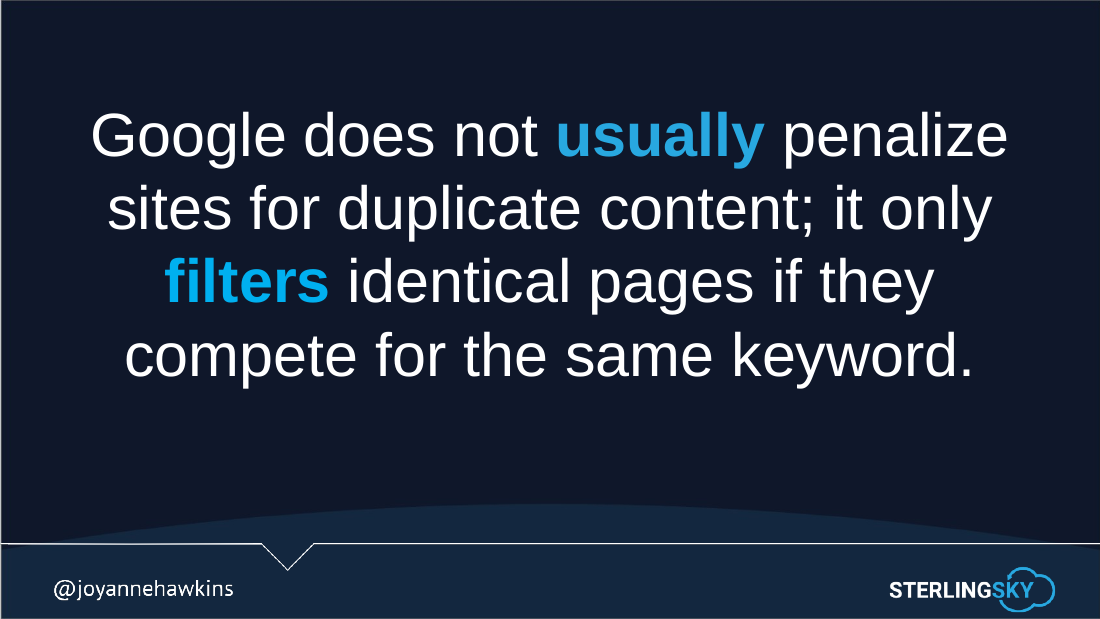
- Exact-duplicate location and service-area content outranks reworded ("spun") content. Grade your pages, keep the most semantically relevant one, and make the rest word-for-word identical (swapping only the city name).
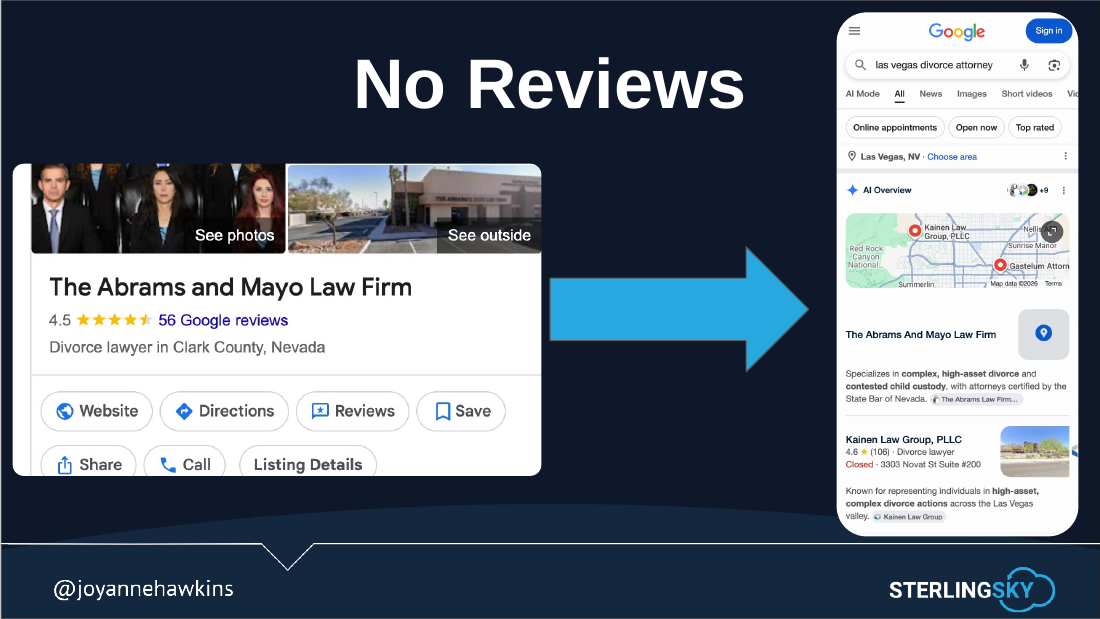
- AI local packs are broken and easy to fix. They show two listings, often fail to connect to a Google Business Profile (a blank pin), and the fix is matching the business name on your website to the GBP name exactly, including capitalization.
- Link-based core-update penalties have gotten much stricter and are domain-wide. Dozens (not hundreds) of anchored links, often guest posts about five years old, can wipe out established small-business and legal/home-services sites; recovery takes at least two core updates and is not guaranteed.
Key points
Mystery 1: Competitor review surges Google never penalizes
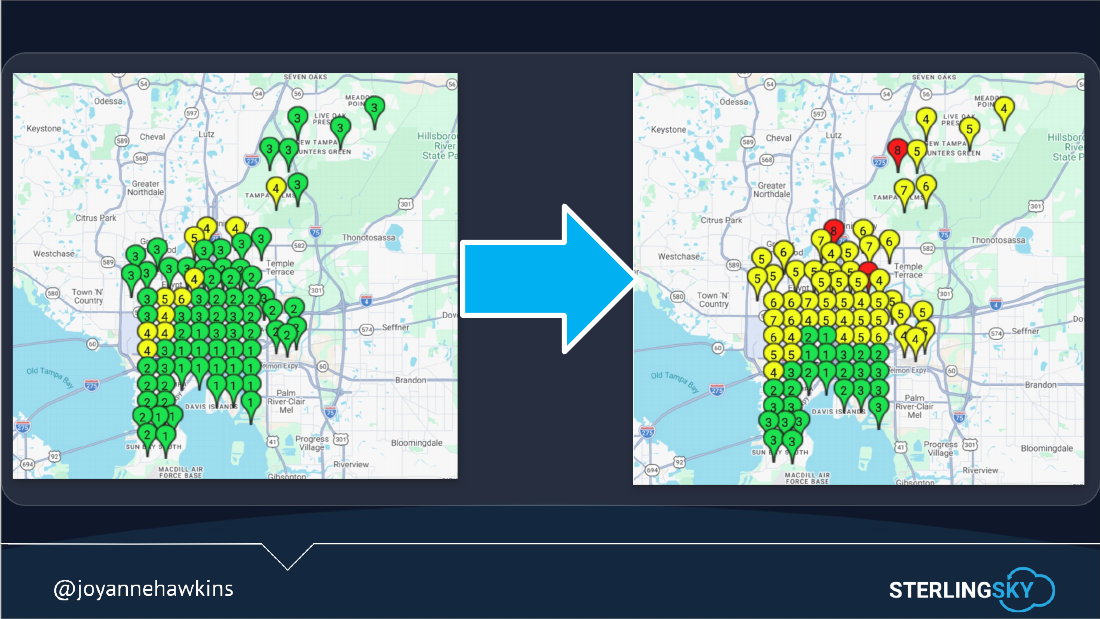
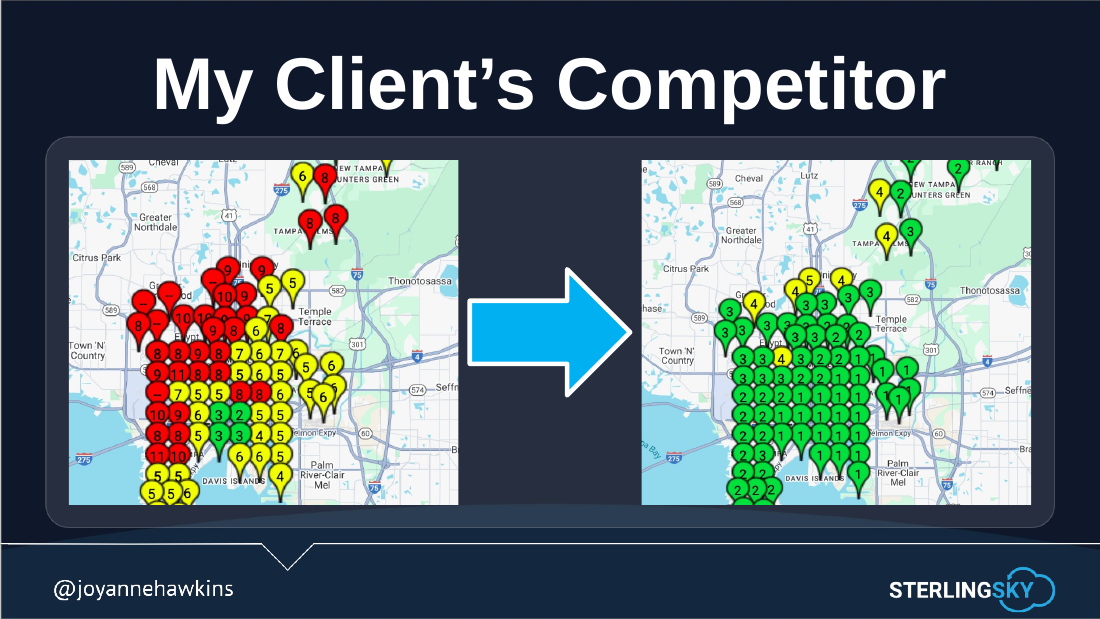
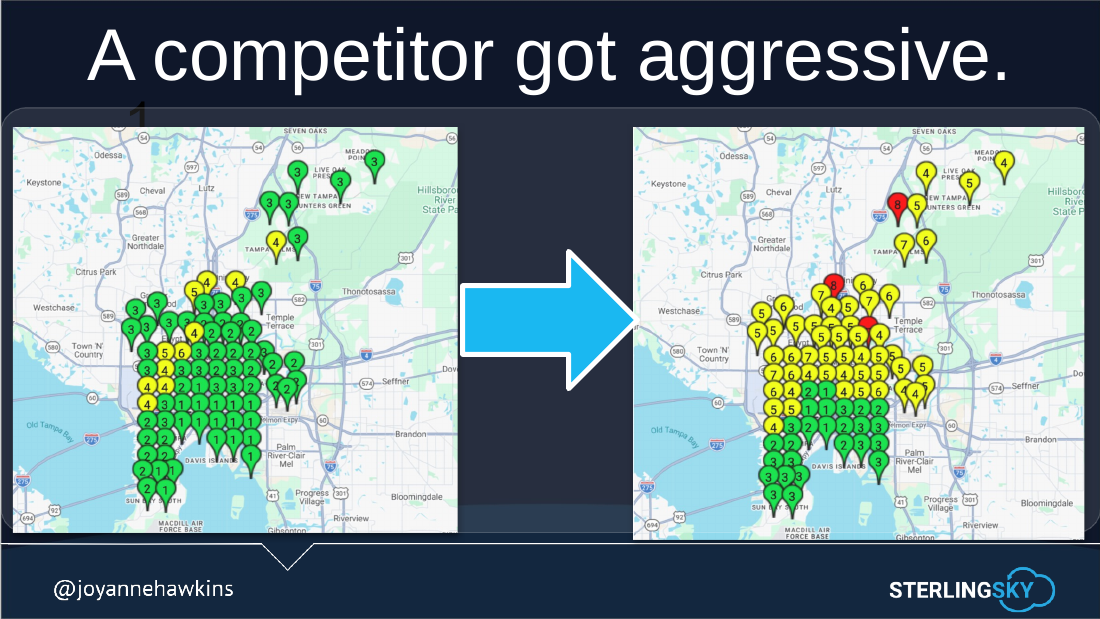
- A Tampa personal injury lawyer's competitor jumped from around position 8 to dominating the top 3 within weeks.
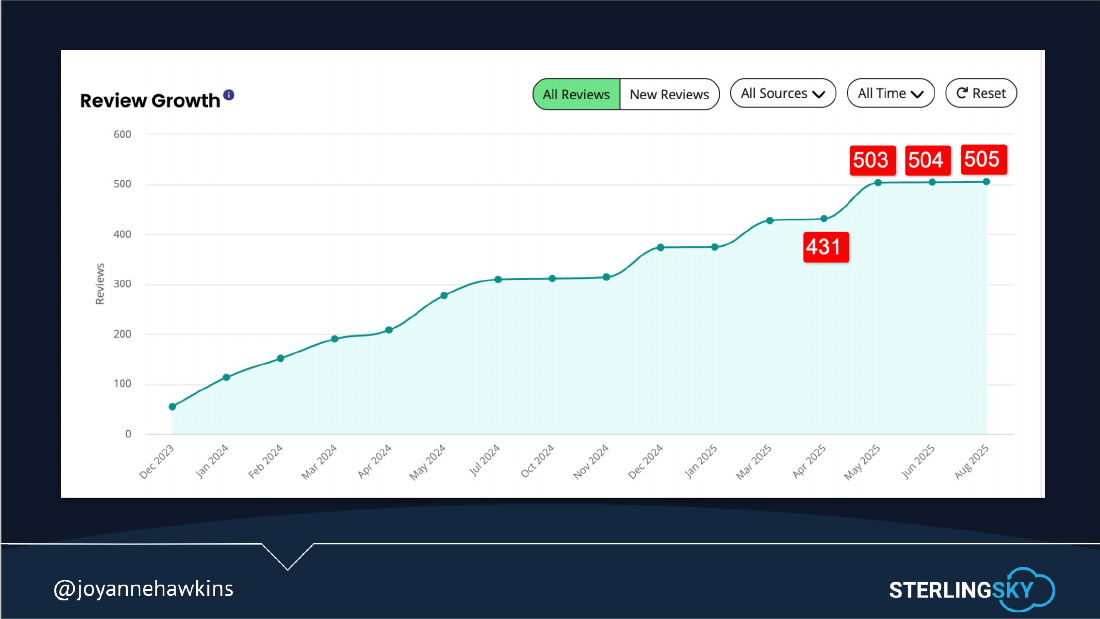
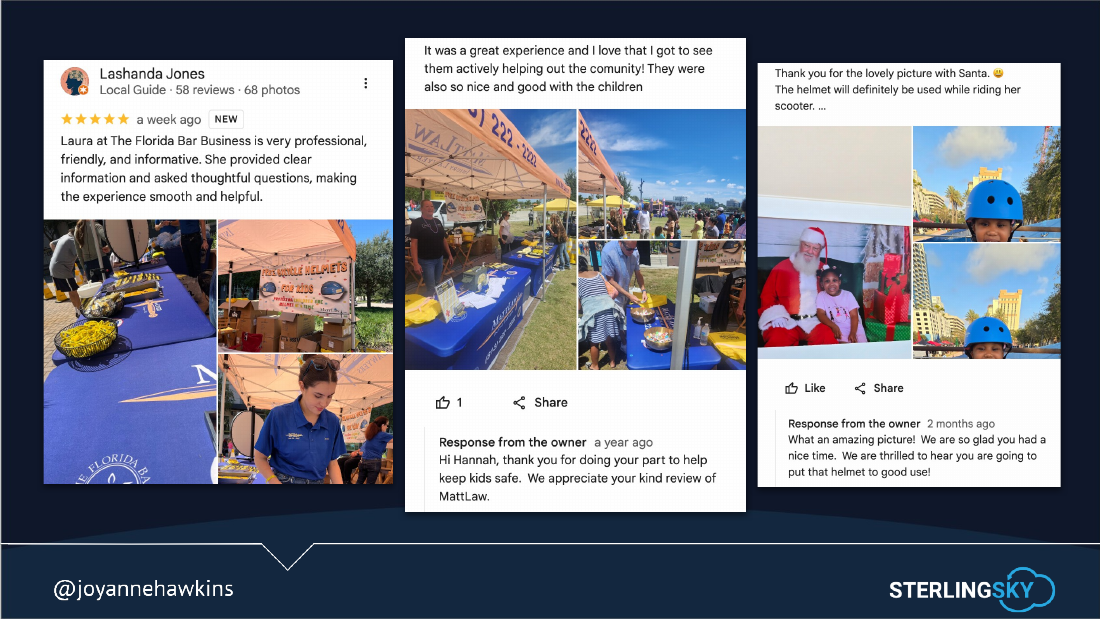
- Cause: reviews went from just over 400 to over 500, almost all on the same day. The tactic was giving out free bicycle helmets to kids at a local festival, then asking for reviews (no signs requiring a review; reviewers posted kids' photos).
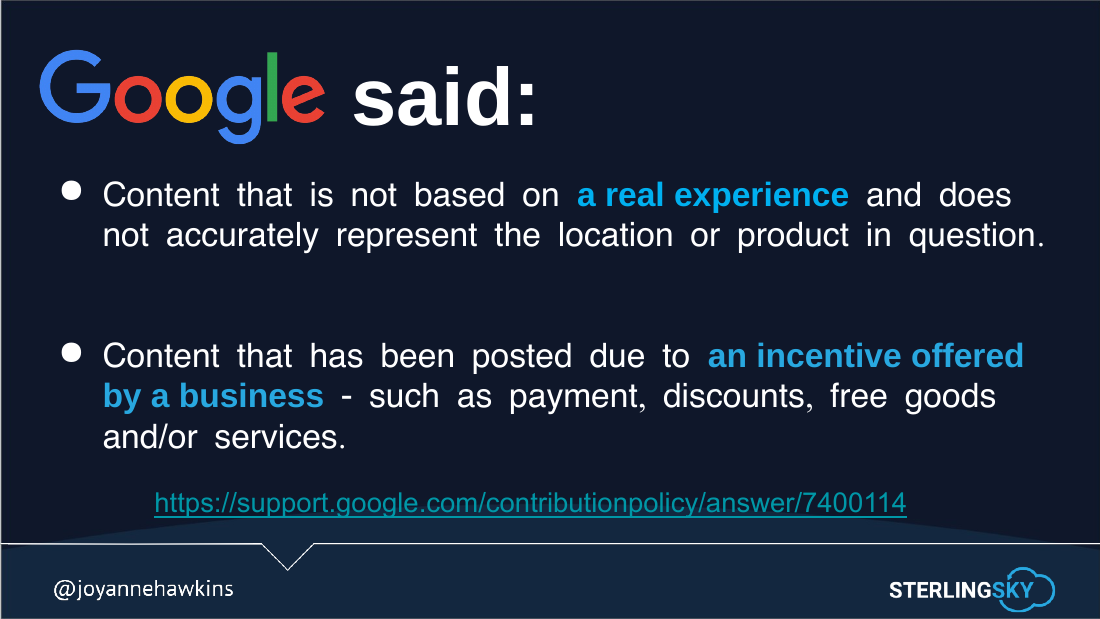
- Google said it violates guidelines (reviewers had no real legal-service experience; the incentive is shady) but did nothing.
- Hawkins tracked them five to six months: rankings held the top spots even after new reviews stopped, and they repeat the boost once or twice a year.
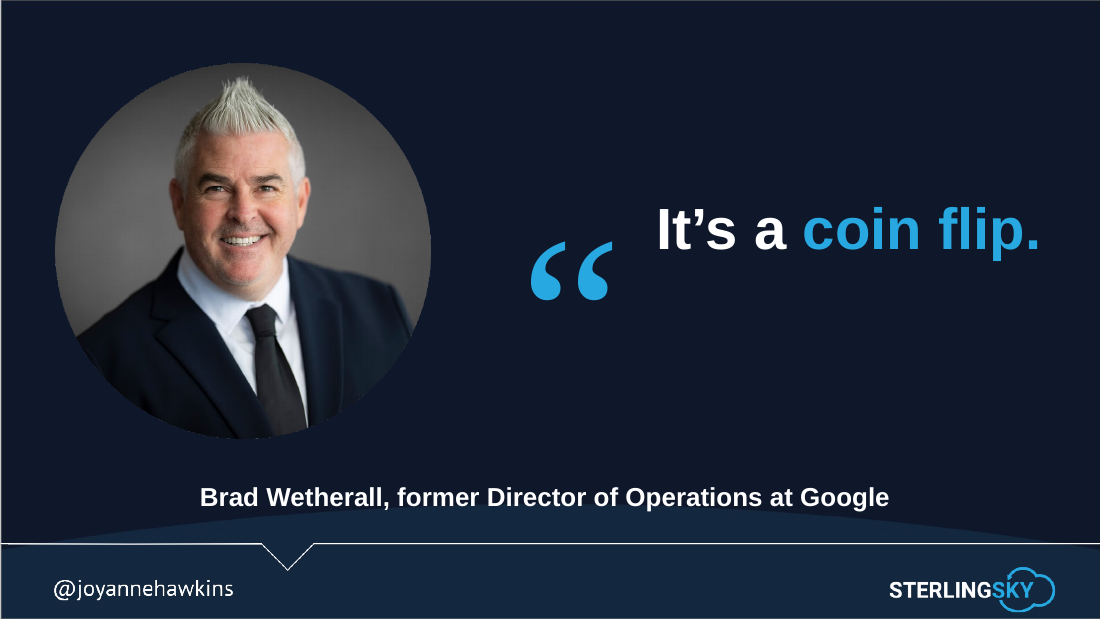
- Brad Weatherall (ex-Google, 10 years) said whether a Googler approves these reviews is "a coin flip."
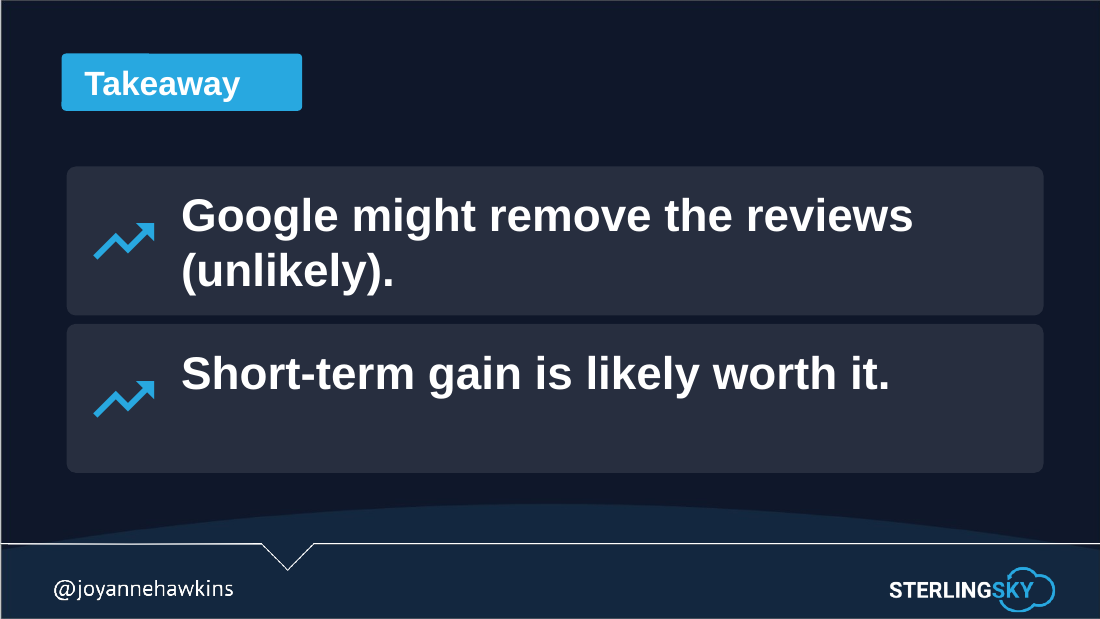
- Her client (bound by state bar rules) declined to copy it, but Hawkins believes the leads and revenue gain outweighed any future review removal.
Mystery 2: Measuring leads and traffic incorrectly
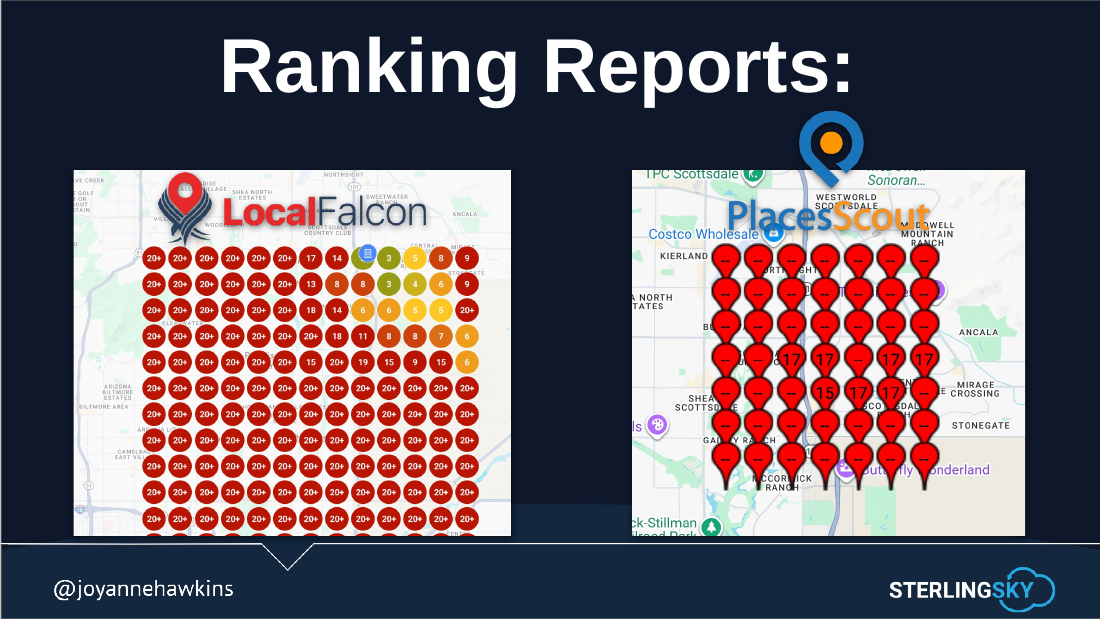
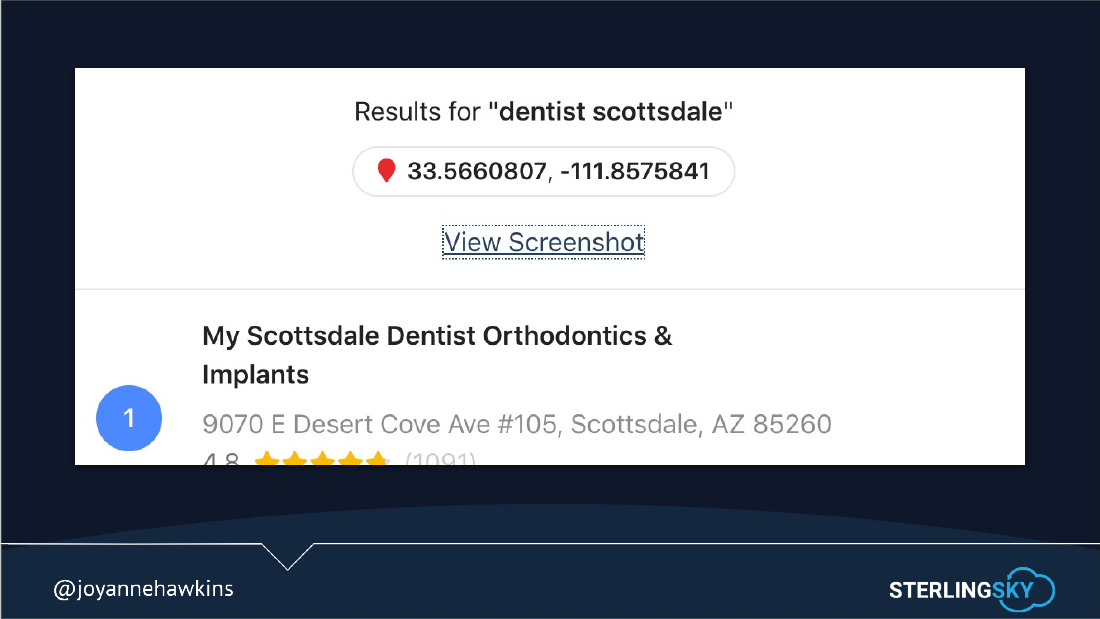
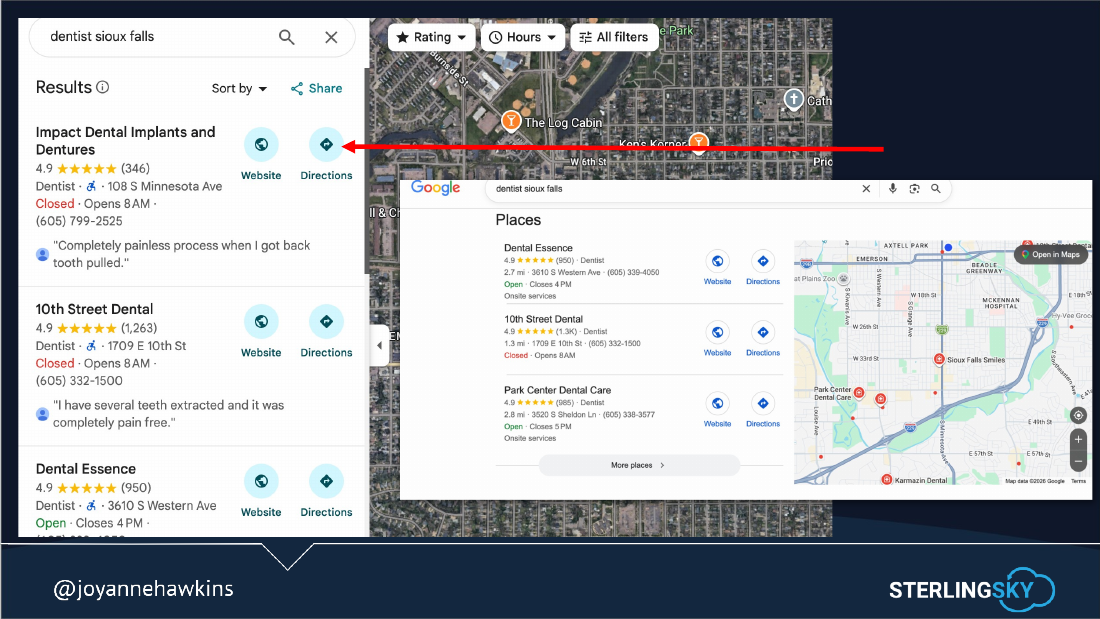
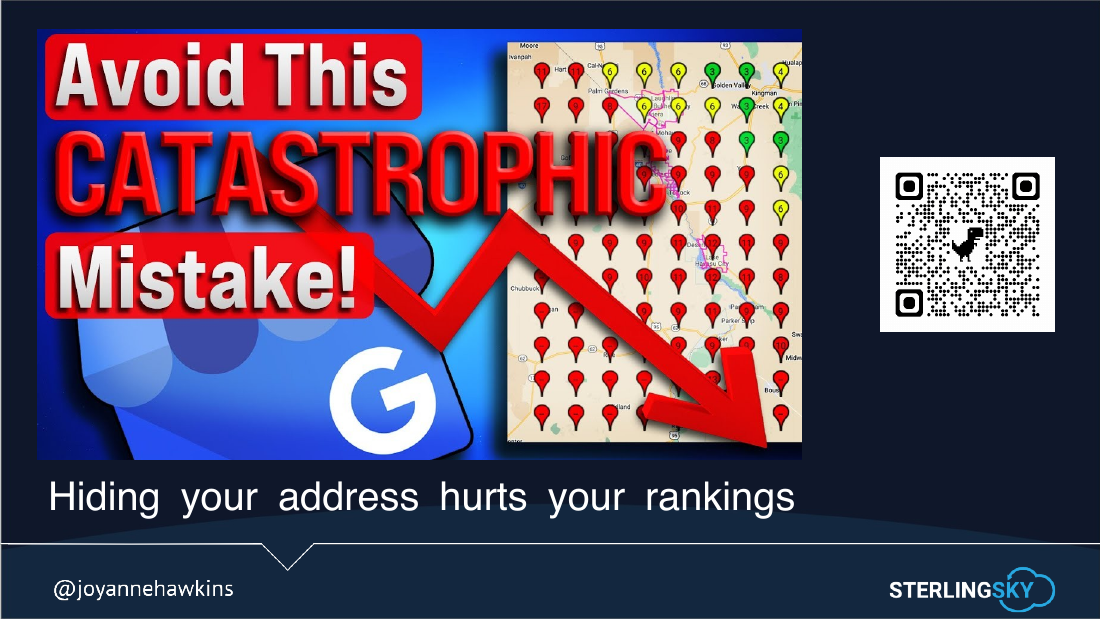
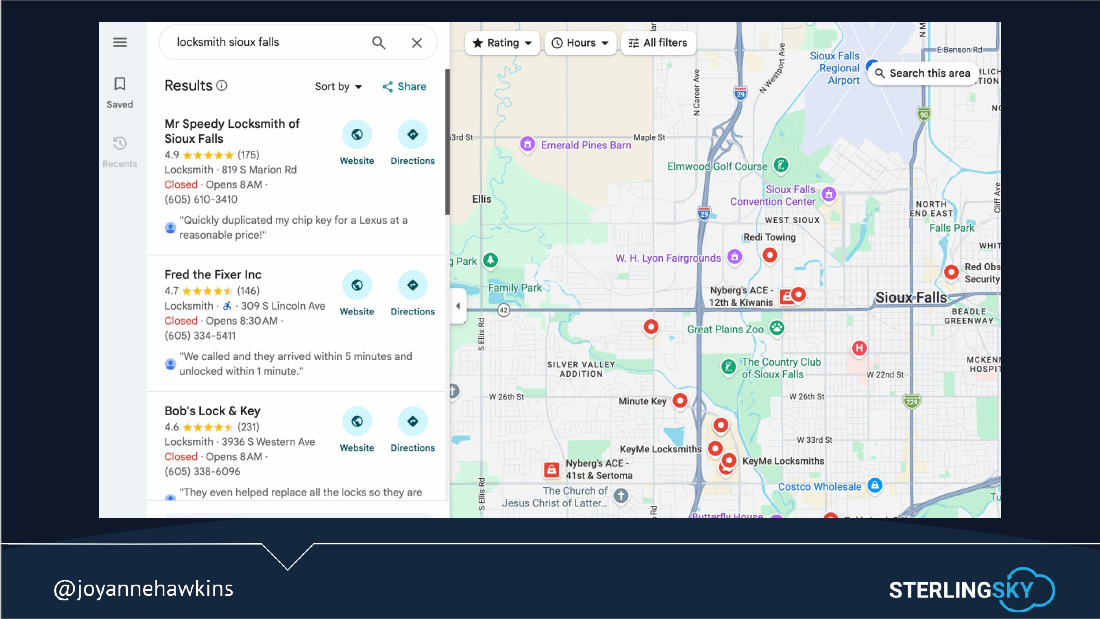
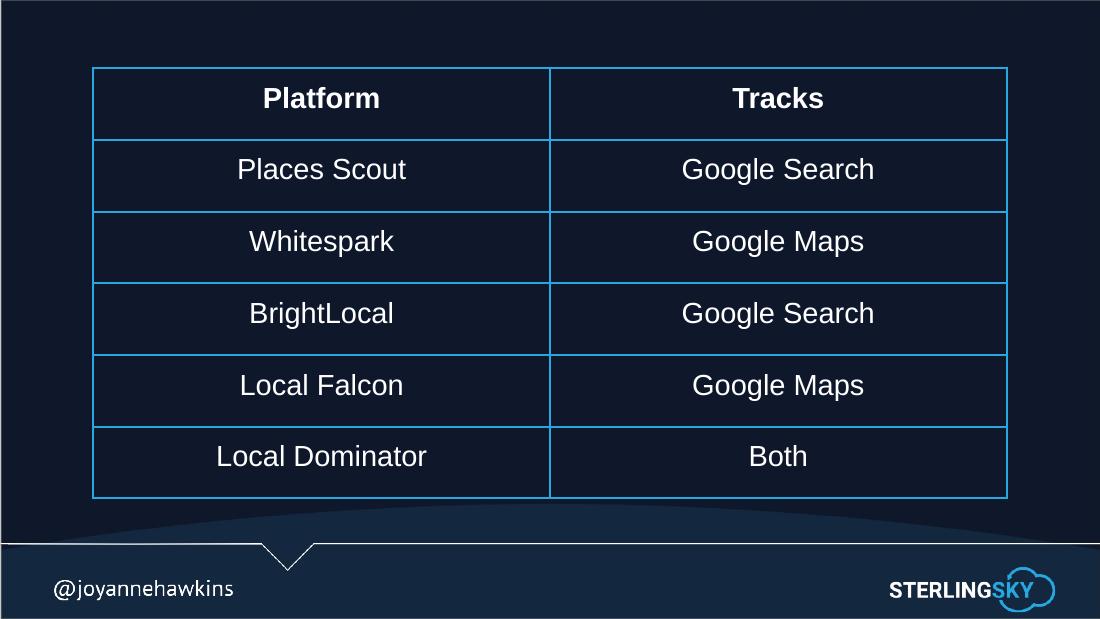
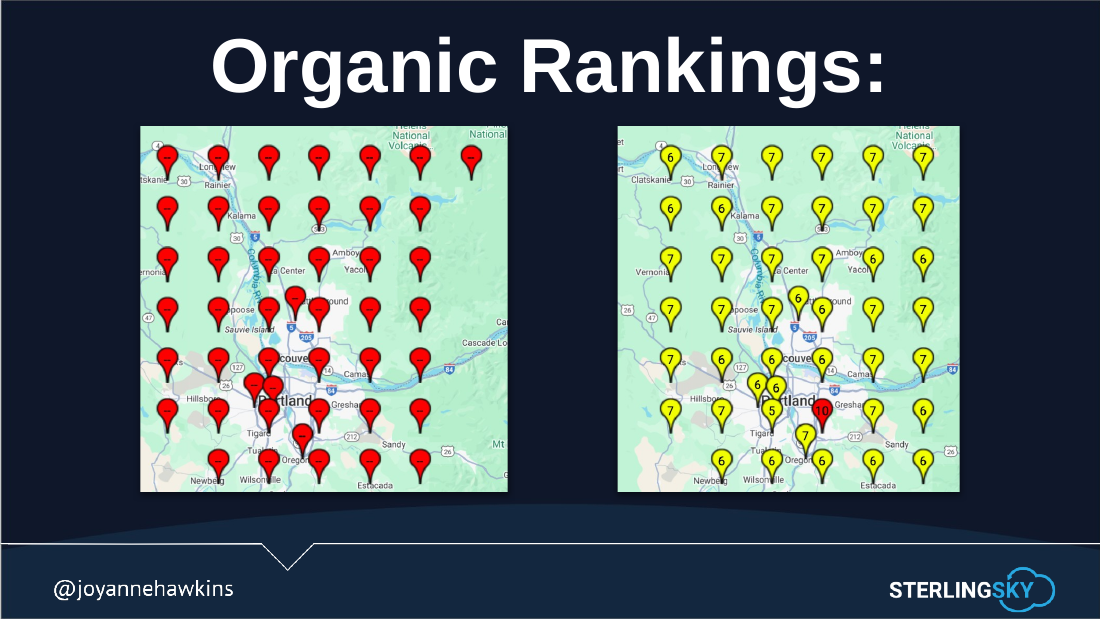
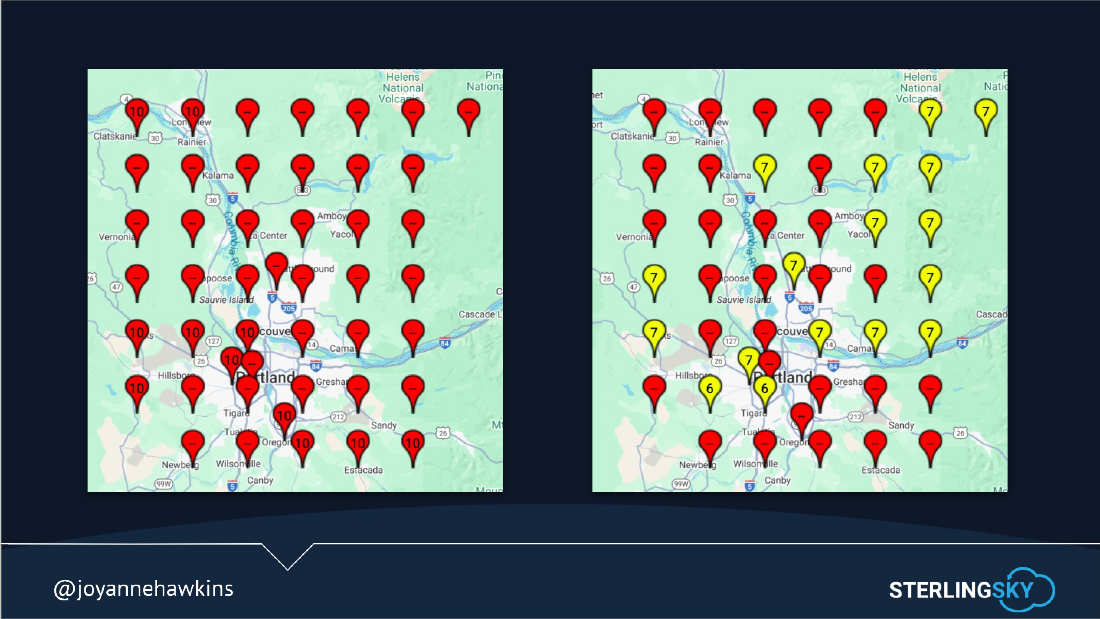
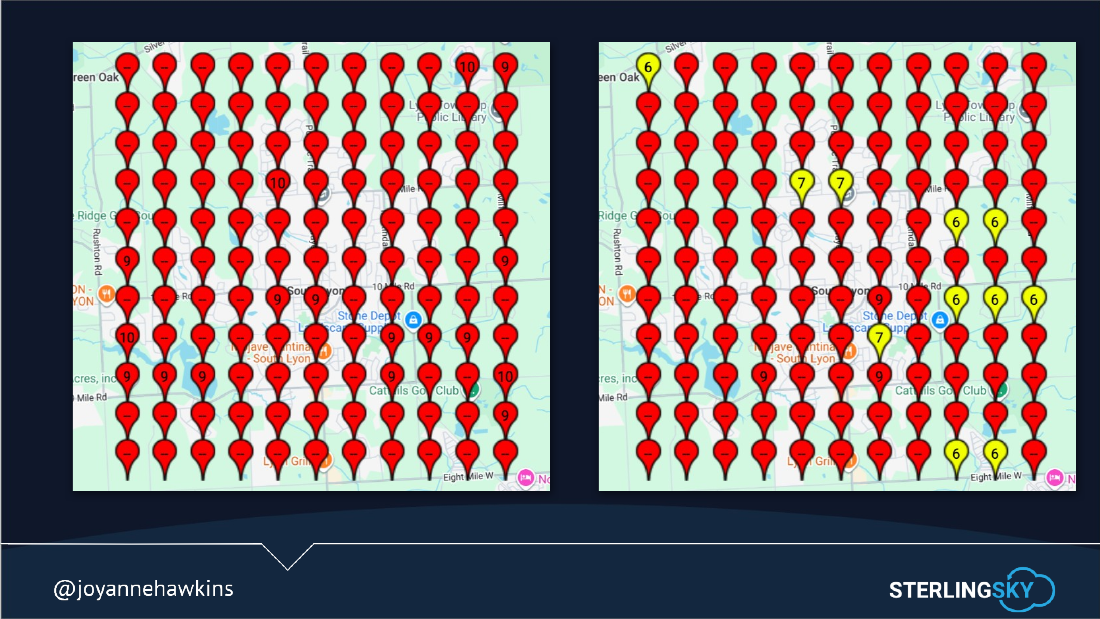
- The same client's Local Falcon report differed from her team's Places Scout report. Local Falcon searches Google Maps; Places Scout searches Google Search, and the two surfaces give very different results.
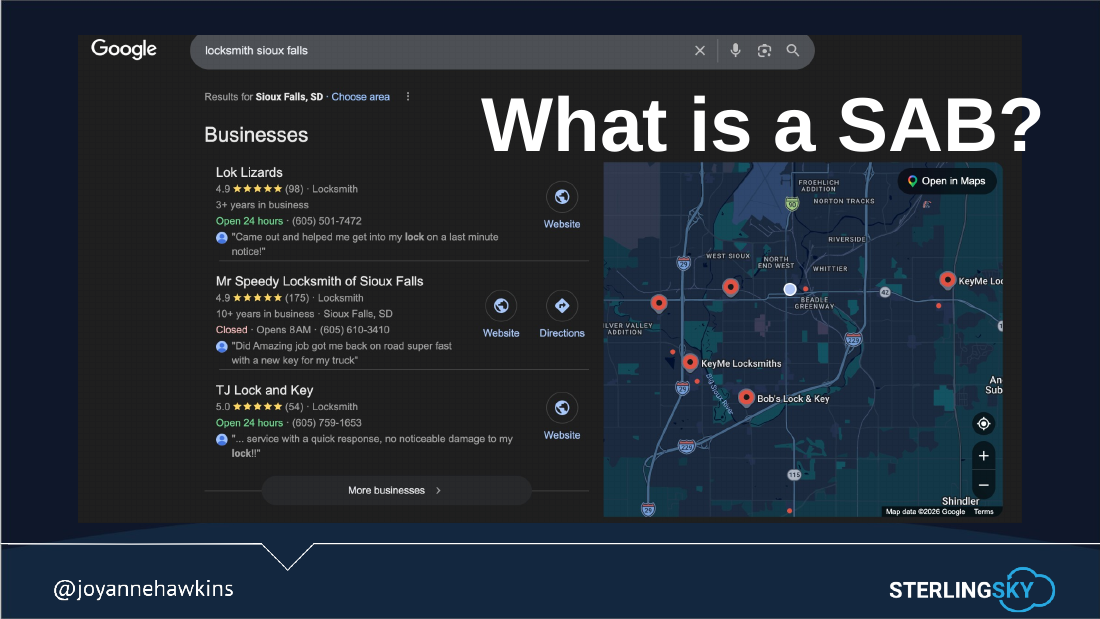
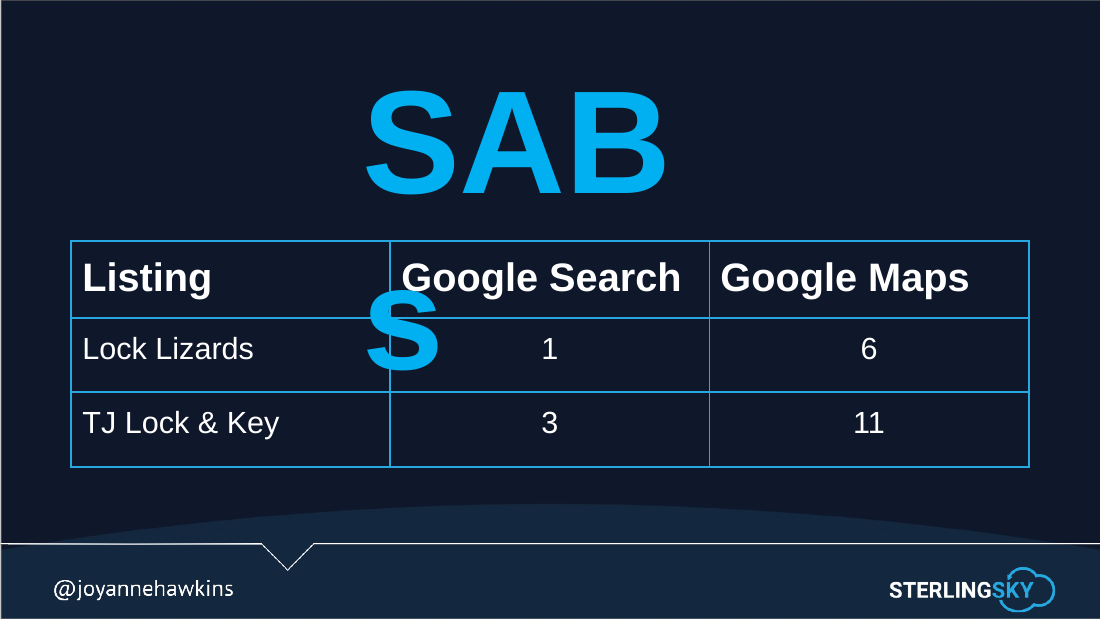
- Service area business (SAB) listings (no directions icon, no map pin, for home-based businesses) rank poorly on Maps but fine on Search. Example: two locksmiths in the top 3 on Search were positions 6 and 11 on Maps.
- Tool providers are split: some use Google Search, some scrape, some use the Google Maps API; results differ.
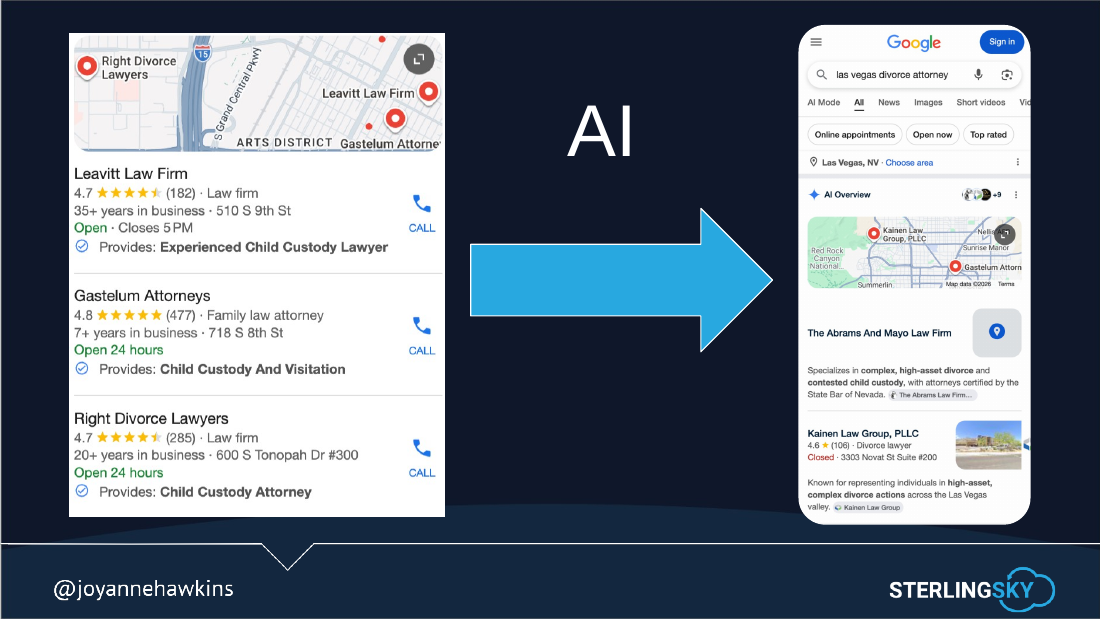
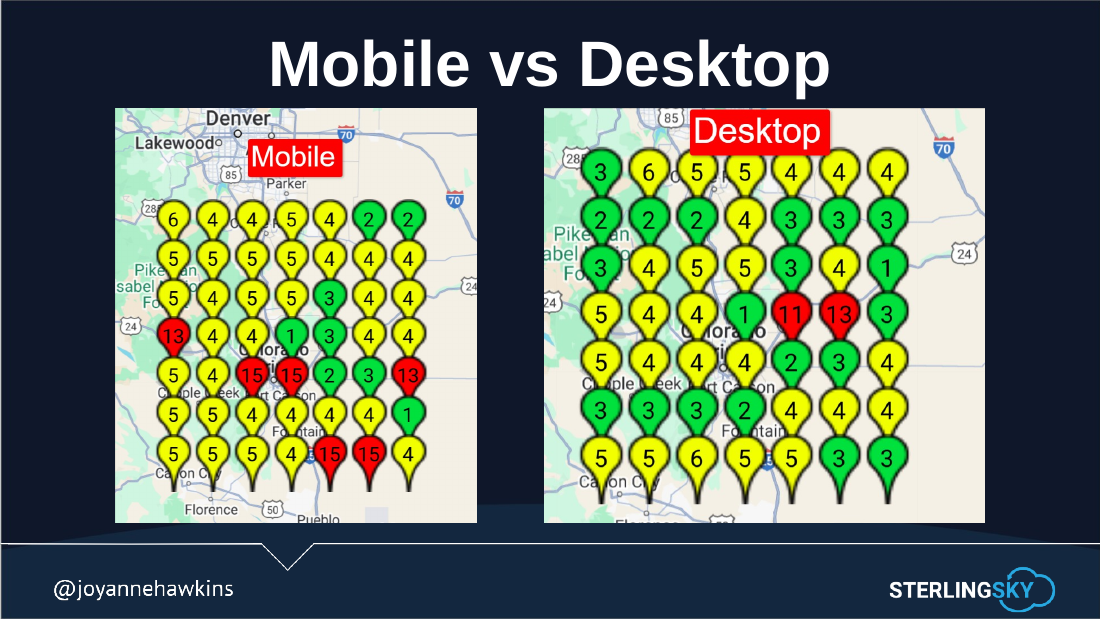
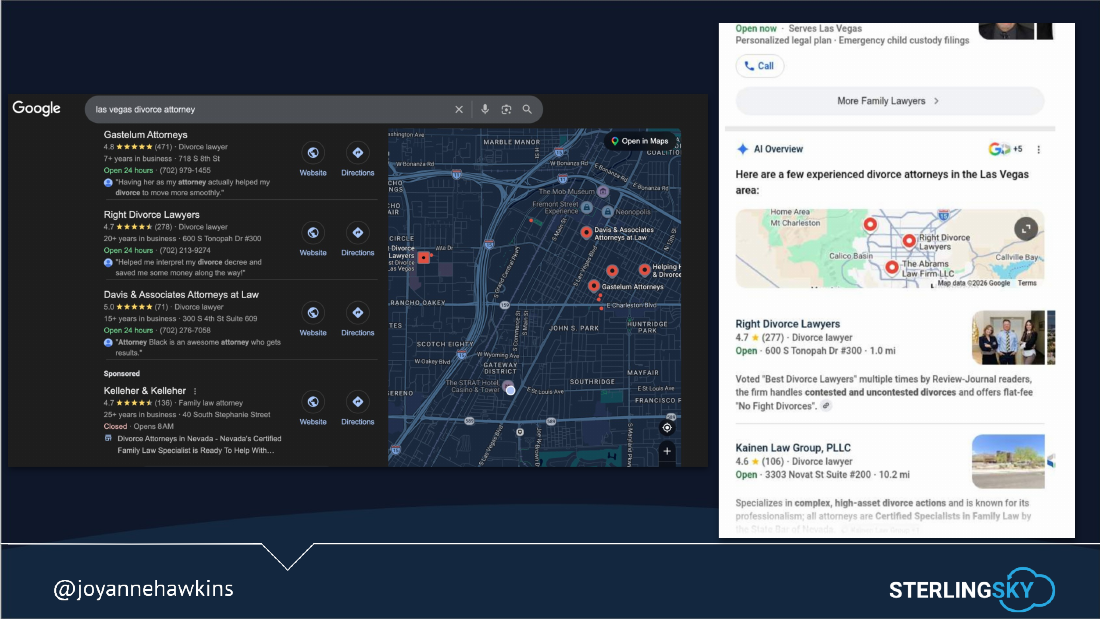
- Mobile vs desktop now diverge (more in the last two years). Same search, same location, same time: desktop showed a 3-pack of three lawyers; mobile showed two lawyers plus an AI local pack.
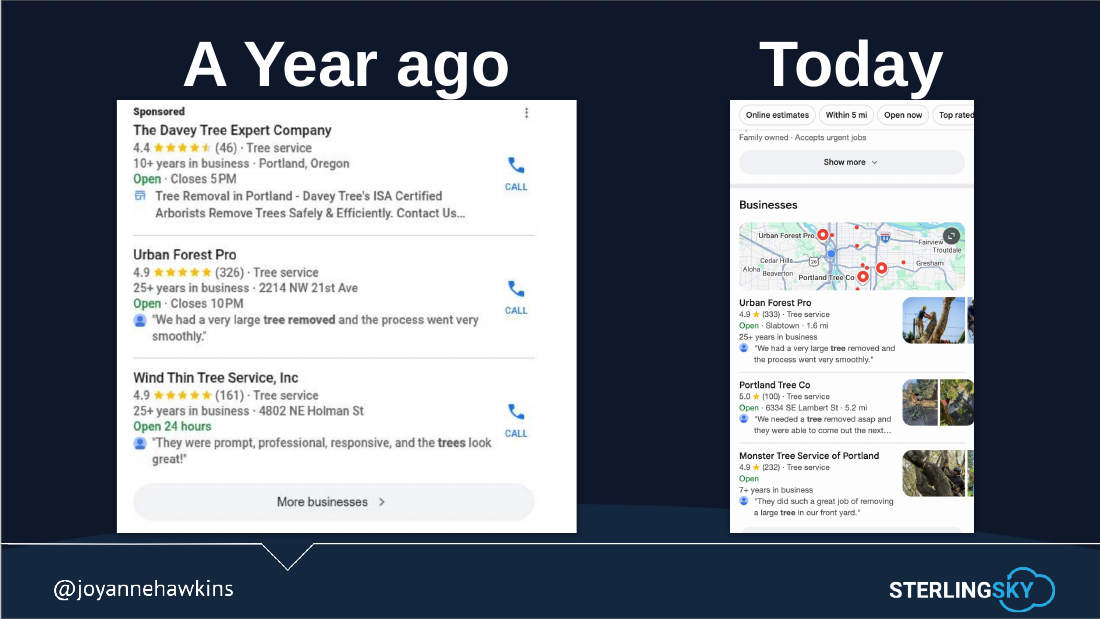
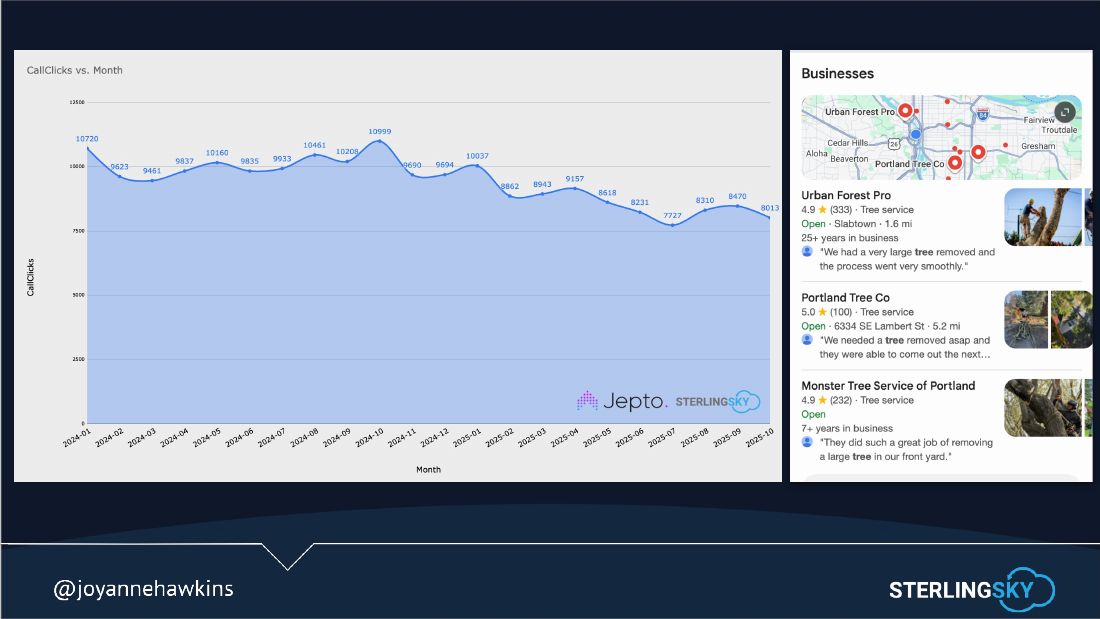
- Google is removing call buttons from Google Business Profiles. A Jepto report showed clicks-to-call steadily declining over two years. Per Places Scout data, ads in the local pack went from almost never at the start of the year to nearly 30% of the time by year-end, swapped in where the call button was.
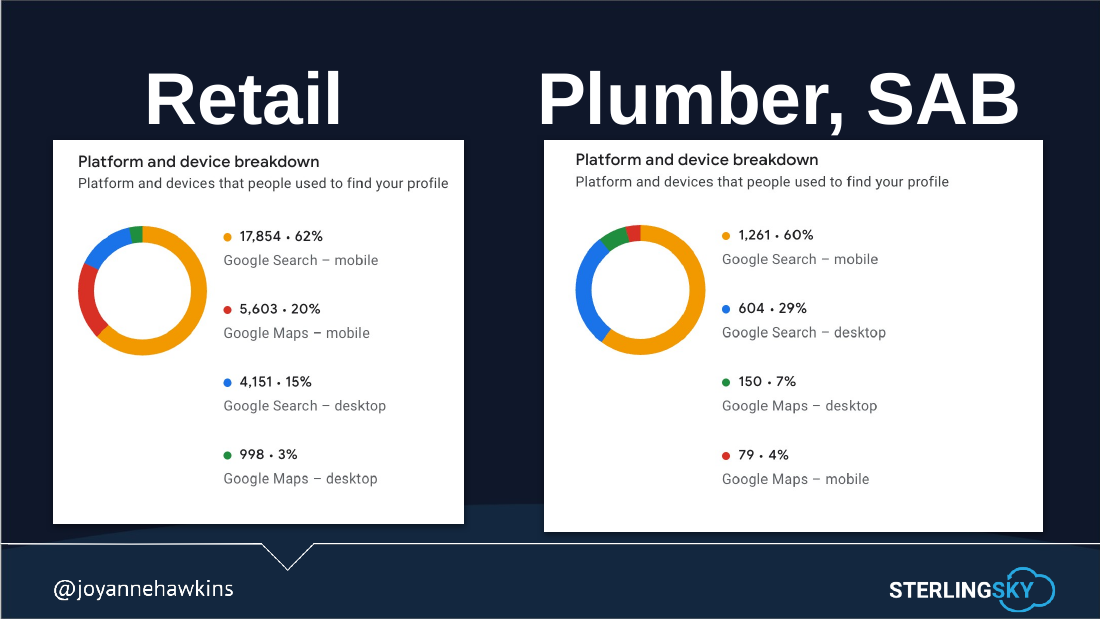
- What to track: Google Business Insights/performance data shows where traffic comes from (Maps vs Search; usually Search mobile wins; retail vs plumber differs a lot). Call tracking is becoming non-negotiable; visibility is misleading.
Mystery 3: Duplicate beats spun content
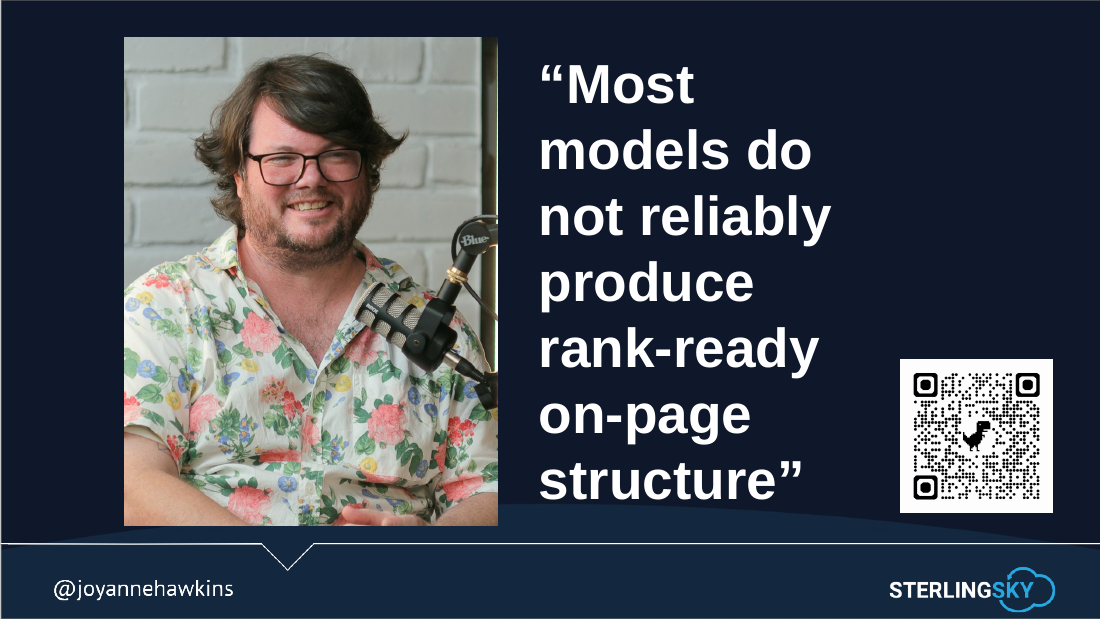
- Prompted by Julius (met in a London mastermind), who found duplicate content outperforms spun content on lead-gen sites, and by Kyle Roof's point that AI content is bad at putting the exact words you need to rank into the content.
- Local businesses fear duplicate content on service-area, location, and city pages and reword them; Hawkins argues that hurts them.
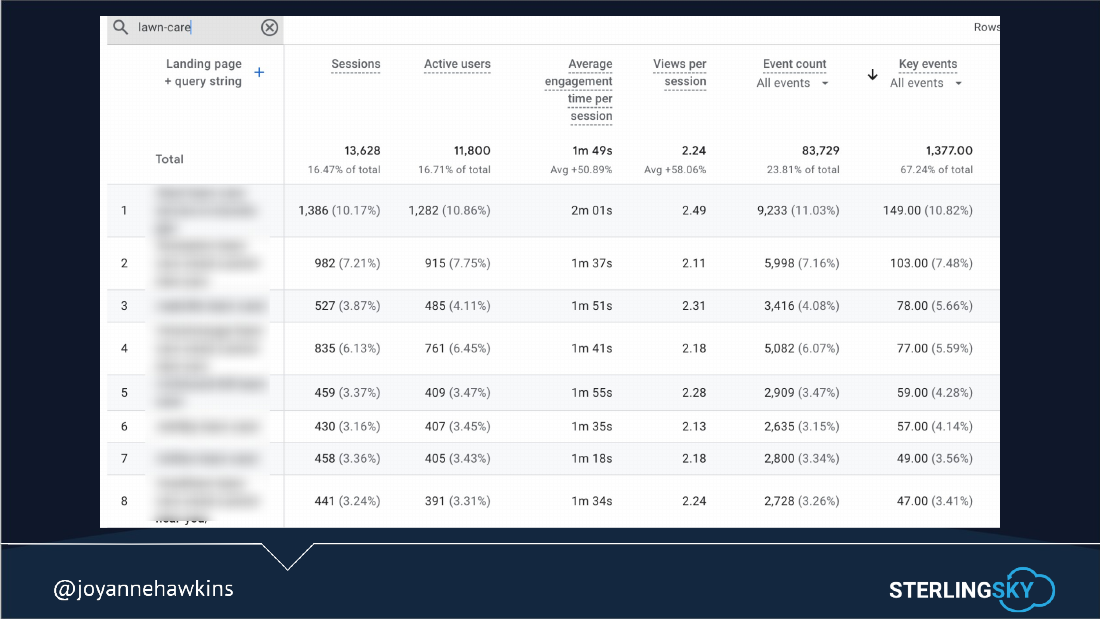
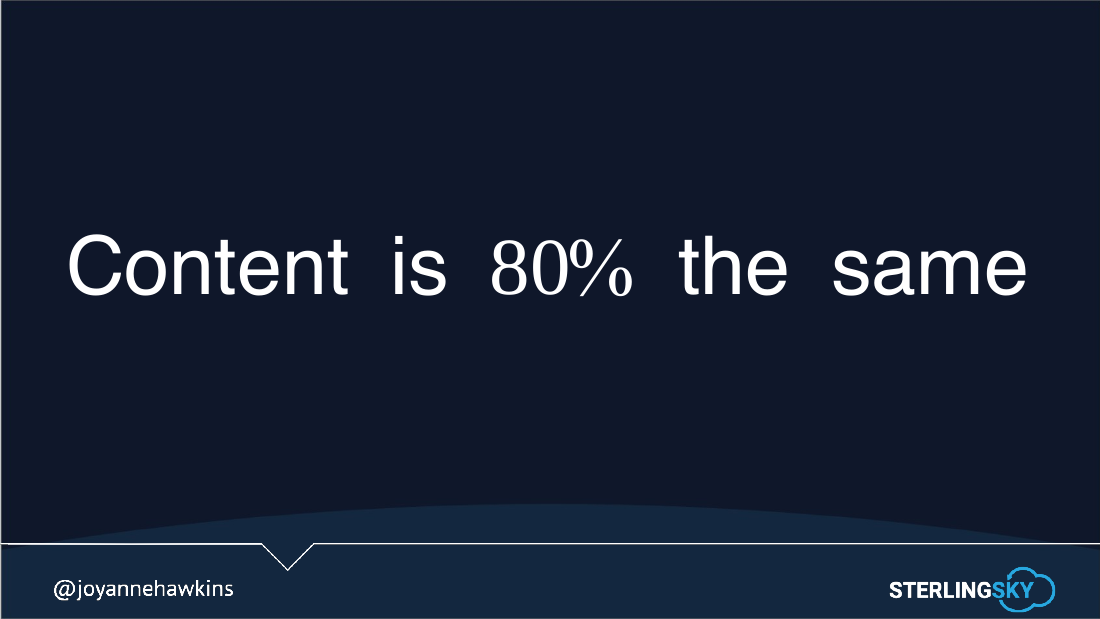
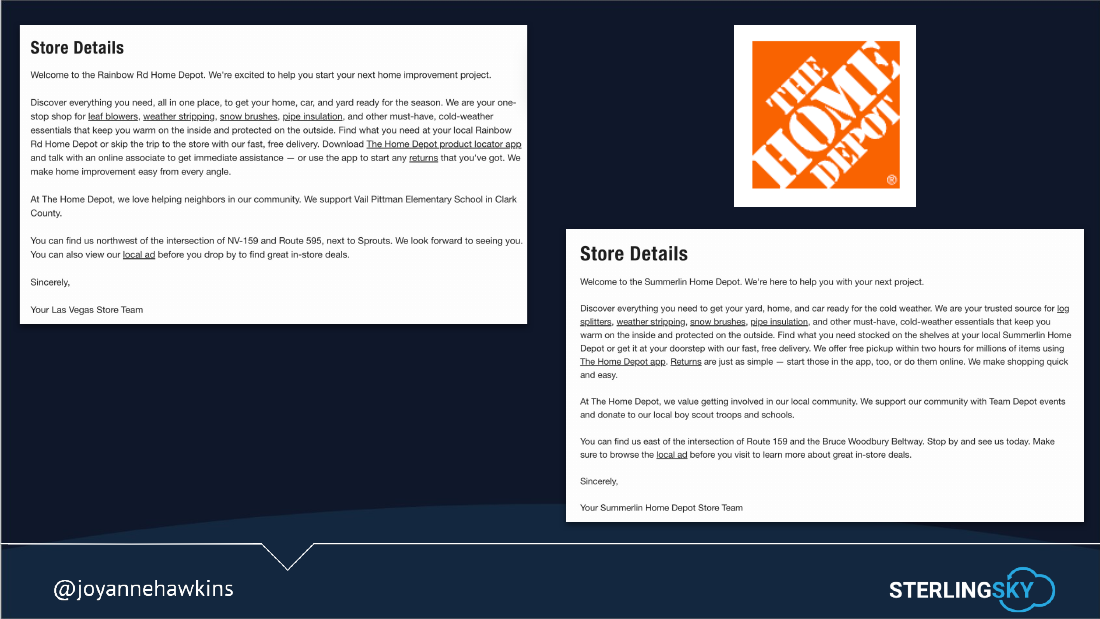
- Reference client (acquired 9 years ago): about 30 service-area pages from a template targeting Toronto-area cities, swapping only the city name, content about 80% identical; ranked extremely well and still does.
- Home Depot analogy: thousands of location pages with the same content, no rewording.
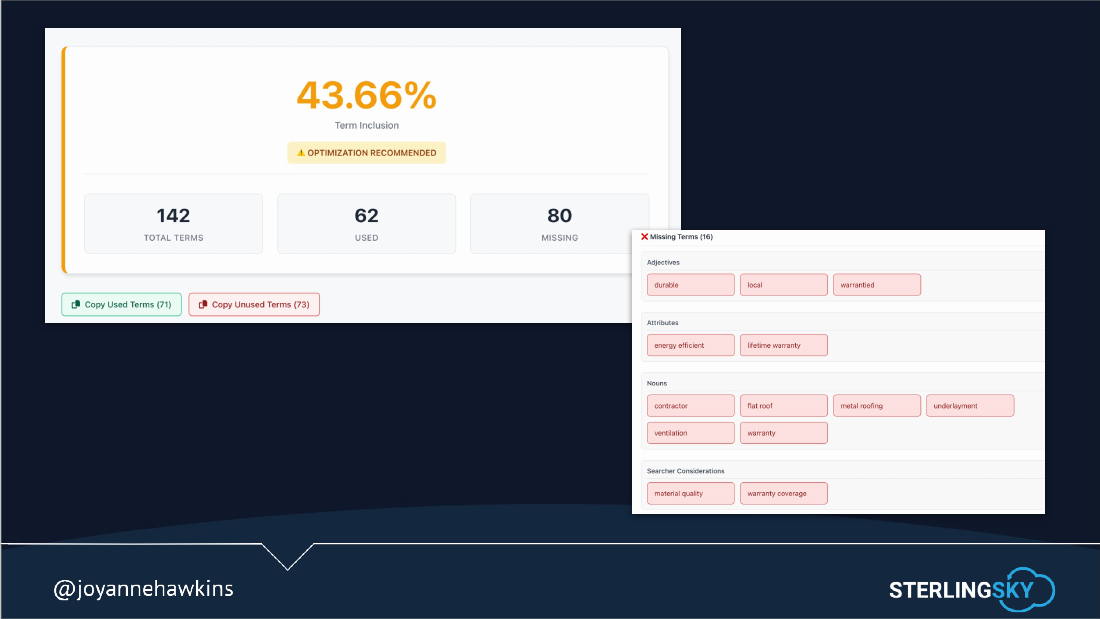
- Method: use an internal tool (or Kyle Roof's tool) to grade pages by semantic relevance, pick the best, then make all other service-area pages word-for-word identical to it. Rankings rose across multiple tests.
- Disclaimer: untested at scale (e.g., 3,000 pages); things can break at scale.
Mystery 4: AI local packs
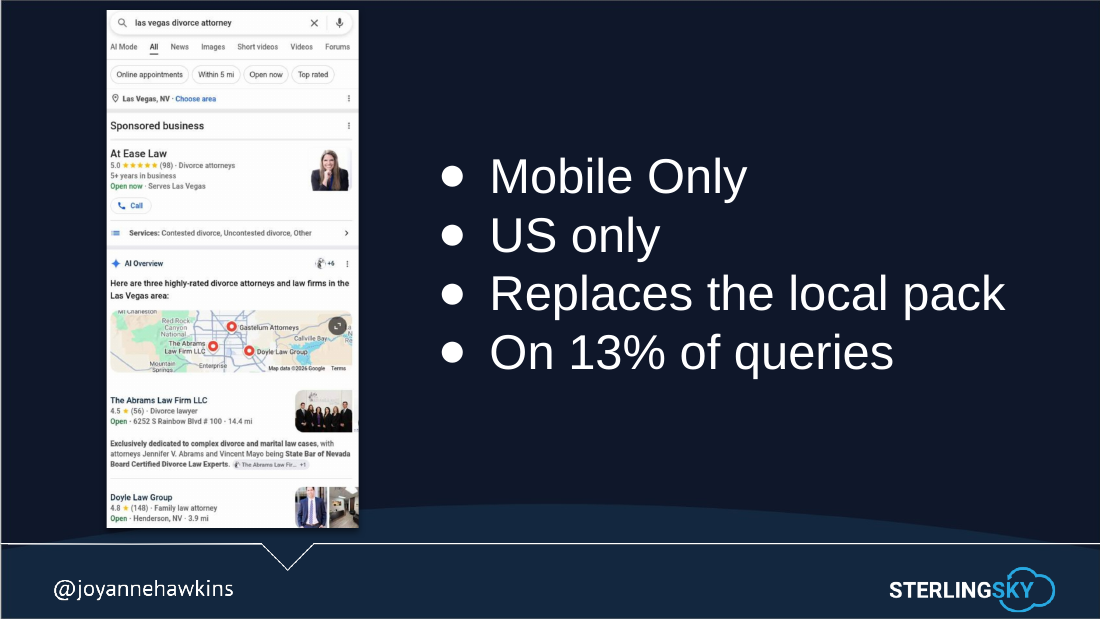
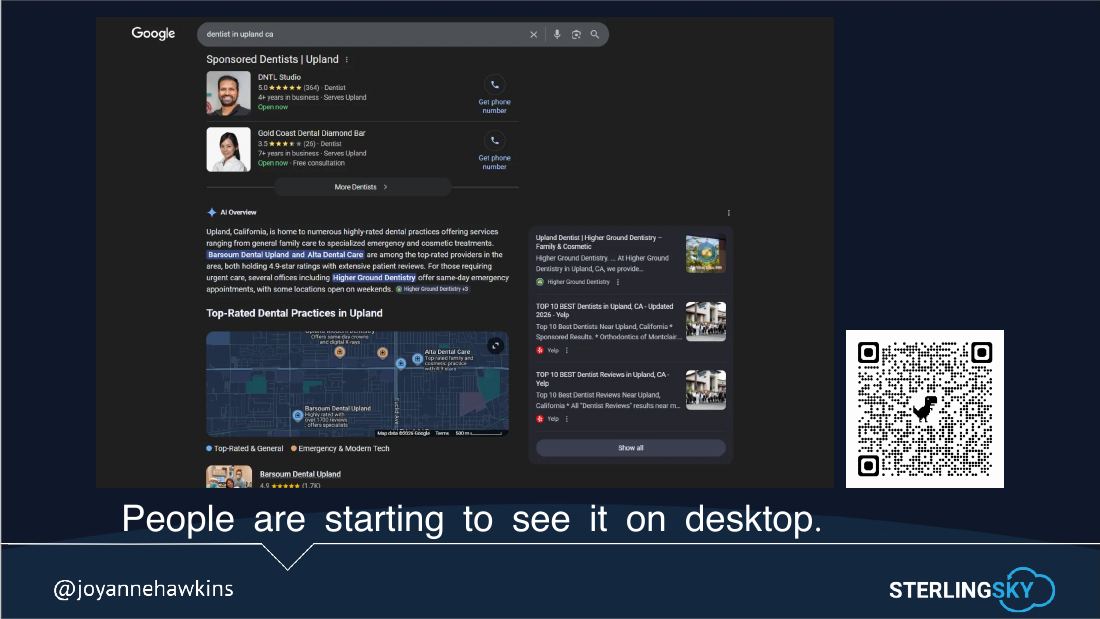
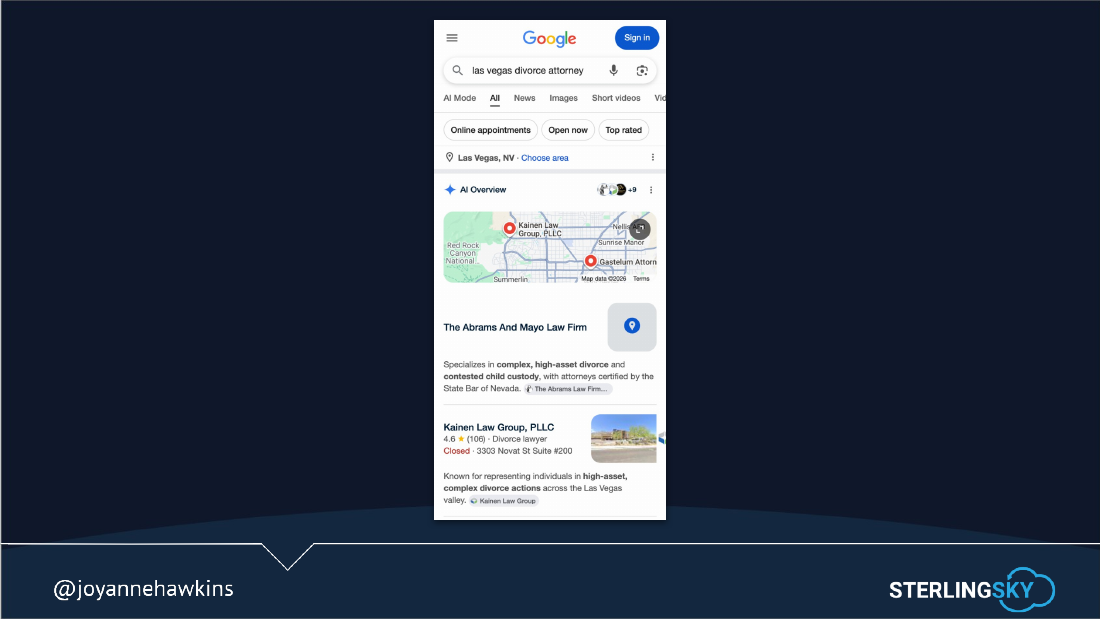
- Hawkins's term "AI local packs." US-only, mostly mobile, showing on about 13% of queries; they display 2 listings (not 3), displacing the 3-pack, and appear slightly on desktop.
- Mechanism: scrapes data from various sources and tries to connect to a GBP, but frequently fails, leaving a blank pin (no photos, reviews, details, or hours).
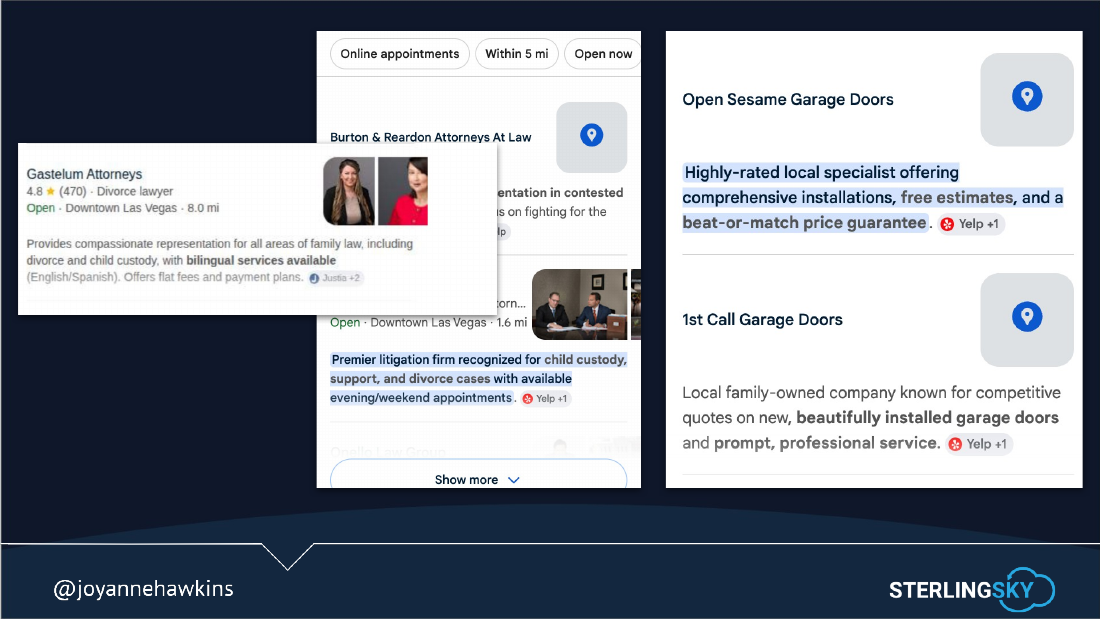
- Seen heavily for lawyers, garage door repair, and some medical practitioners.
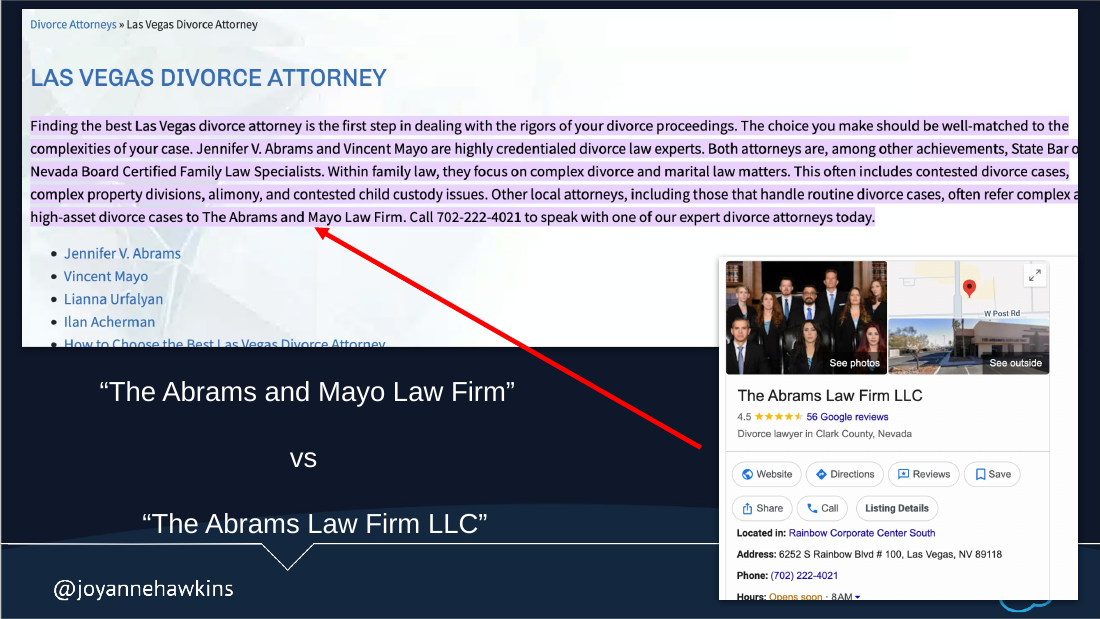
- Example: Abrams & Mayo Law Firm; the current legal name is "Abrams Law Firm LLC" but the website says "Abrams & Mayo Law Firm," so Google's AI cannot match and connect the GBP.
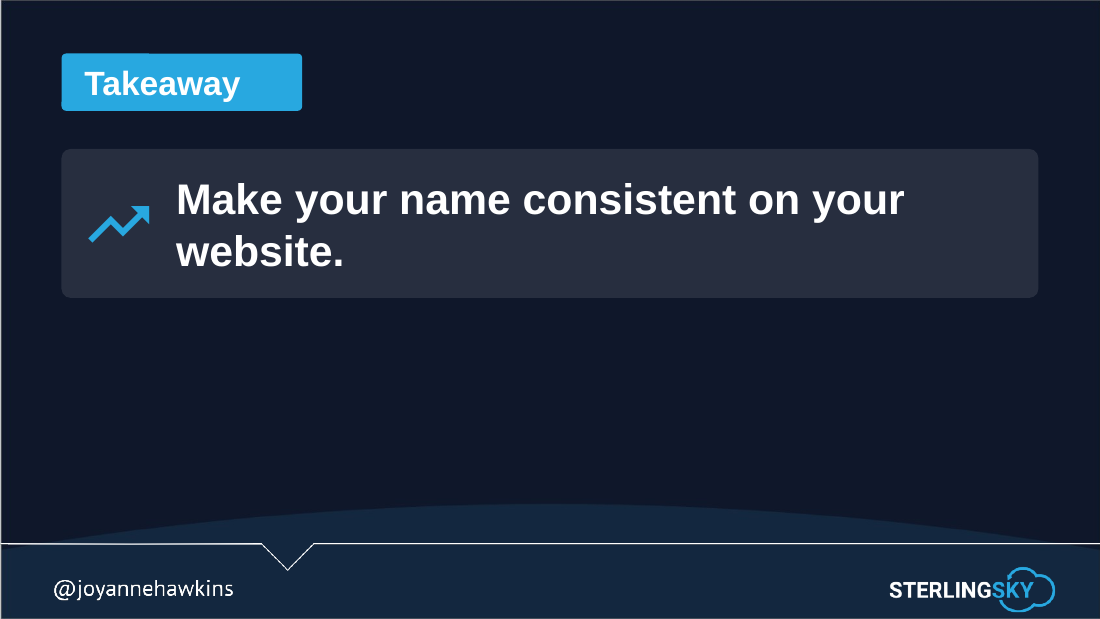
- Fix: make the business name on the website match the GBP name exactly, including capitalization (one client connected only after both were put in all caps). This is NOT a NAP/citation consistency issue; it is mostly your website.
- Google shows the source link for each item (click the tiny link button to see where it pulls from, usually your website).
- New trend (last month): Yelp showing up as a top cited source for AI local packs.
Mystery 5: Stricter, domain-wide link penalties (core/spam updates)
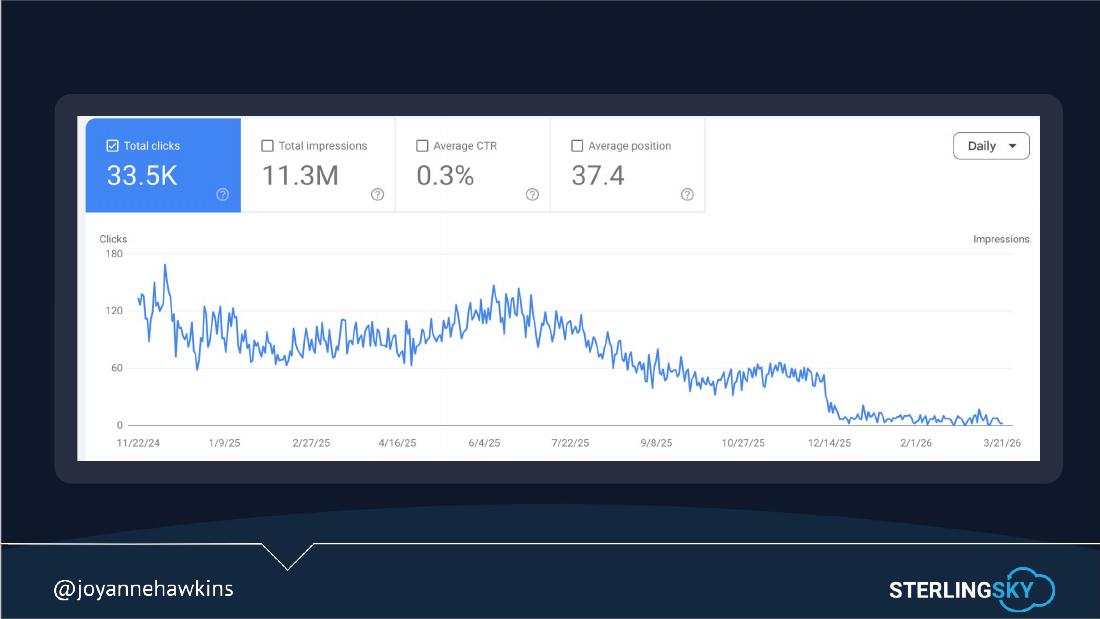
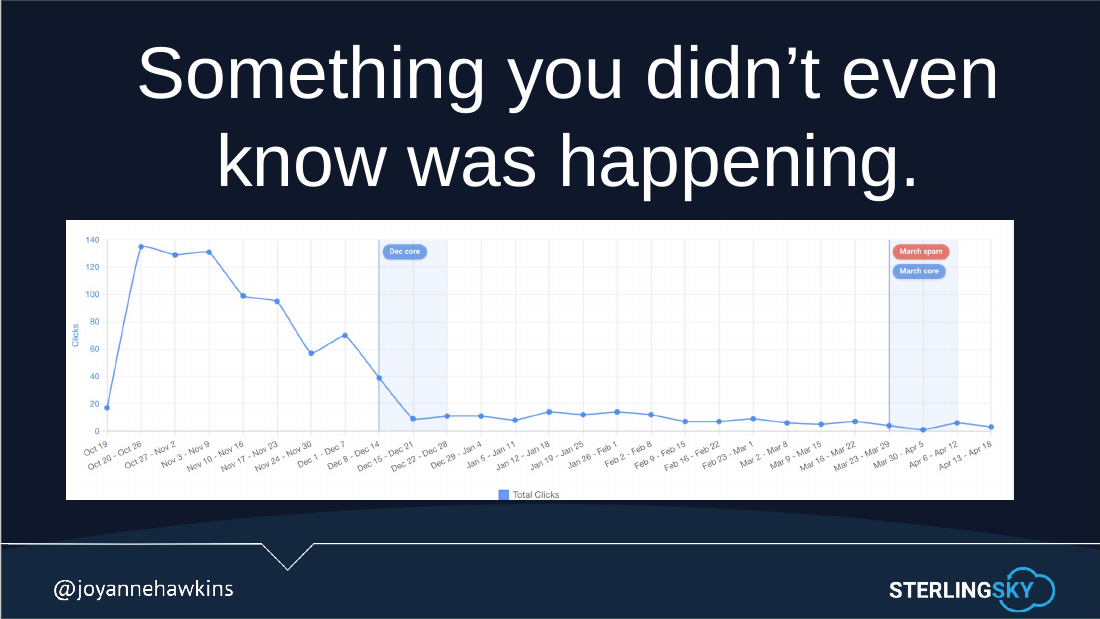
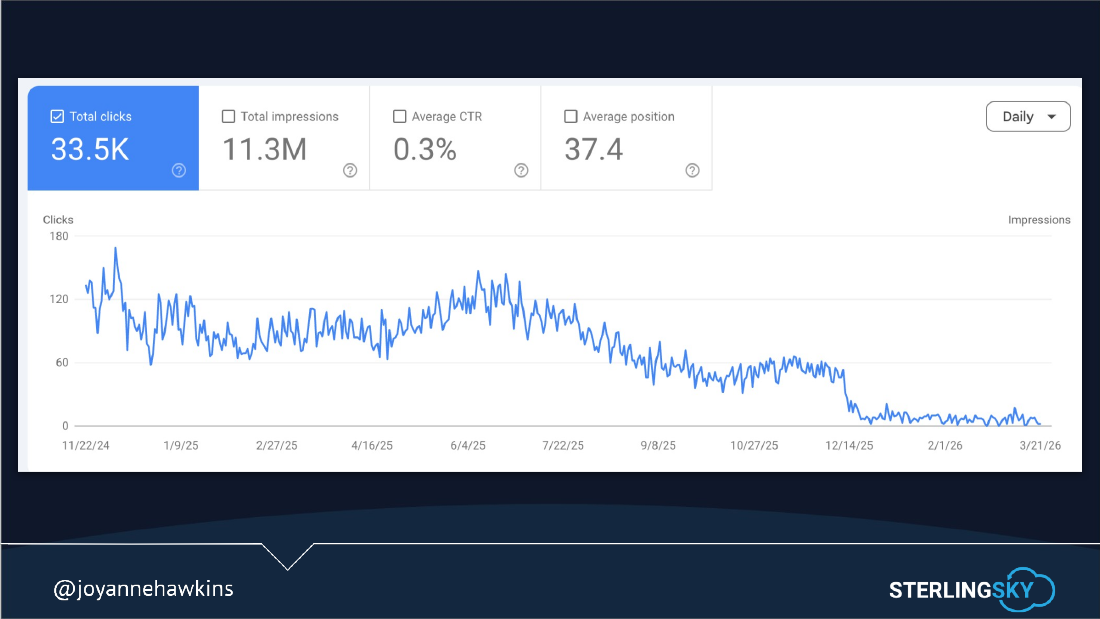
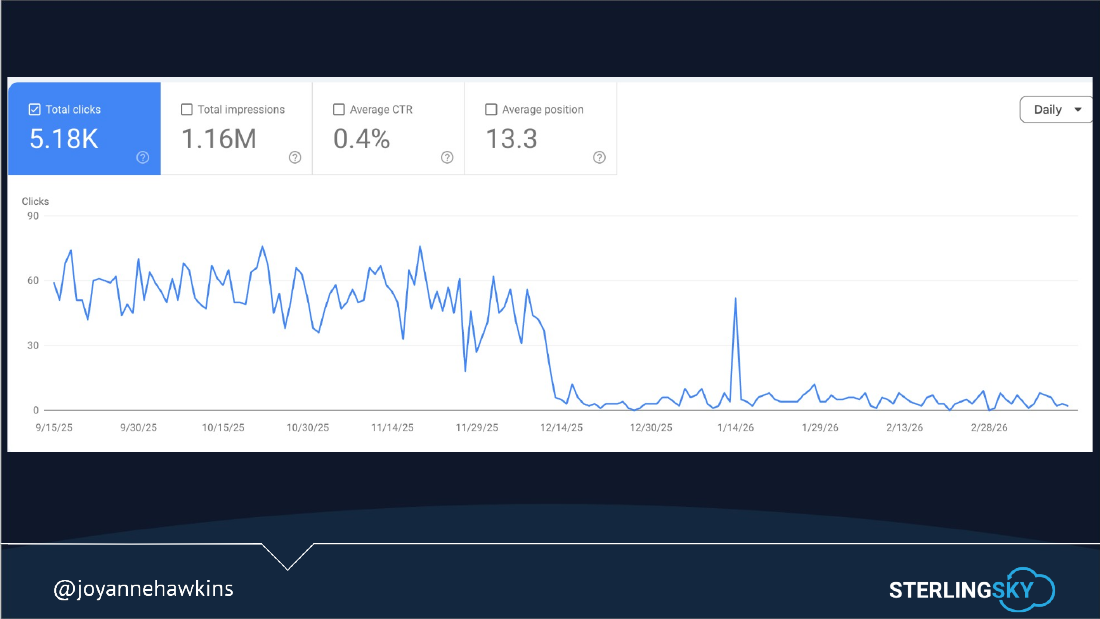
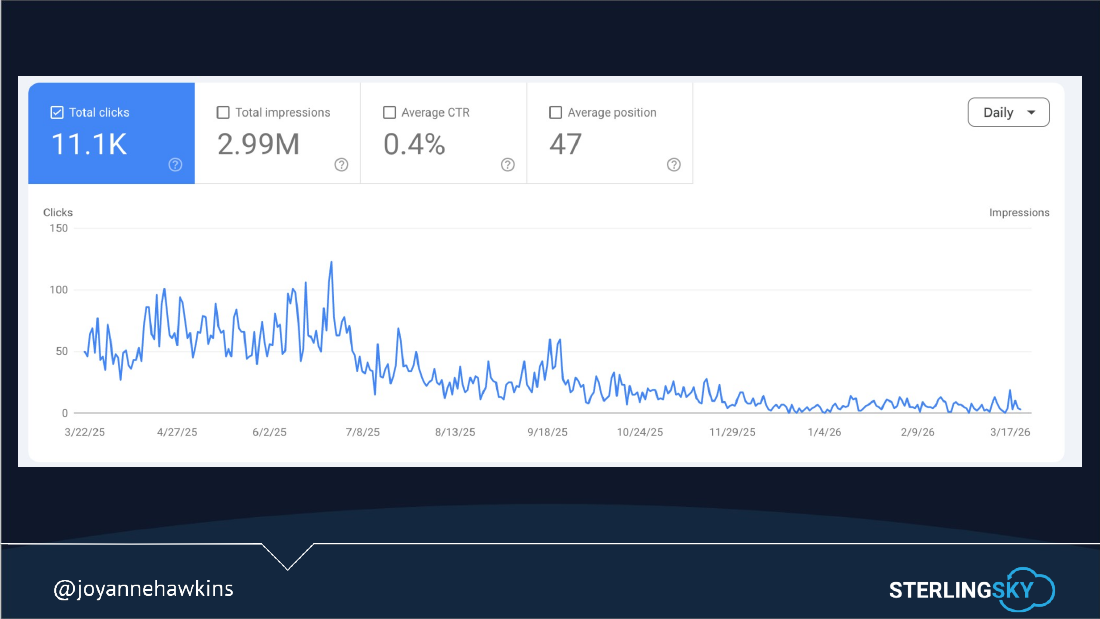
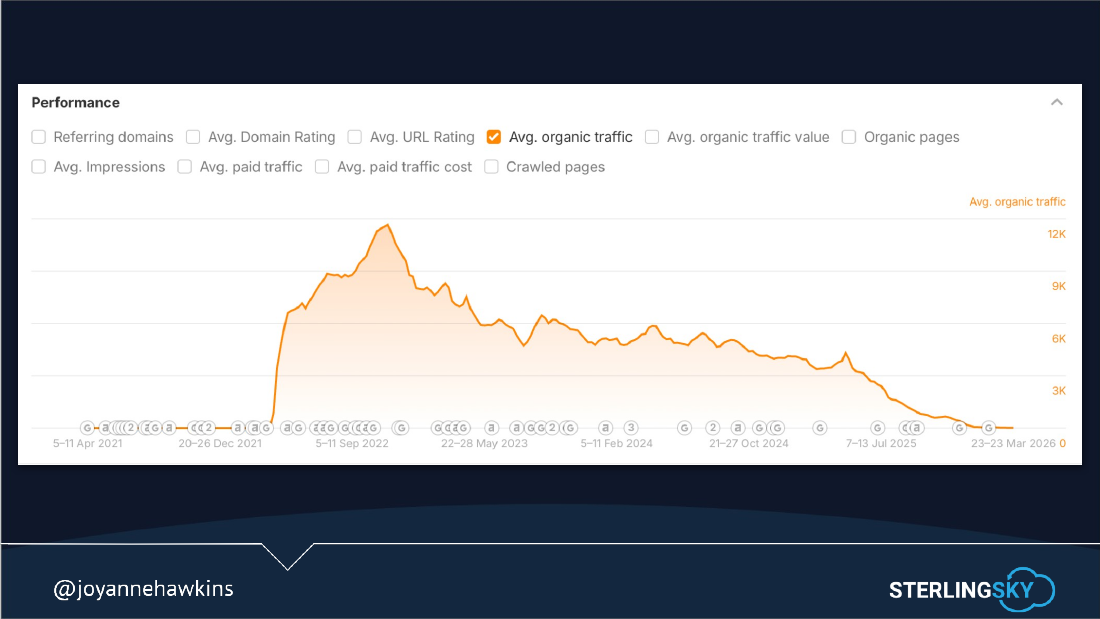
- Many established small-business and legal/home-services sites are getting traffic wiped out and do not know why.
- Lily Ray (interviewed on Hawkins's podcast) confirmed core updates are getting harsher and Google's penalty threshold is getting stricter.
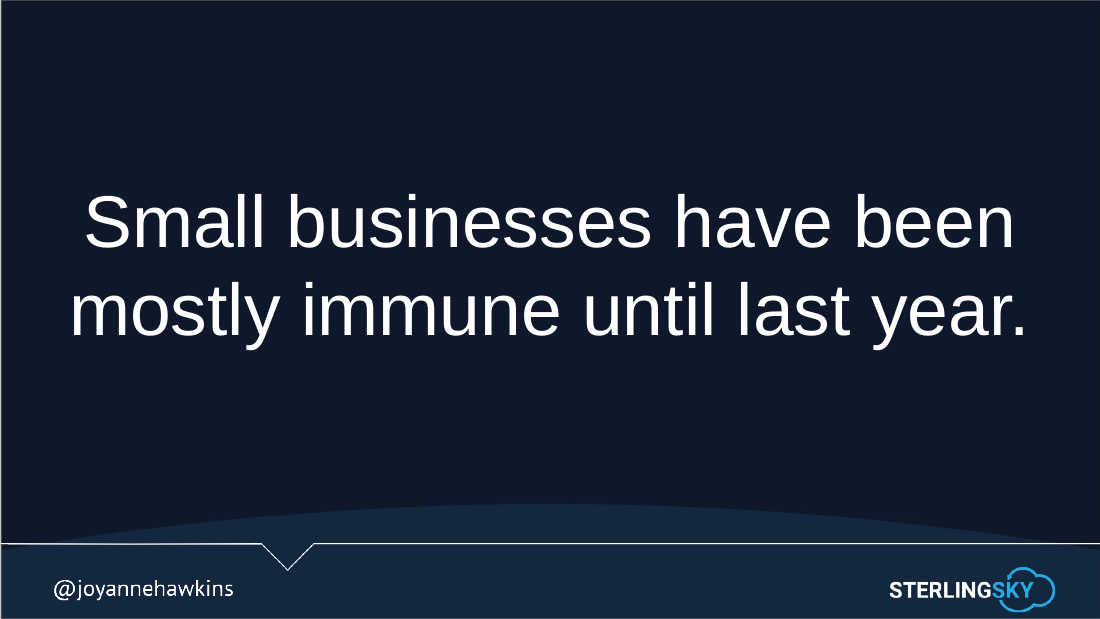
- Small and established-brand business sites used to be mostly immune; lead-gen and affiliate crashes are normal, but these established-site crashes are new.
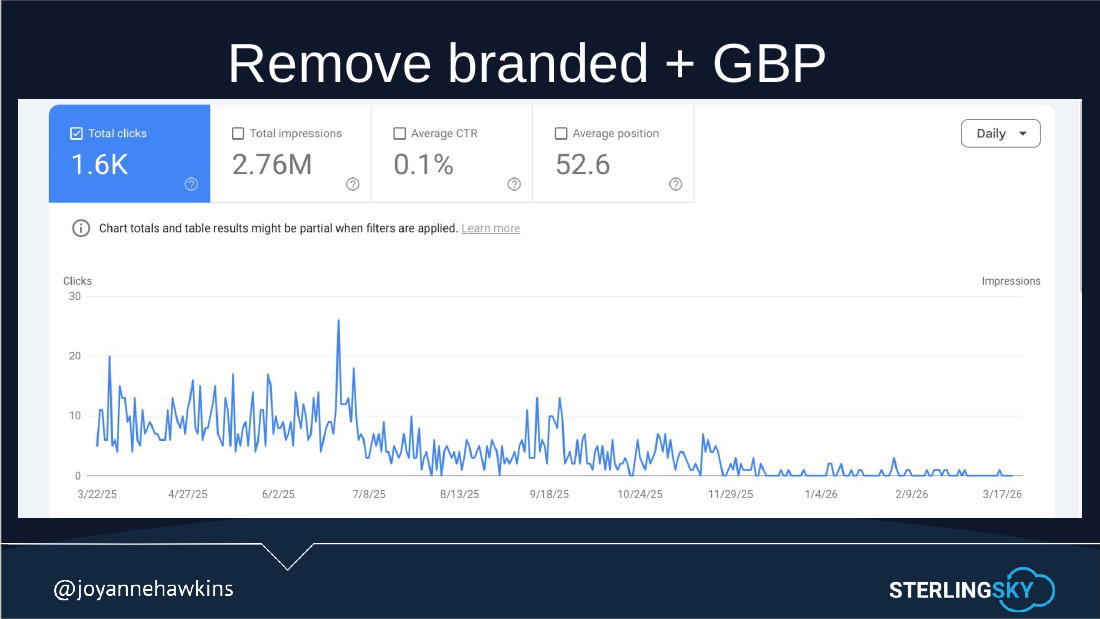
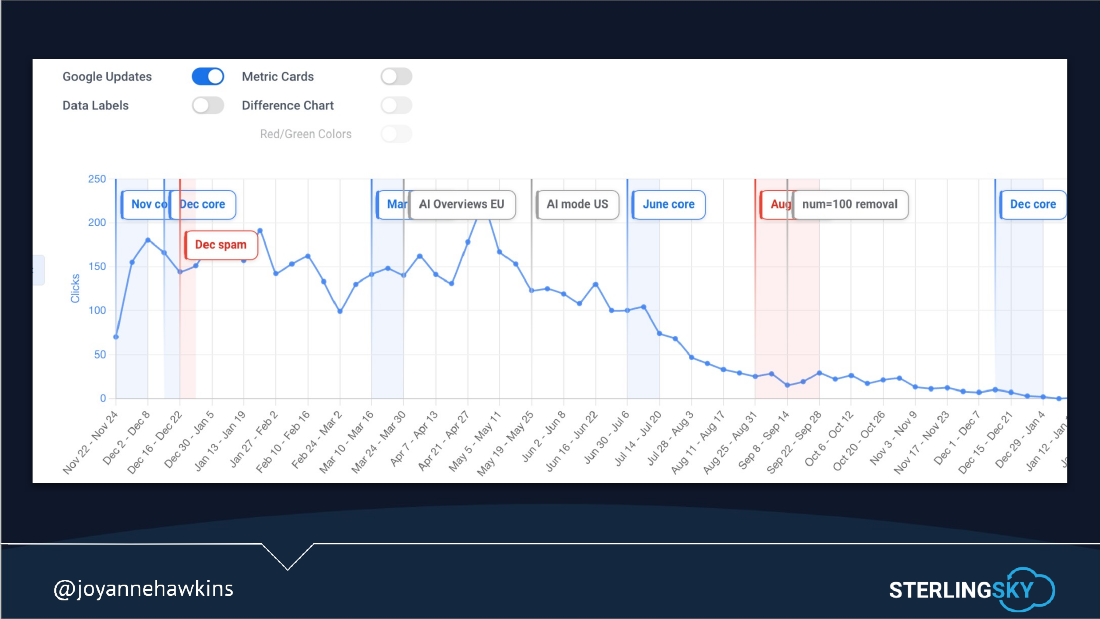
- Analysis method: in Search Console, remove branded terms and remove the GBP URL (use a negative UTM filter); otherwise the crash is hidden by branded and local pack traffic.
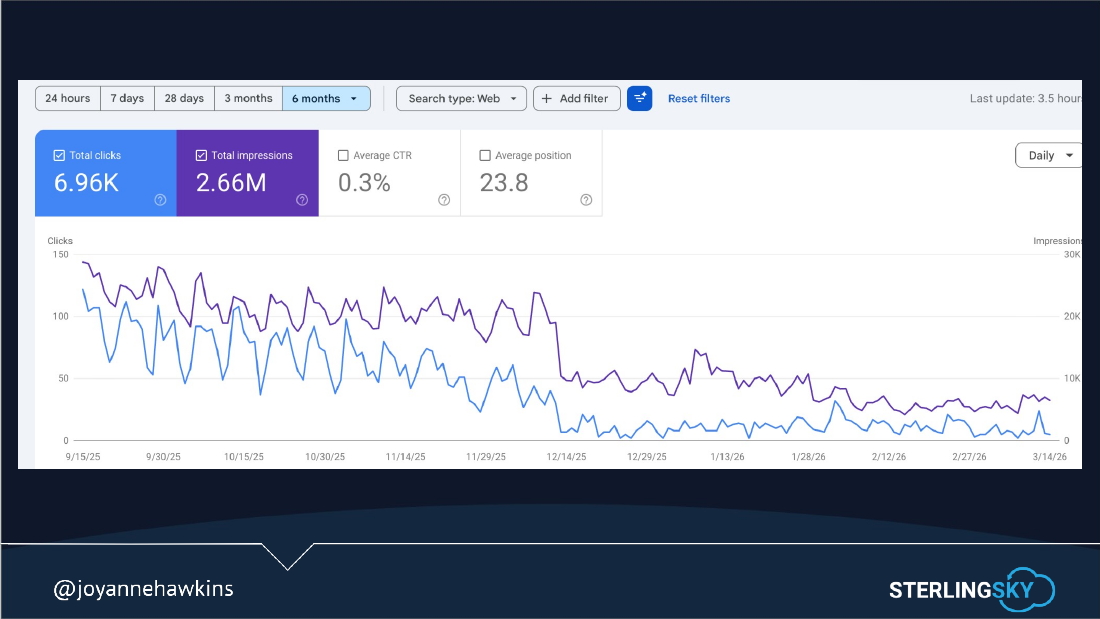
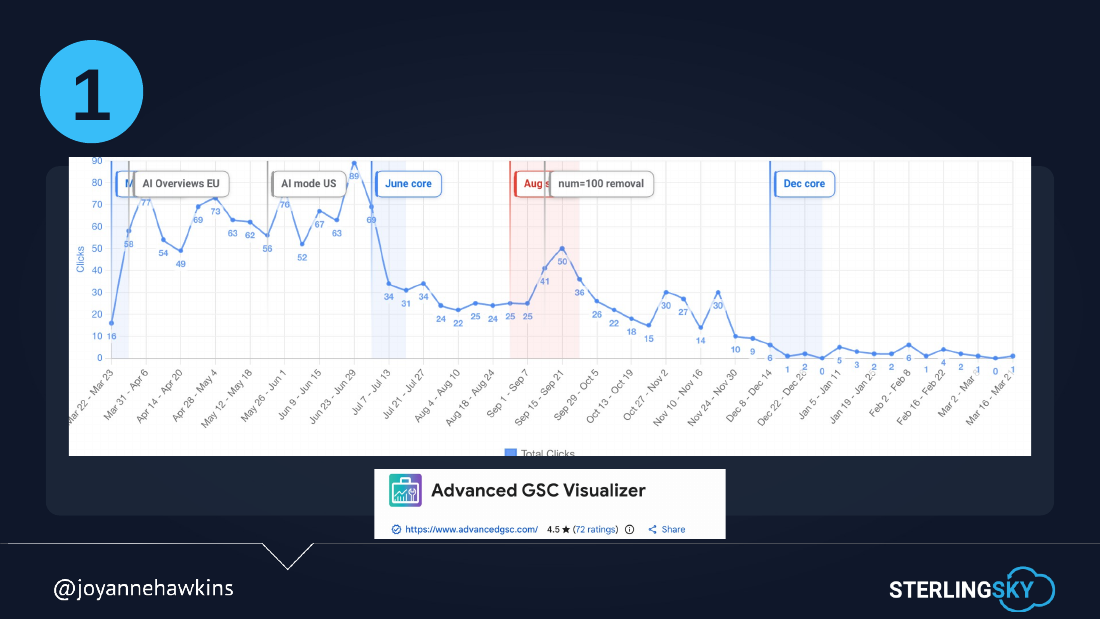
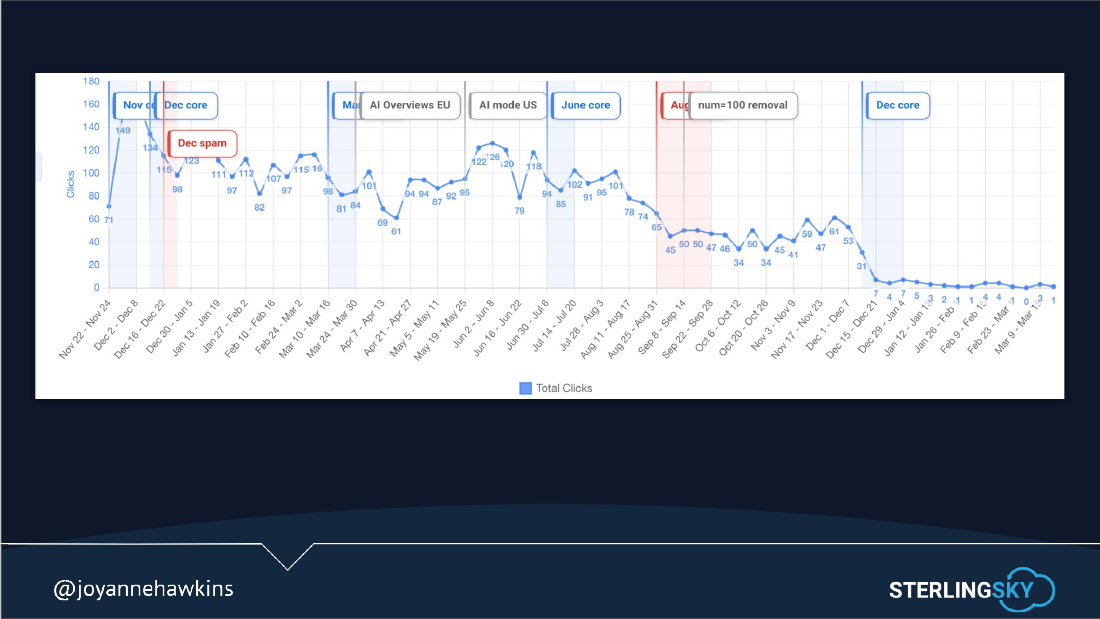
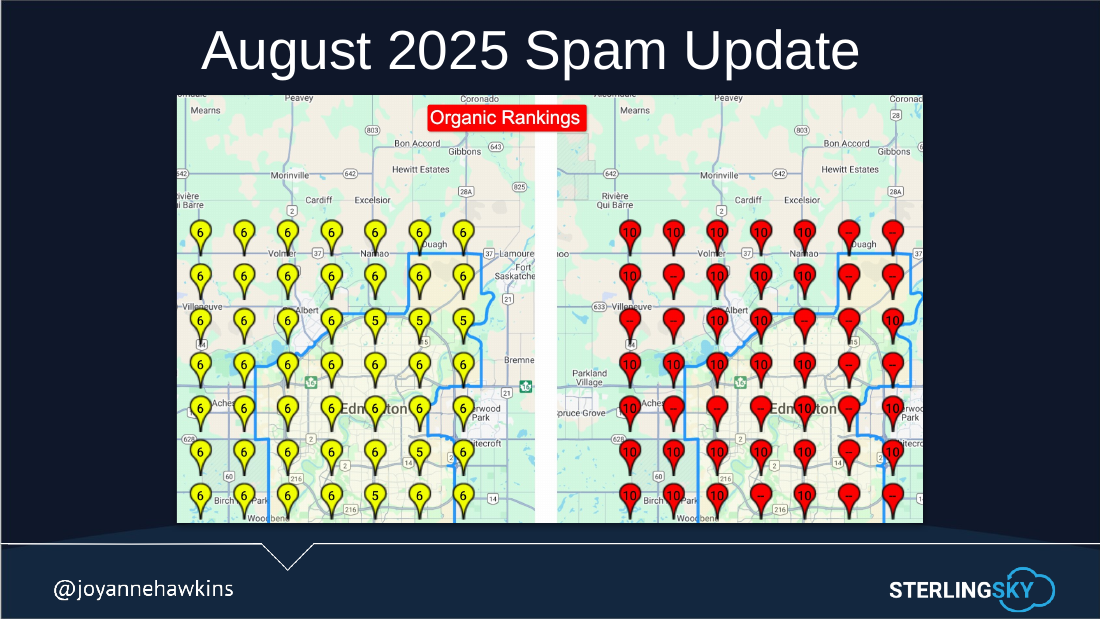
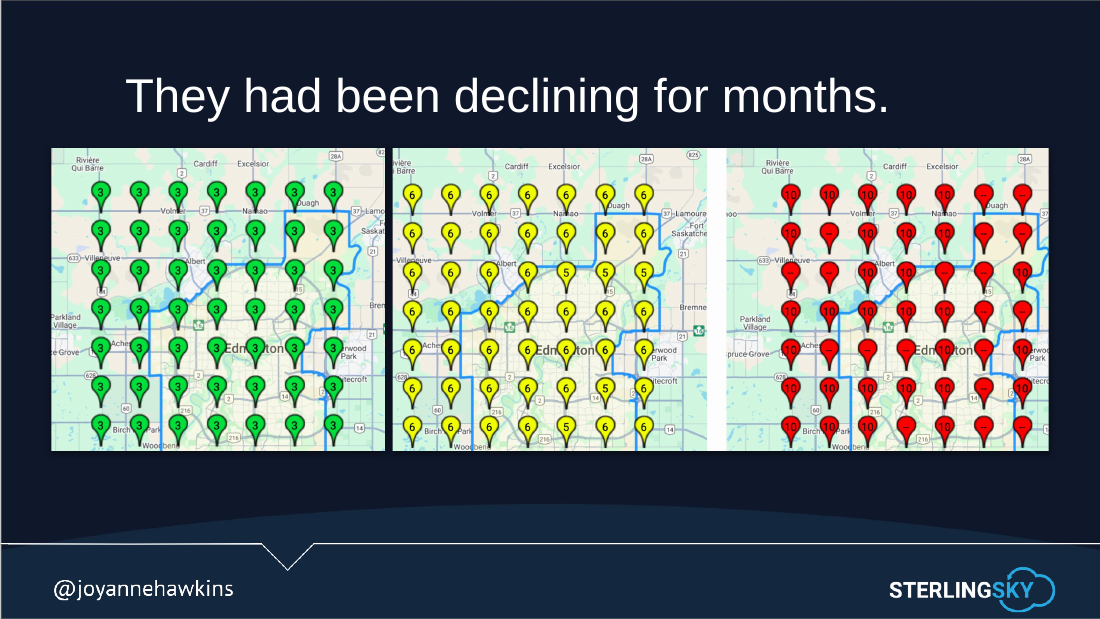
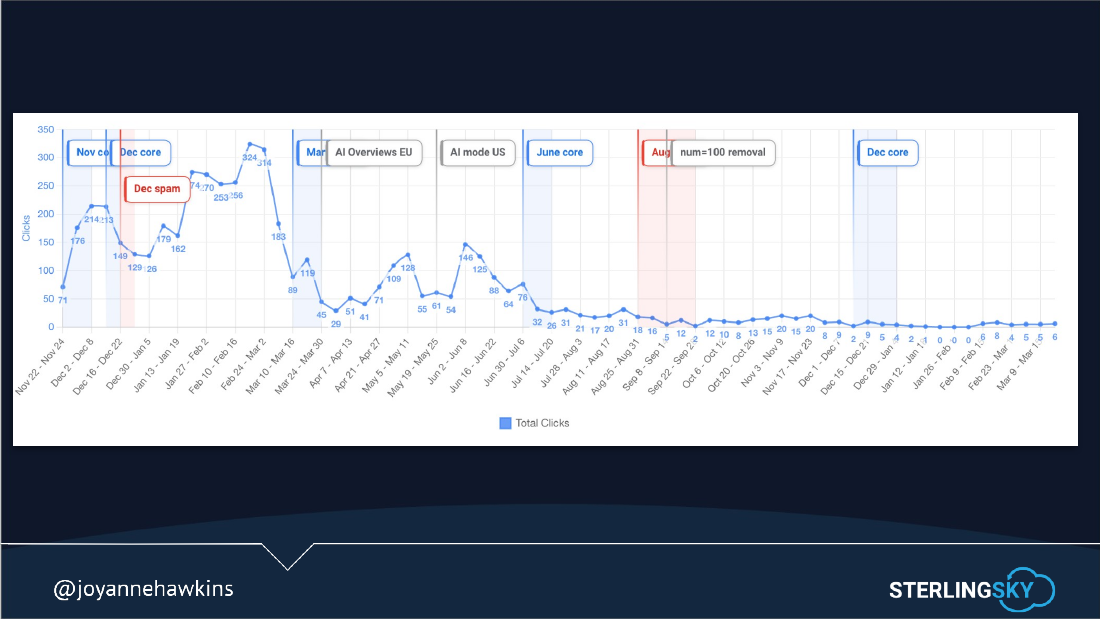
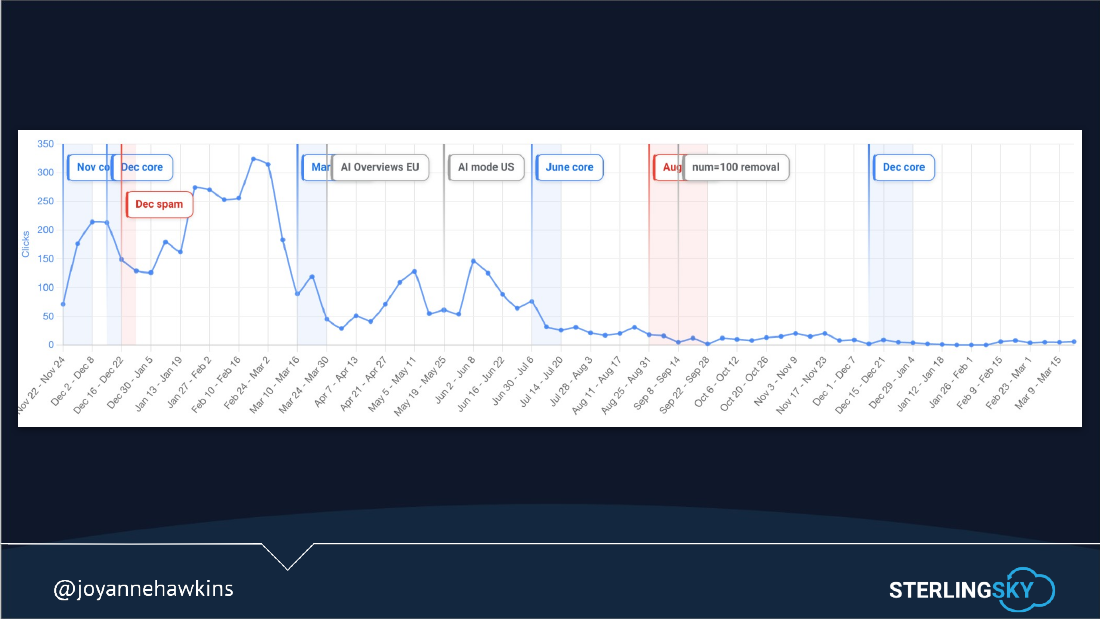
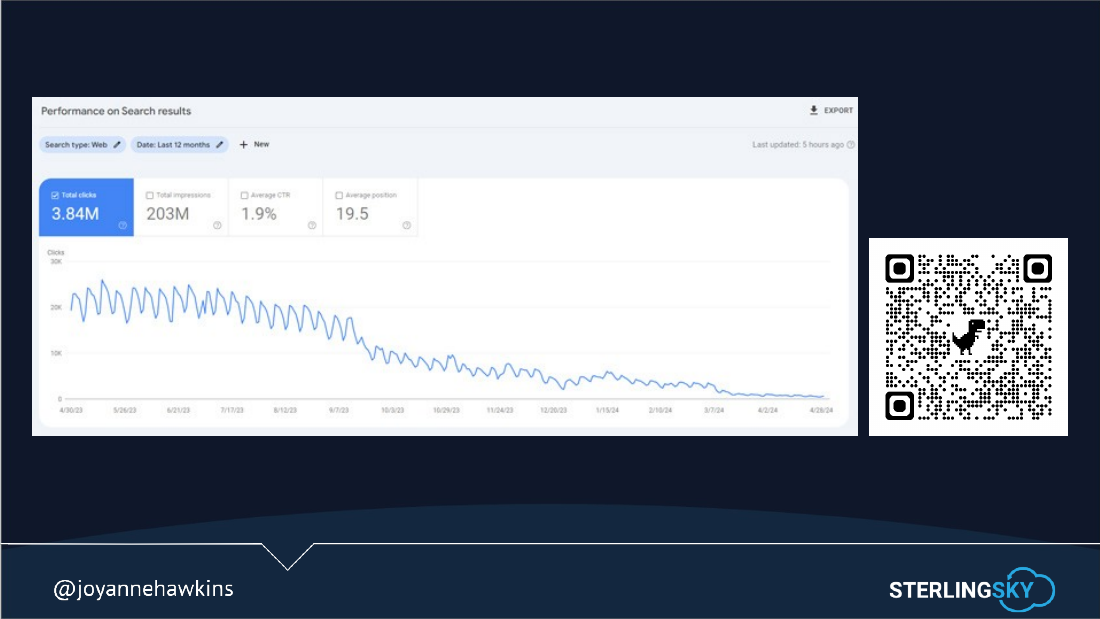
- Three patterns: (1) Google usually warns first, with a big drop at an earlier update (e.g., June or August spam update), then the December core update kills the whole site after months of decline; (2) declines visible on weekly graphs; (3) classifier sites that do not recover.
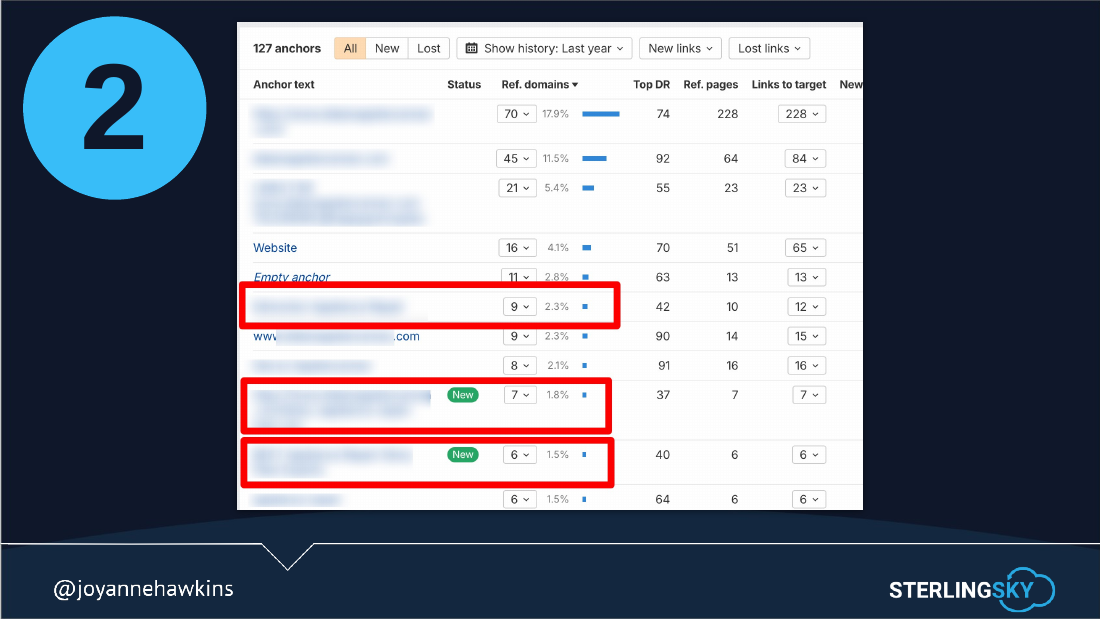
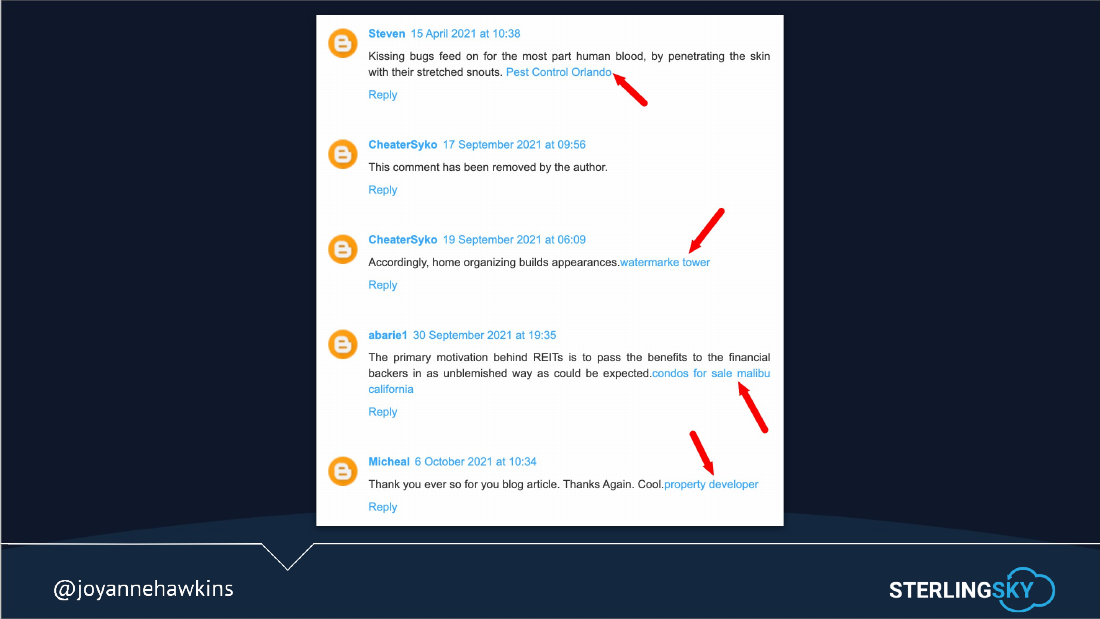
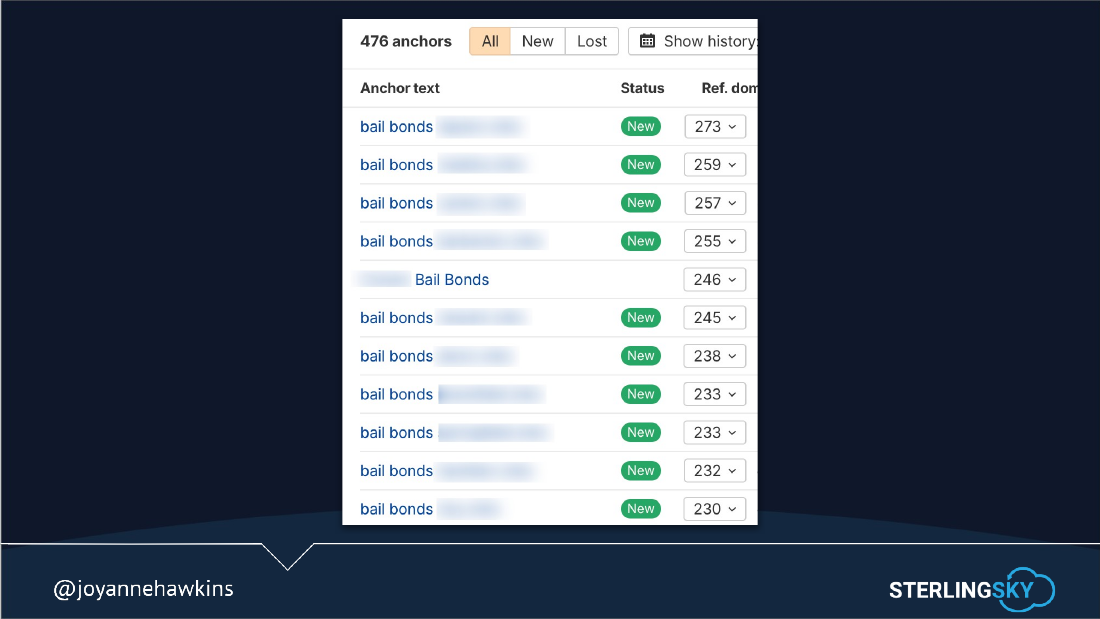
- Cause is links, not AI content. Common culprits: anchored links (e.g., "best plumber in Dallas"), guest posts (top of the list), business-network links, PBNs.
- Threshold is dozens of anchored links, not hundreds; the killing links are often about five years old.
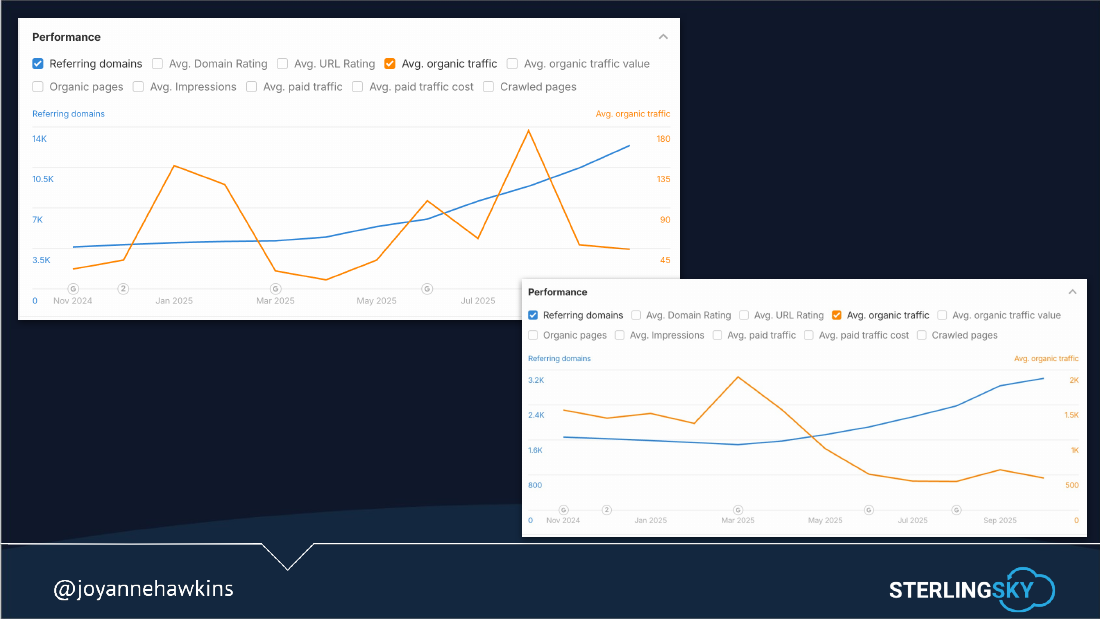
- Attribution: a single keyword crashes that exactly matches an anchor text; pull all links with that anchor; check whether other sites linked on the same pages are also crashing at the same time; referring domains rising while organic crashes (the two graphs diverging) signals a link scheme.
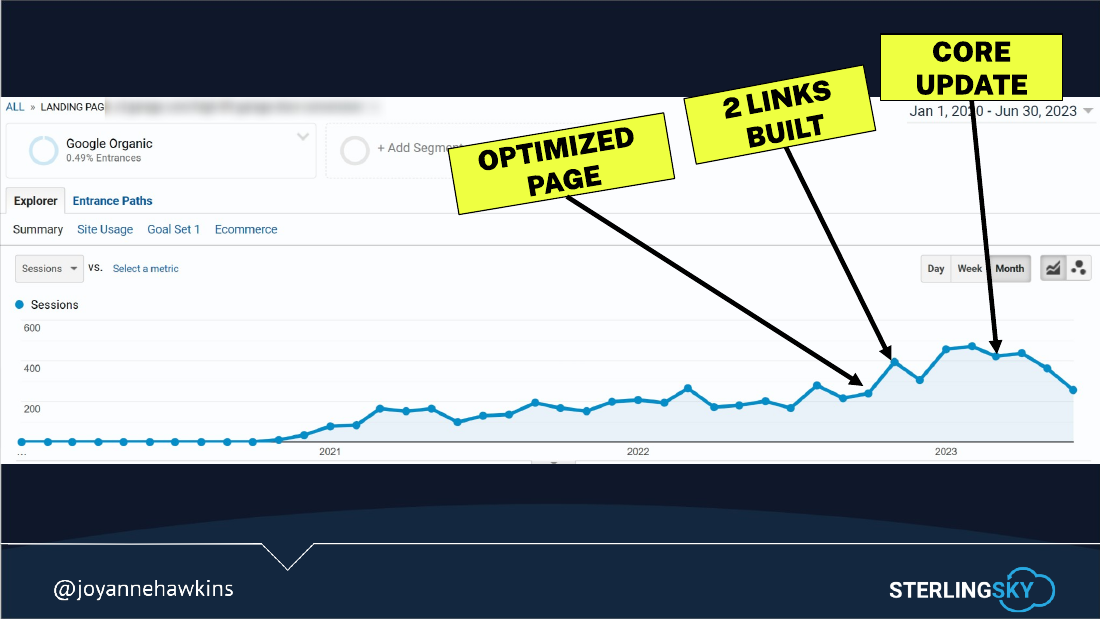
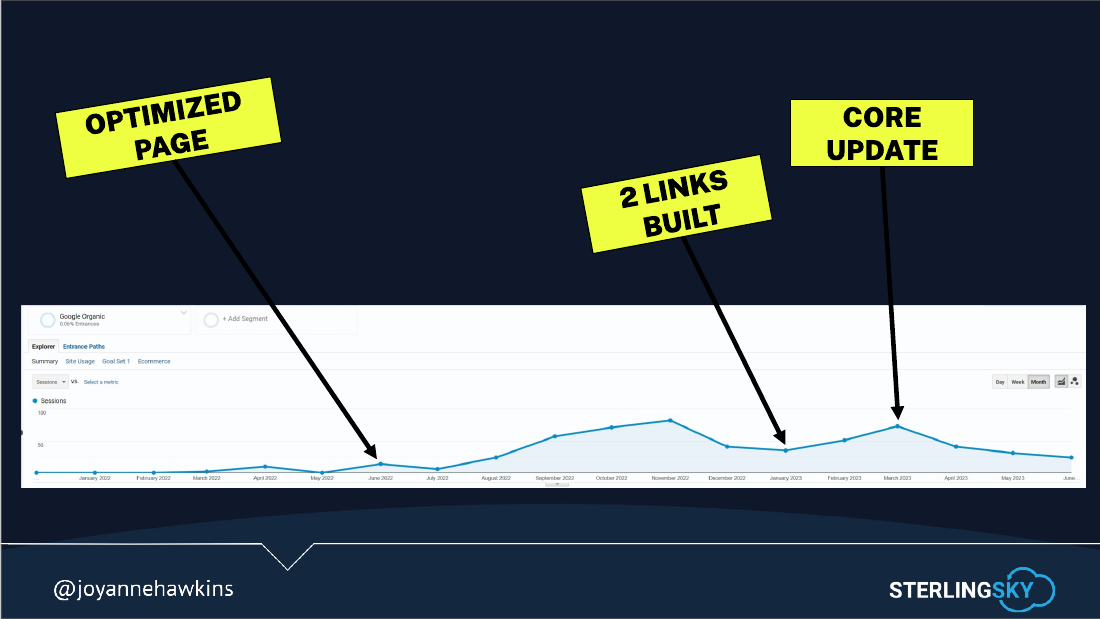
- Client example: bought about 400 links from a popular link-building company in 2021-2022. In 2023, core updates undid the gains repeatedly (so you keep buying more, "chasing"); in the last year Google now wipes the entire linked page from ranking. New zero-link pages on the same site rank fine; only the linked pages flatline.
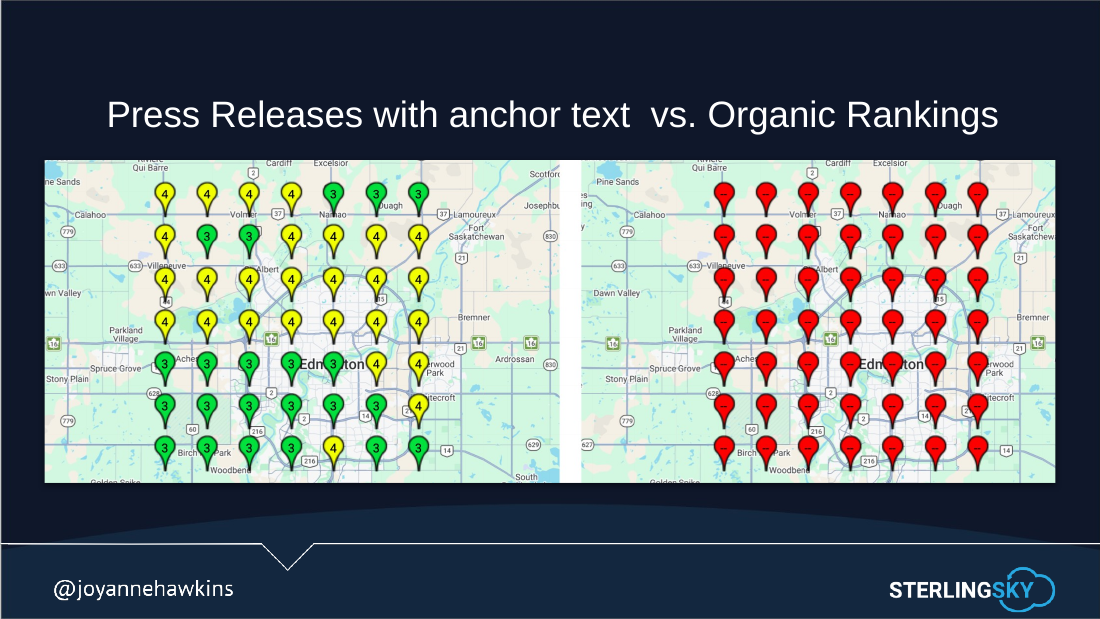
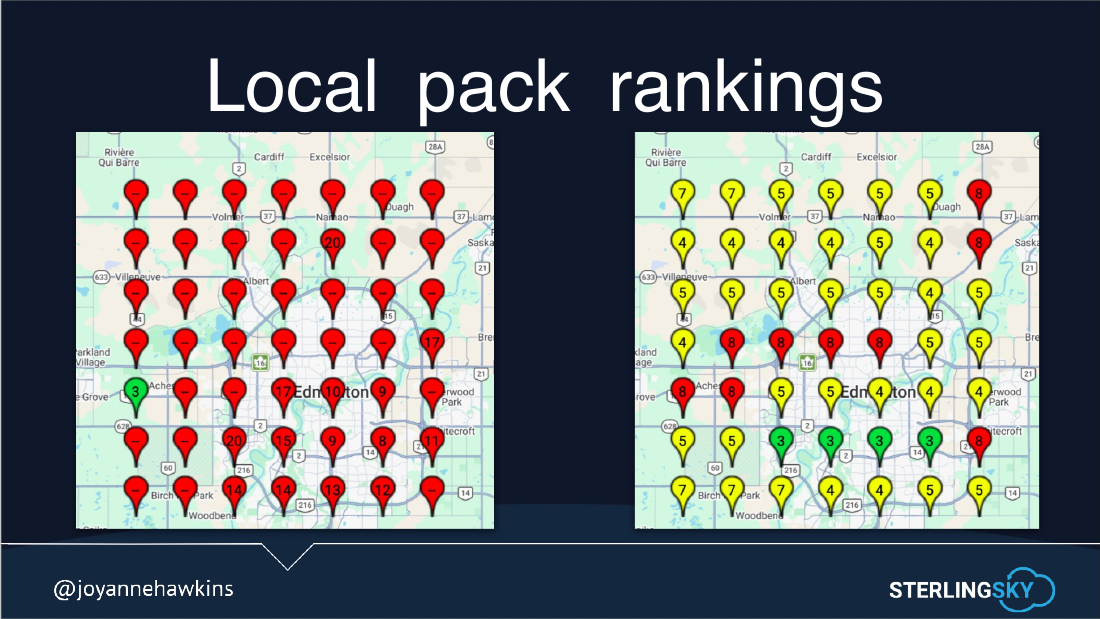
- Penalties (classifiers) do NOT affect local pack rankings, only organic. Press-release tests with anchor text all boosted rankings except on a site already hit by a core update, where only the keyword used in the anchor crashed.
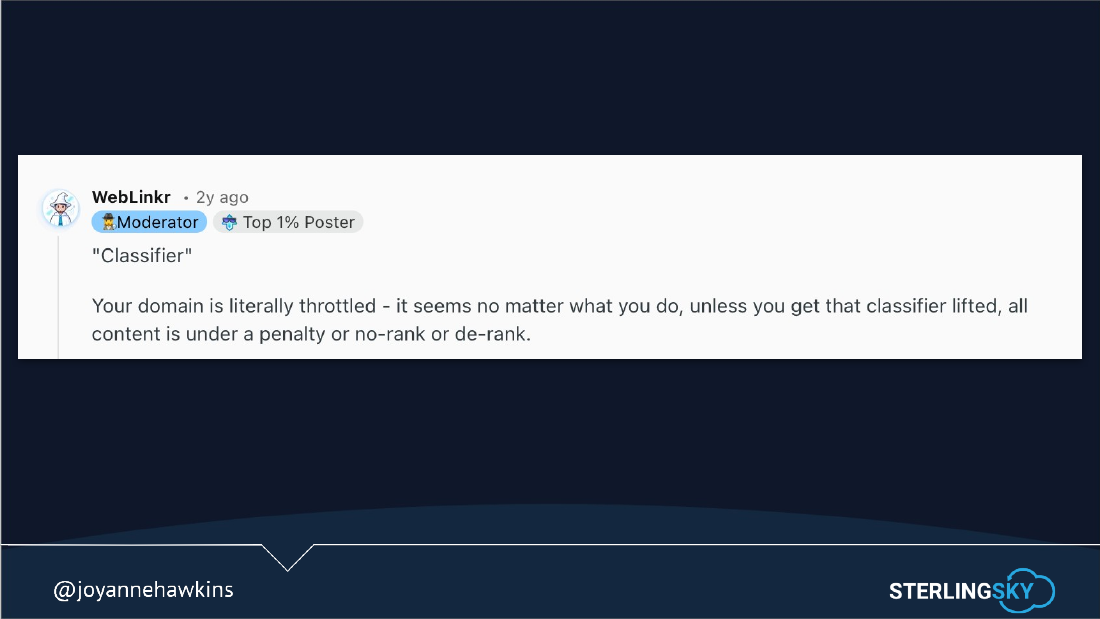
- The "classifier" concept came with the 2023 Helpful Content Update (HCU). With a site-wide classifier, nothing you do raises traffic until it is removed. Hawkins tracks dozens of classifier sites; none improved since December or with the March core update.
- Counterexample: a bail bonds site with hundreds of exact-match anchors is dominating and even rose with the March update because Google has not caught its network yet.
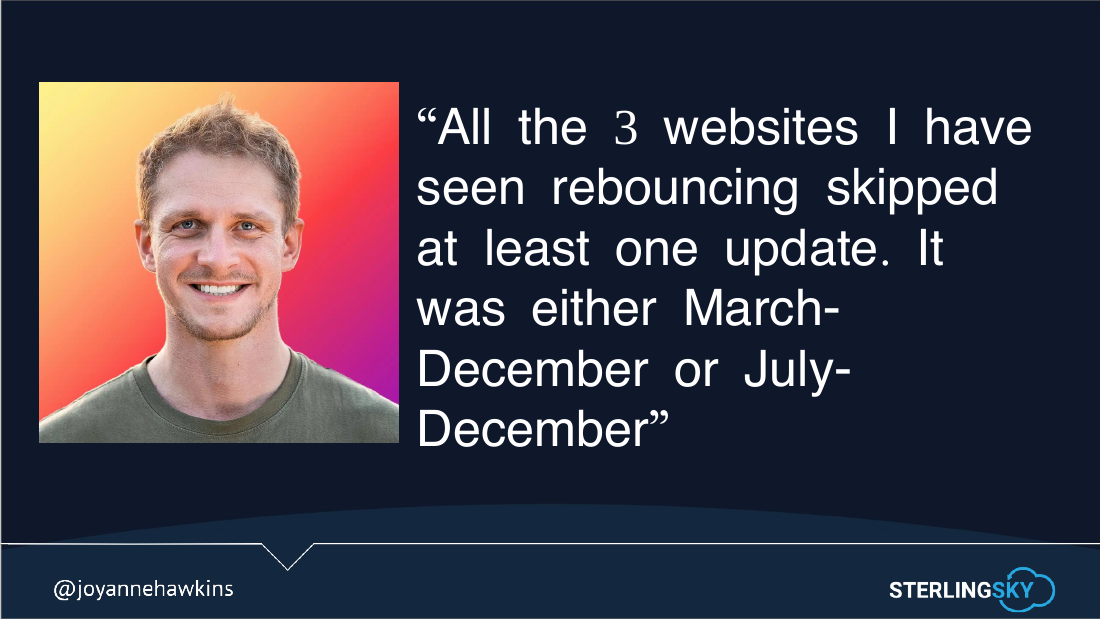
- Recovery: she is actively working to recover about 6 sites; the minimum to clear a classifier is usually two core updates (about 6 months), best case; worst case is a new domain.
- Tooling: a Chrome extension (name not given in the recording) draws update lines on weekly Search Console graphs; she is now testing many disavow files in recent months.
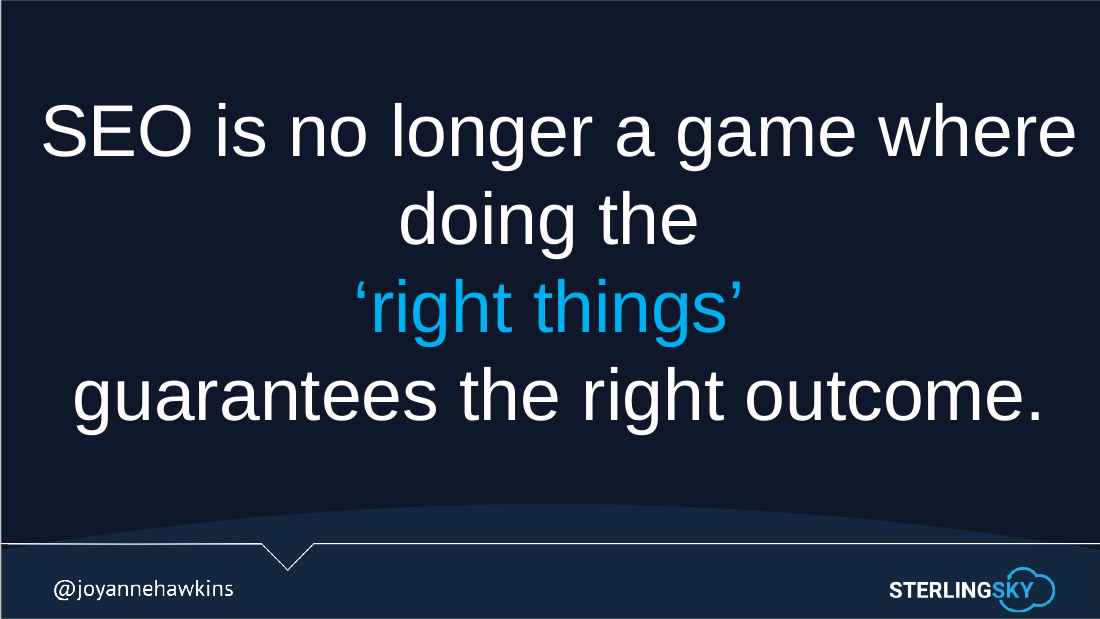
- Closing advice: doing the right things no longer guarantees good outcomes; catch patterns early, question assumptions, and adapt faster.
Slides
Slides (108)
Source
Deck file: joy-hawkins-5-seo-mysteries-that-secretly-kill-your-rankings-solved (108 slides, embedded above). This was Joy Hawkins's solo talk, "Five SEO mysteries that secretly kill your ranking." Session notes live in the project knowledge folder, which is not published on the live site.