Marty Marion - De-Positioning and Marketing Psychology
Marty Marion's de-positioning workshop on unbinding prospects from incumbents before positioning can land.
On this page
- Main takeaways
- Key points
- Speaker background and framing
- Core claims and numbers
- Named frameworks and people
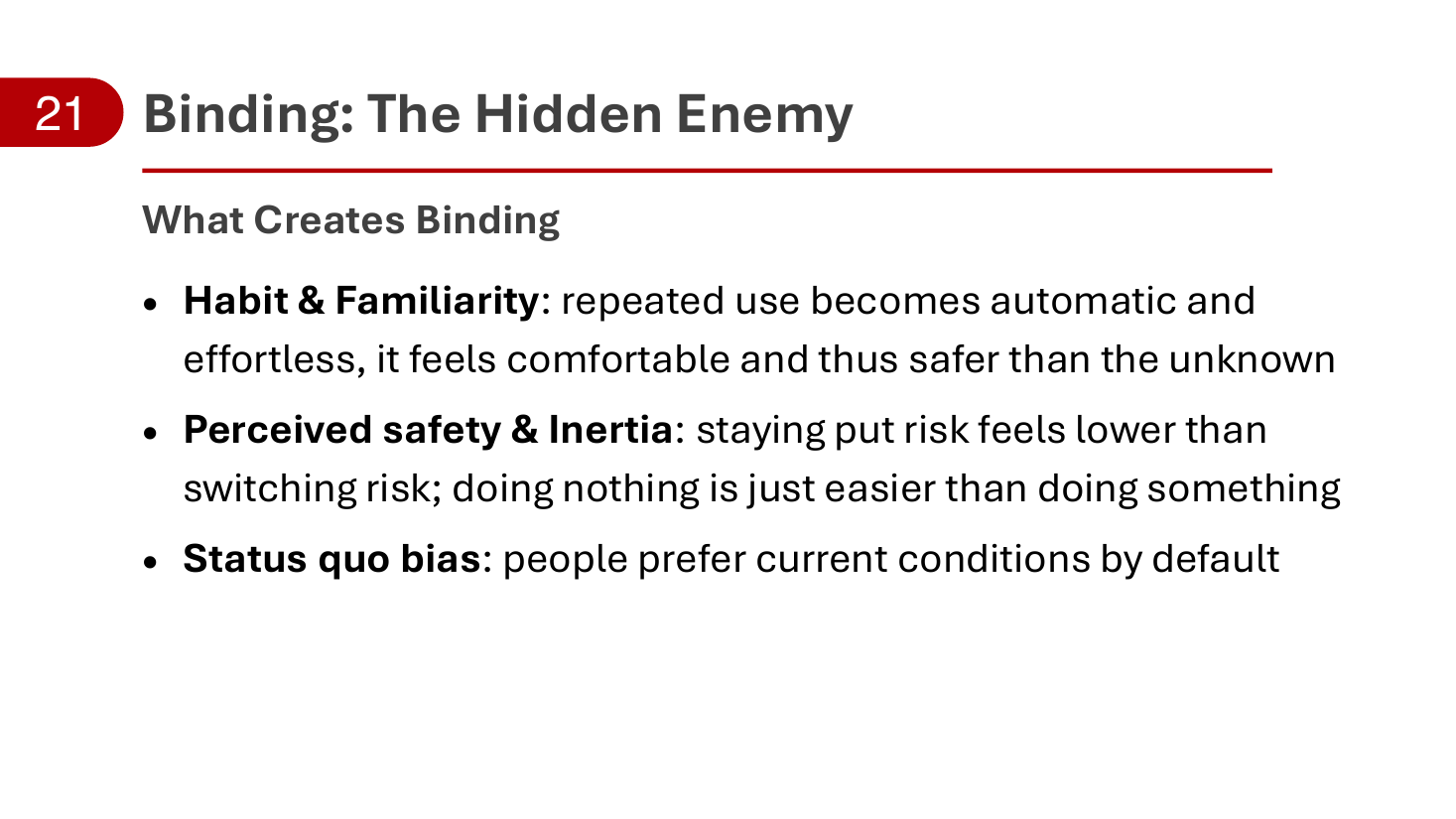
- The Four Binding Forces (what creates and sustains binding)
- The Four Binding States
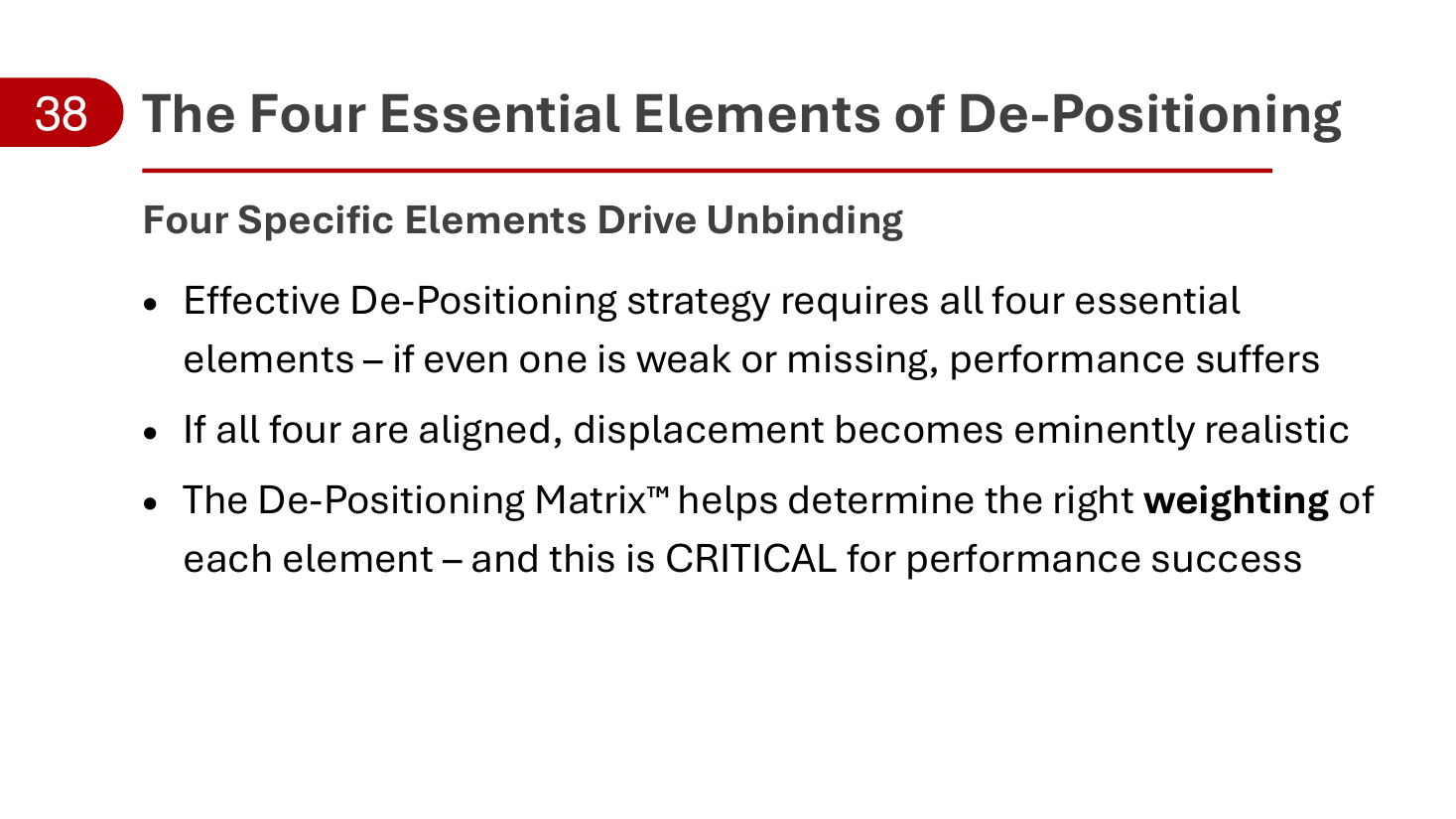
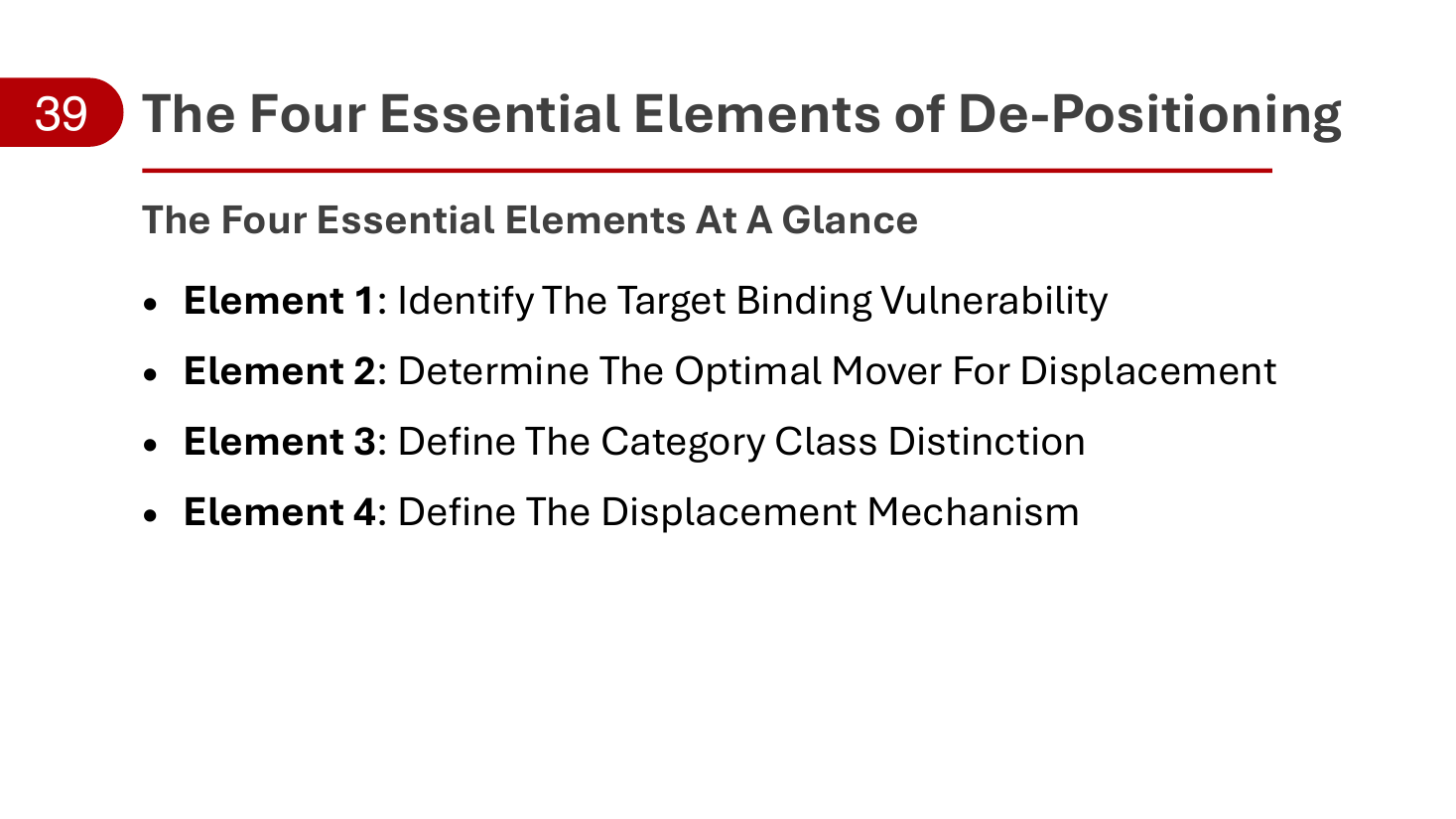
- The Four Essential Elements of De-Positioning
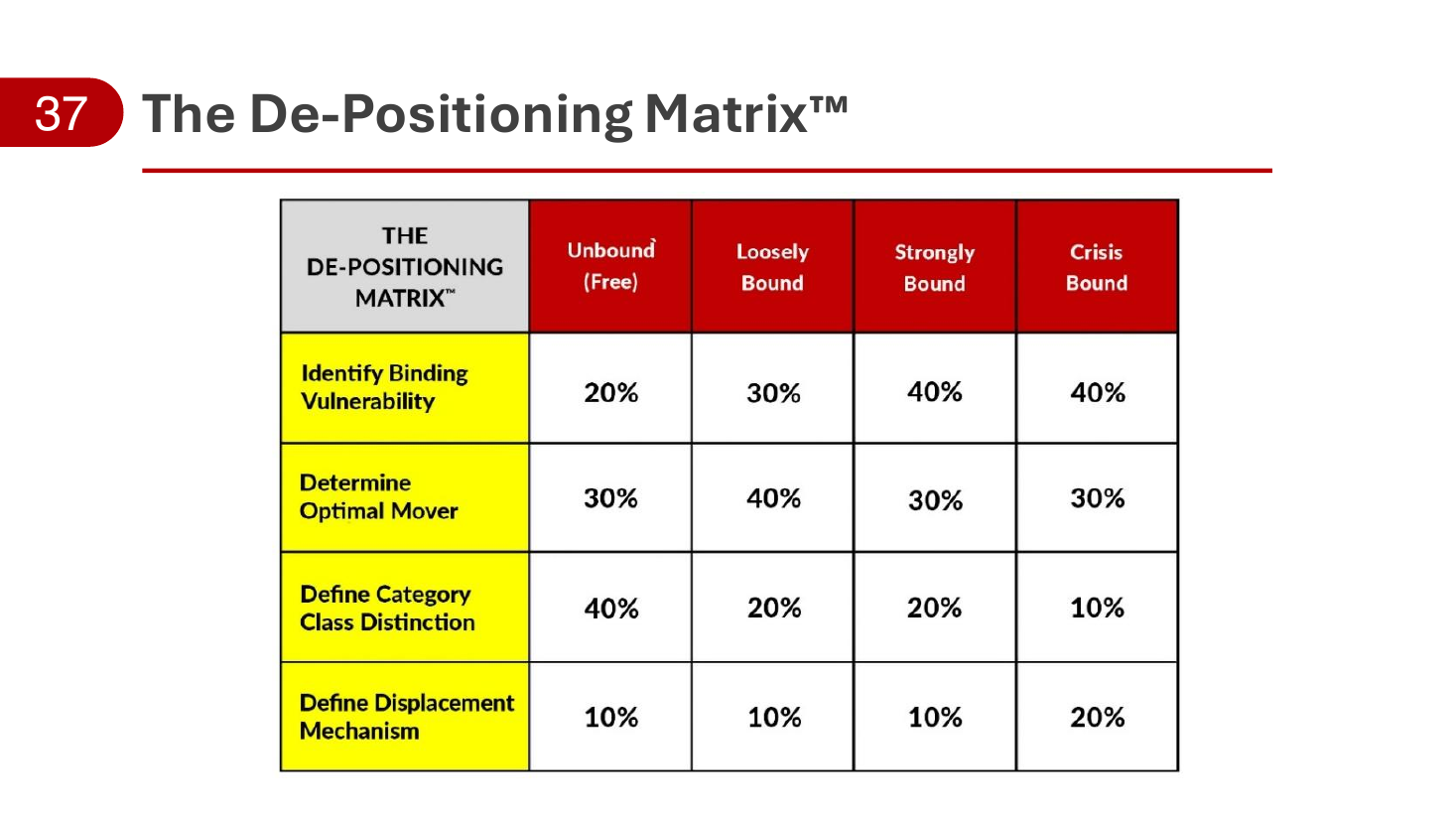
- Matrix weightings (primary element per state)
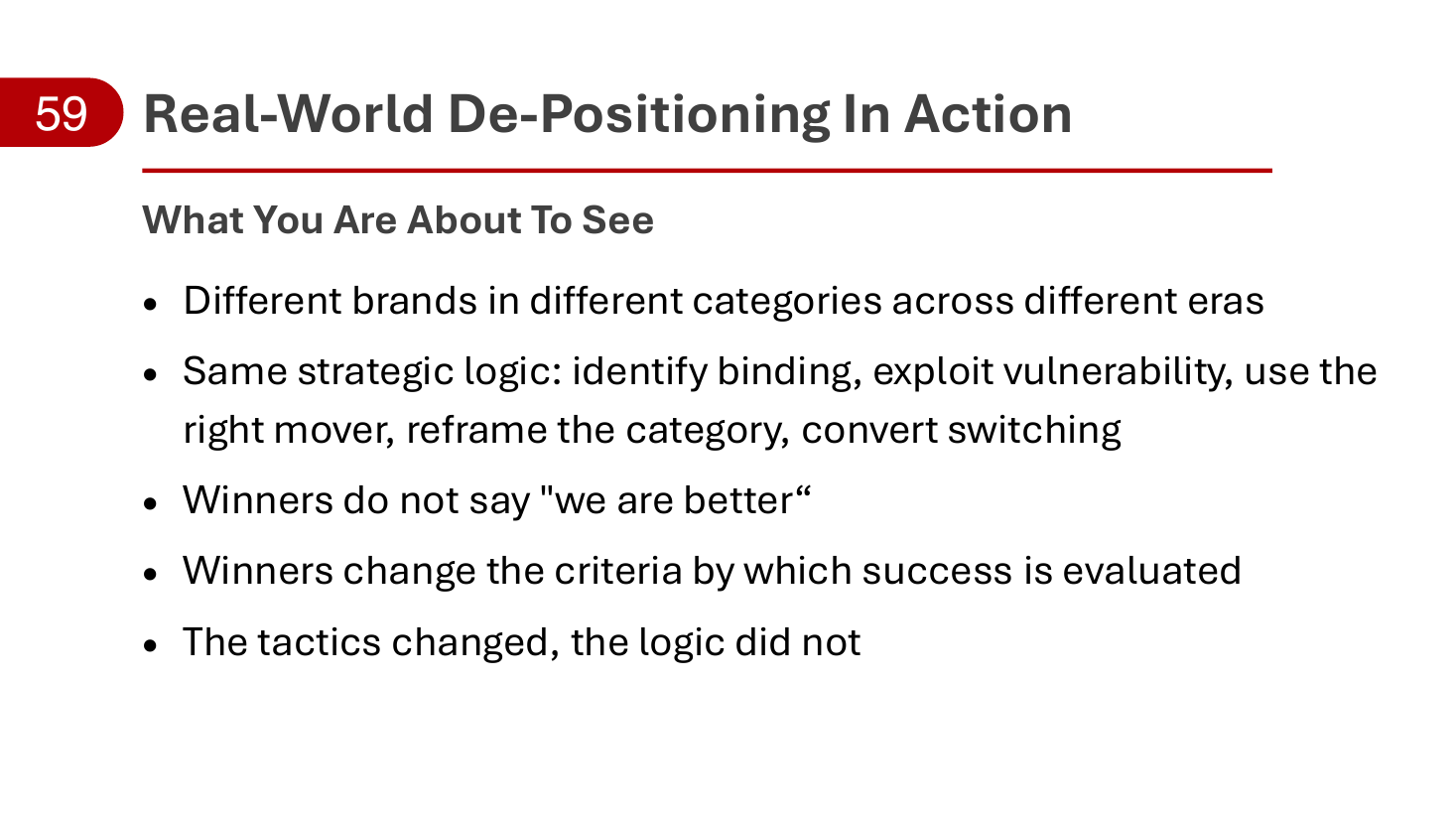
- Real-world examples
- The worksheet flow (two pages distributed at tables)
- Slides
- Source
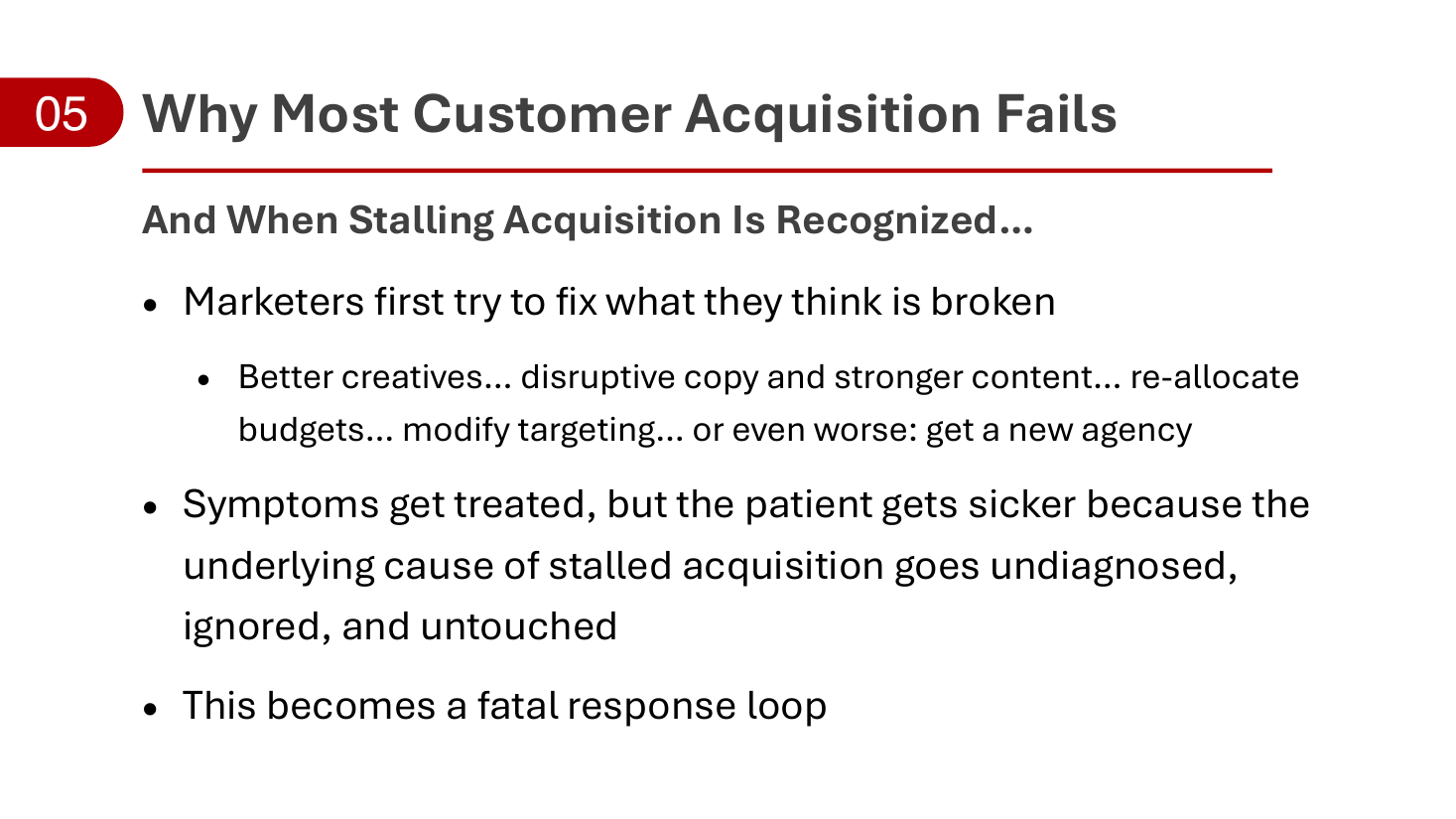
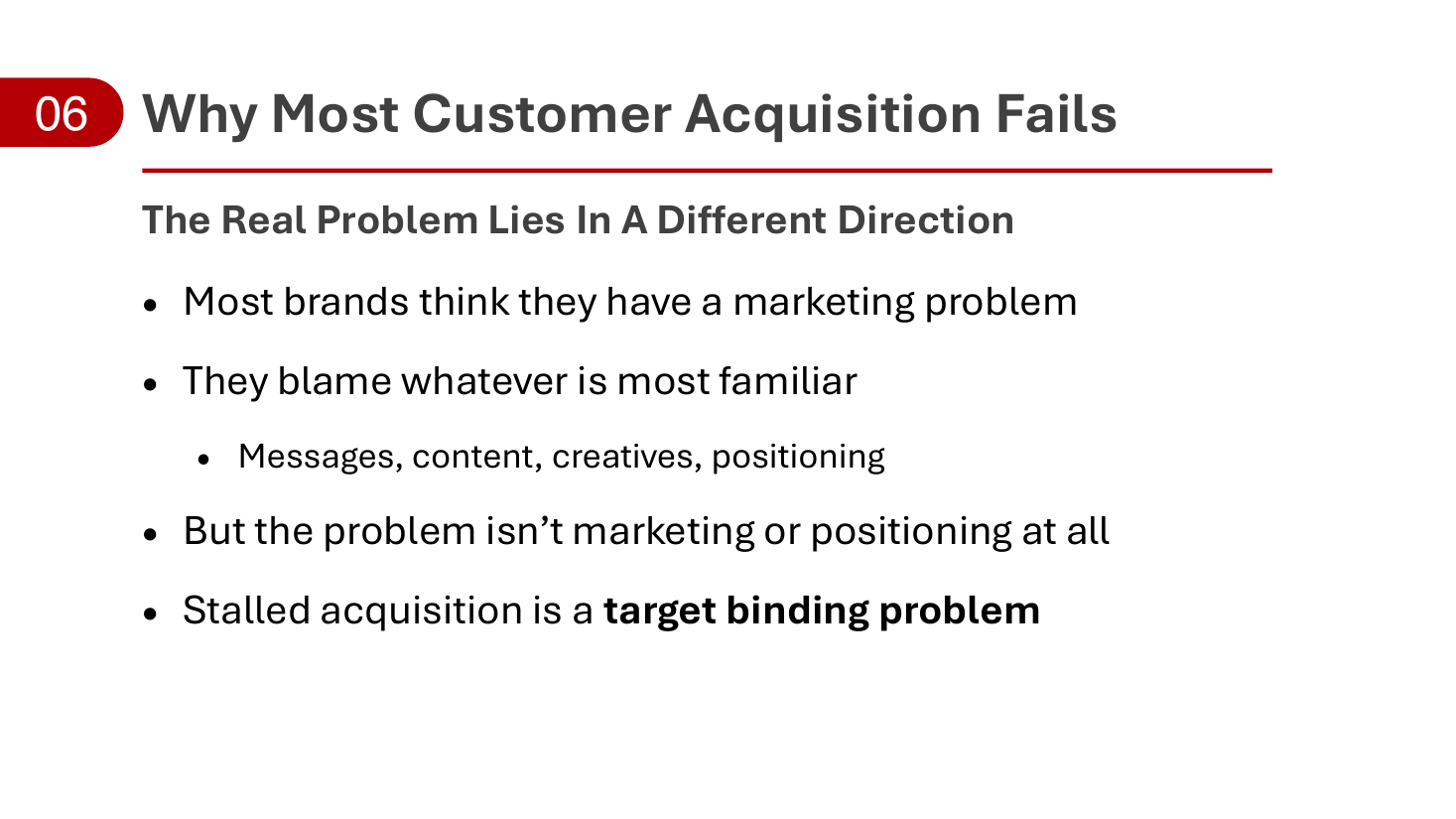
Marty Marion, a self-described former Madison Avenue strategist, opened the conference with a workshop on "de-positioning," the discipline of weakening a prospect's attachment to their current provider before any positioning or persuasion can work. His core argument is that stalled customer acquisition is usually misdiagnosed as a marketing or positioning problem when it is actually a "target binding" problem: in a competitive market, 95%+ of prospects are already buying from someone, so growth comes from displacement, not demand creation. The talk walks through his De-Positioning Matrix, a model that maps four binding states against four essential elements with different weightings for each state.
Main takeaways
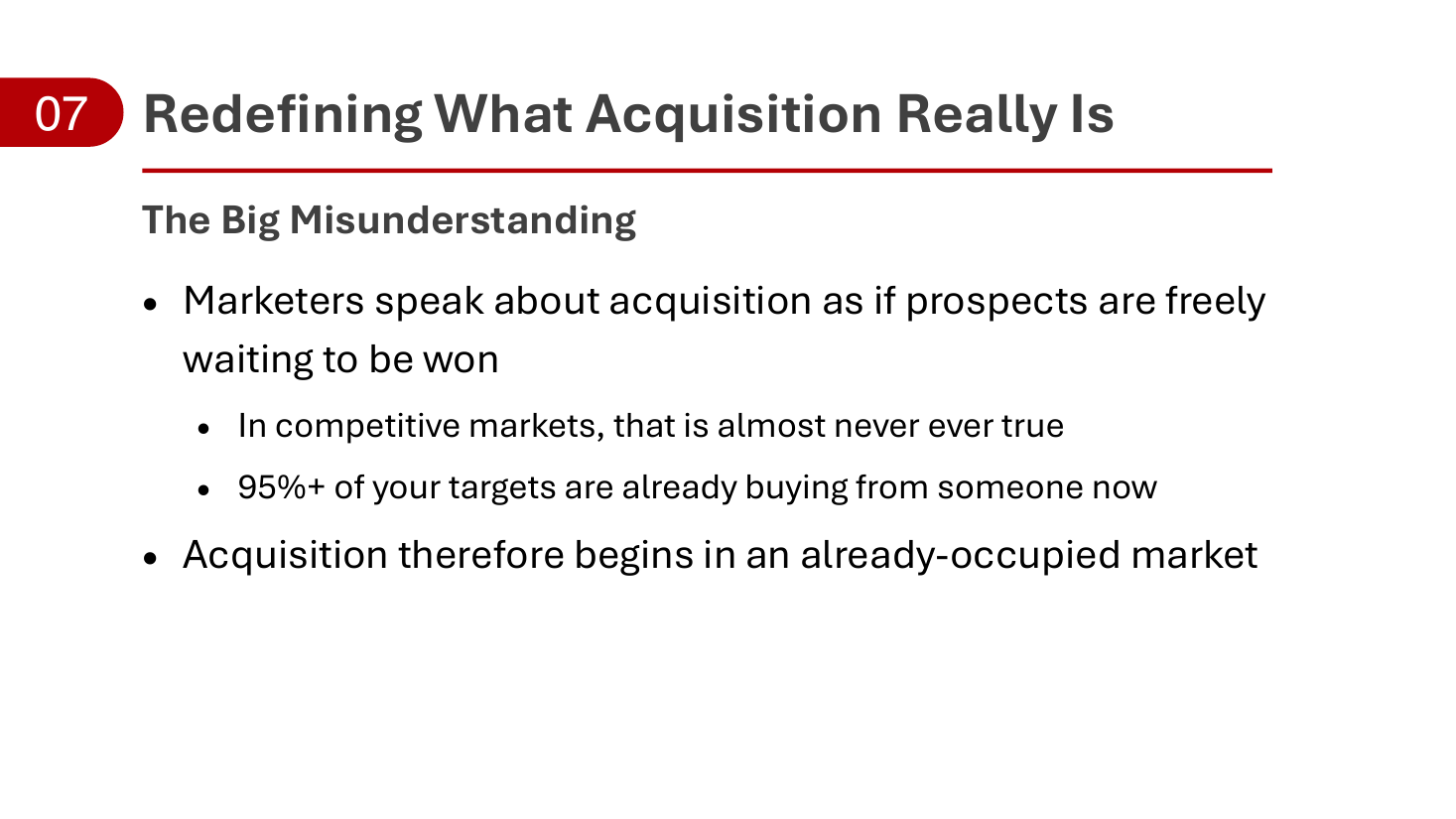
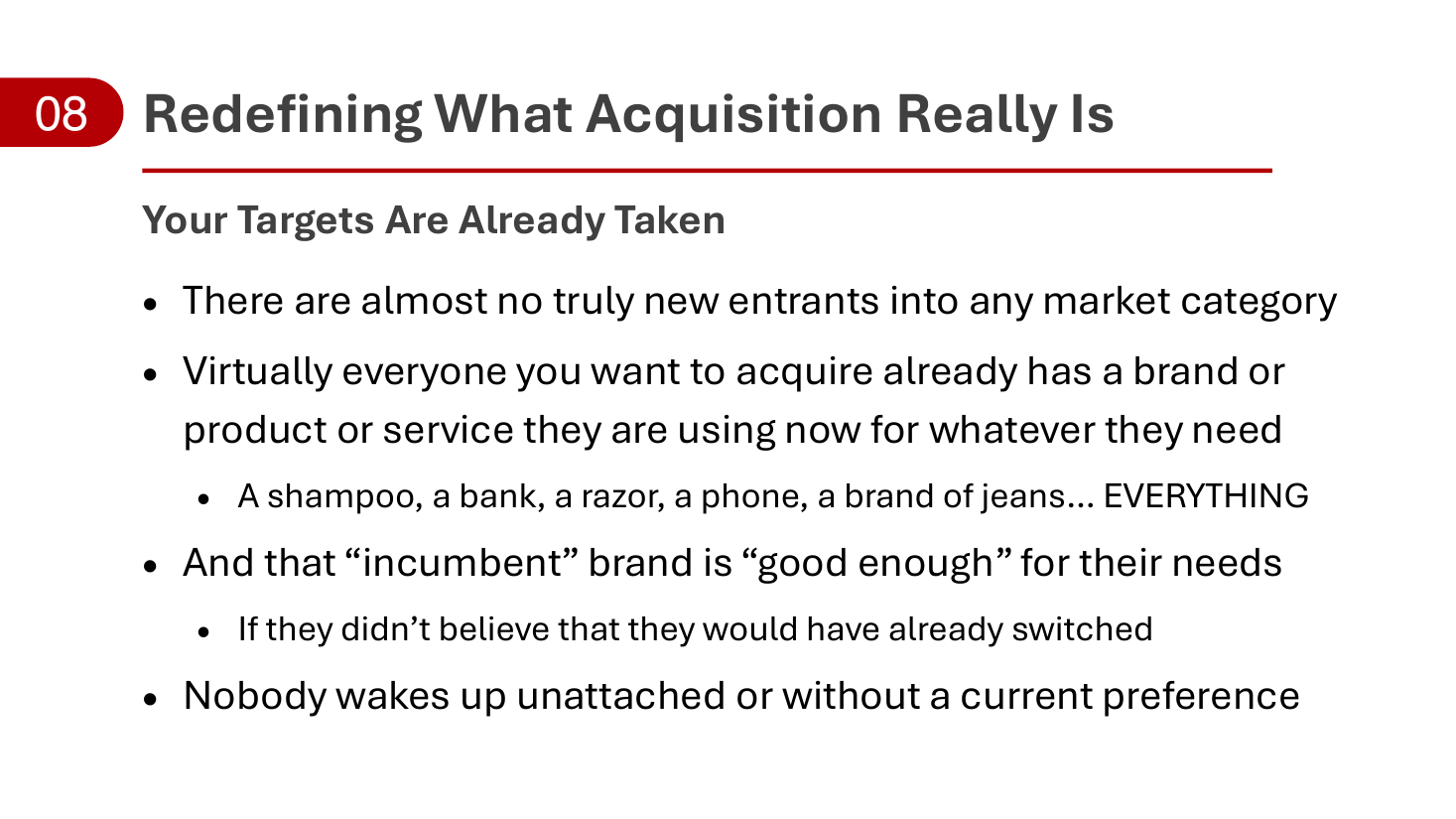
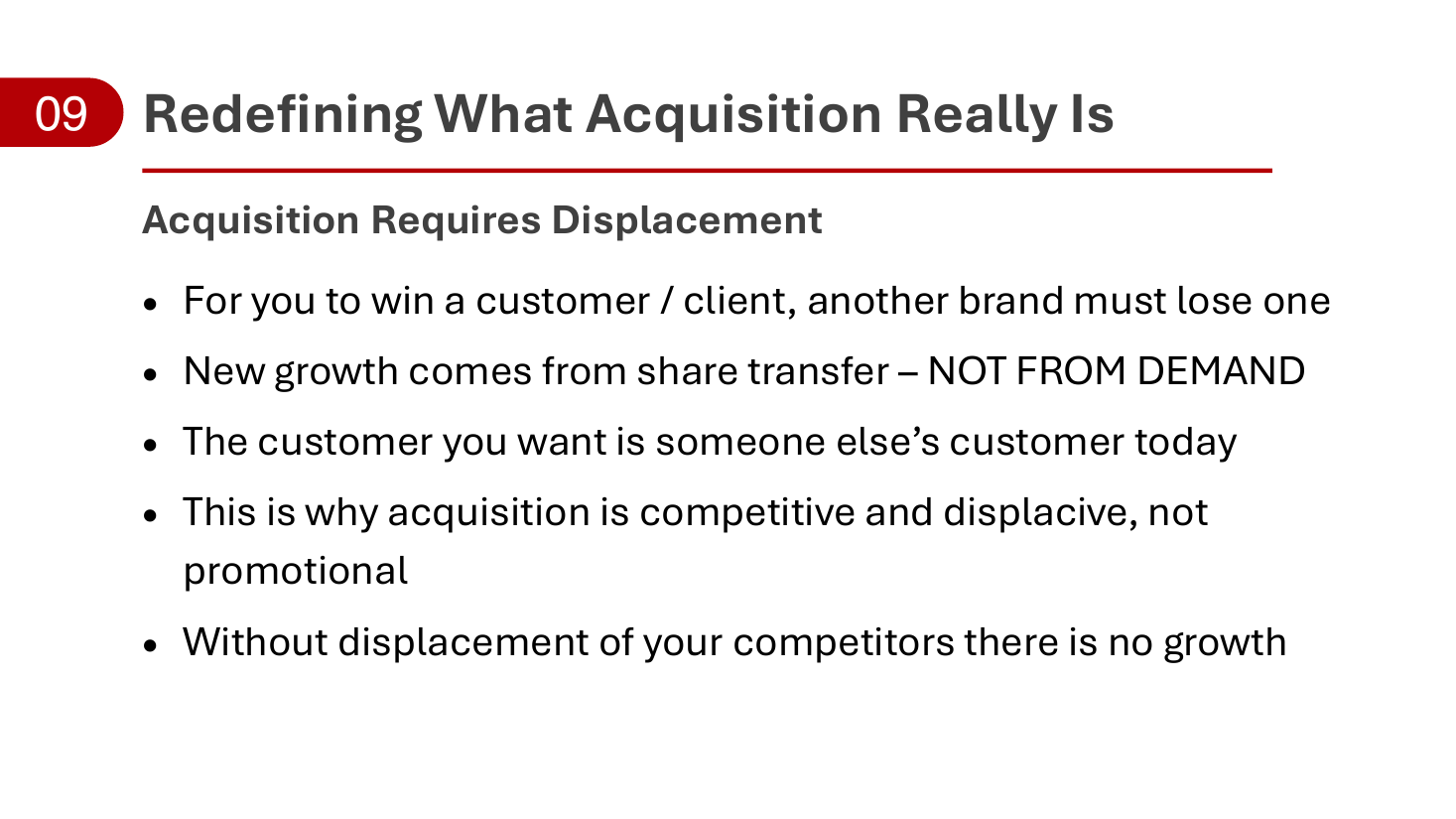
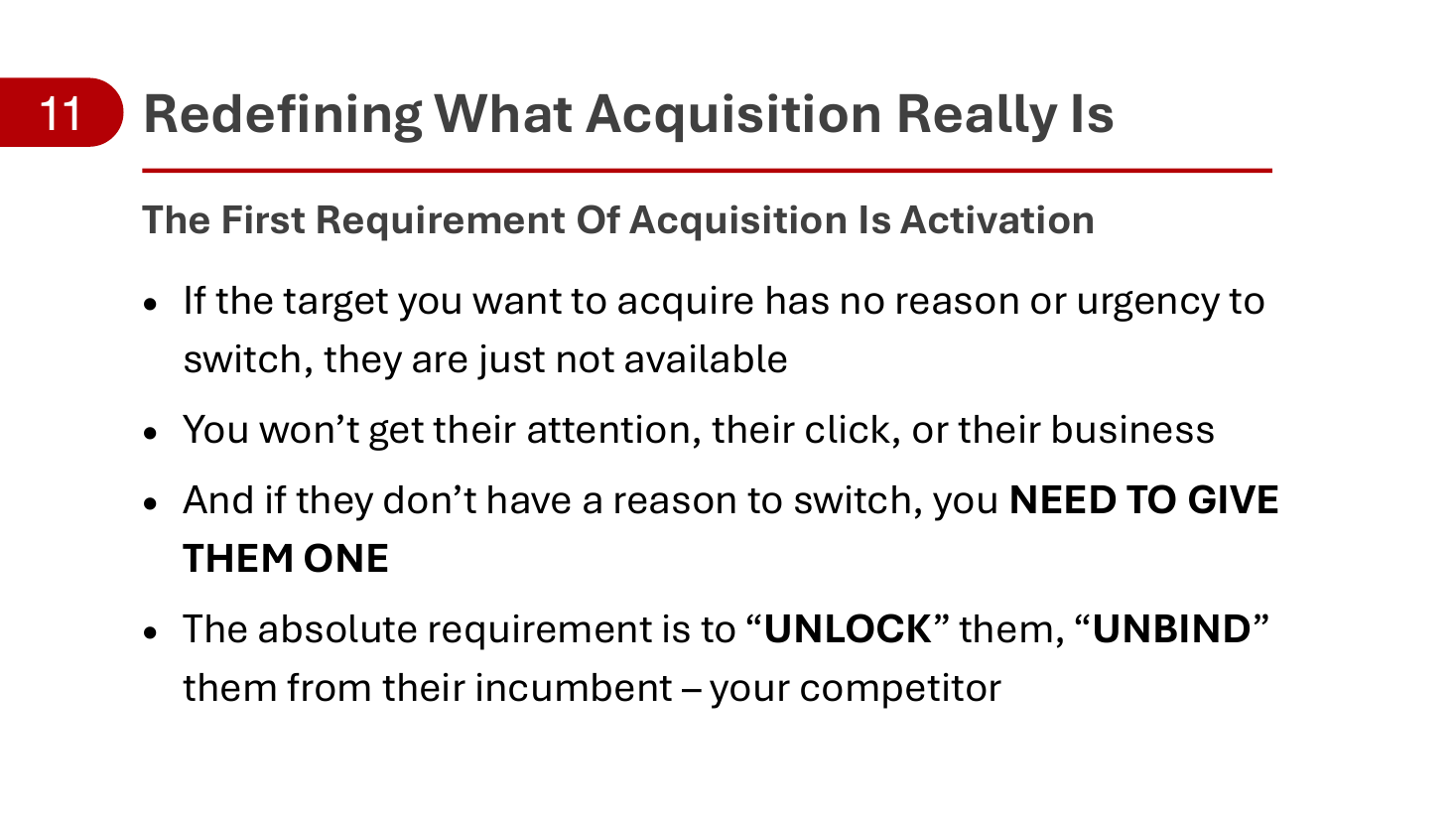
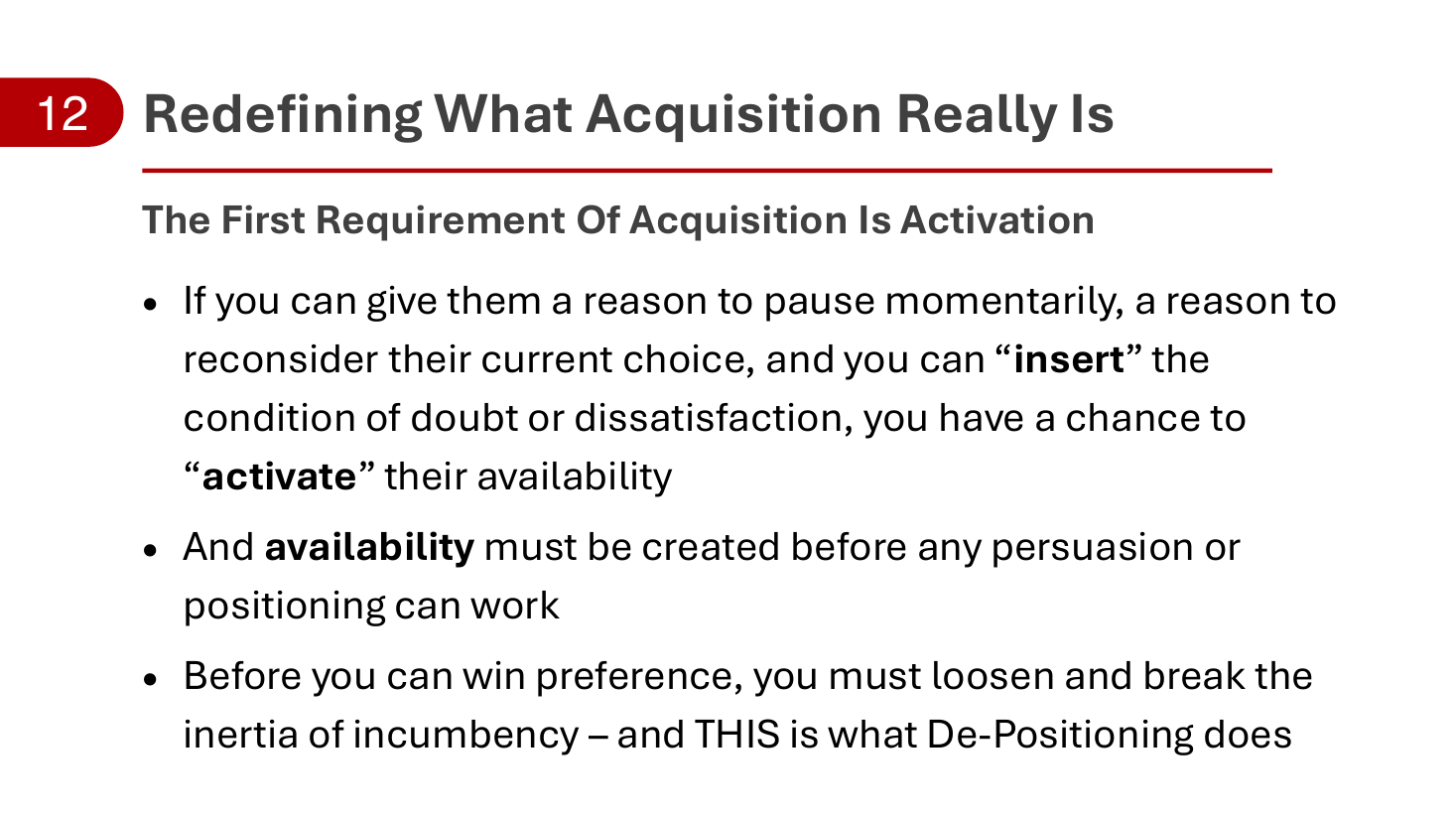
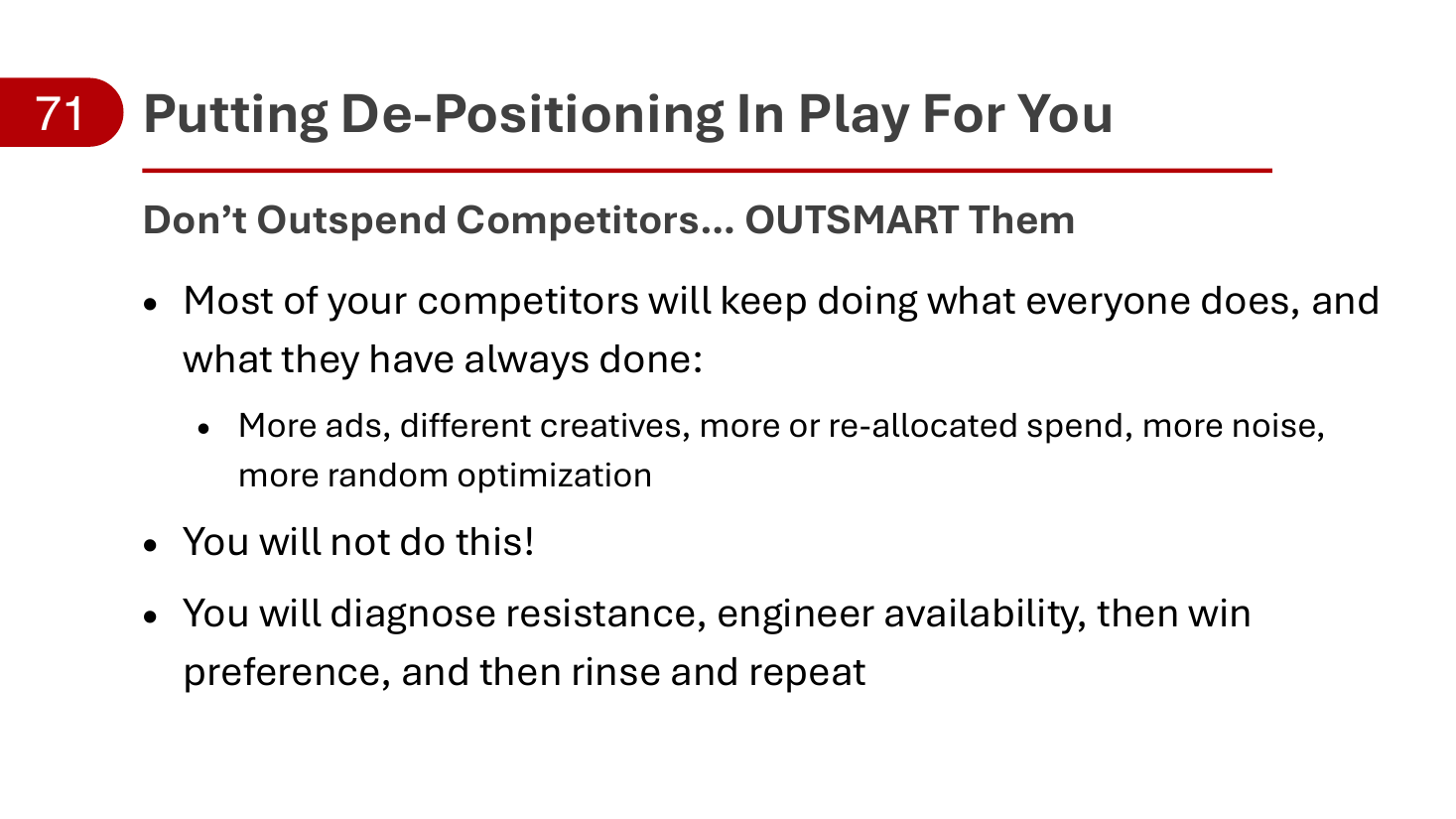
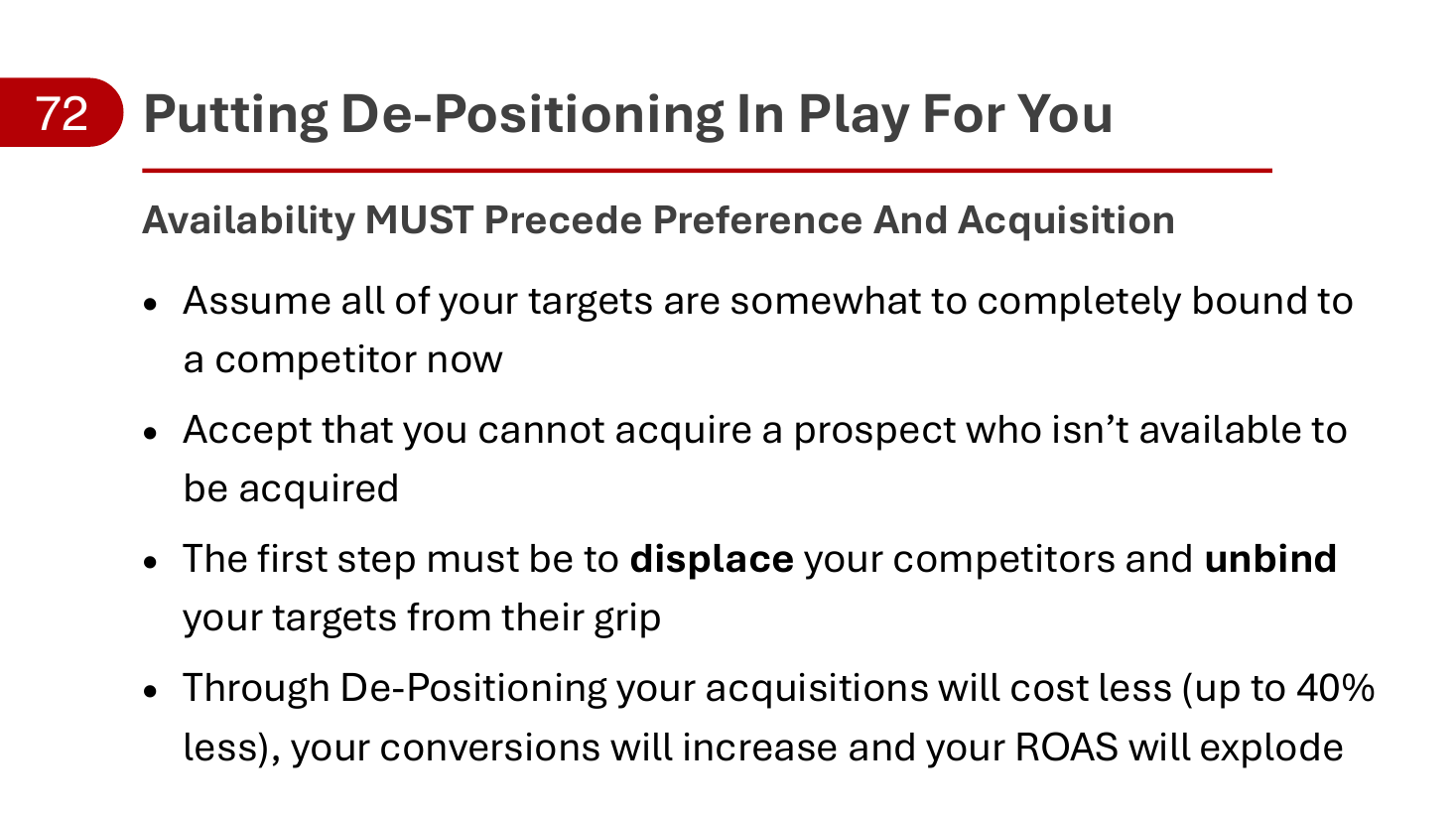
- Acquisition is displacement, not demand creation. Marion argues 95%+ of any competitive market is already buying from someone, so growth comes from share transfer. For you to win a customer, another brand must lose one. The first job is "activation": giving a bound prospect a reason to pause and reconsider before positioning tries to win them.
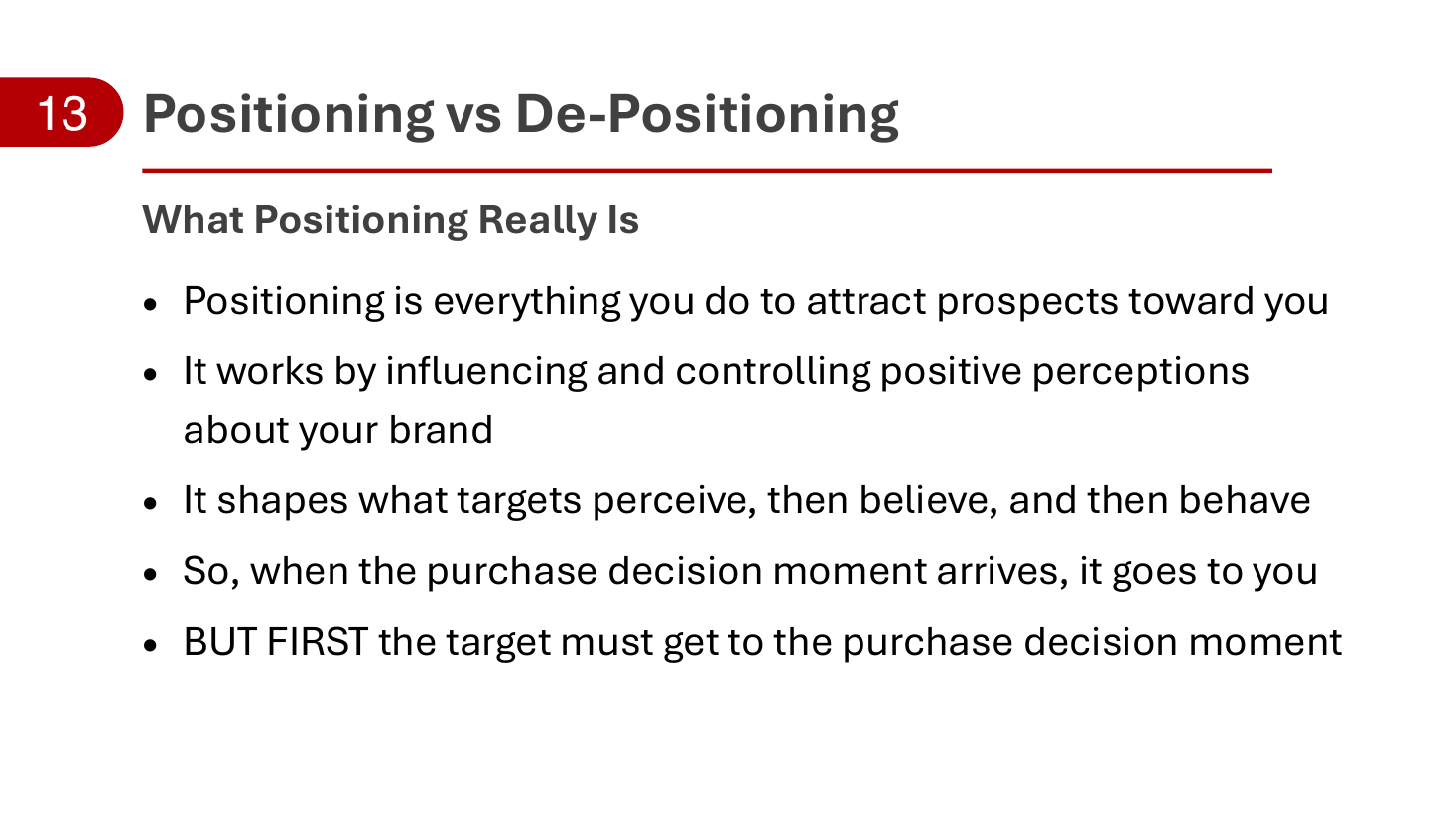
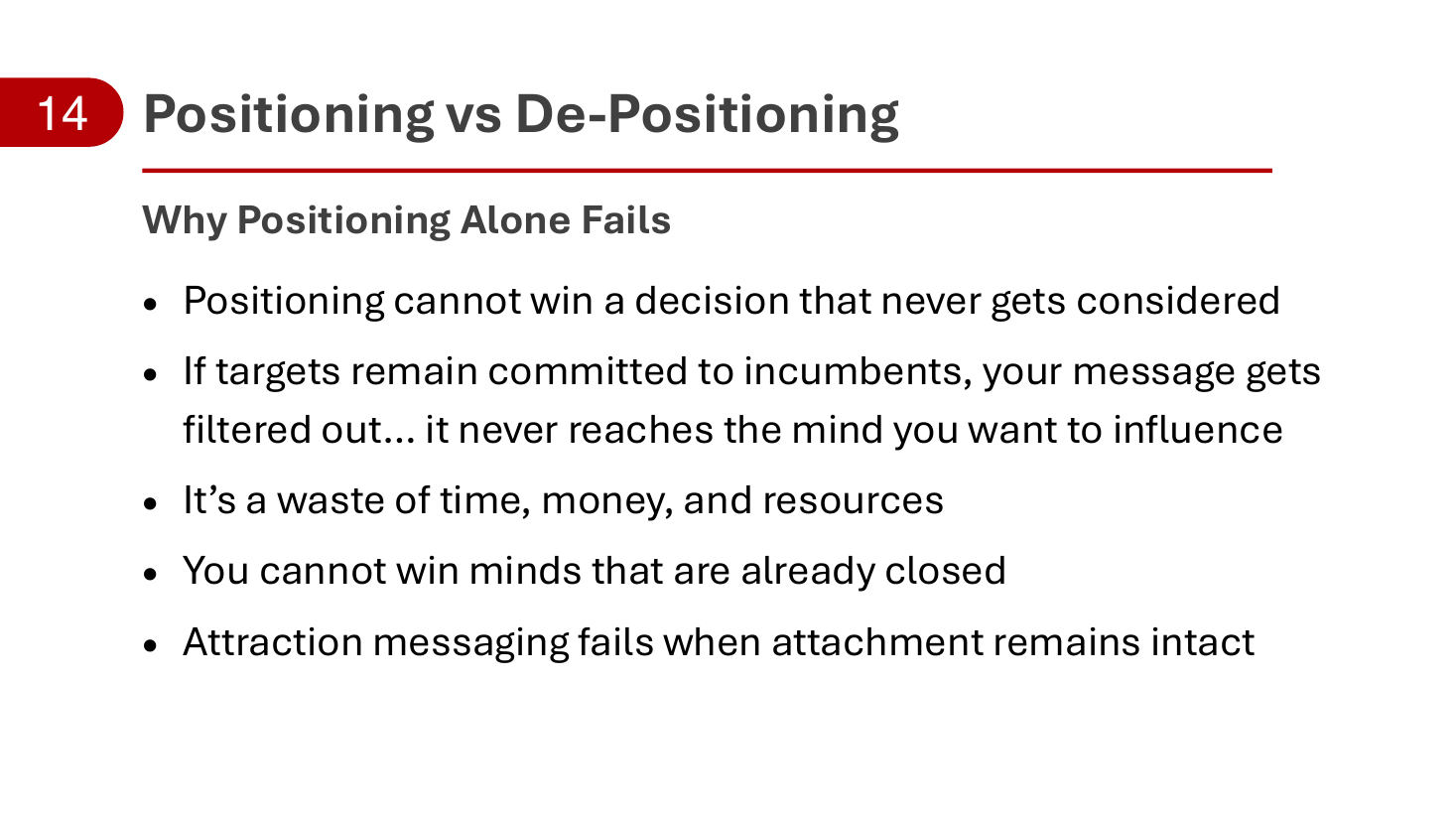
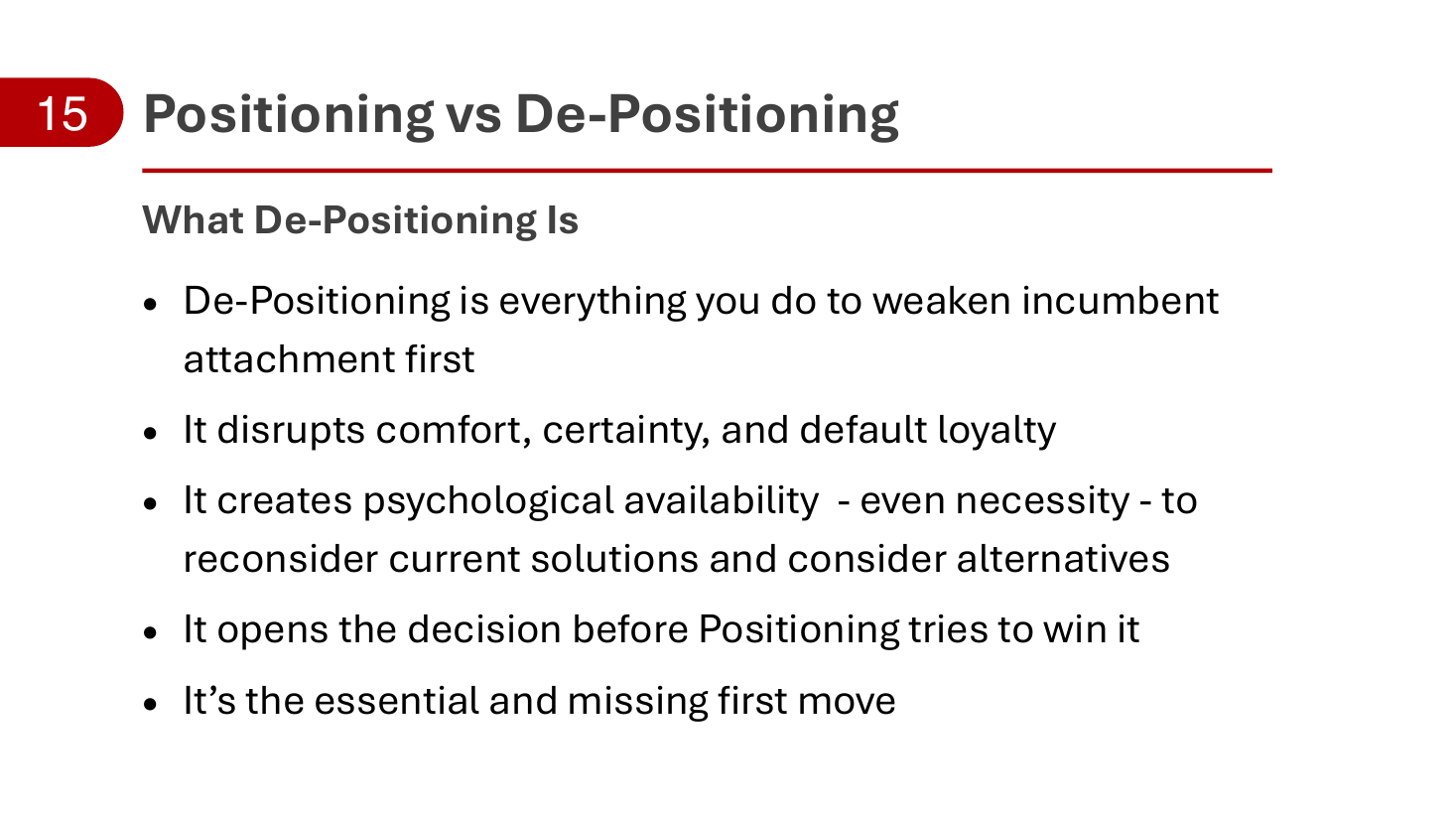
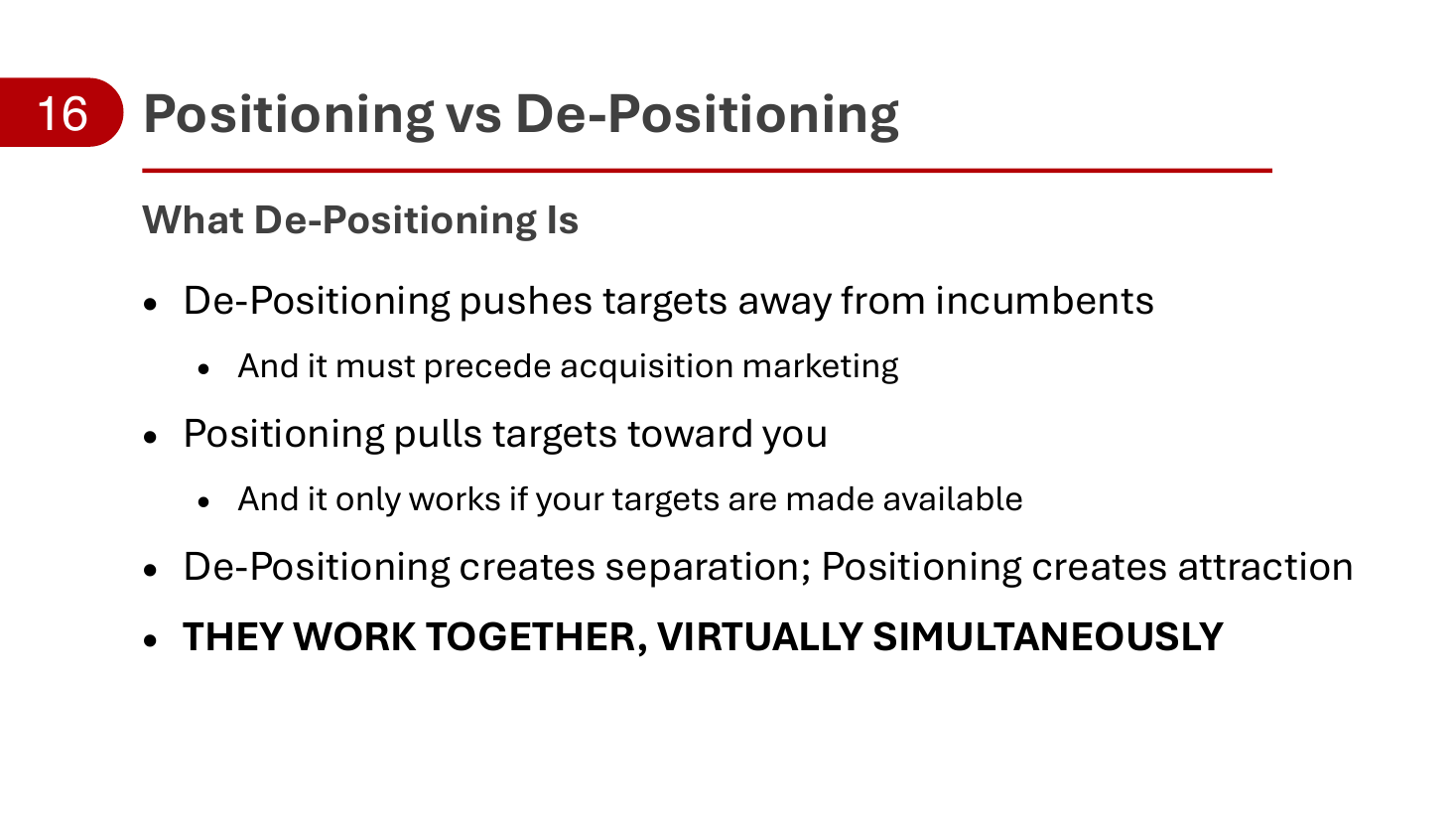
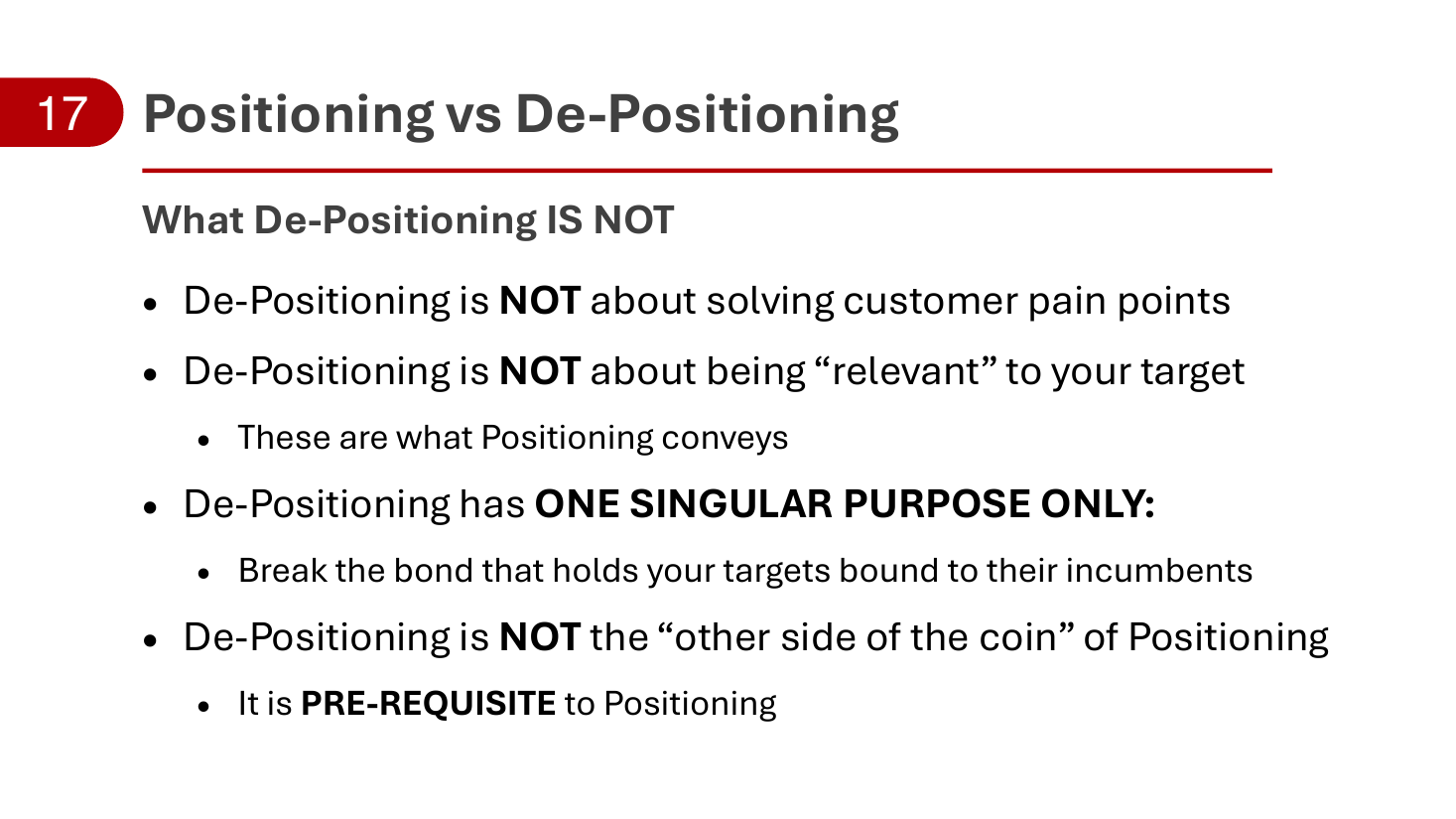
- De-positioning is a prerequisite to positioning, not its opposite. Positioning shapes how a target perceives you, but it fails if the target's mind is closed and committed to an incumbent. De-positioning has one purpose only: break the bond holding the target to their current provider. The two work together, virtually simultaneously, but de-positioning must come first.
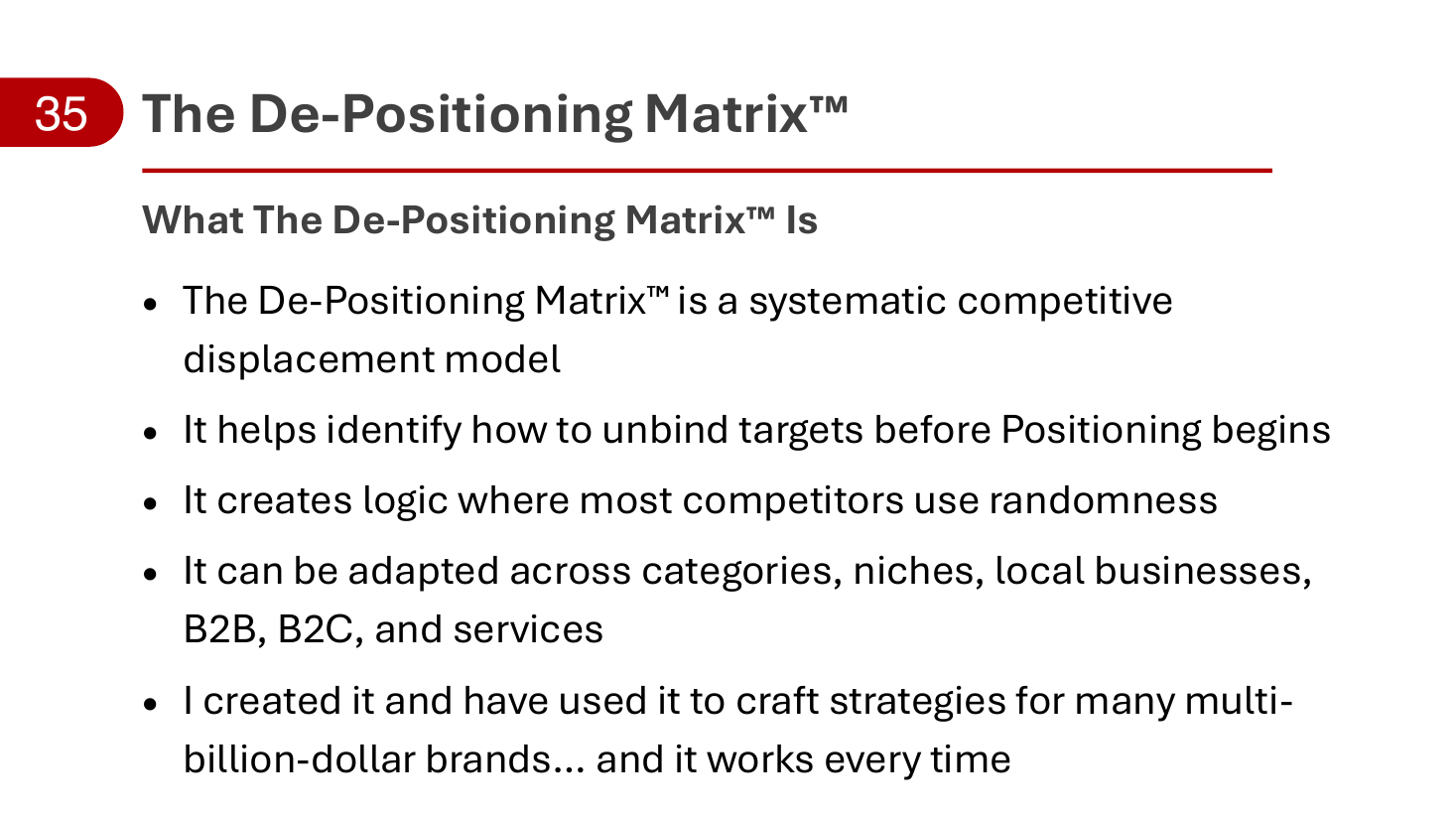
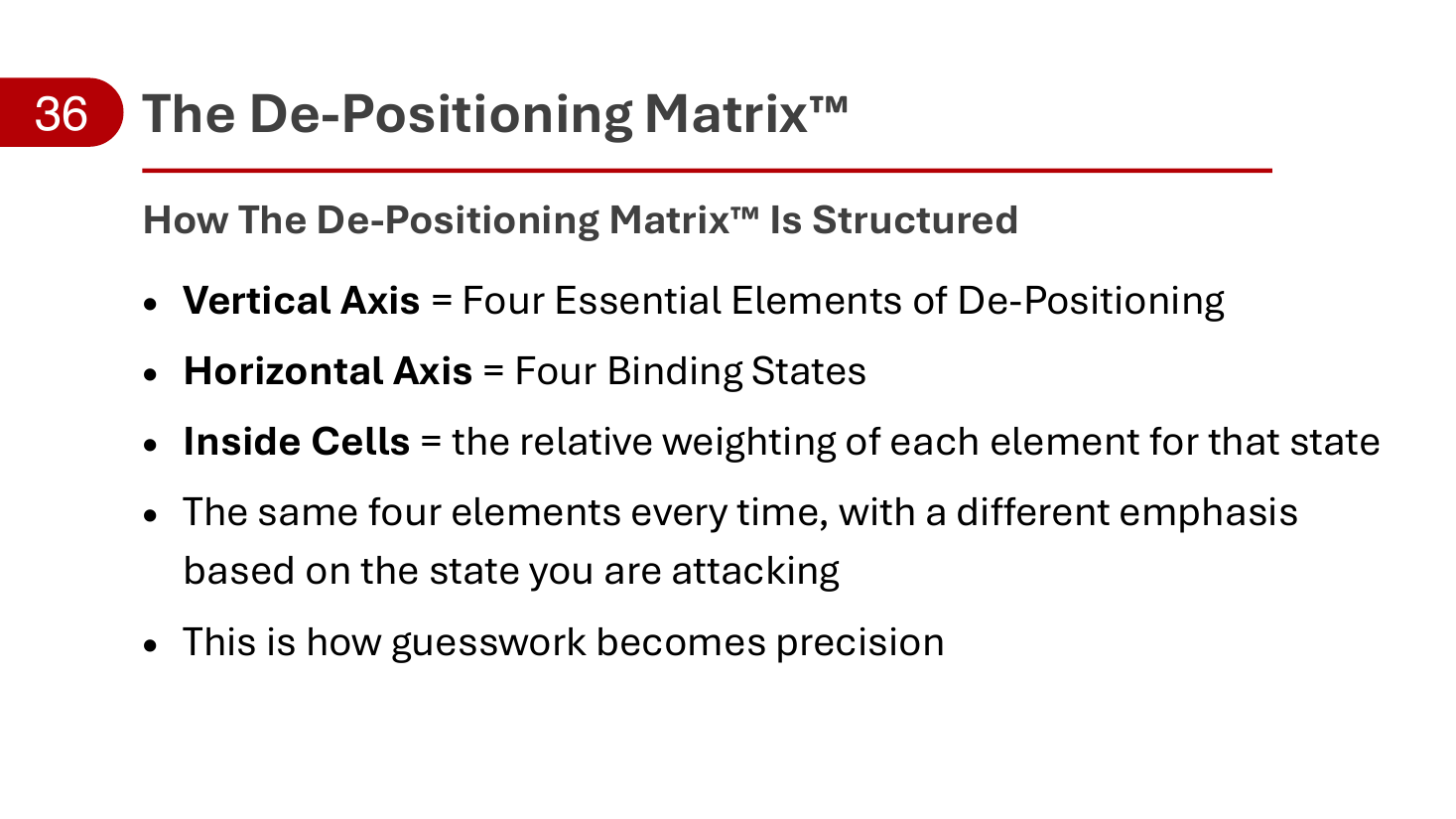
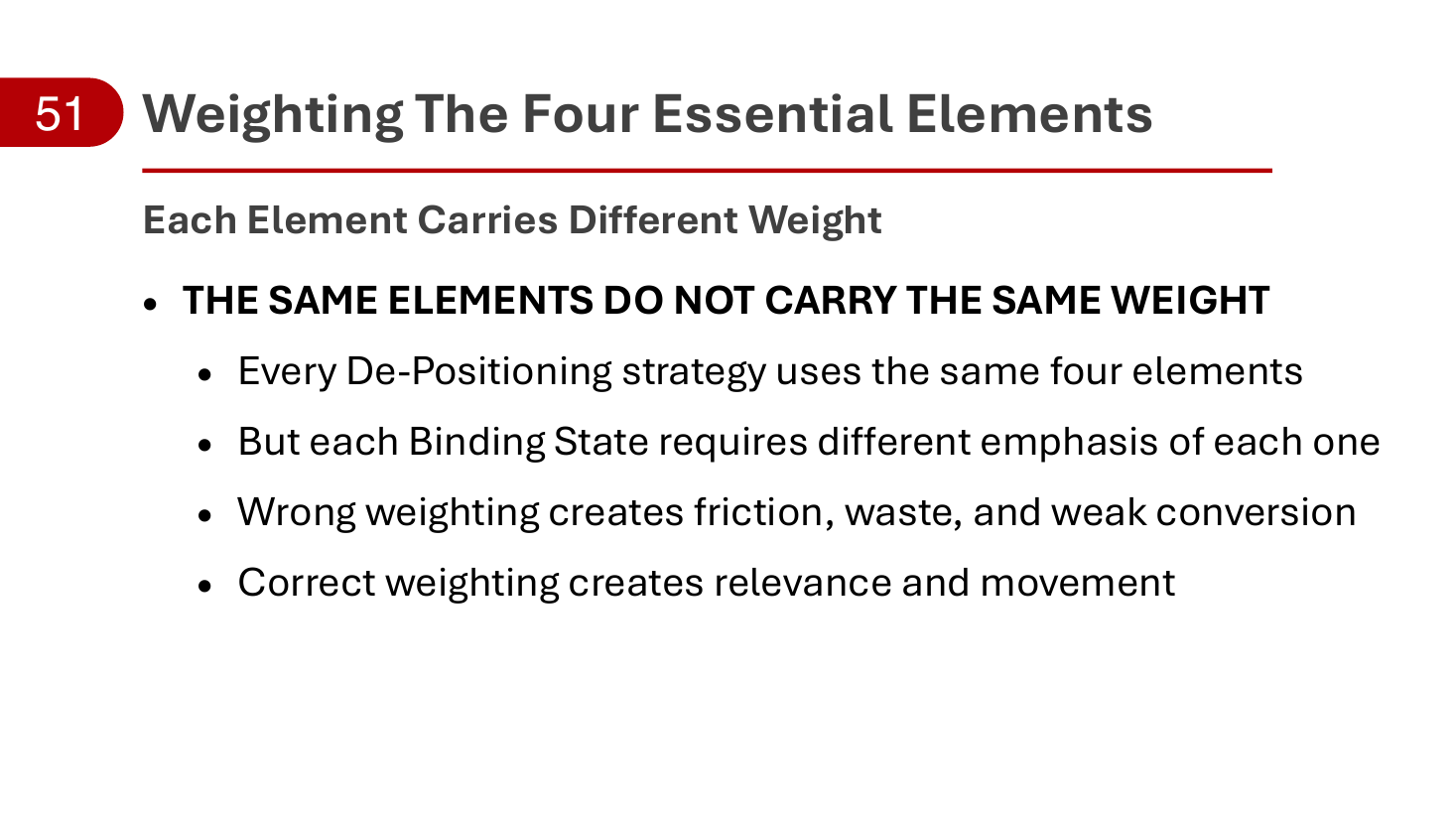
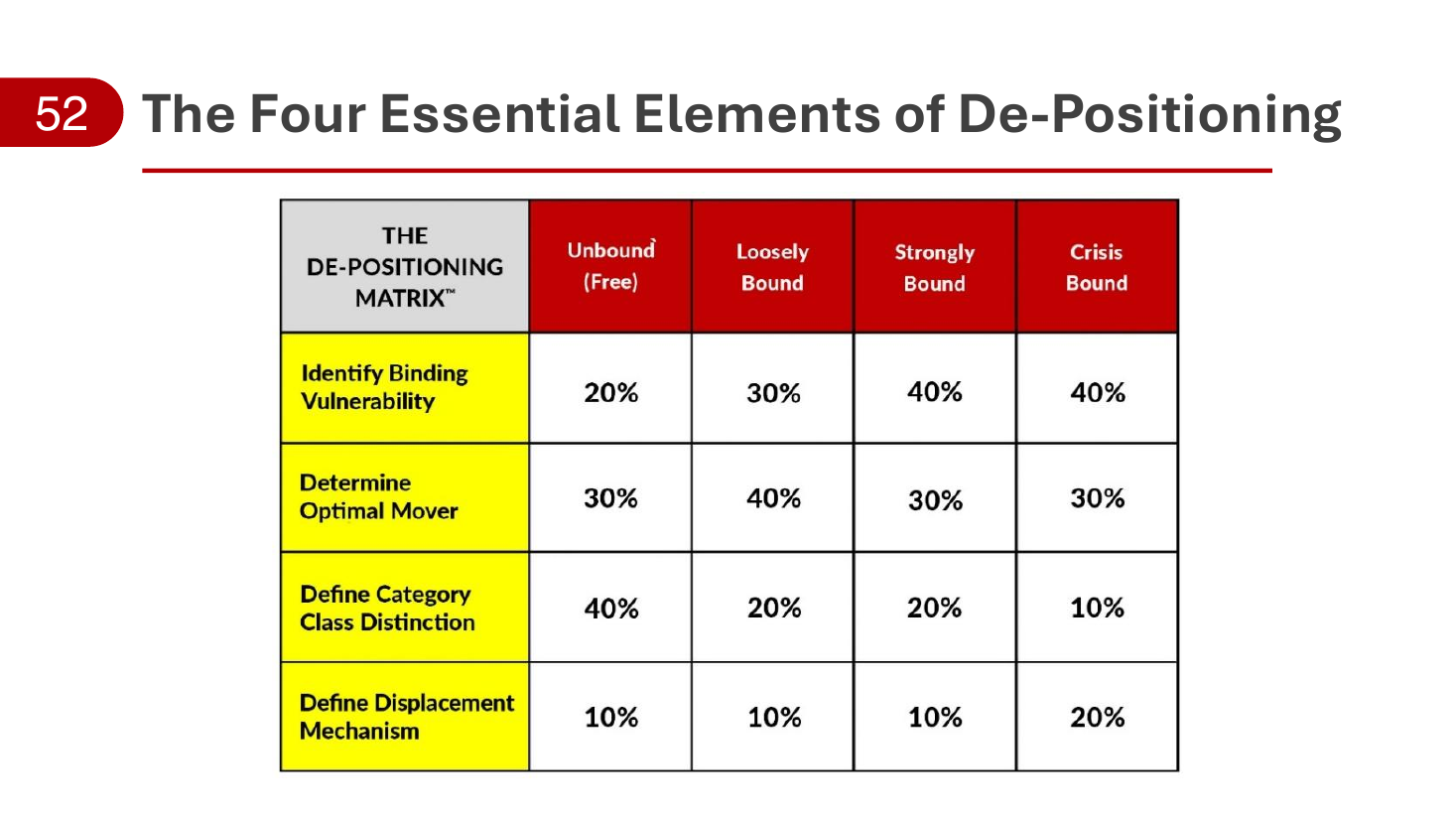
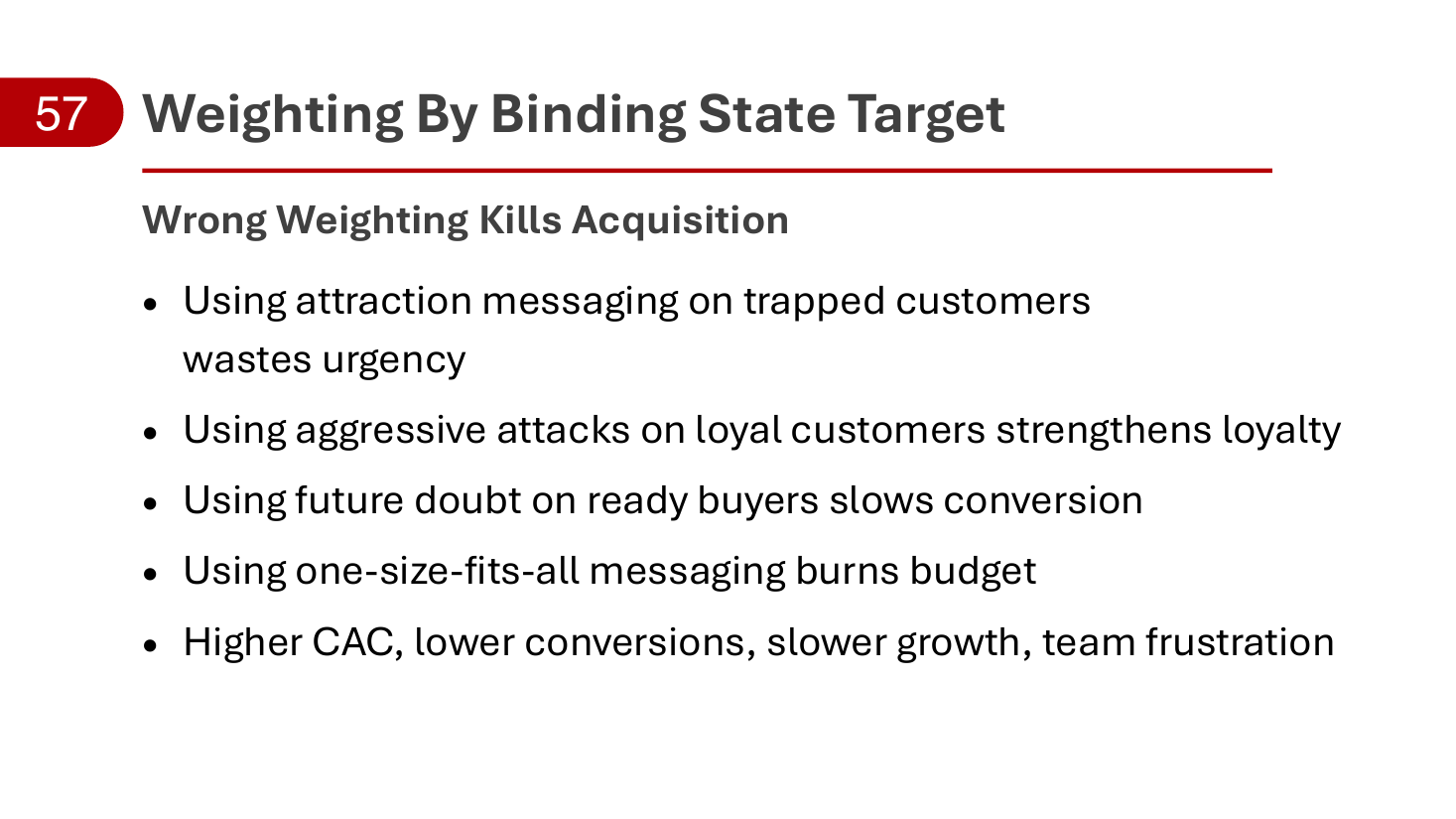
- The De-Positioning Matrix maps four binding states against four essential elements, with different weightings per state. Unbound, Loosely Bound, Strongly Bound, and Crisis Bound targets each require a different primary emphasis among Vulnerability, Mover, Category Class, and Displacement Mechanism. Wrong weighting wastes budget.
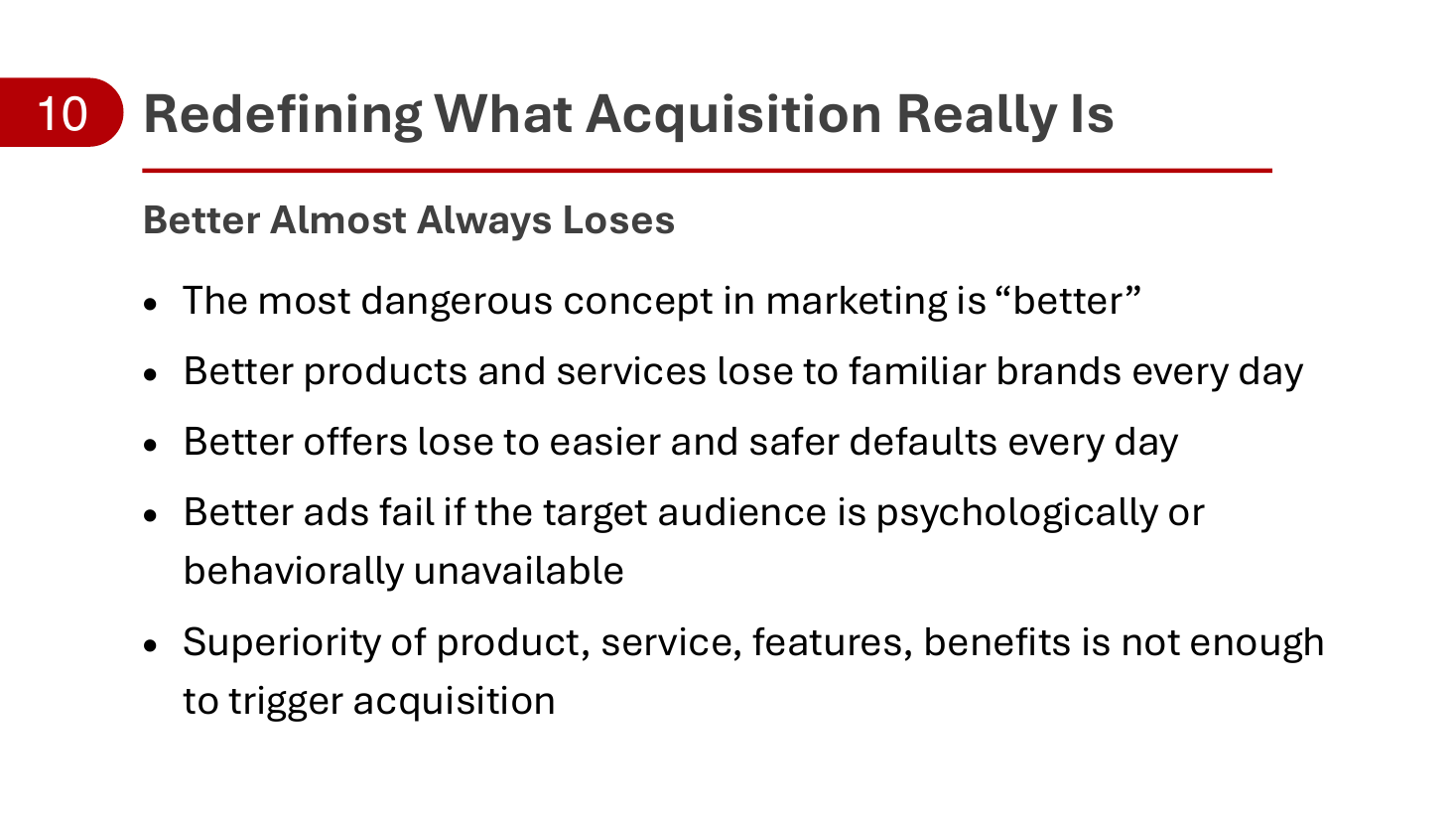
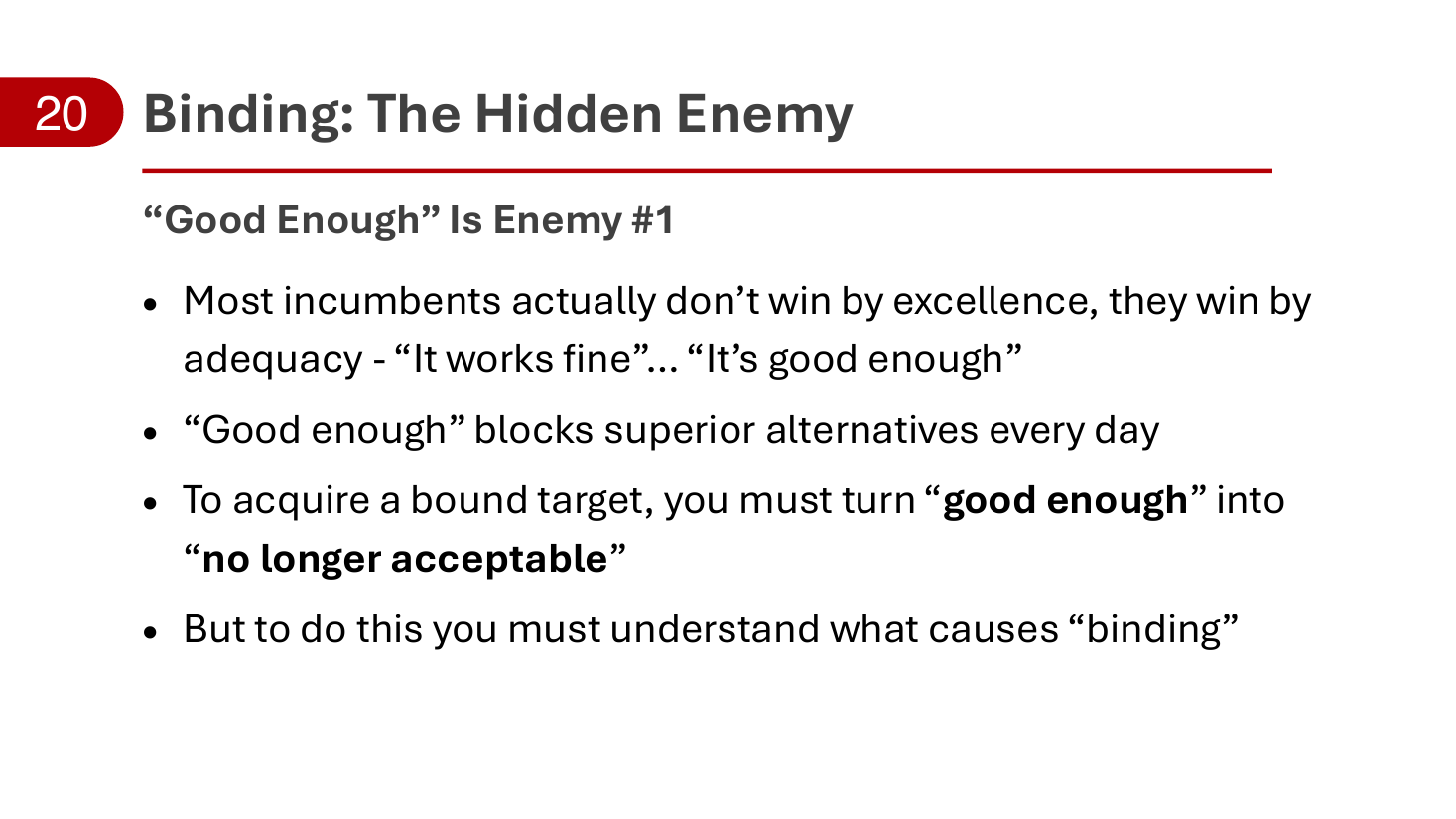
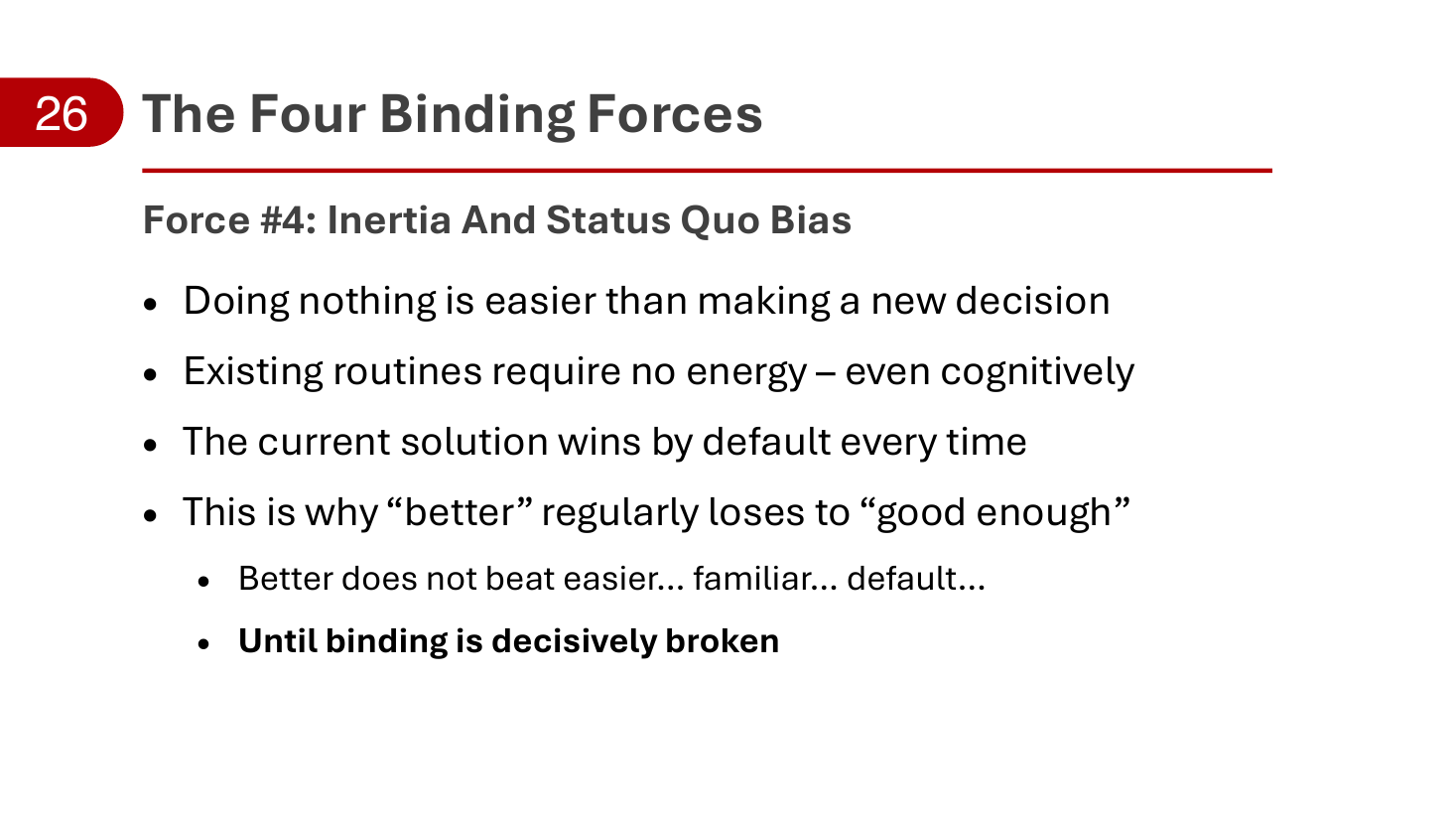
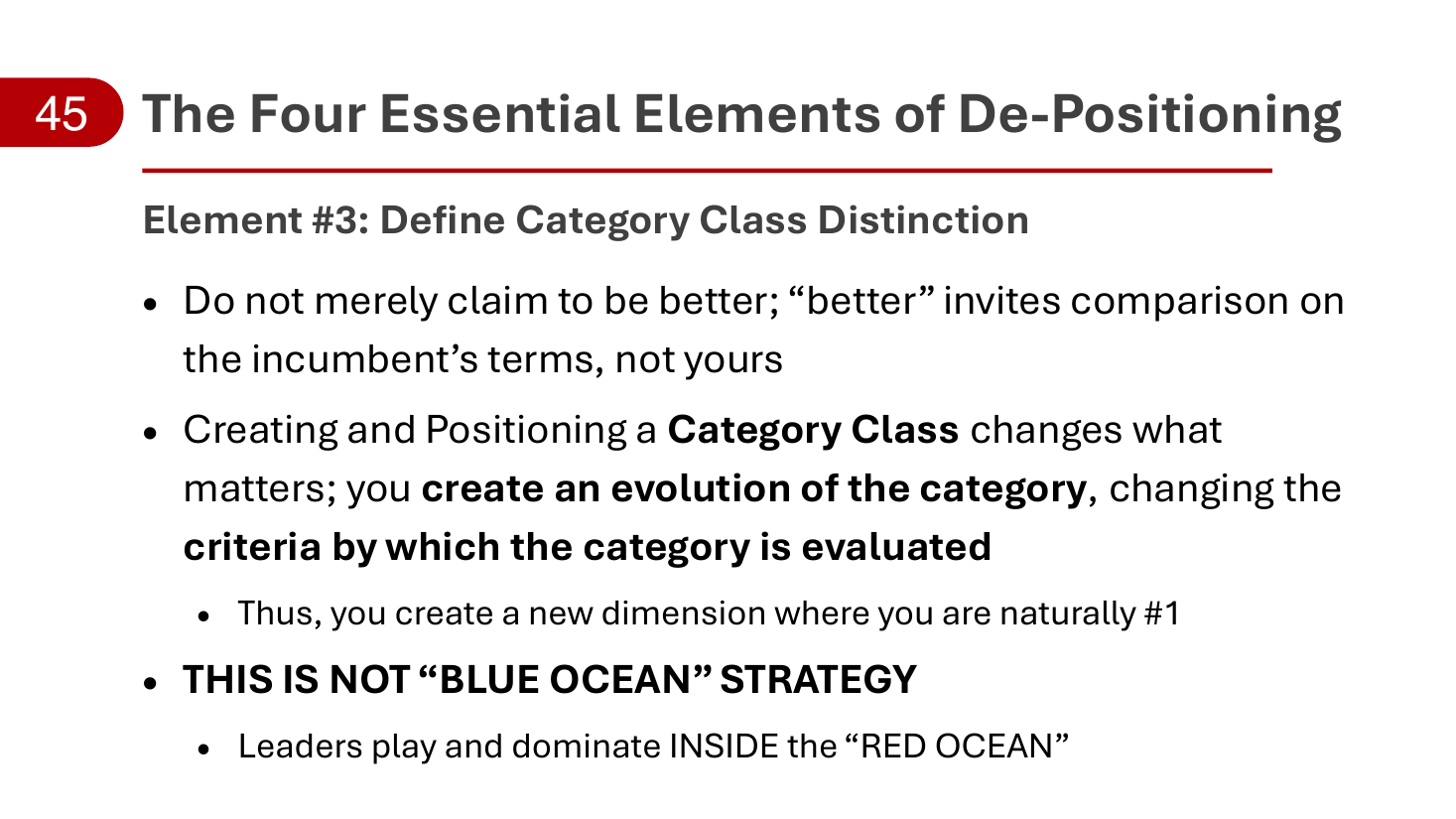
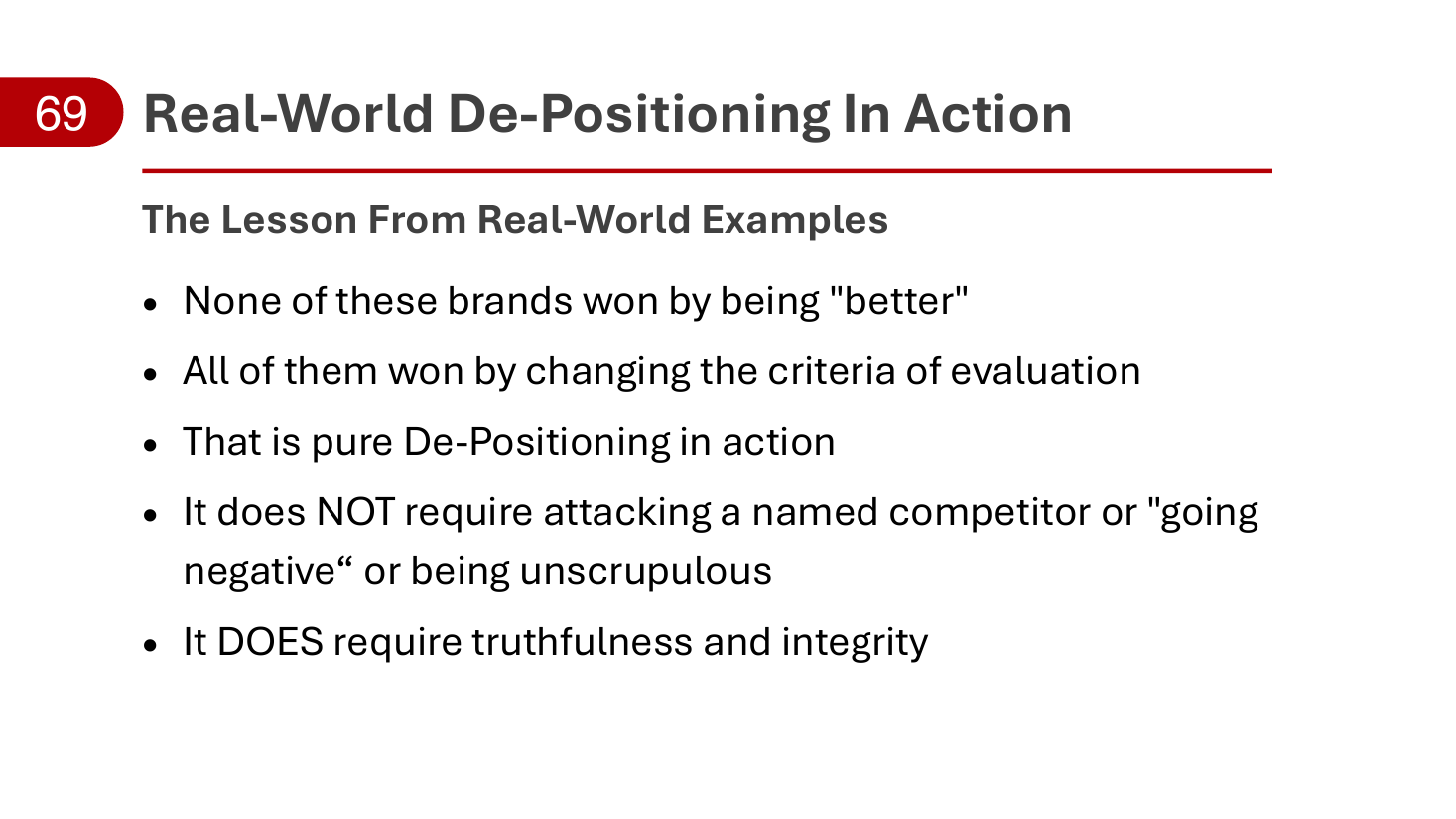
- "Better" almost always loses. Marion calls "better" the most dangerous concept in marketing. Better products lose to familiar brands; better offers lose to easier, safer defaults. You win by changing the criteria of evaluation, not by competing on the incumbent's terms.
- De-positioning stays ethical. It does not require attacking a named competitor or going negative. It does require truthfulness and integrity.
Key points
Speaker background and framing
- Self-described former Madison Avenue strategist: senior director / VP of strategic planning for three of "the world's largest advertising agencies." Calls himself one of "the mad men."
- Says he opened SEO Spring Training in 2019 (its first year) and has opened the conference every year since.
- Claims his de-positioning technique is responsible for "over three hundred and fifty billion dollars of incremental revenue" for brands that were already global category leaders (speaker claim, unverified).
- Says the USPTO granted him registered trademark status for the De-Positioning Matrix "this week" (the week of the talk).
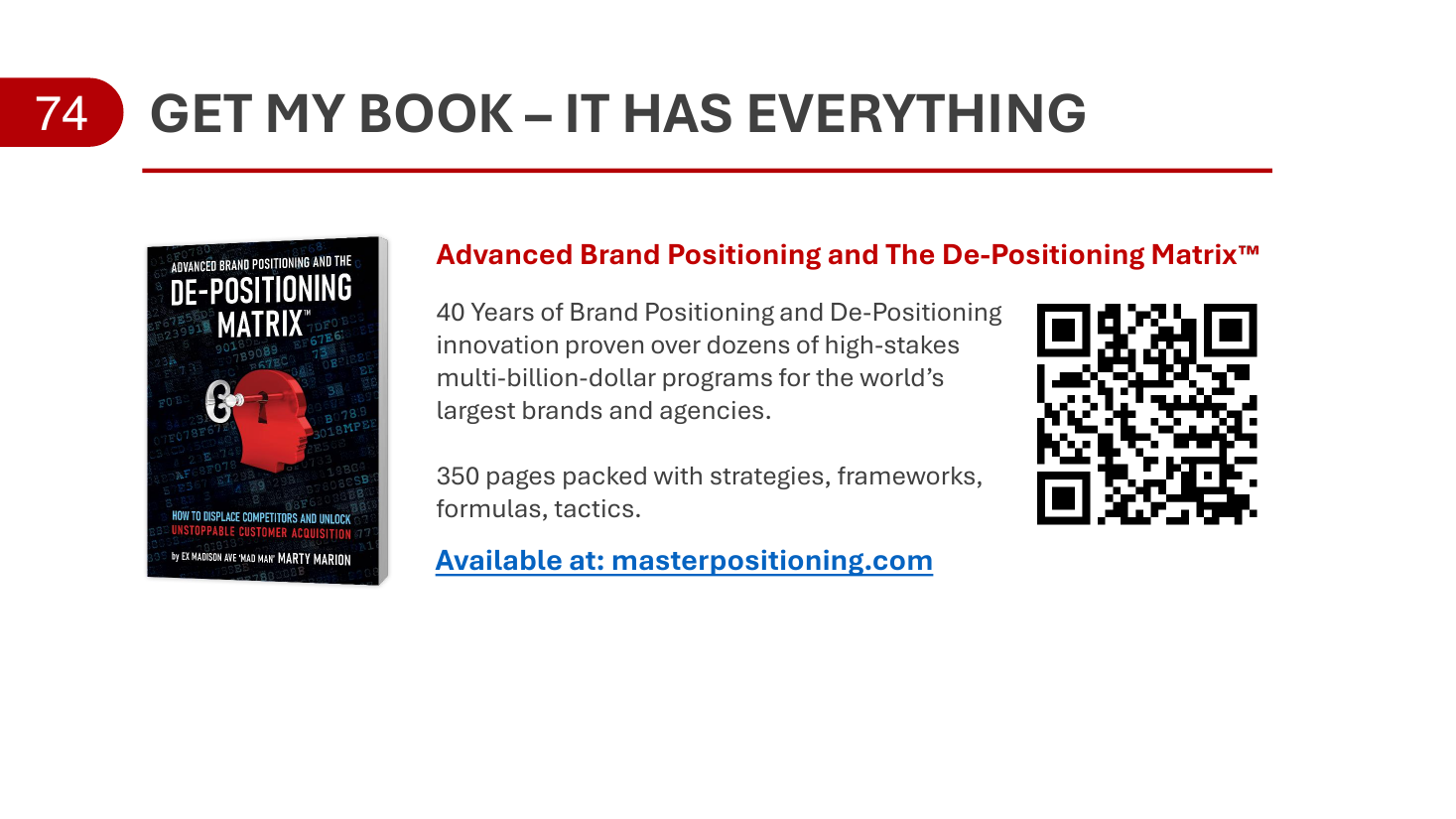
- Website: masterpositioning.com. Email: marty@masterpositioning.com. Book: "Advanced Brand Positioning and The De-Positioning Matrix," 350 pages, sold at masterpositioning.com.
Core claims and numbers
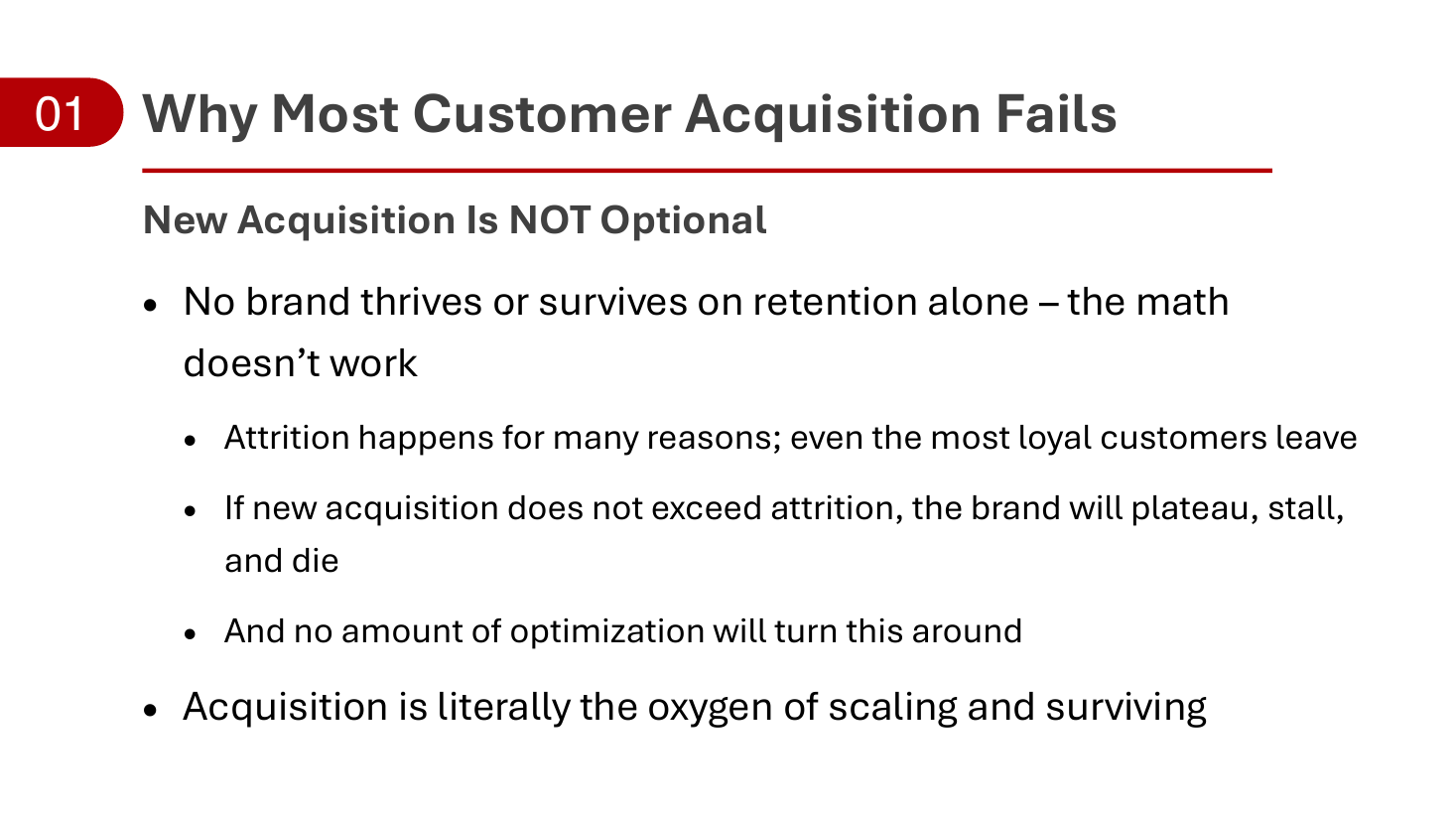
- "Sixty to seventy percent of everybody who enrolls in any kind of loyalty or retention program attrites that program in less than seven months" (and the number rises over a year).
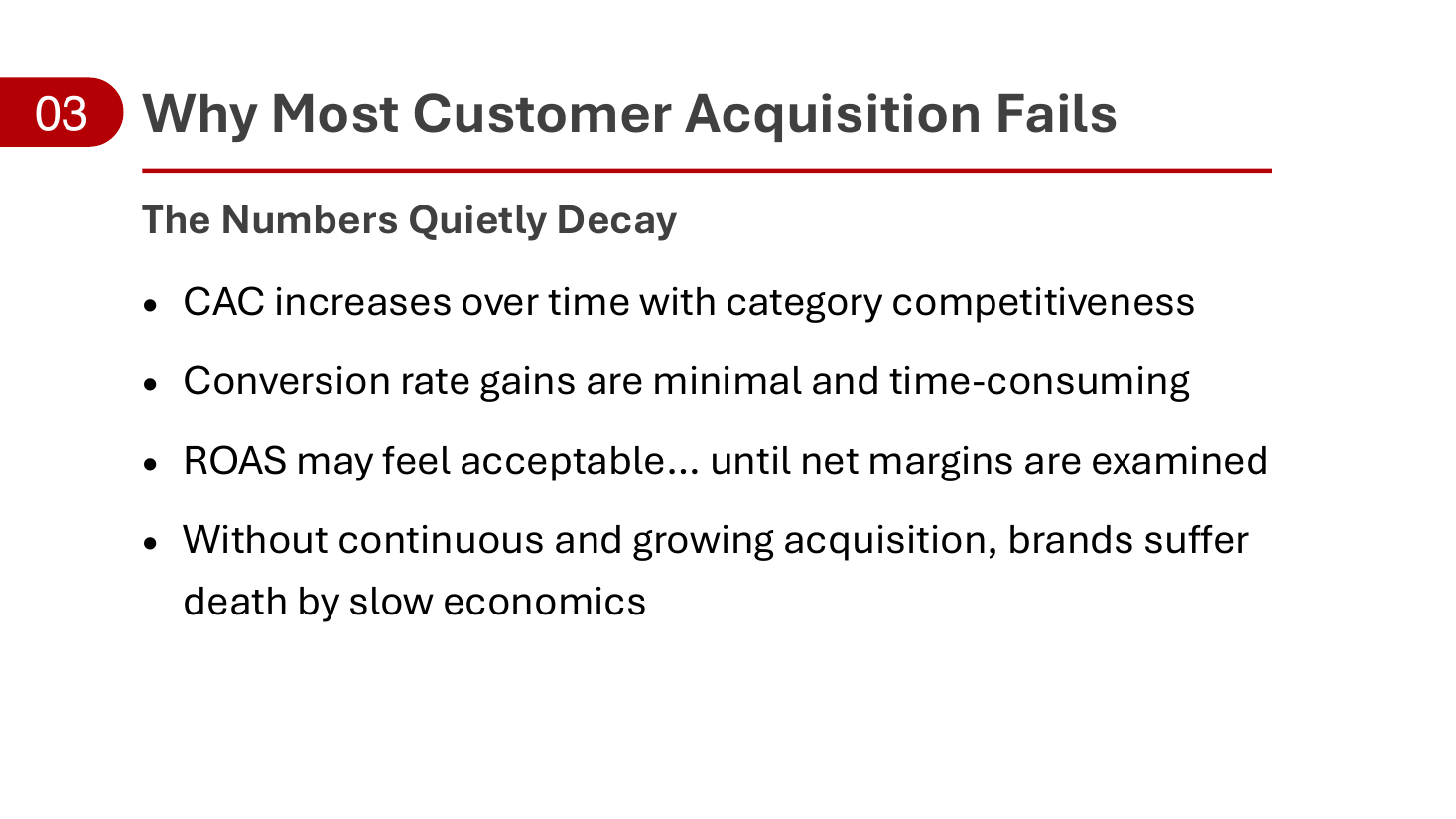
- "If your rate of new customer and client acquisition does not exceed your rate of attrition on a monthly or quarterly basis, your business is going out of business, you just don't know it yet."
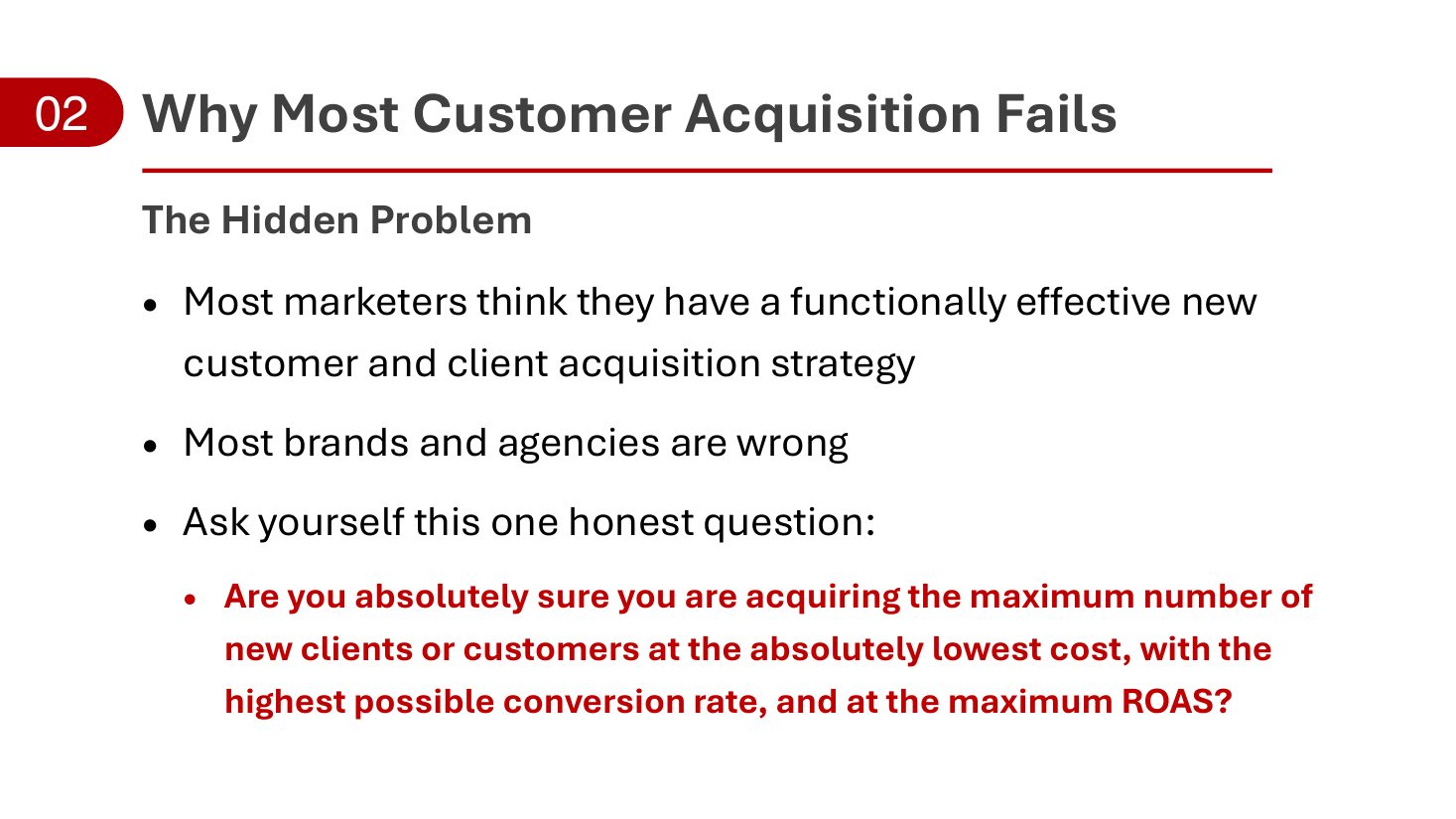
- "95%+ of your targets are already buying" what you sell from someone else; "acquisition begins in an already-occupied market."
- Acquisition is a "zero-sum game": new growth comes from share transfer, not from demand.
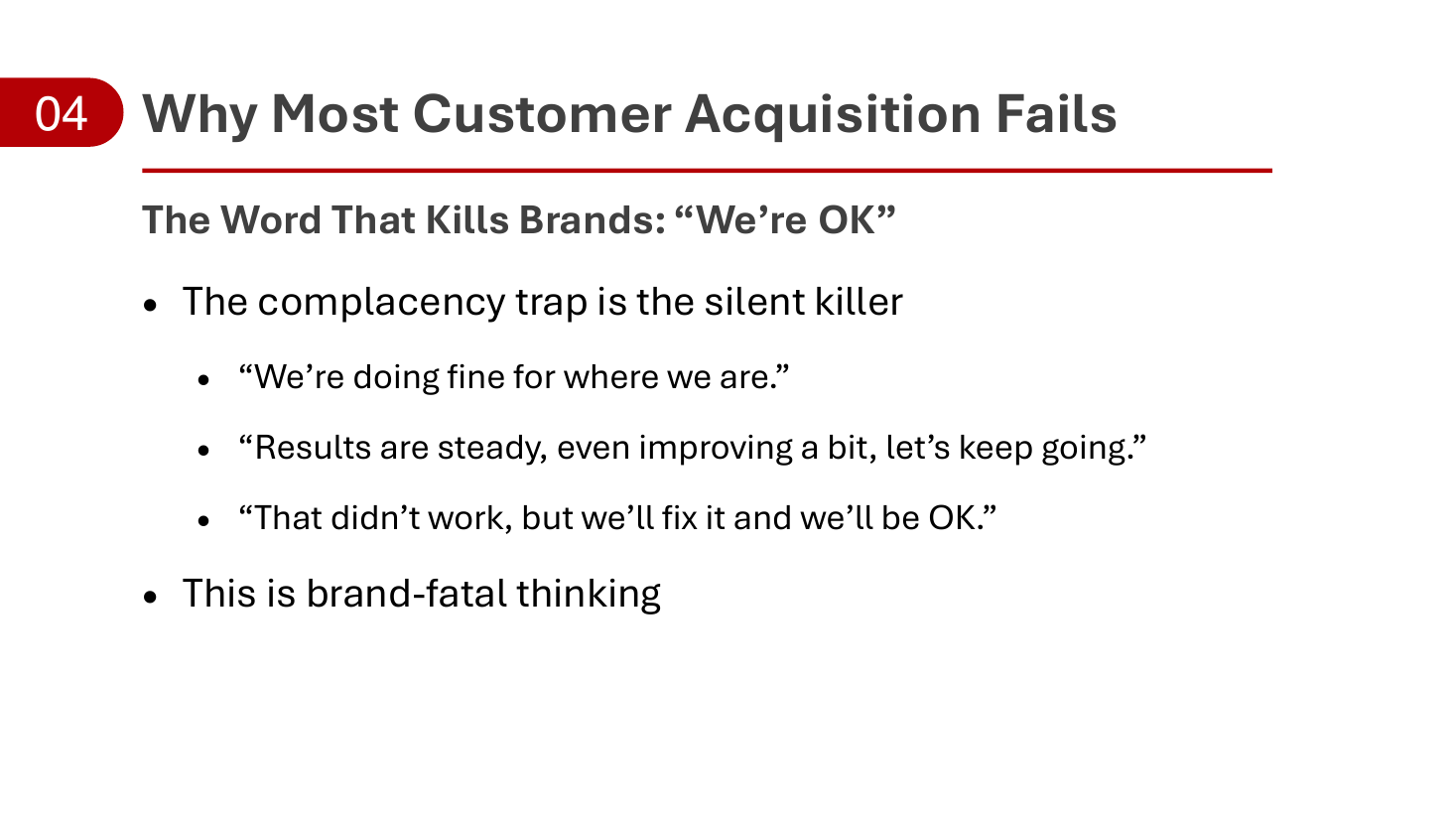
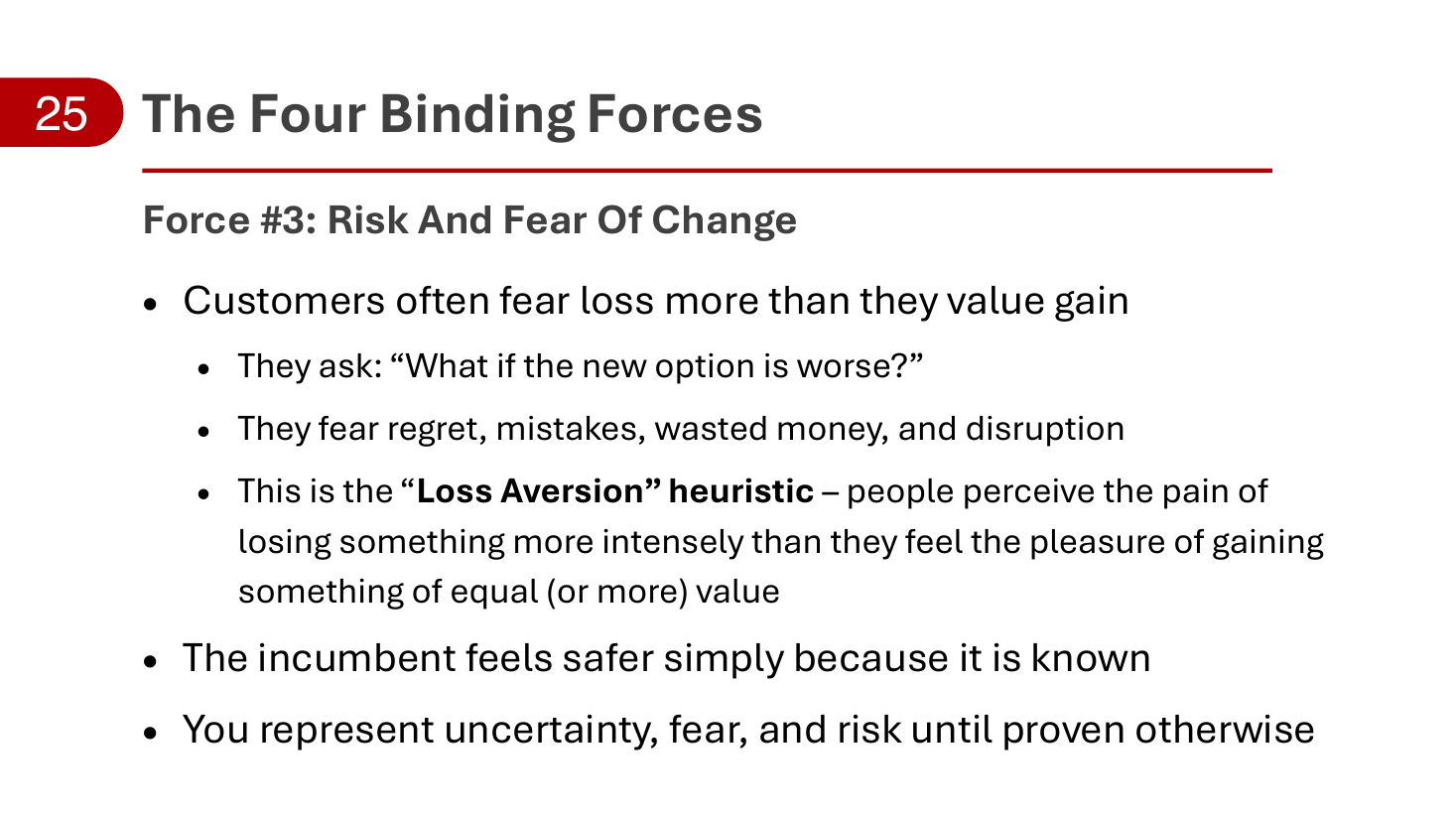
- Loss aversion: people fear the pain of losing something "three to four times more intensely" than they value an equal or greater gain (transcript; the deck states "loss aversion" without the multiplier).
- Through de-positioning, "your acquisitions will cost less (up to 40% less)" (deck slide 72).
Named frameworks and people
- References Trout and Ries, "Positioning: The Battle for Your Mind" (1970s), as the origin of positioning theory.
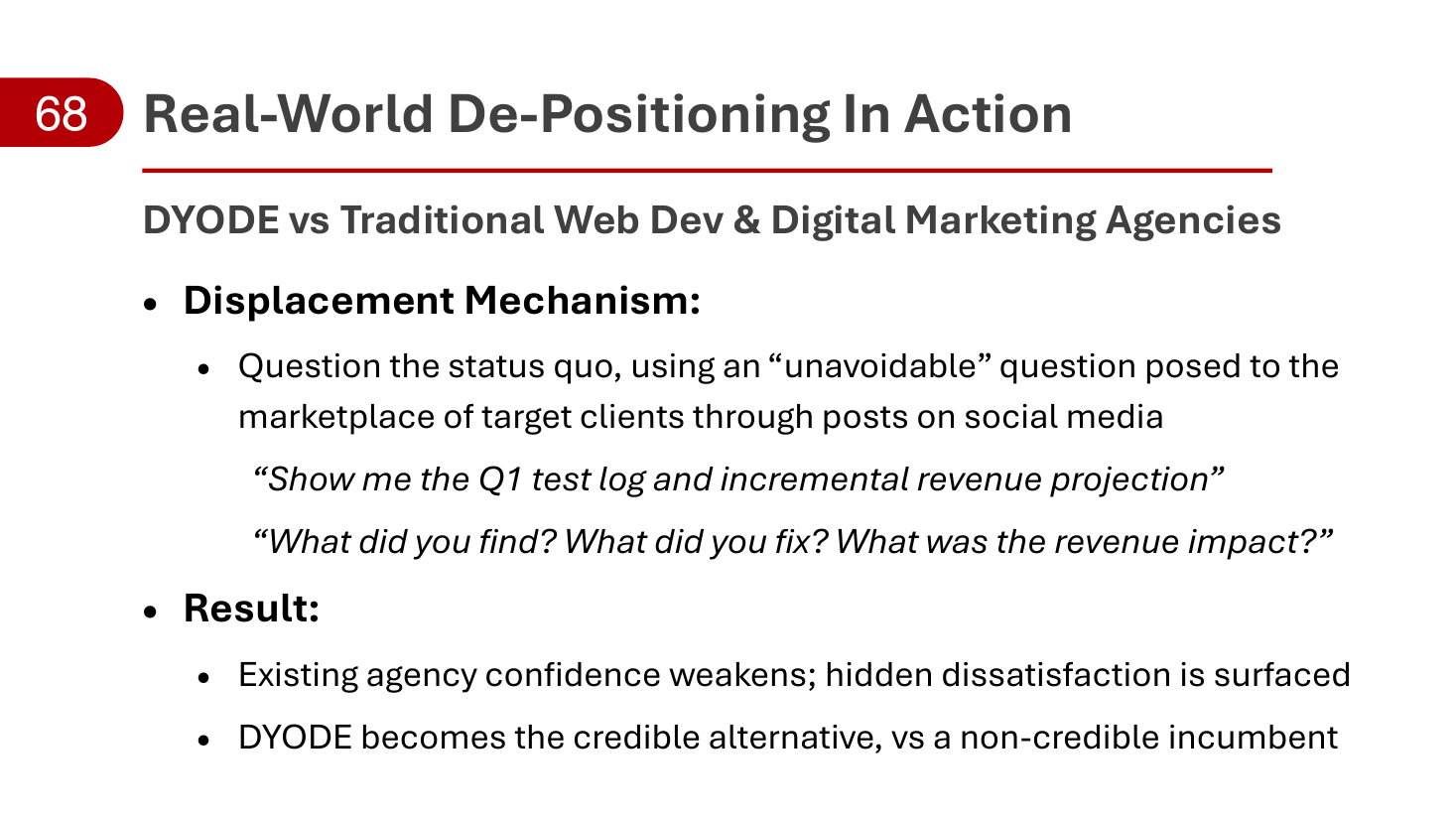
- Cites the Zeigarnik effect (people are compelled to answer unanswered questions) as the psychological hook behind the DYODE open-question displacement mechanism.
The Four Binding Forces (what creates and sustains binding)
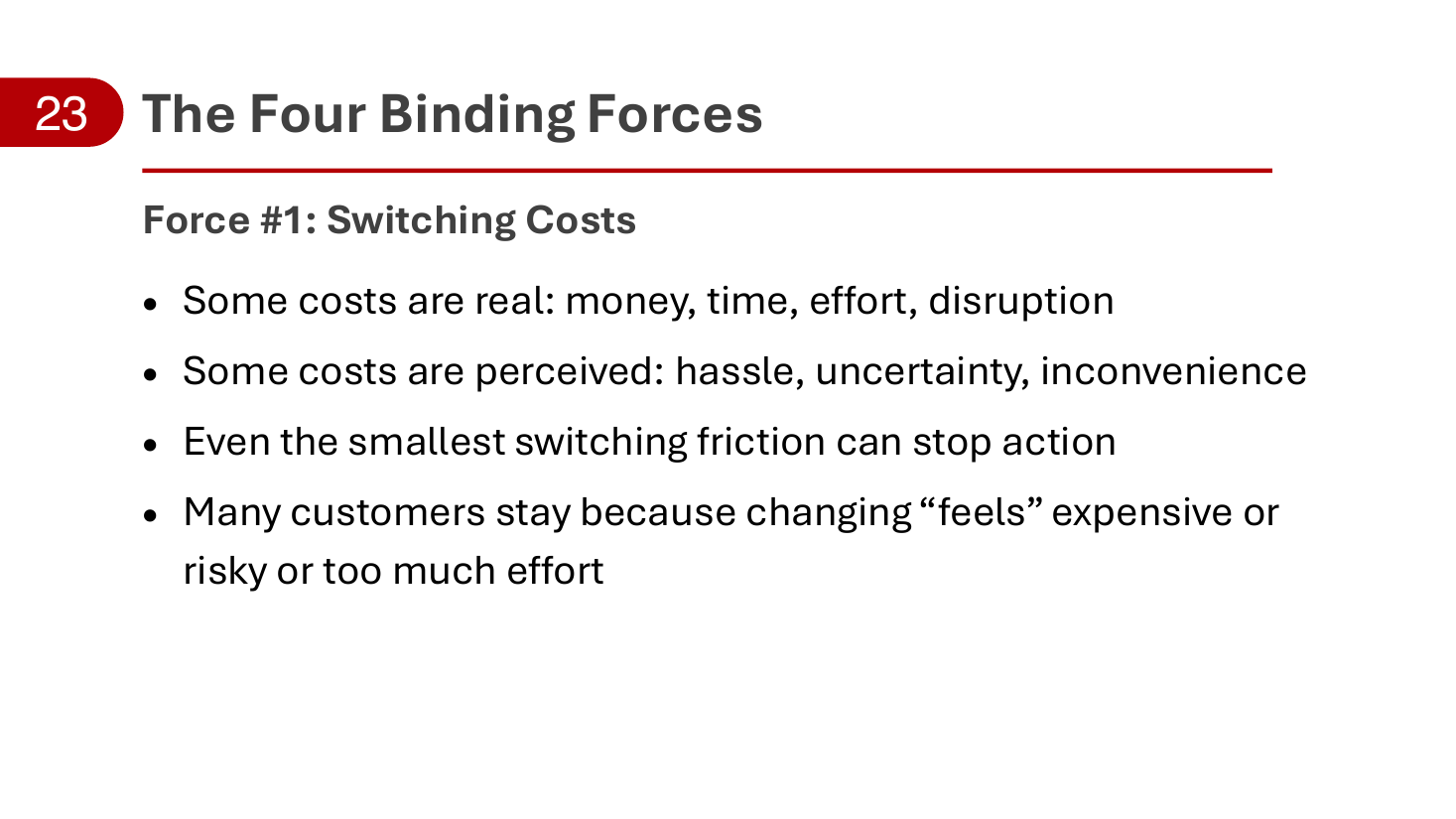
- Switching Costs (real: money, time, effort, disruption; perceived: hassle, uncertainty).
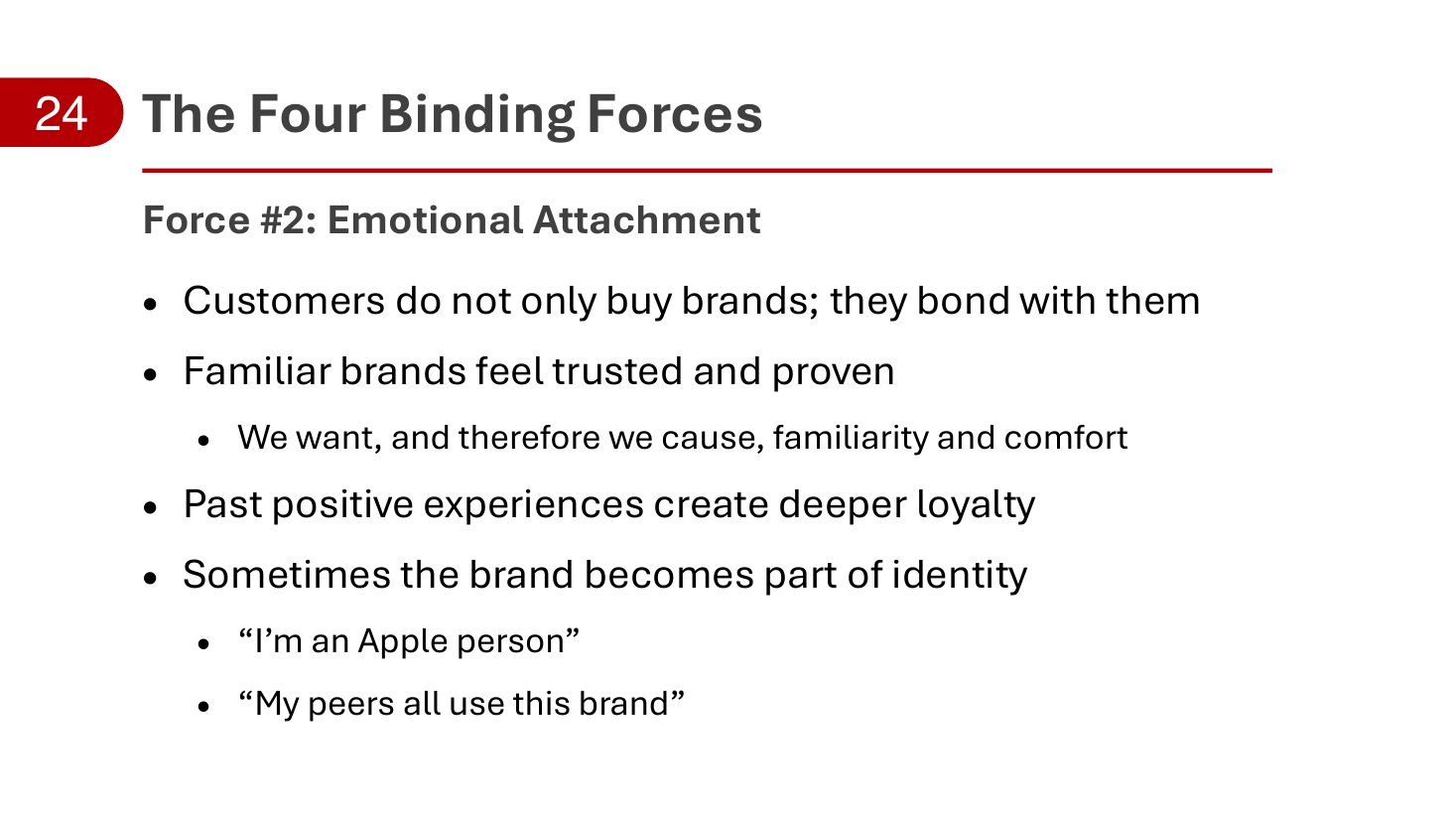
- Emotional Attachment (identity: "I'm an Apple person").
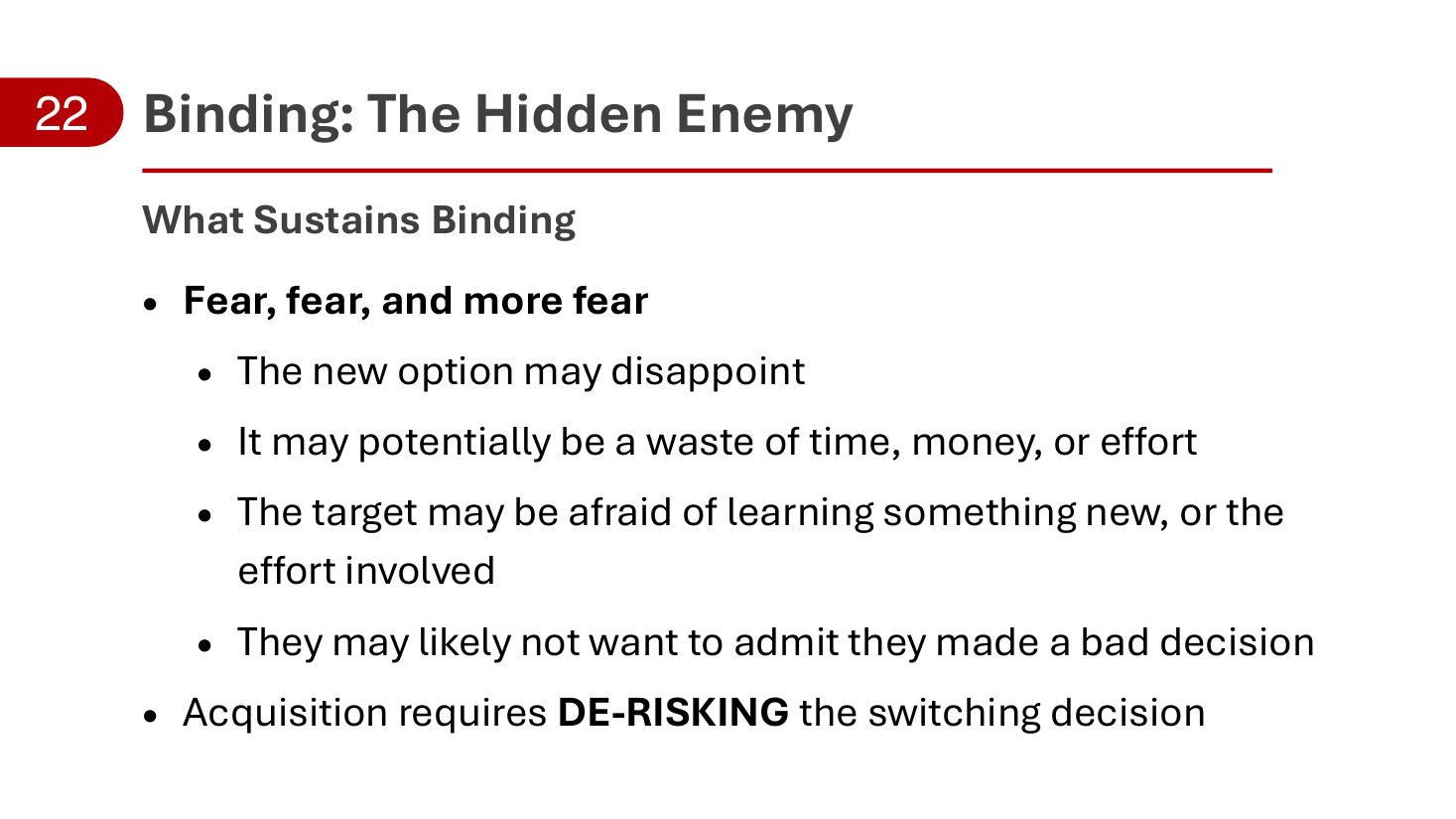
- Risk and Fear of Change (loss aversion).
- Inertia and Status Quo Bias ("better" loses to "good enough").
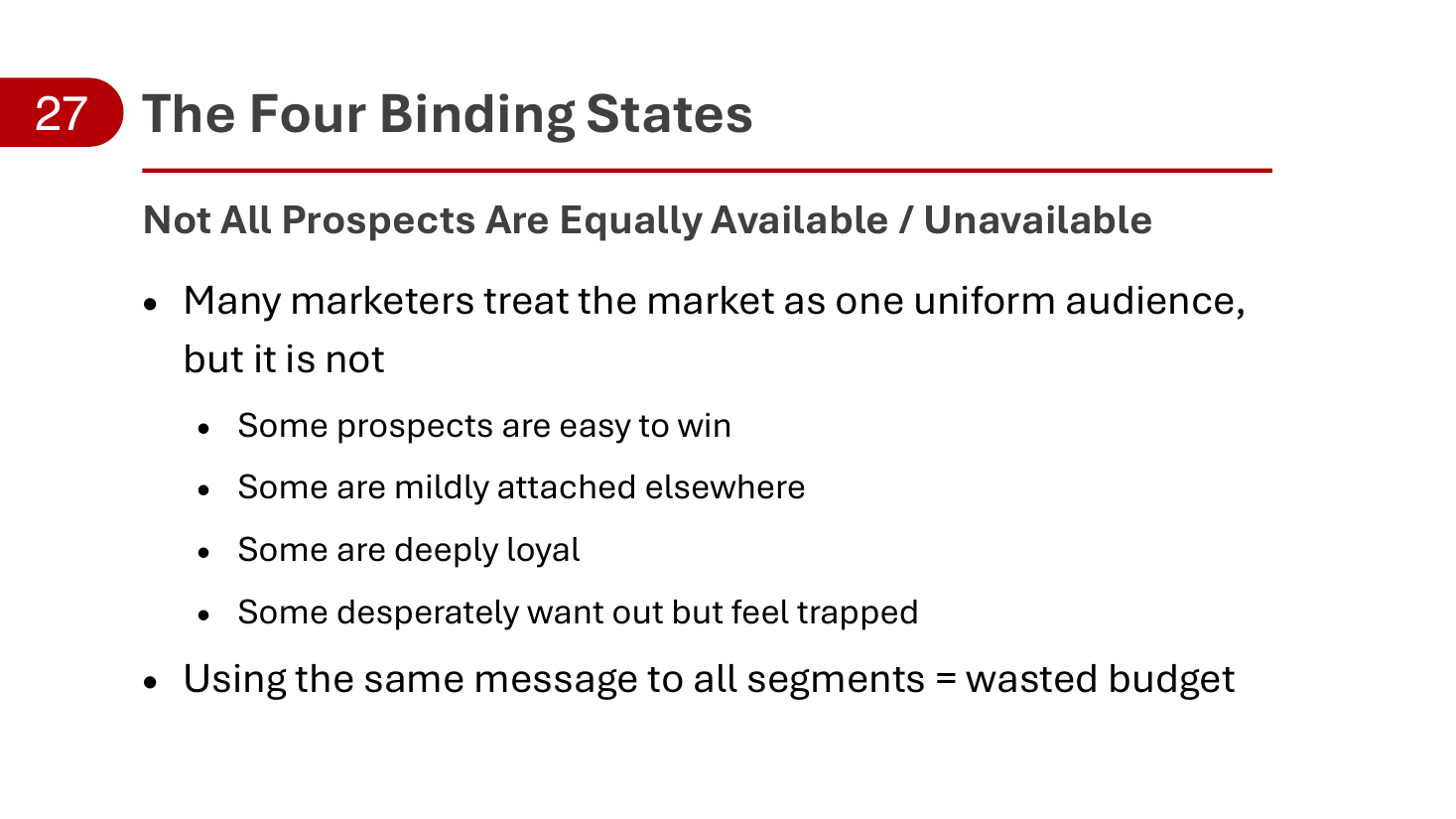
The Four Binding States
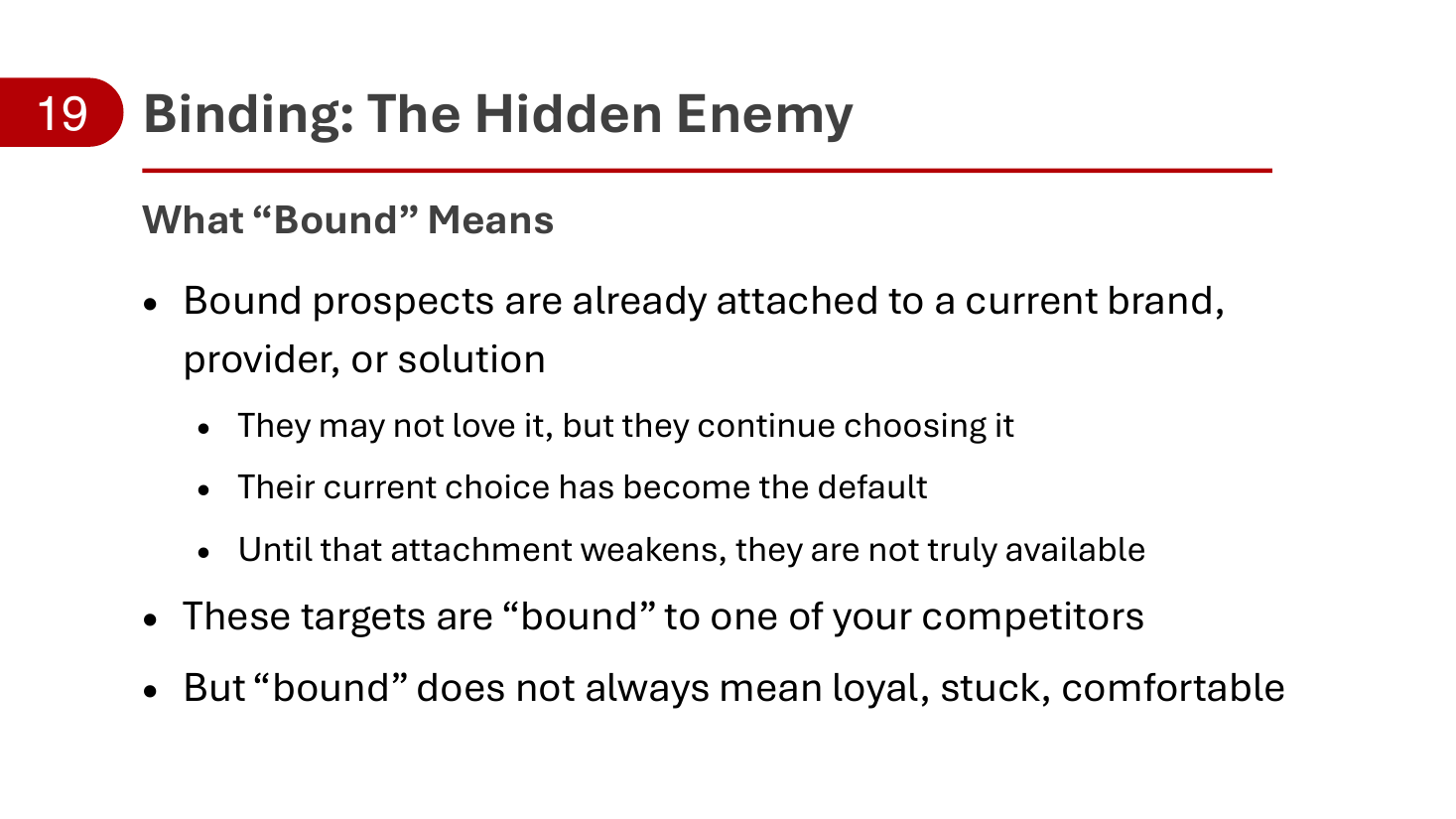
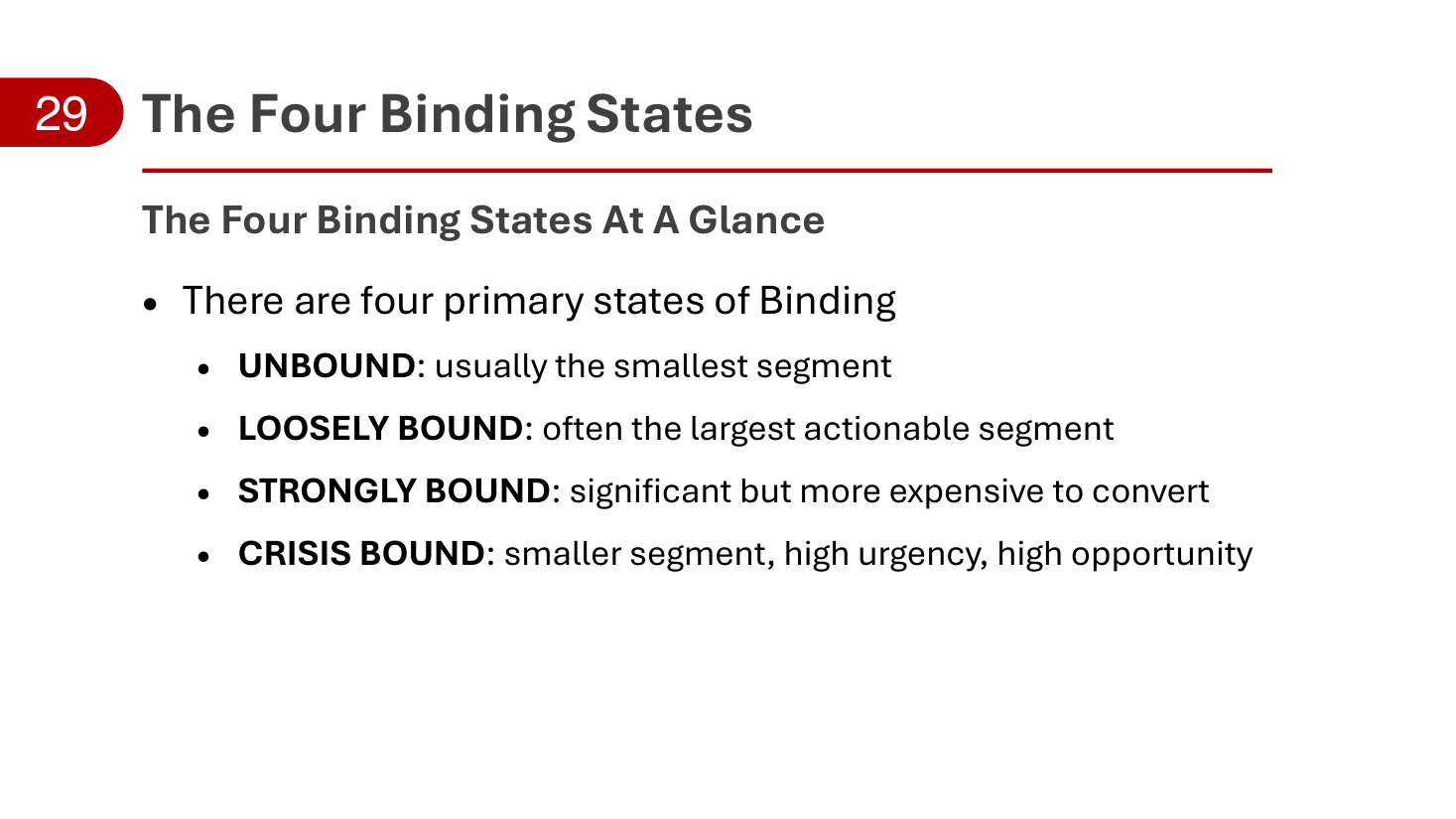
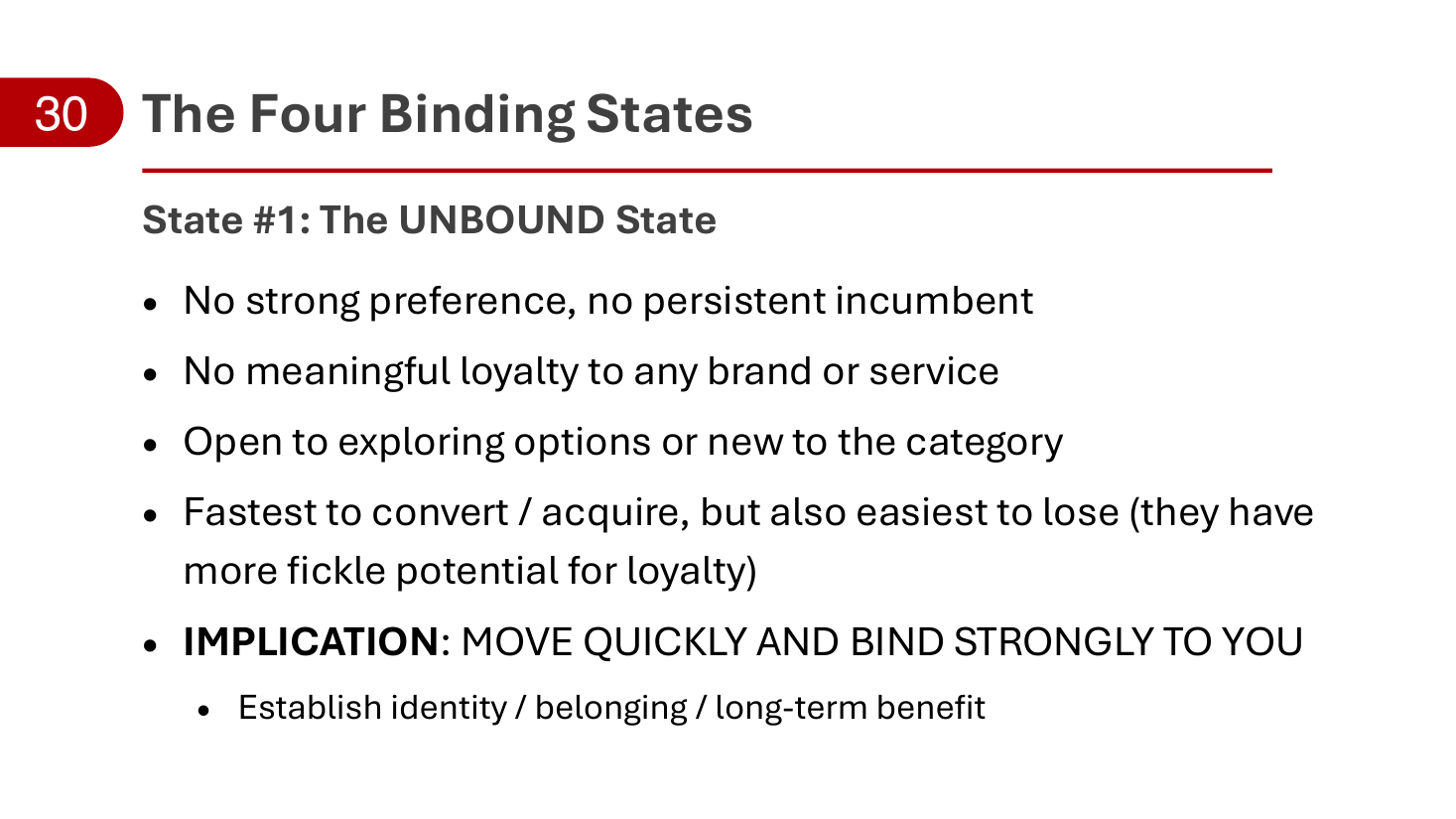
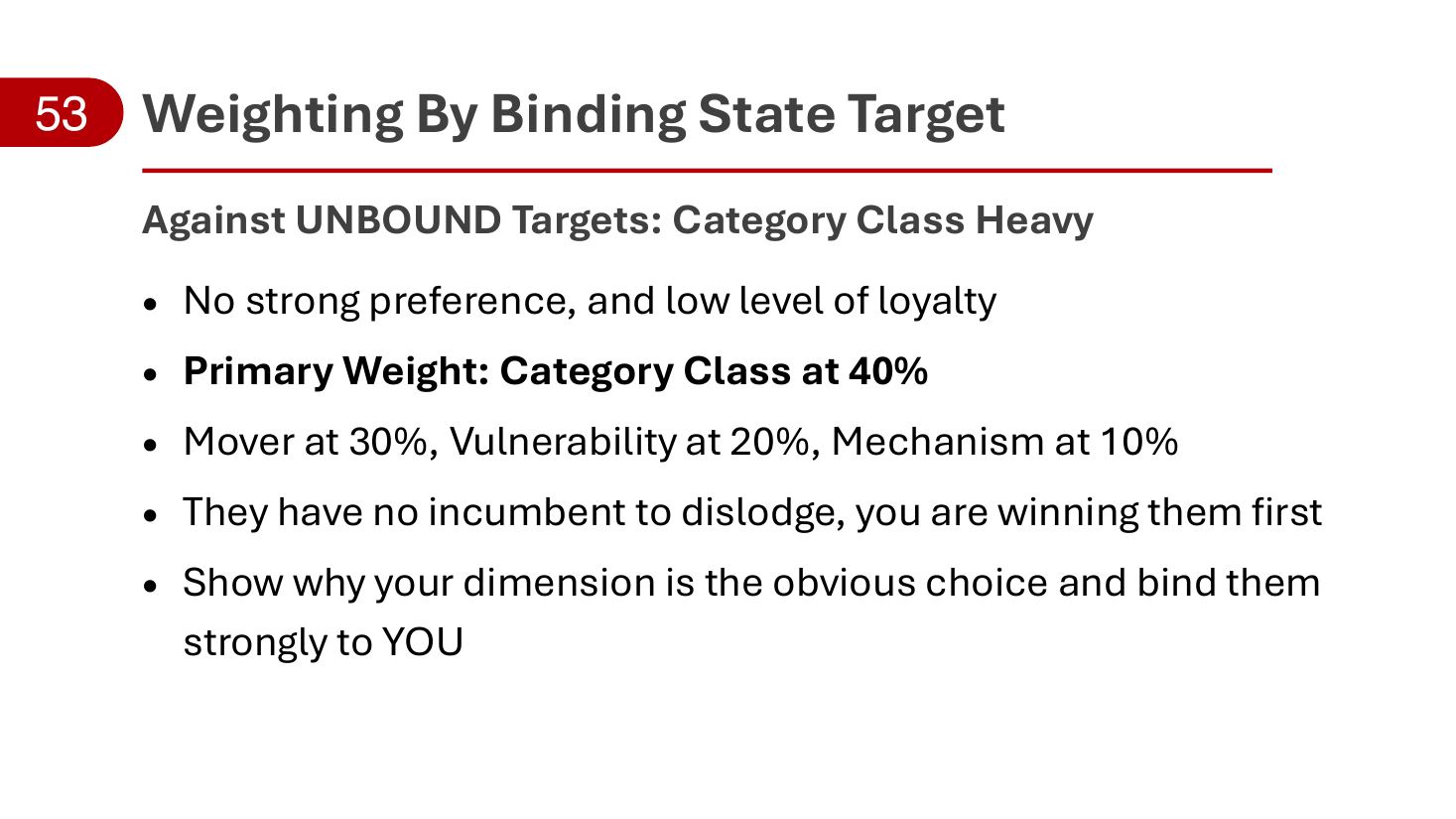
- UNBOUND: usually the smallest segment; no incumbent; fastest to convert but easiest to lose. Implication: move quickly and bind strongly to you.
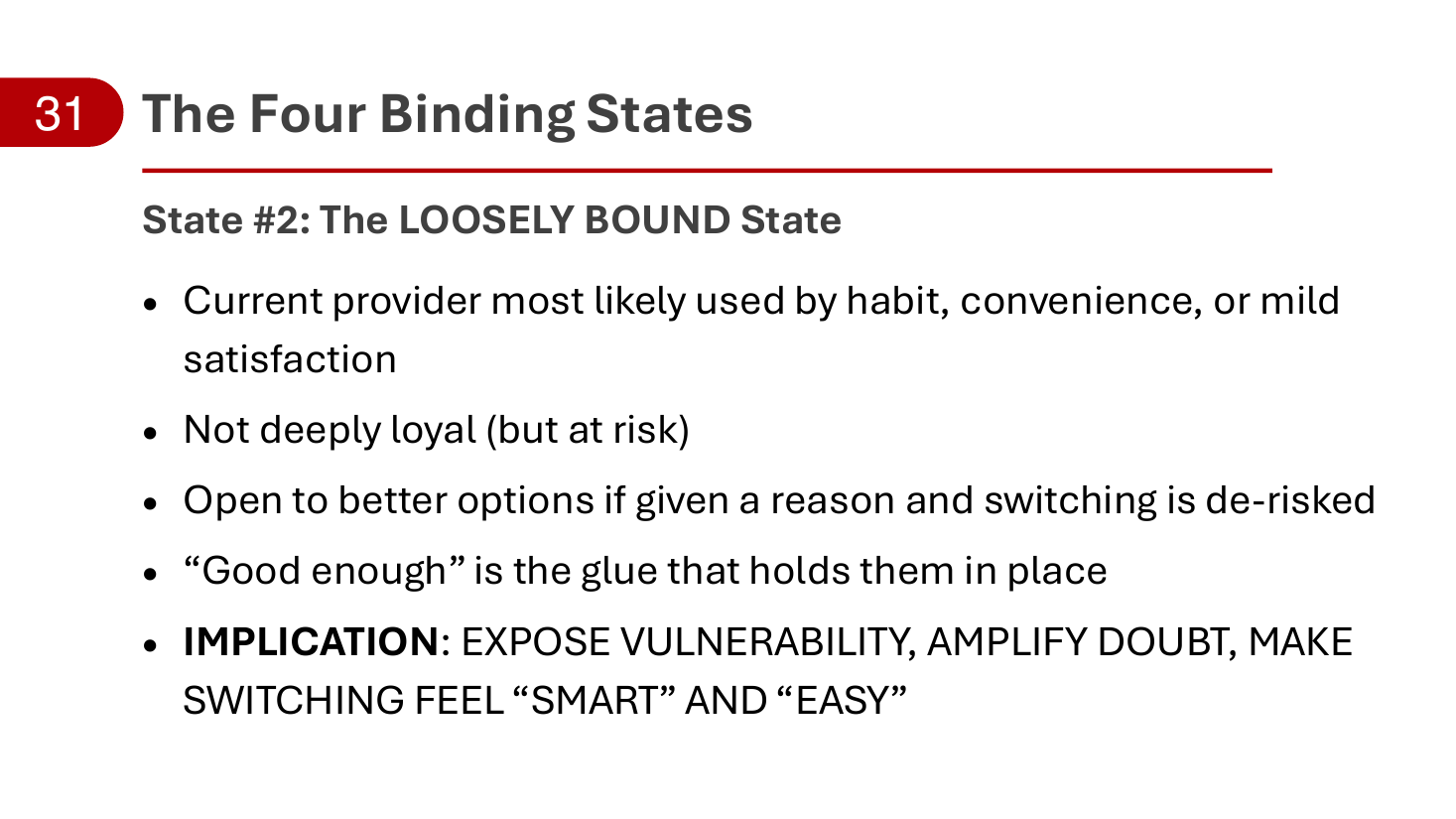
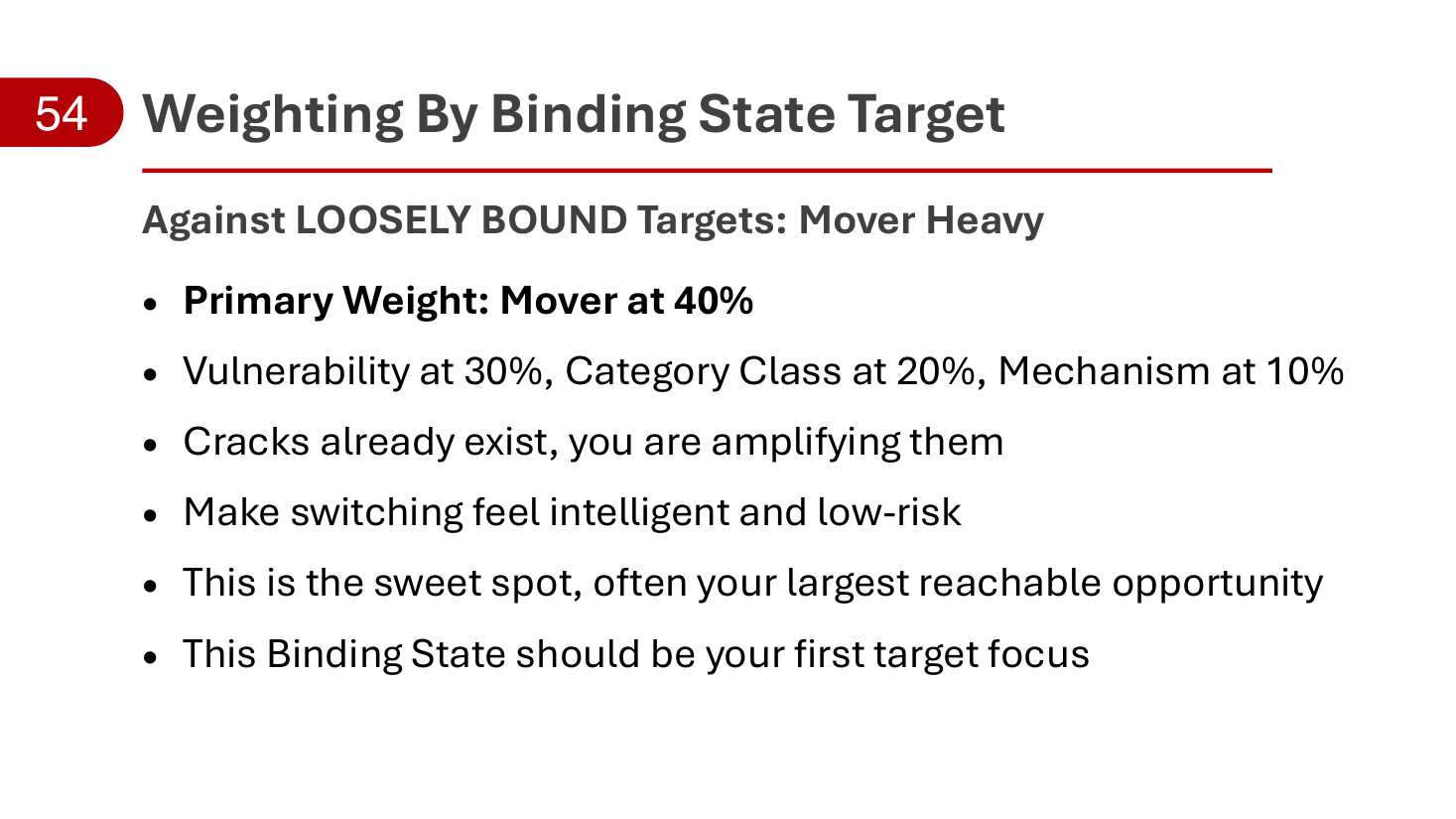
- LOOSELY BOUND: often the largest actionable segment; held by "good enough"; described as the "sweet spot" and recommended first target.
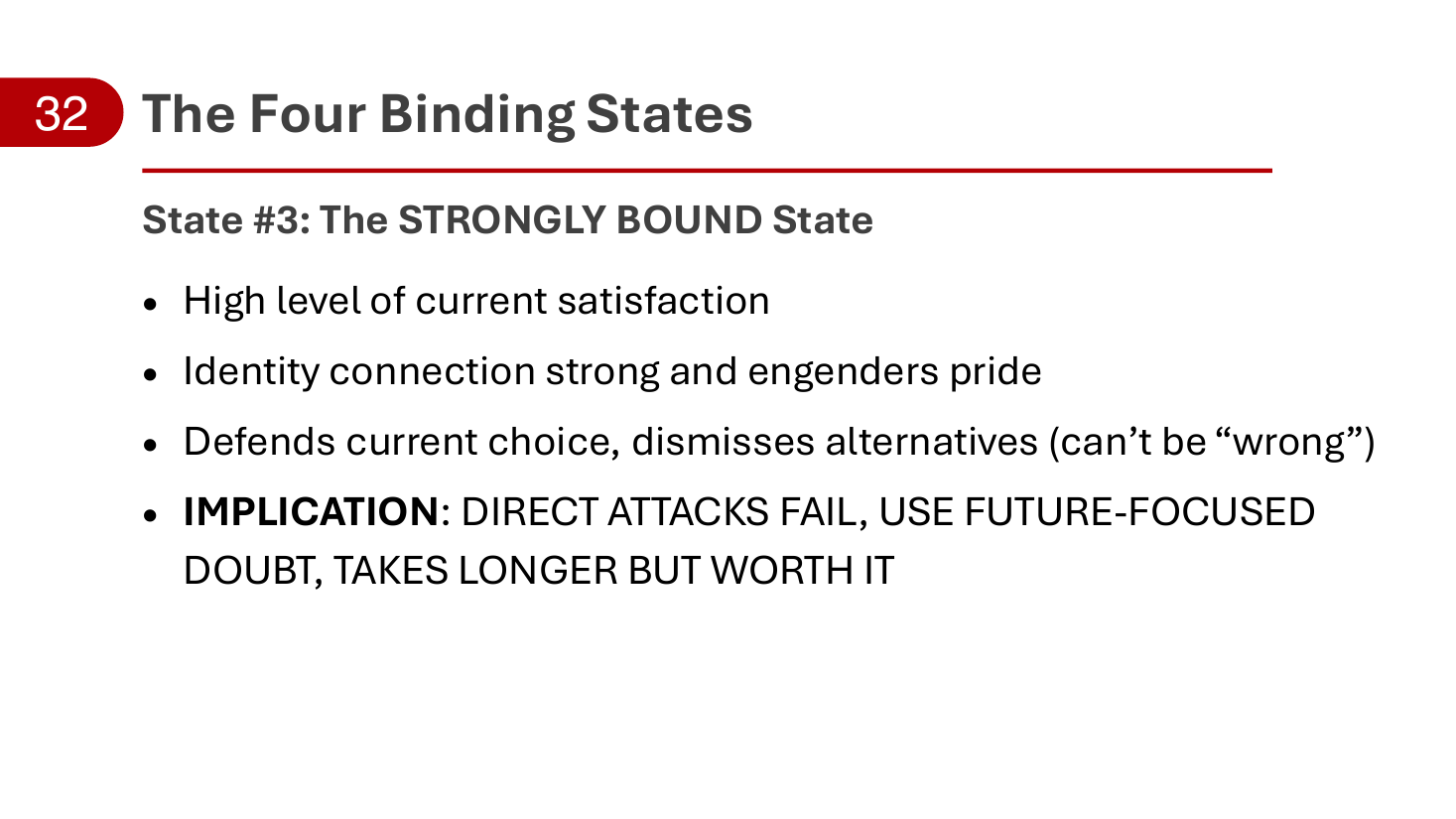
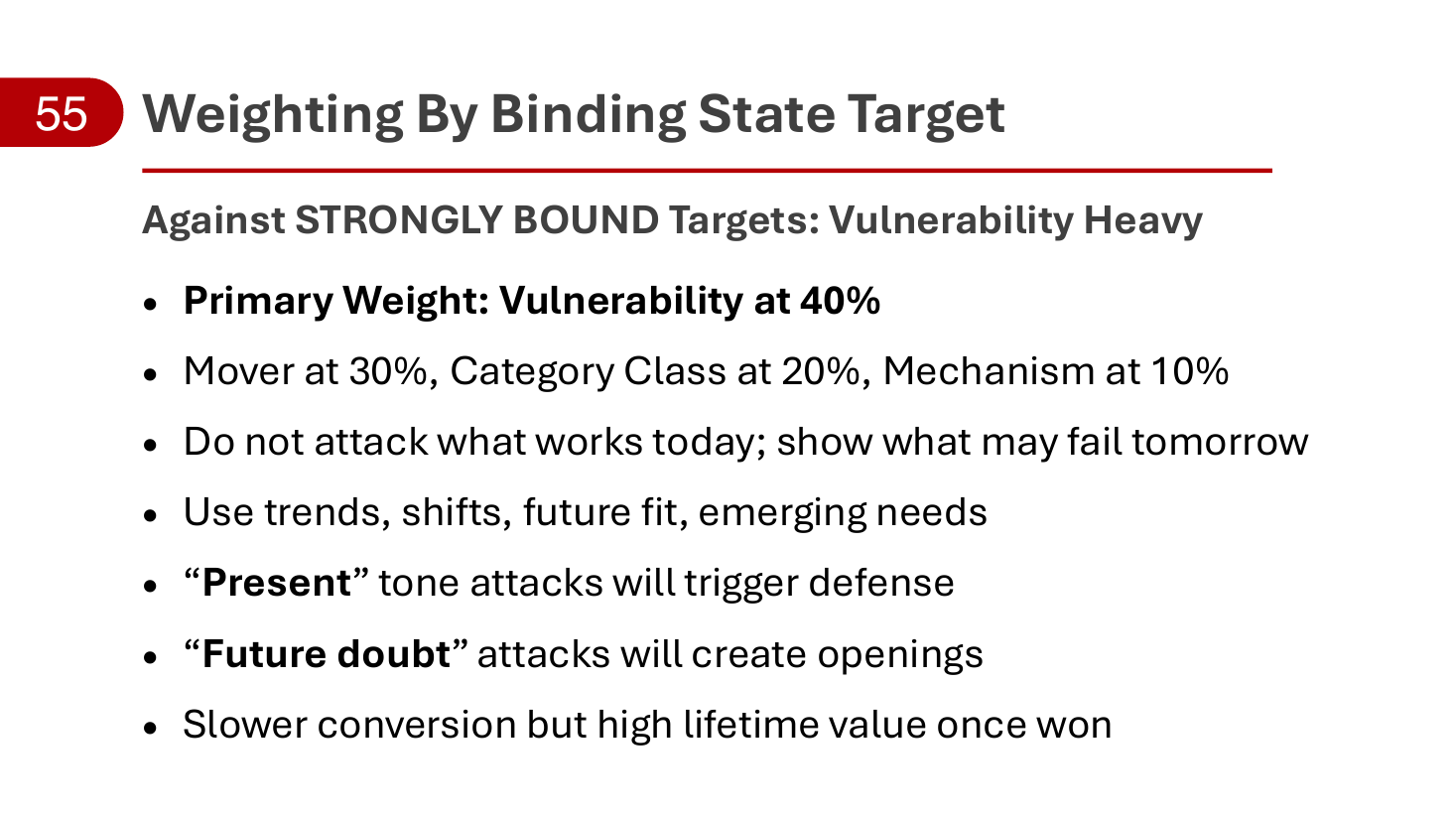
- STRONGLY BOUND: high satisfaction and identity connection; direct attacks fail; use future-focused doubt.
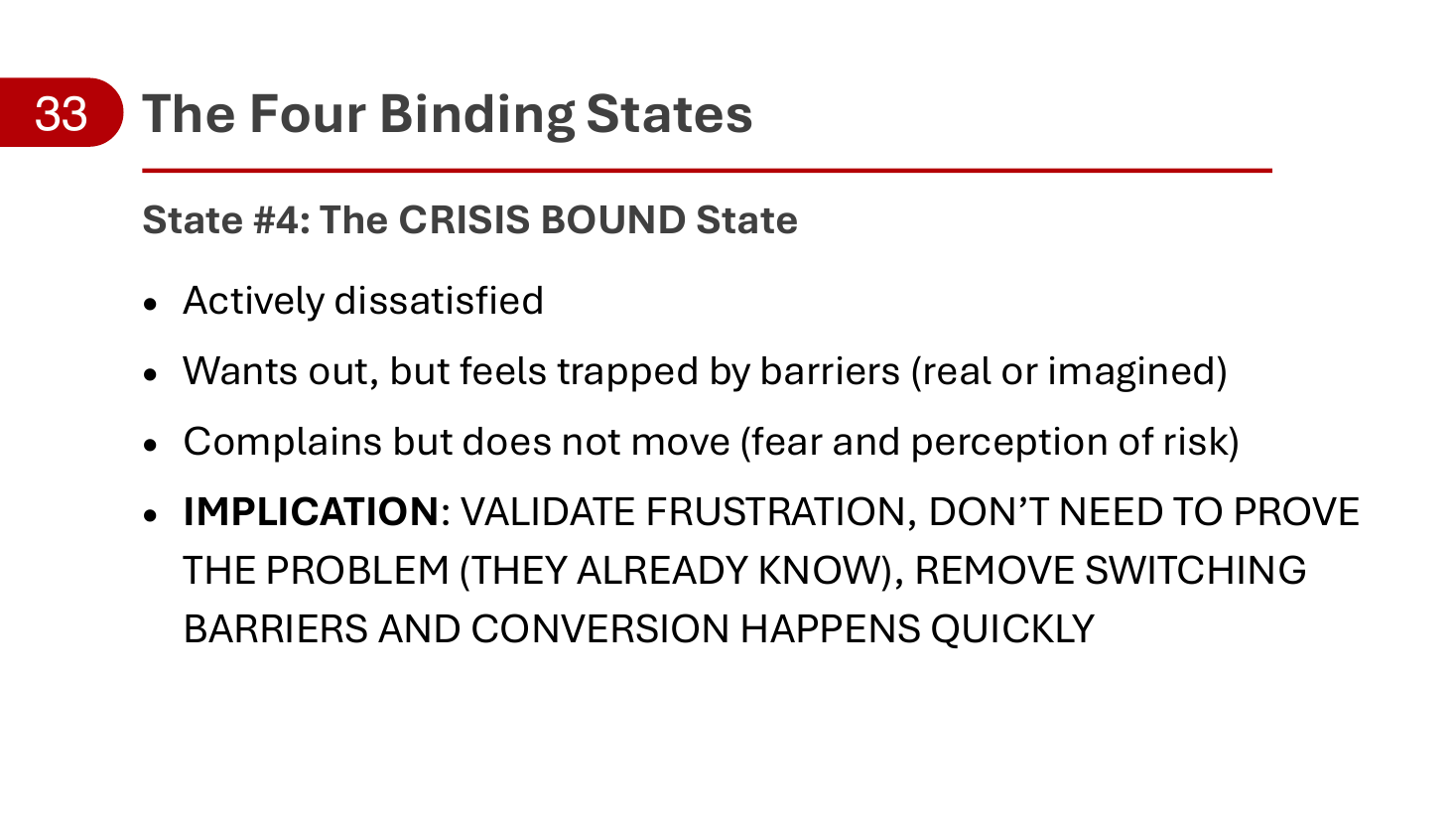
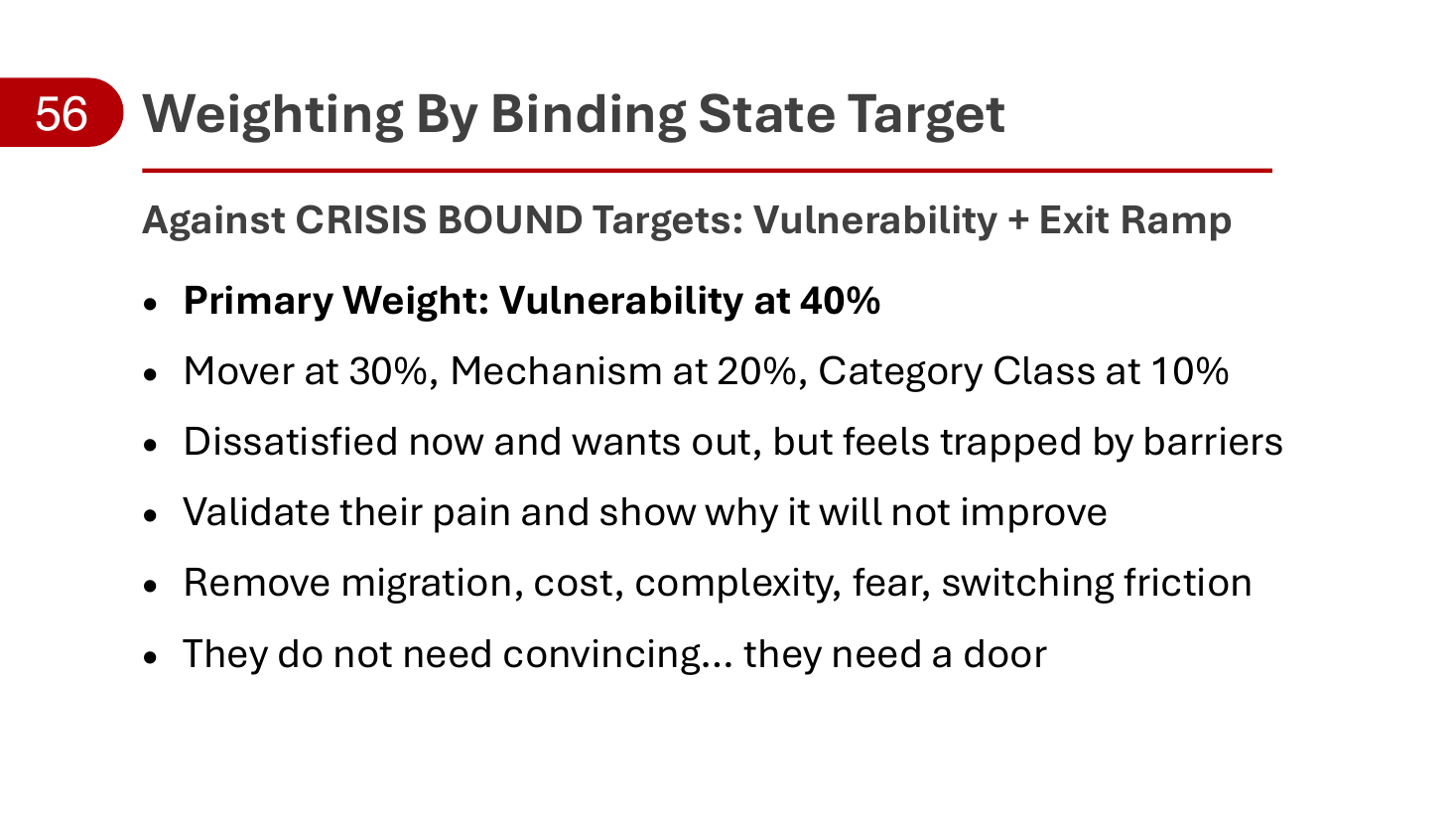
- CRISIS BOUND: actively dissatisfied, wants out, feels trapped; validate frustration and remove switching barriers. "They do not need convincing; they need a door."
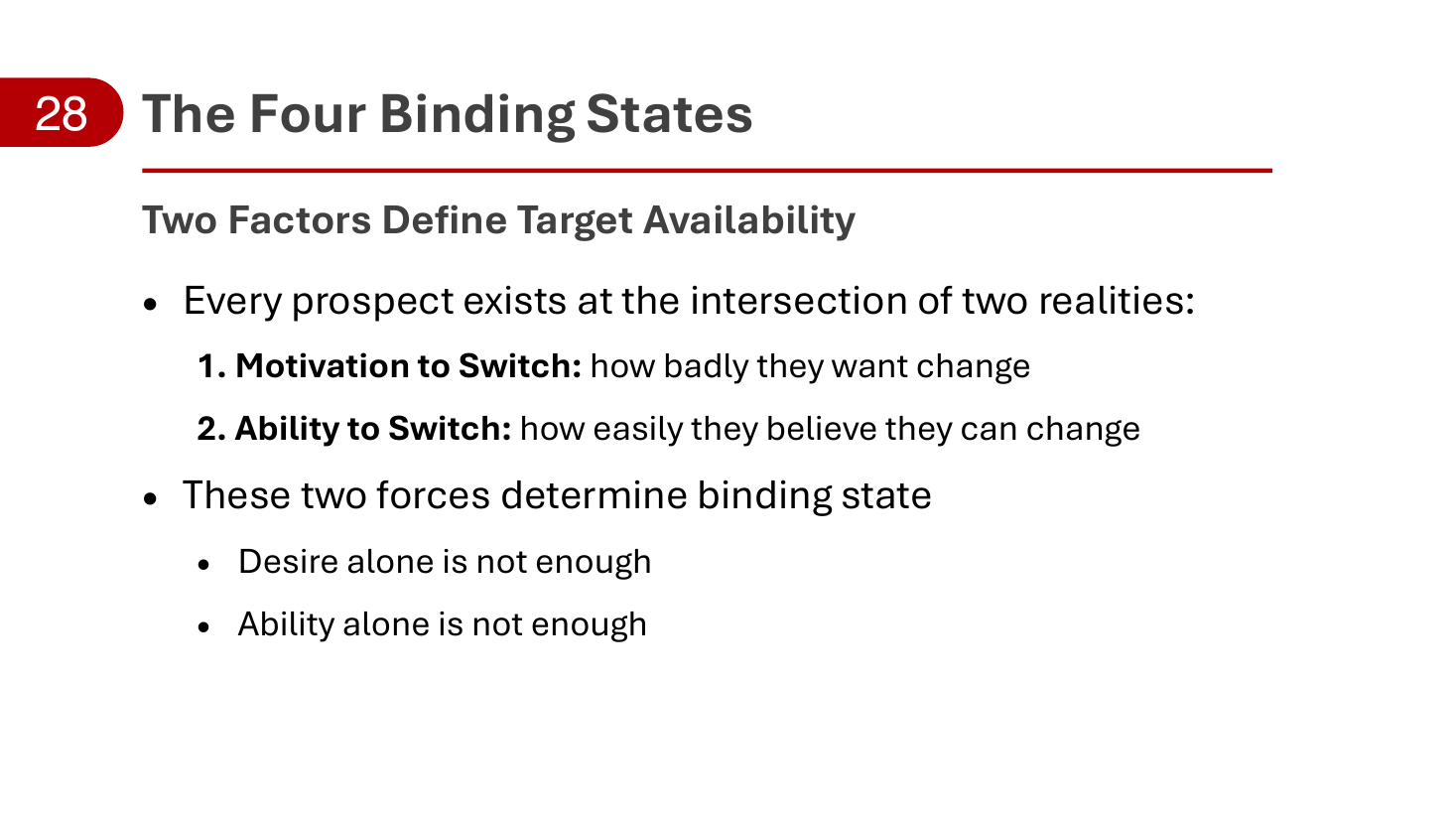
- Two factors define availability: Motivation to Switch and Ability to Switch.
The Four Essential Elements of De-Positioning
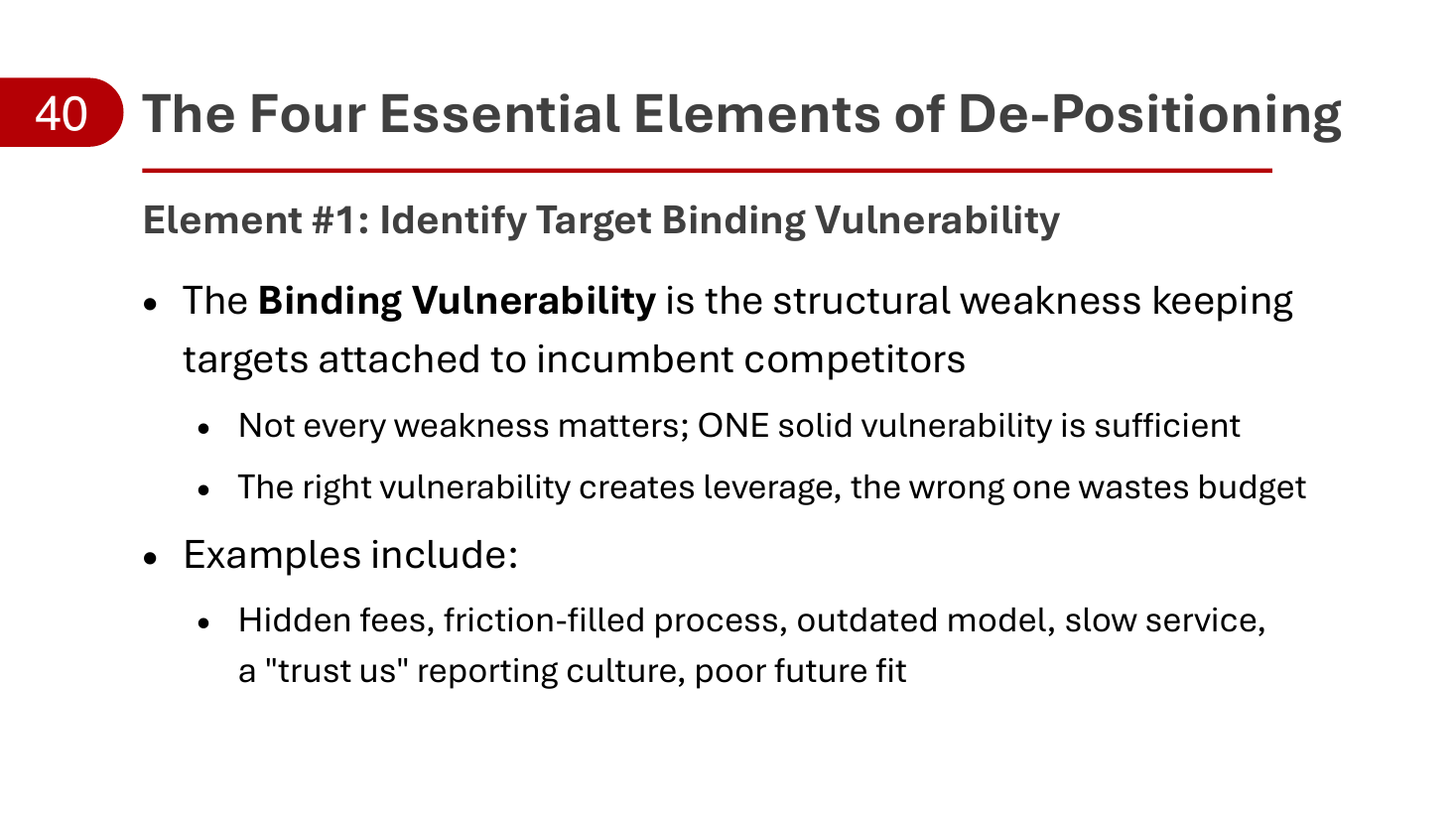
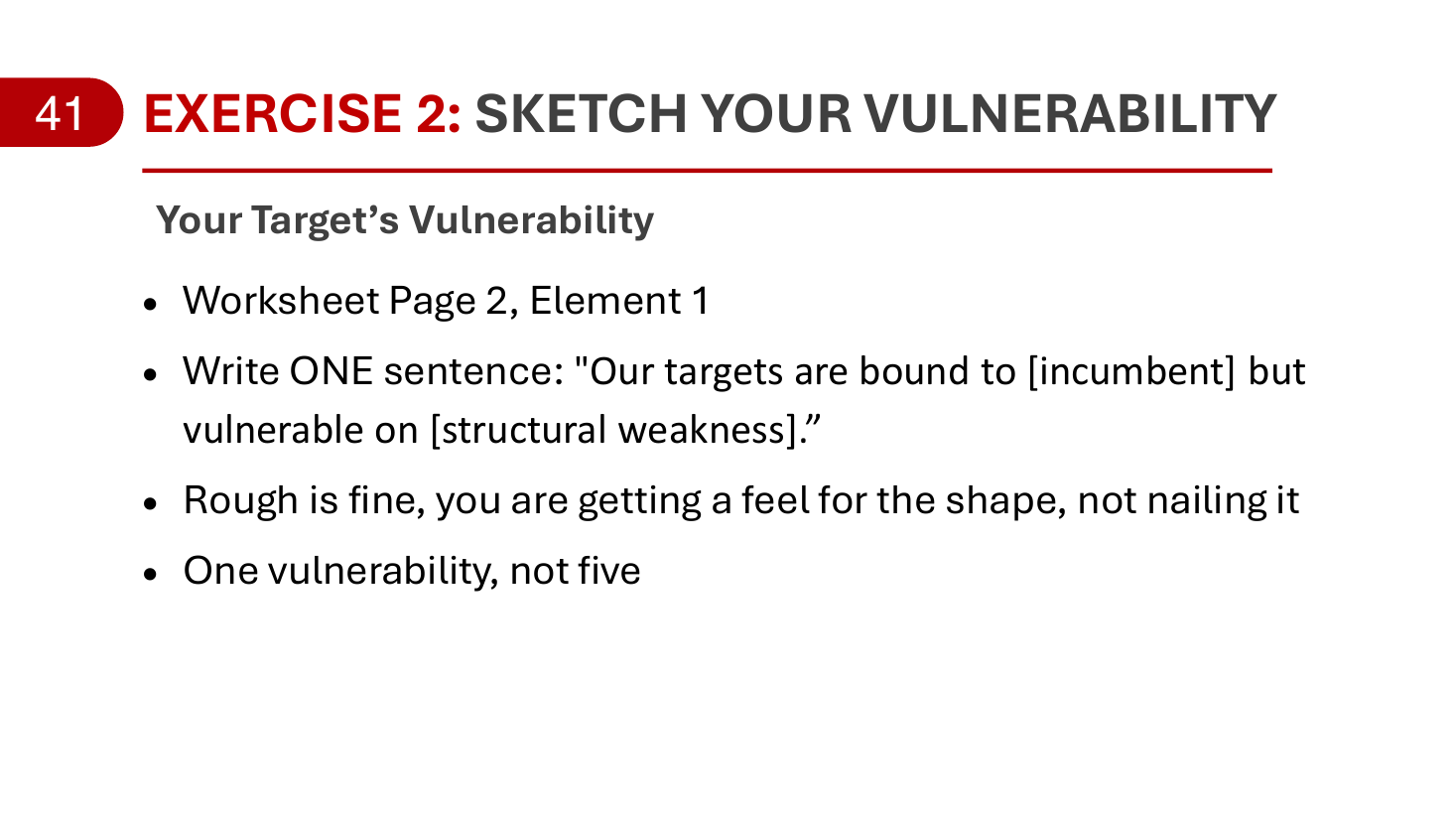
- Identify the Target Binding Vulnerability. One structural weakness is enough (e.g. hidden fees, a "trust us" reporting culture, poor future fit).
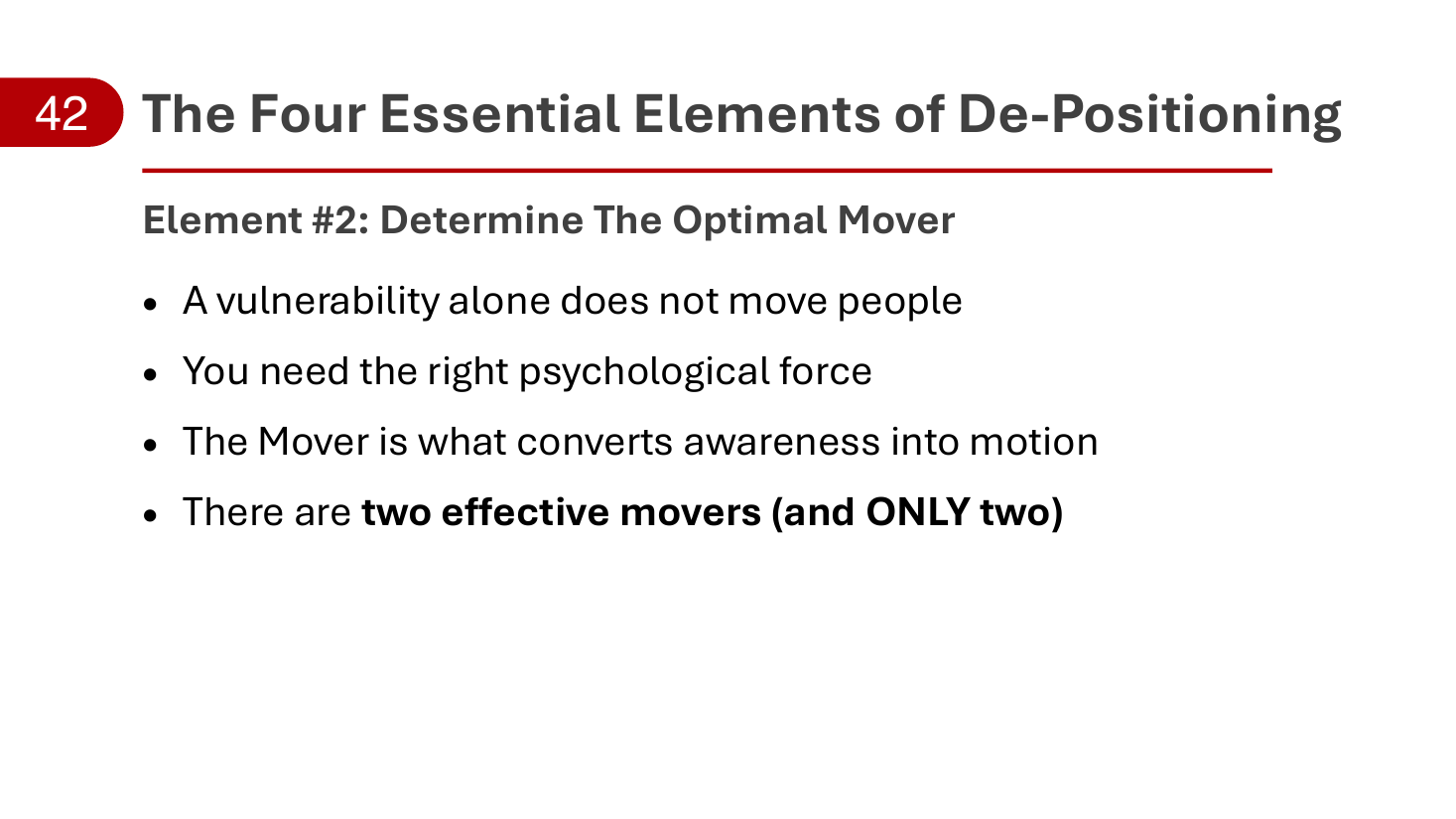
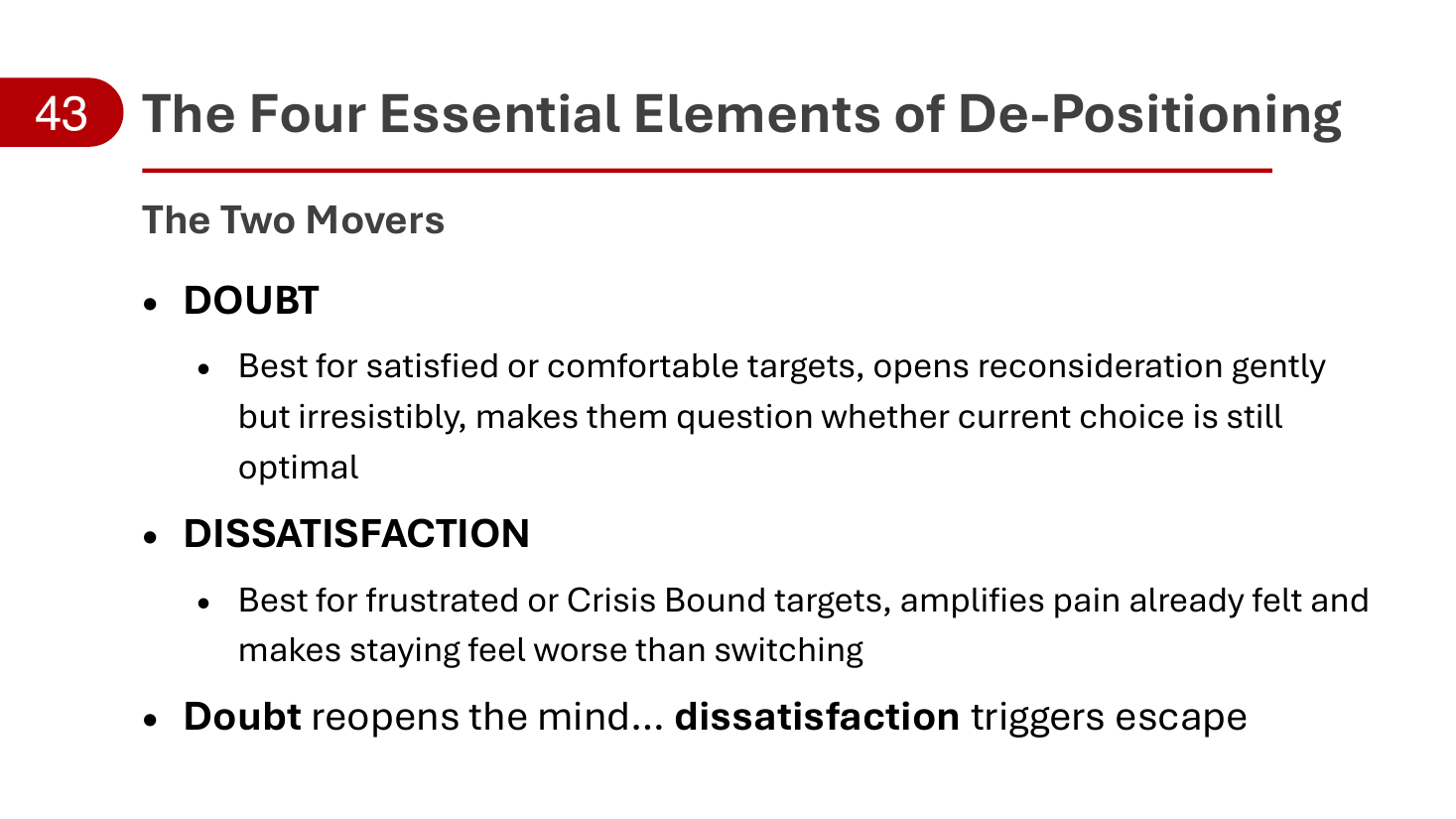
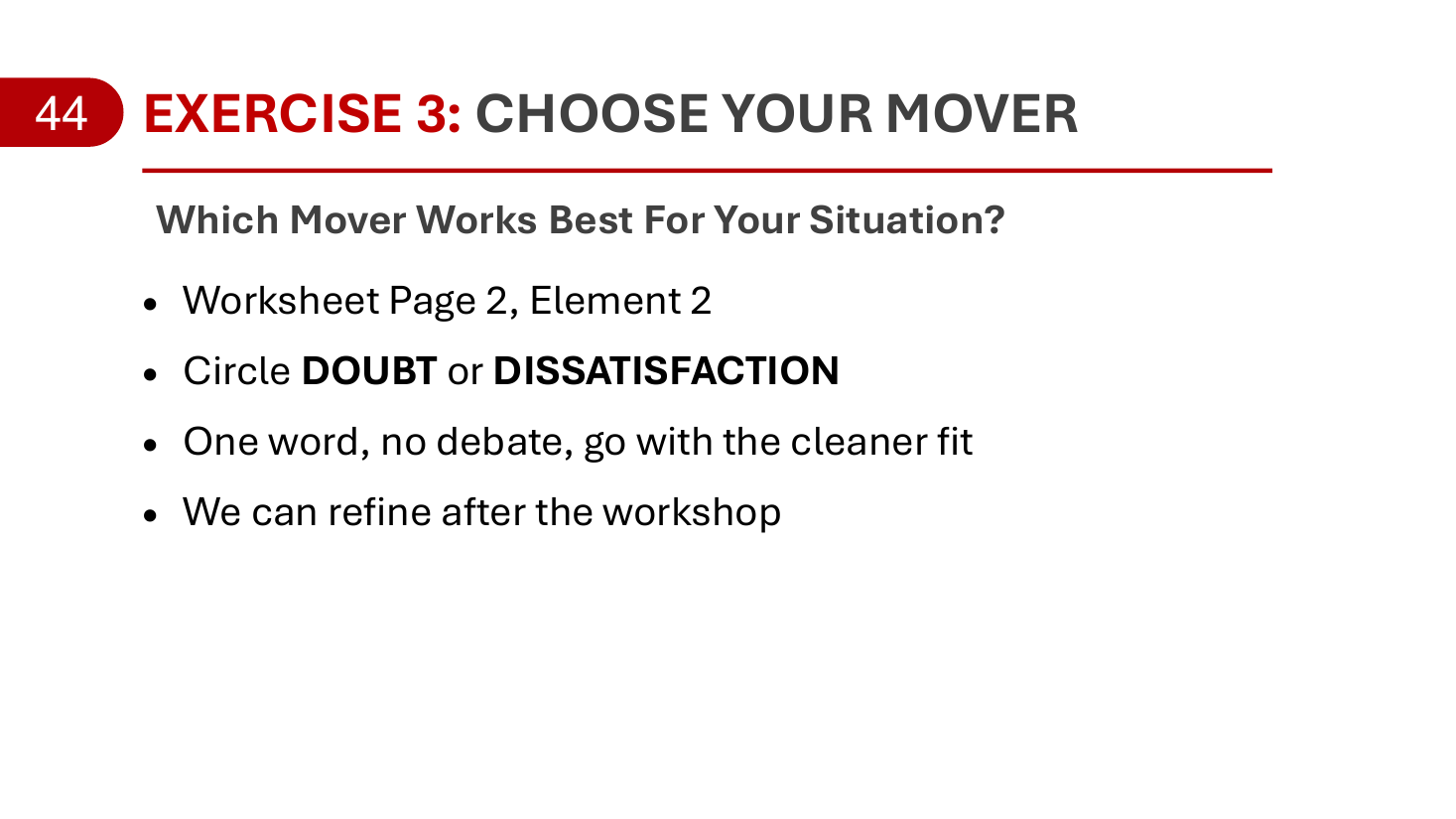
- Determine the Optimal Mover. Only two movers exist: DOUBT (for satisfied or comfortable targets) and DISSATISFACTION (for frustrated or Crisis Bound targets). "Doubt reopens the mind; dissatisfaction triggers escape."
- Define the Category Class Distinction. Change the evaluation criteria so you are naturally #1. Explicitly "NOT Blue Ocean": leaders dominate inside the "Red Ocean."
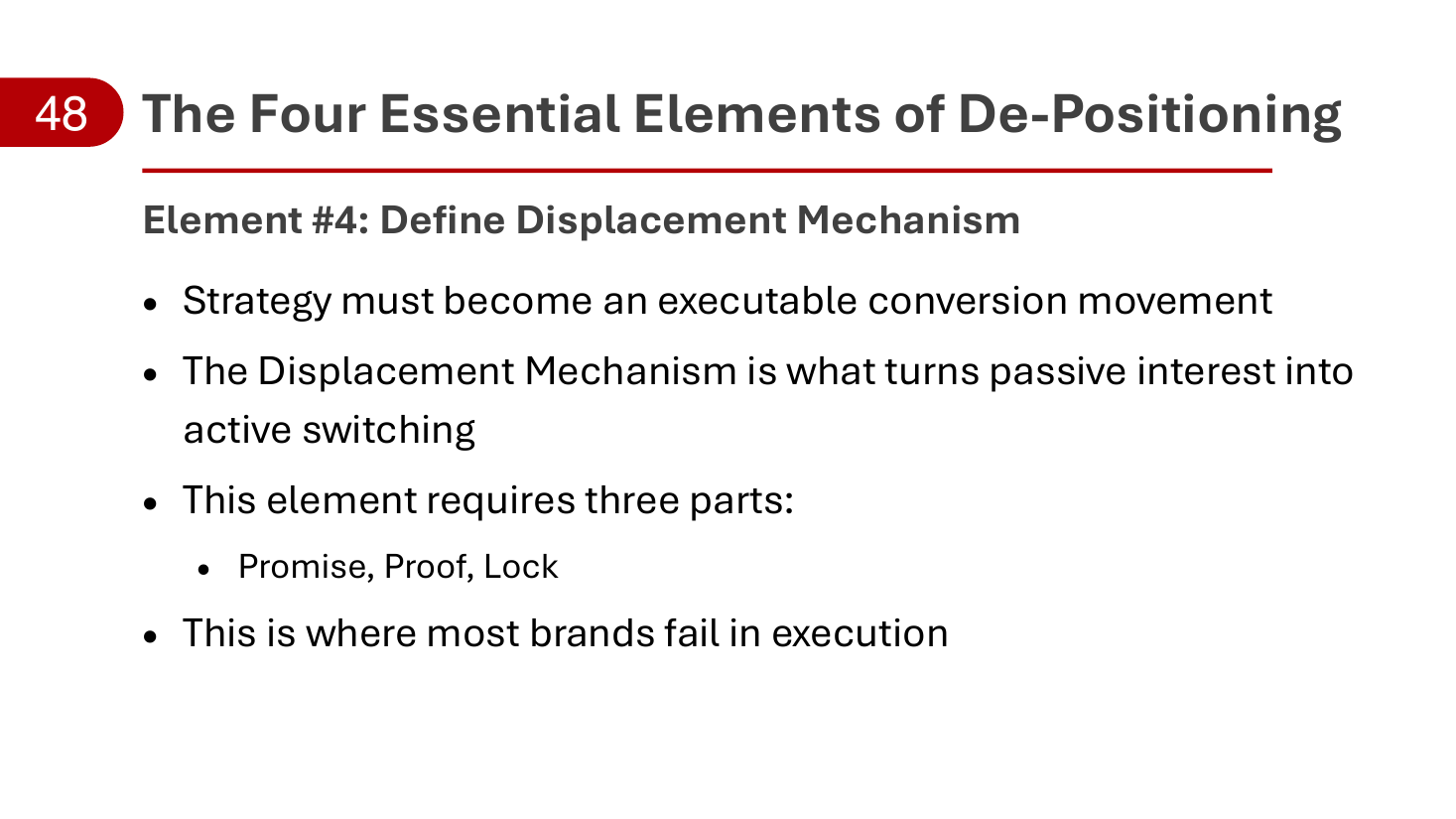
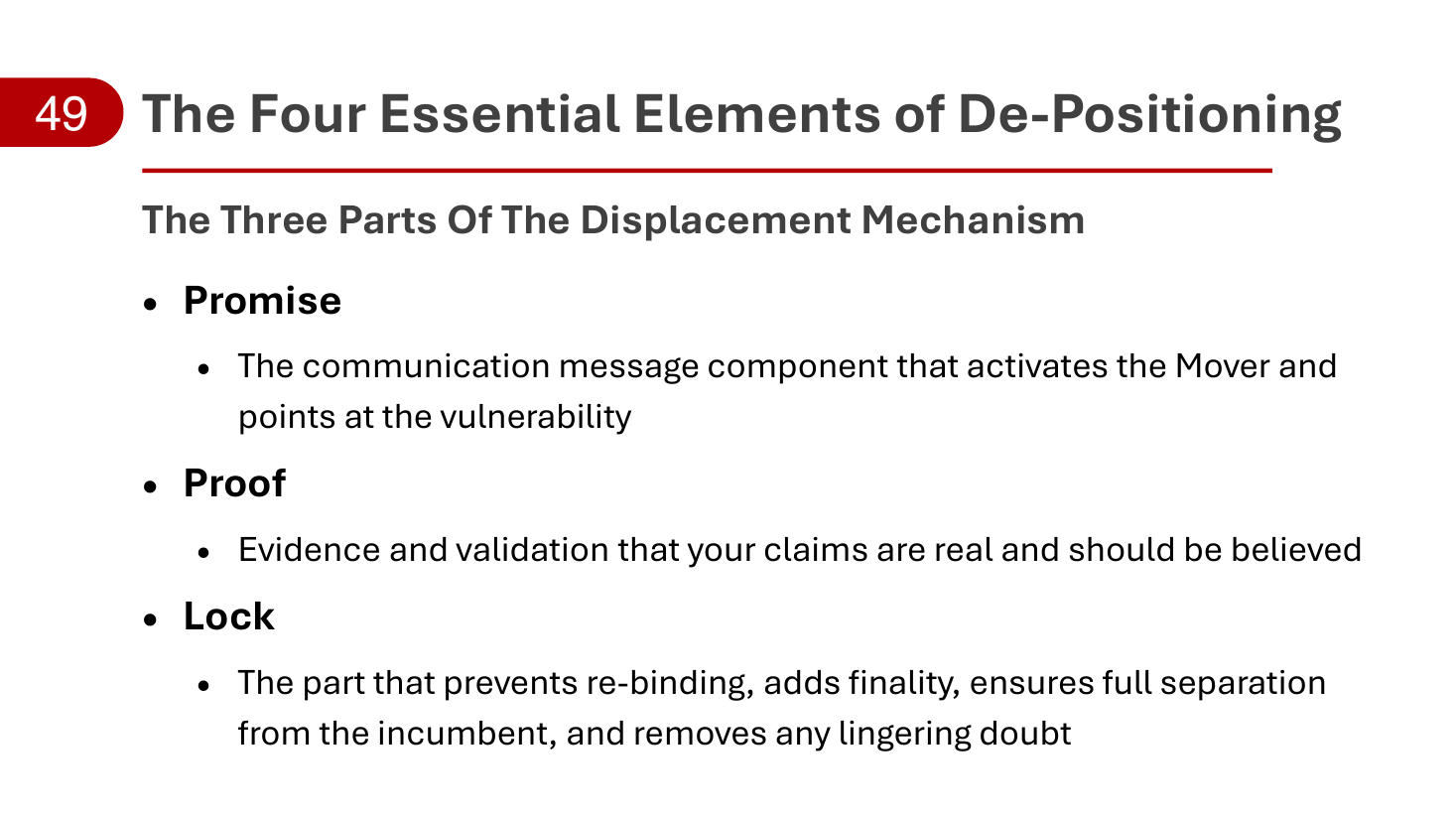
- Define the Displacement Mechanism, which has three parts: Promise, Proof, Lock.
Matrix weightings (primary element per state)
- UNBOUND: Category Class 40%, Mover 30%, Vulnerability 20%, Mechanism 10%.
- LOOSELY BOUND: Mover 40%, Vulnerability 30%, Category Class 20%, Mechanism 10%.
- STRONGLY BOUND: Vulnerability 40%, Mover 30%, Category Class 20%, Mechanism 10%.
- CRISIS BOUND: Vulnerability 40%, Mover 30%, Mechanism 20%, Category Class 10%.
Real-world examples
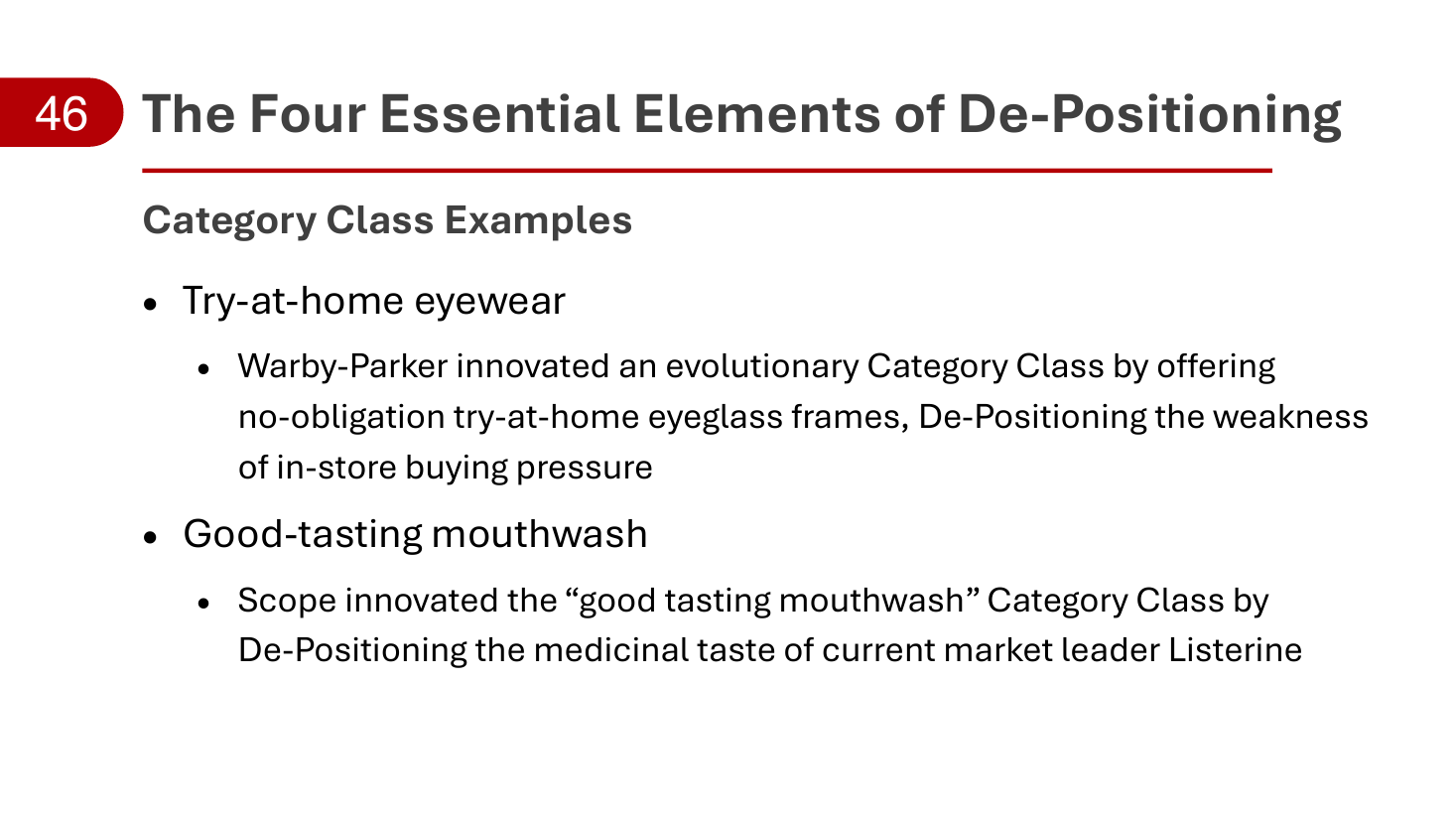
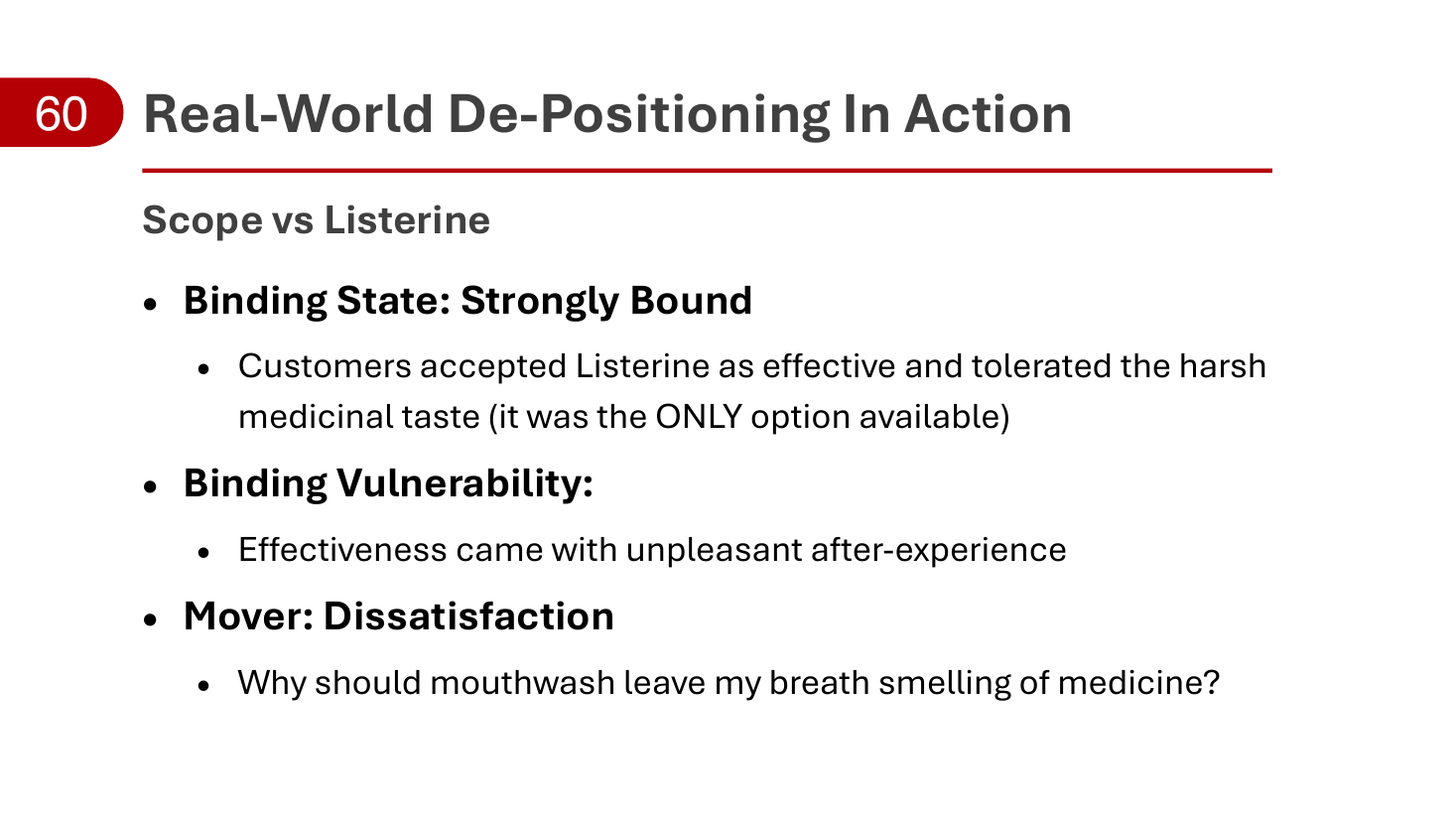
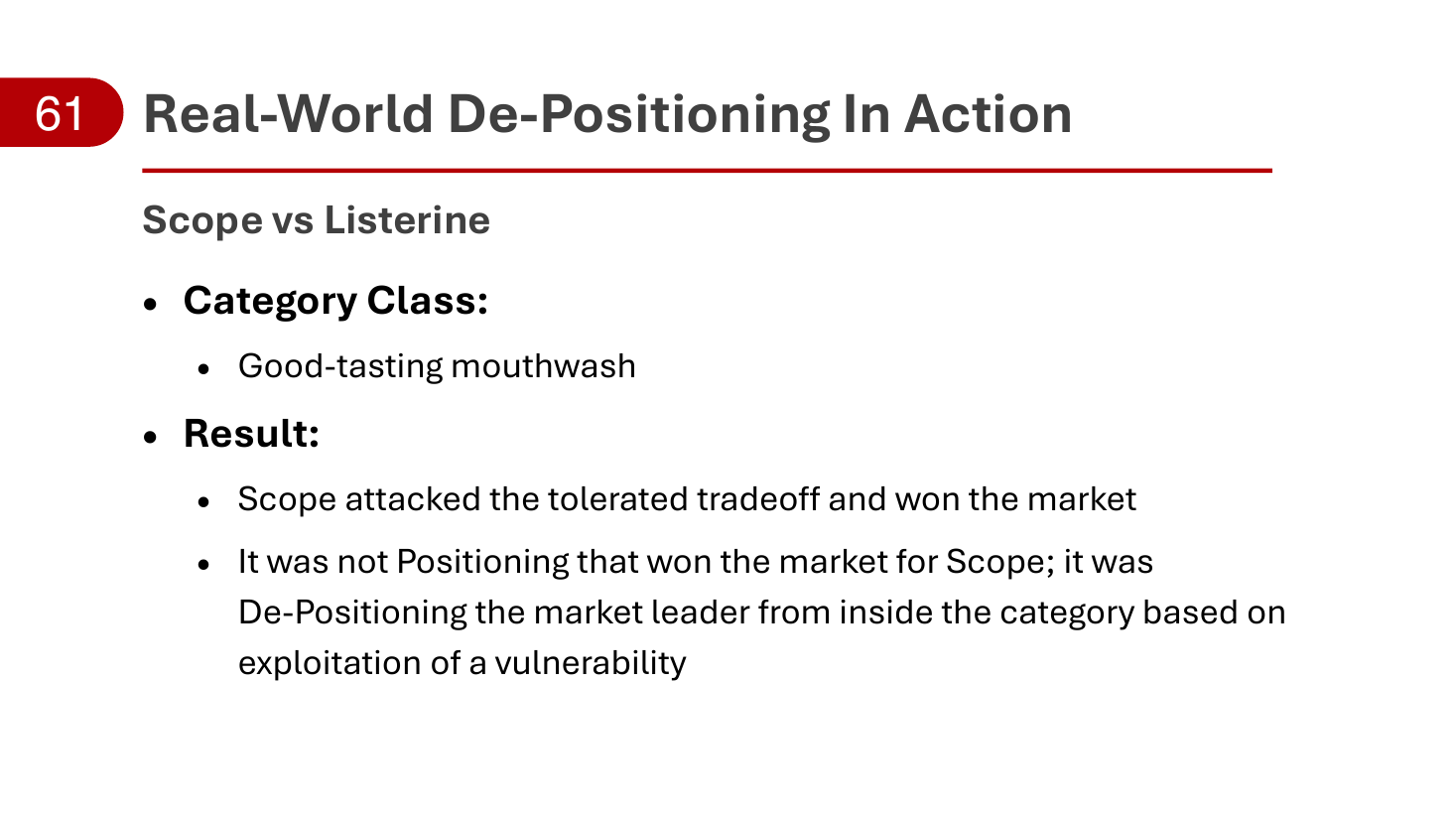
- Scope vs Listerine: Strongly Bound; vulnerability = harsh medicinal taste; mover = dissatisfaction; category class = "good-tasting mouthwash."
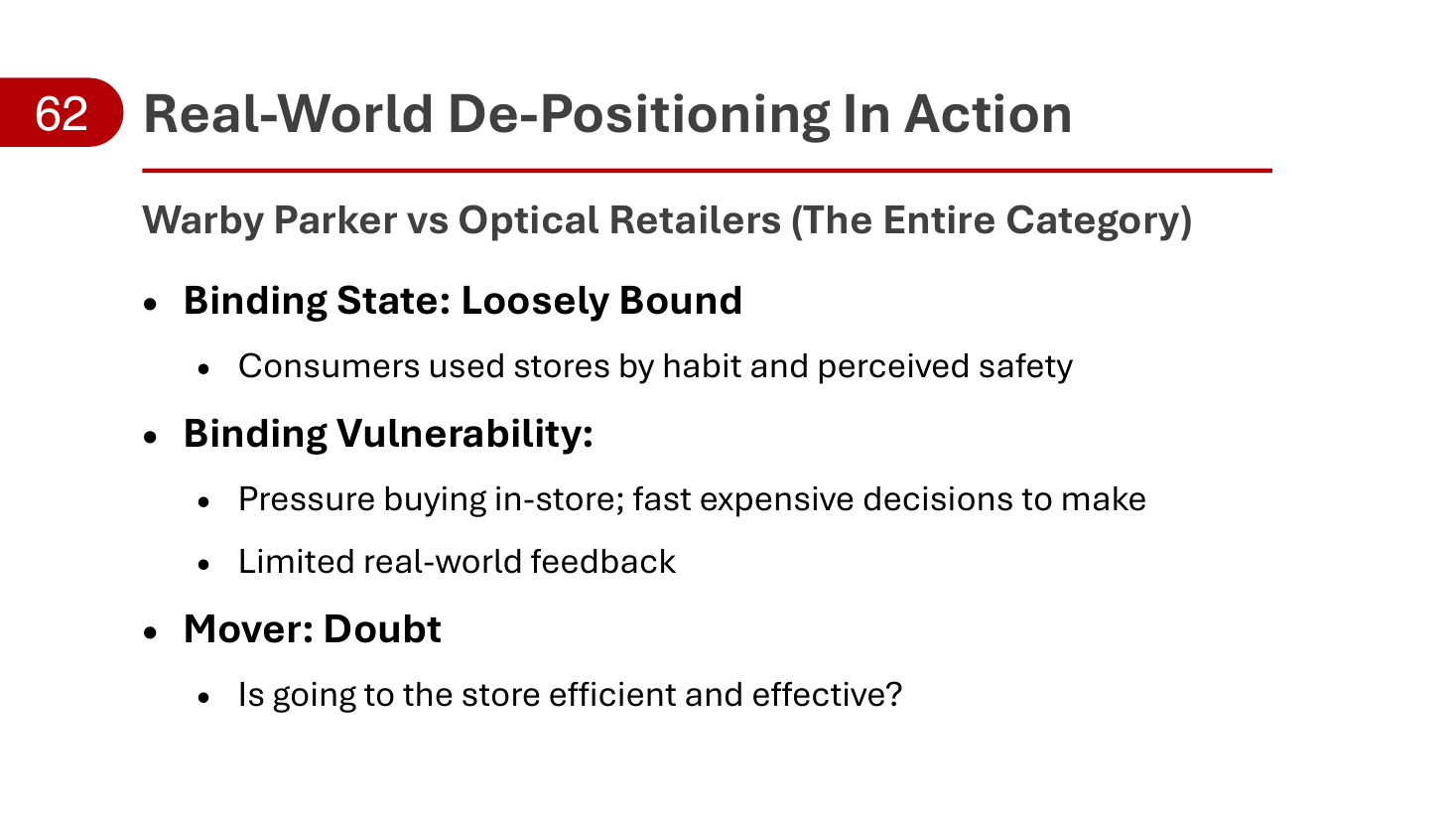
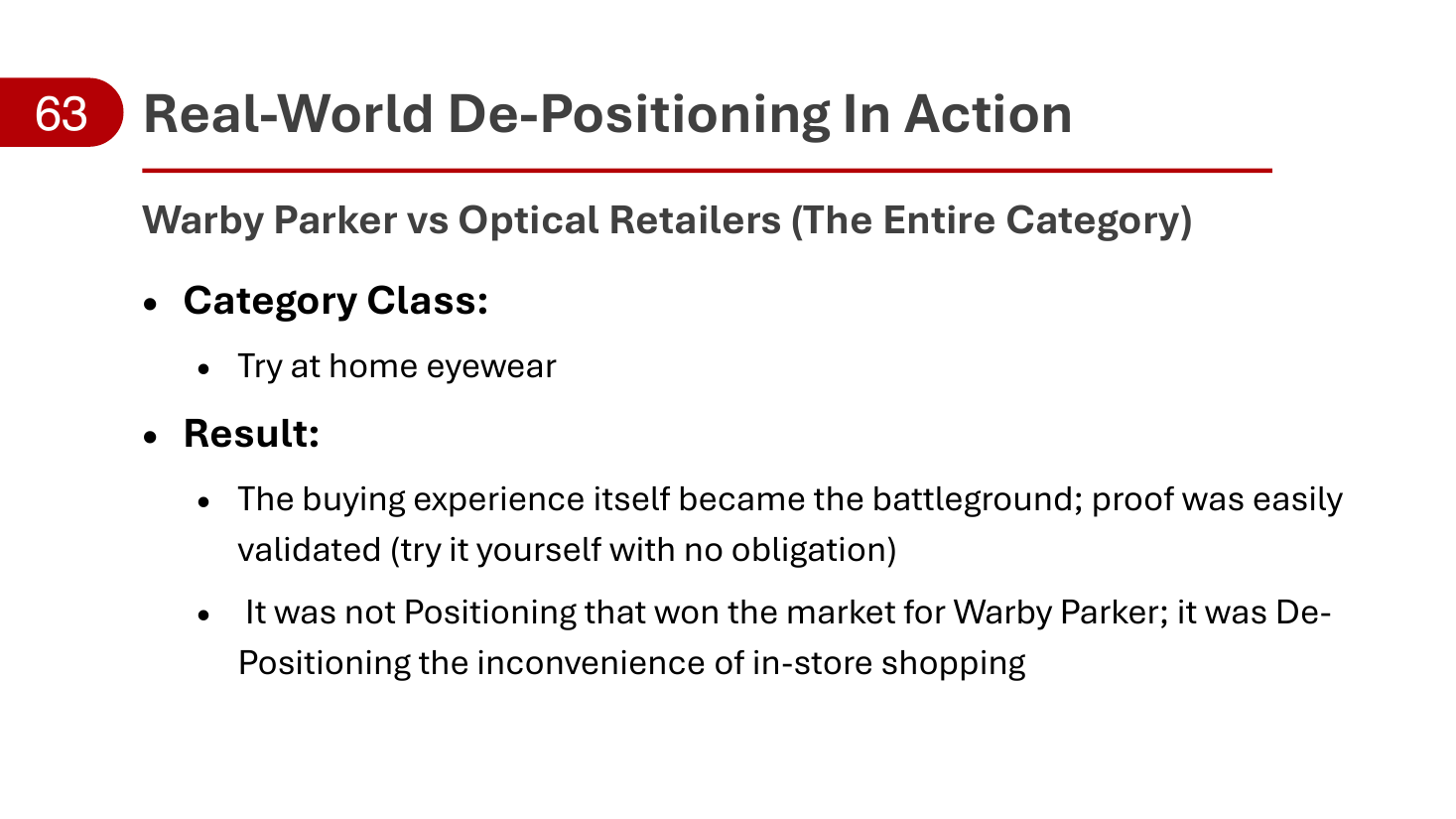
- Warby Parker vs optical retailers: Loosely Bound; vulnerability = in-store buying pressure and limited real-world feedback; mover = doubt; category class = "try-at-home eyewear."
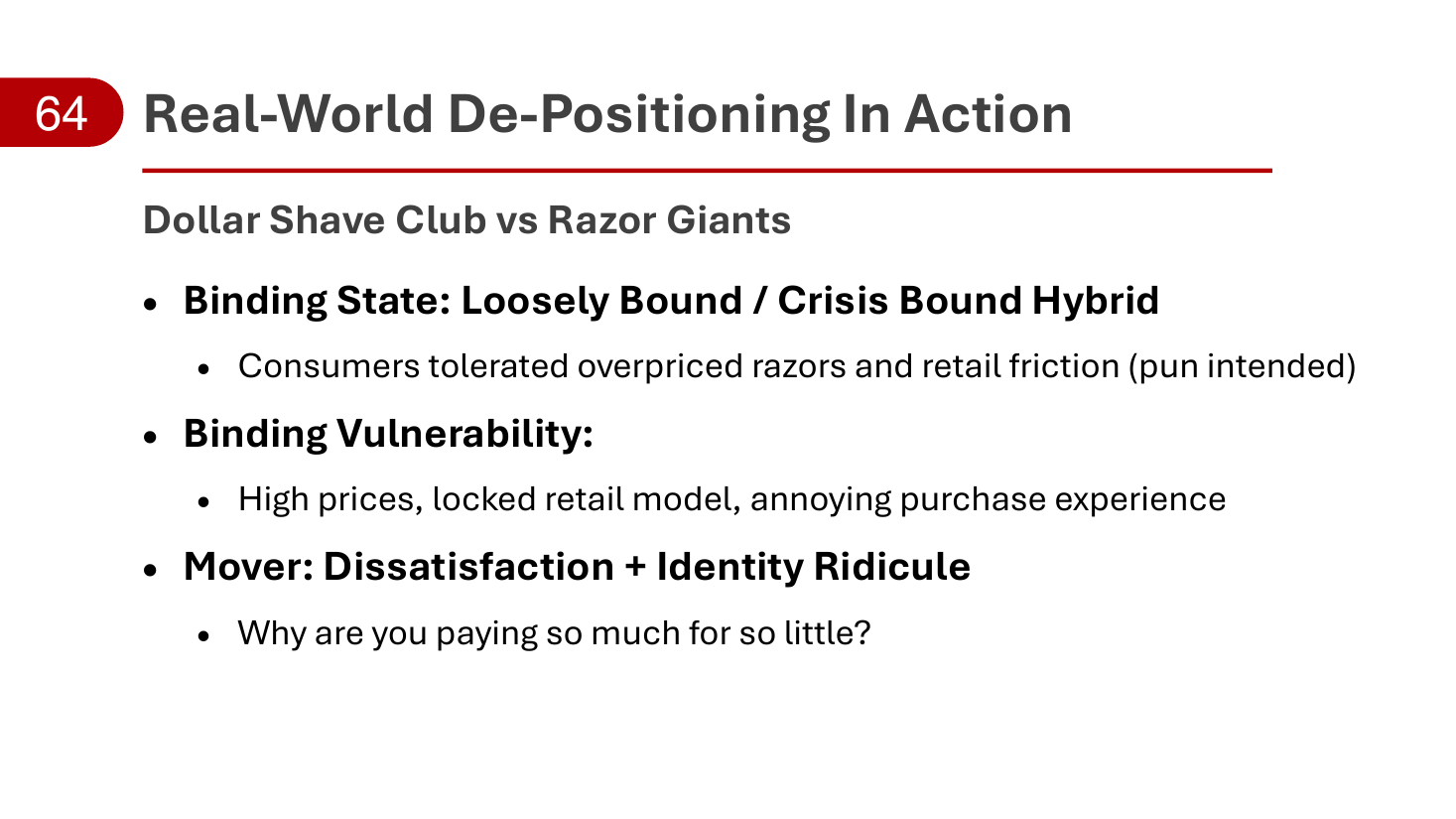
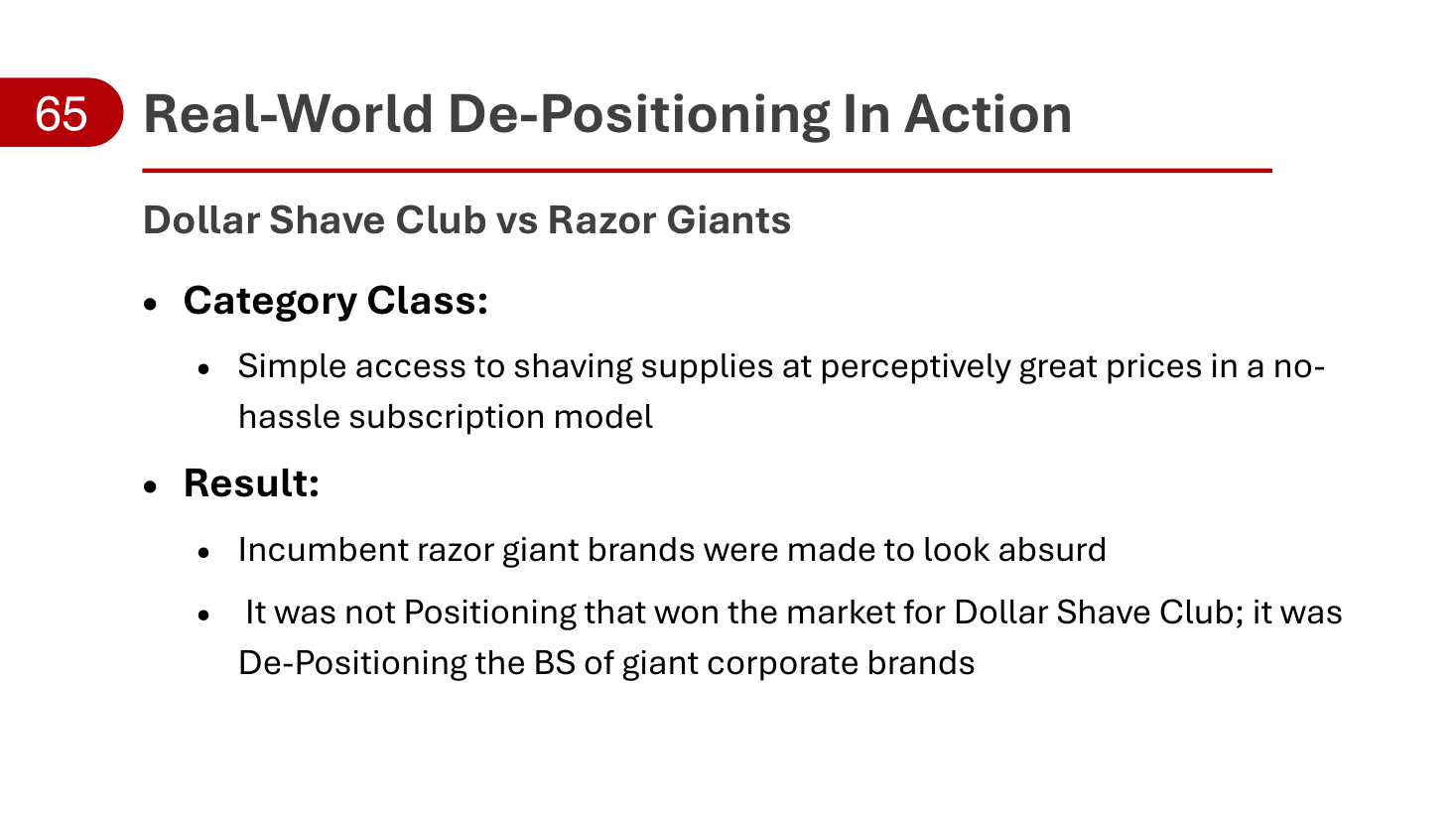
- Dollar Shave Club vs razor giants: Loosely / Crisis Bound hybrid; vulnerability = high prices, locked retail model, annoying purchase; mover = dissatisfaction plus identity ridicule ("Why are you paying so much for so little?"); category class = hassle-free shaving supplies via no-hassle subscription.
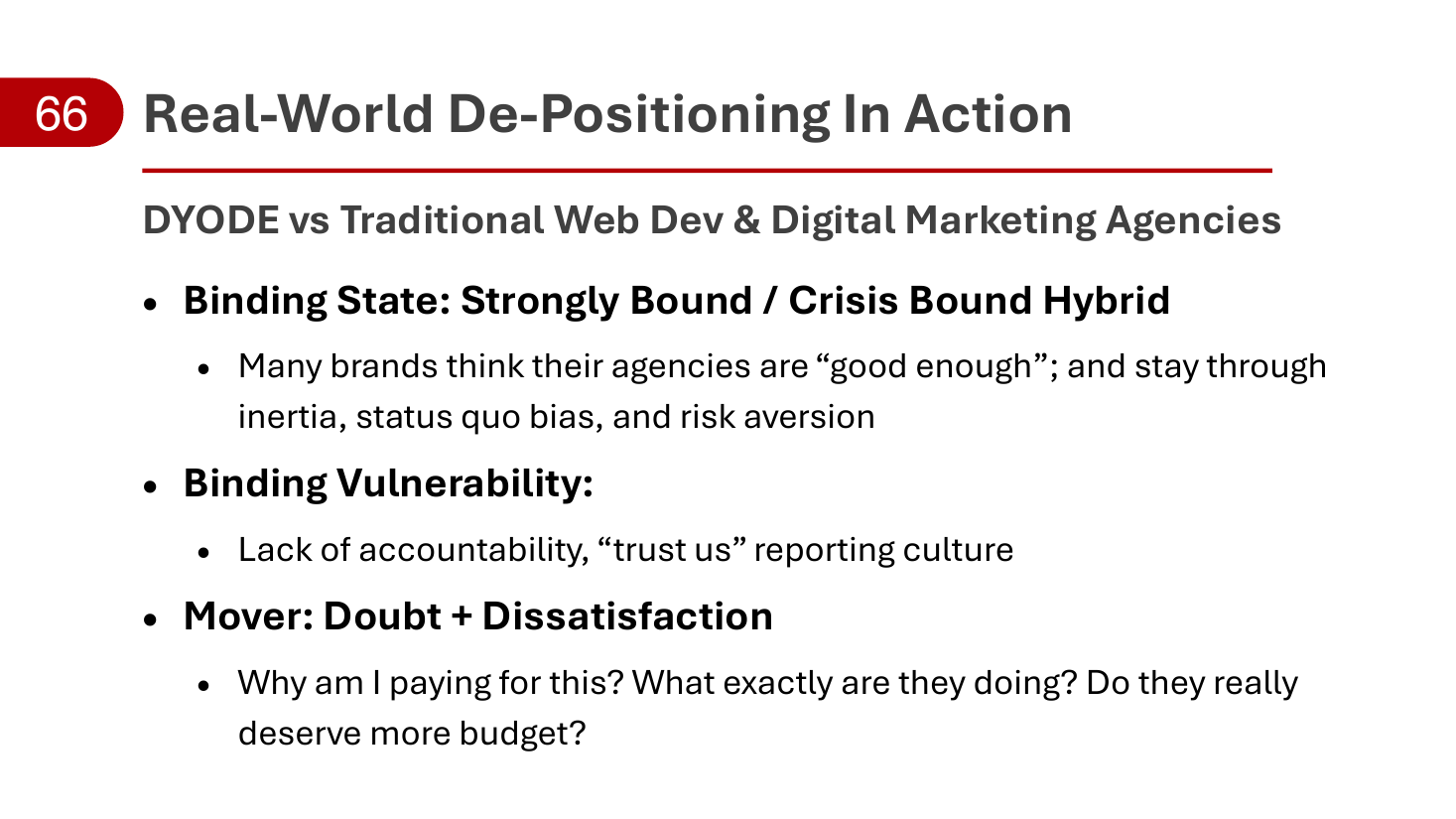
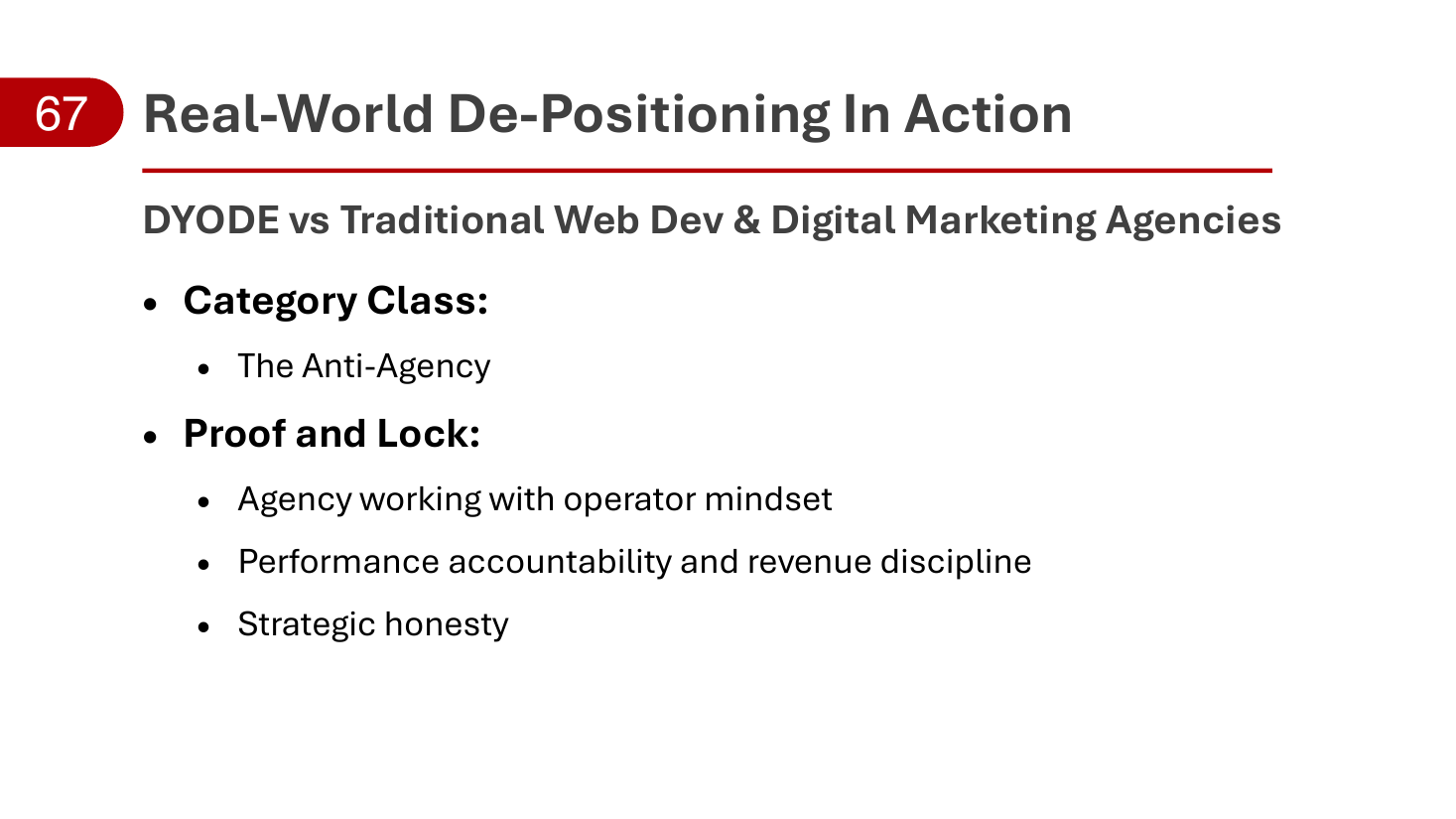
- DYODE vs traditional web dev / digital marketing agencies (deck spells "DYODE"; transcript pronounces "Diode"; Marion says he has permission to use it): Strongly / Crisis Bound hybrid; vulnerability = lack of accountability, a "trust us" reporting culture; mover = doubt plus dissatisfaction; category class = "the Anti-Agency." Displacement mechanism = arm clients with an unavoidable question to ask their current agency: "Show me the test logs... point out every mistake you found, how you fixed it, and what the revenue impact was."
- Shampoo illustration ("Susie shampoo" / "Marty shampoo"): an extreme example where a hypothetical report flips "good enough" to "no longer acceptable." Marion presents this as an extreme illustration of the mechanic, not a recommended tactic.
The worksheet flow (two pages distributed at tables)
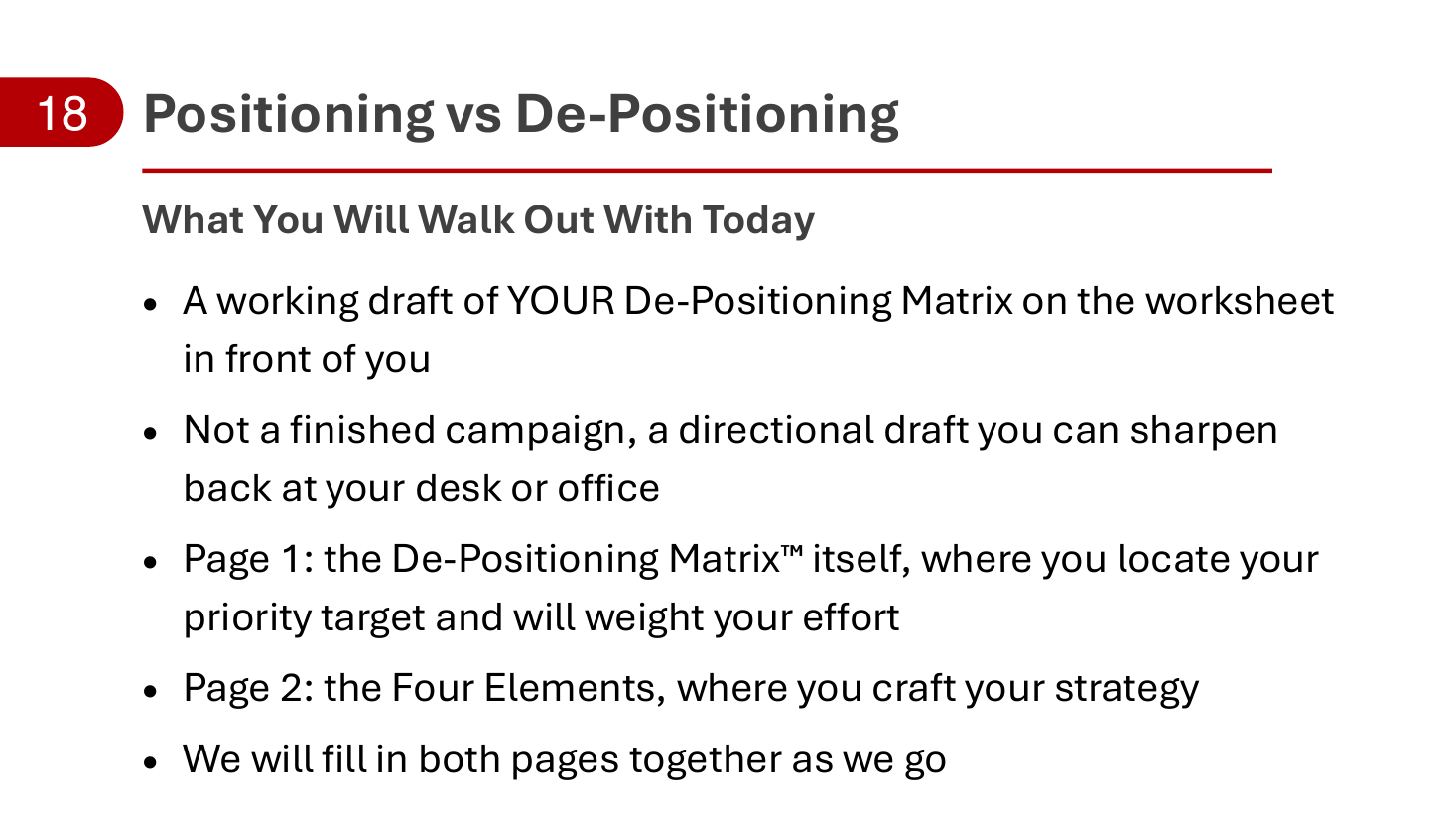
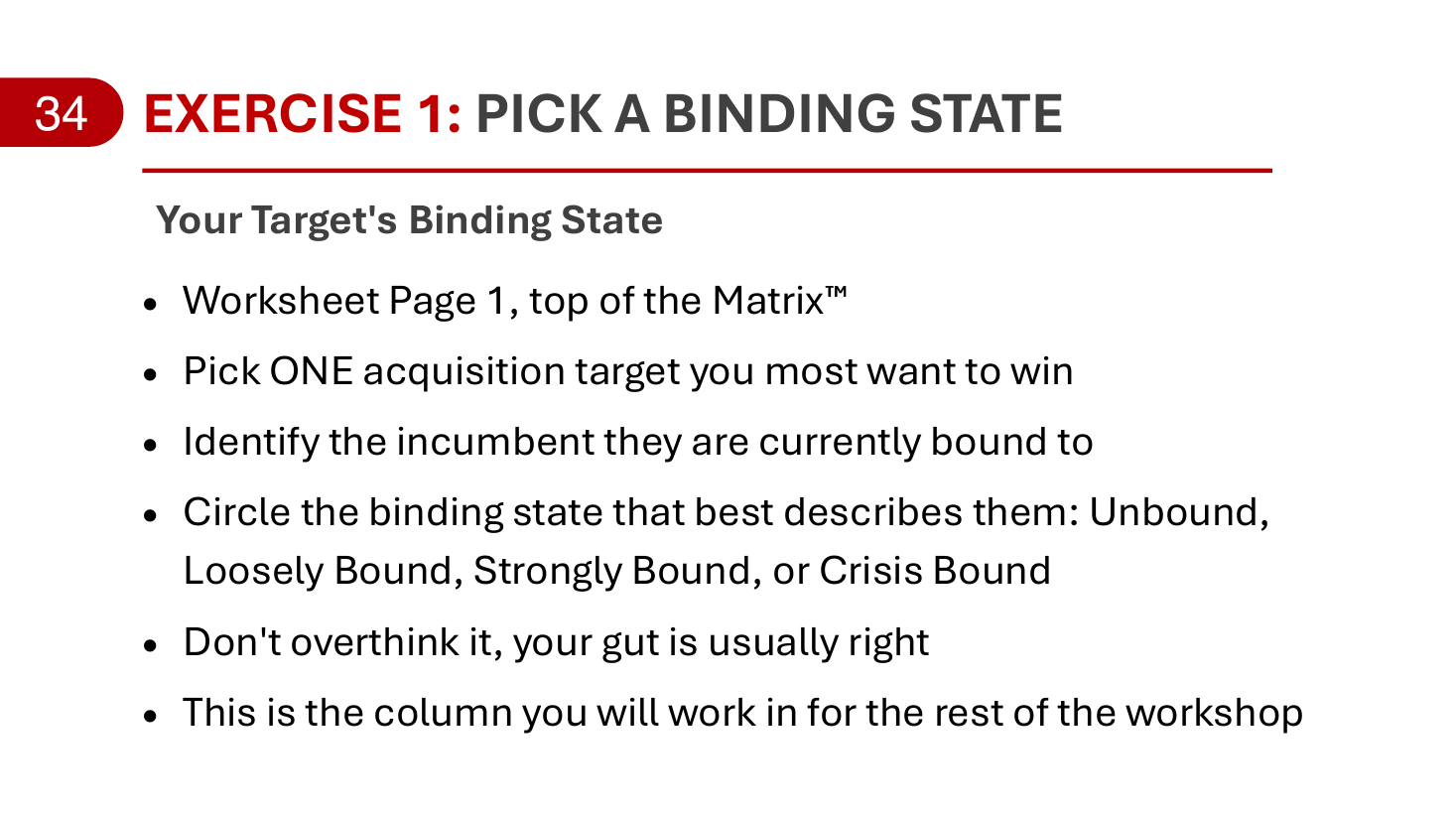
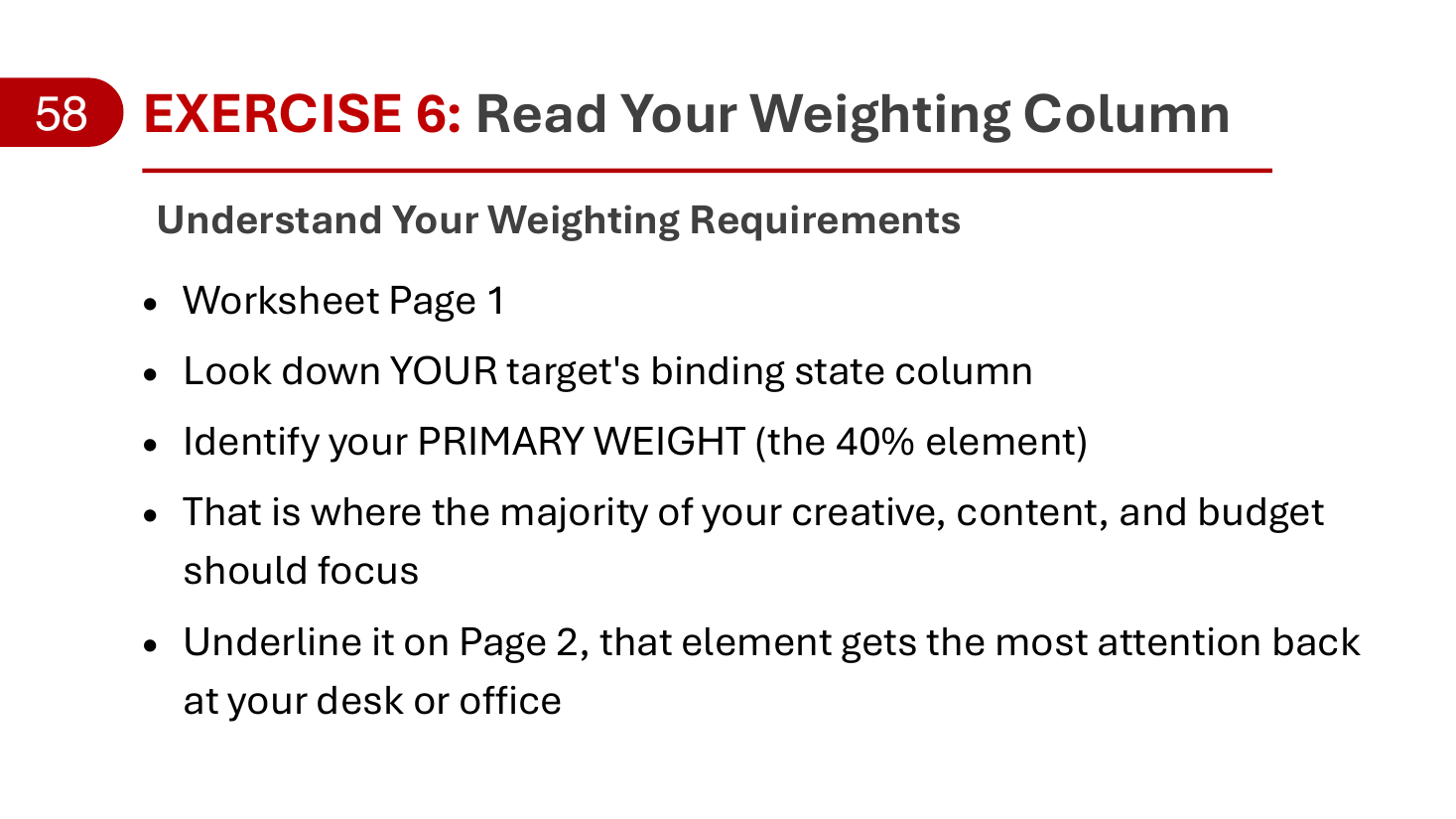
- Page 1: the De-Positioning Matrix (pick target, identify incumbent, circle binding state, read the weighting column).
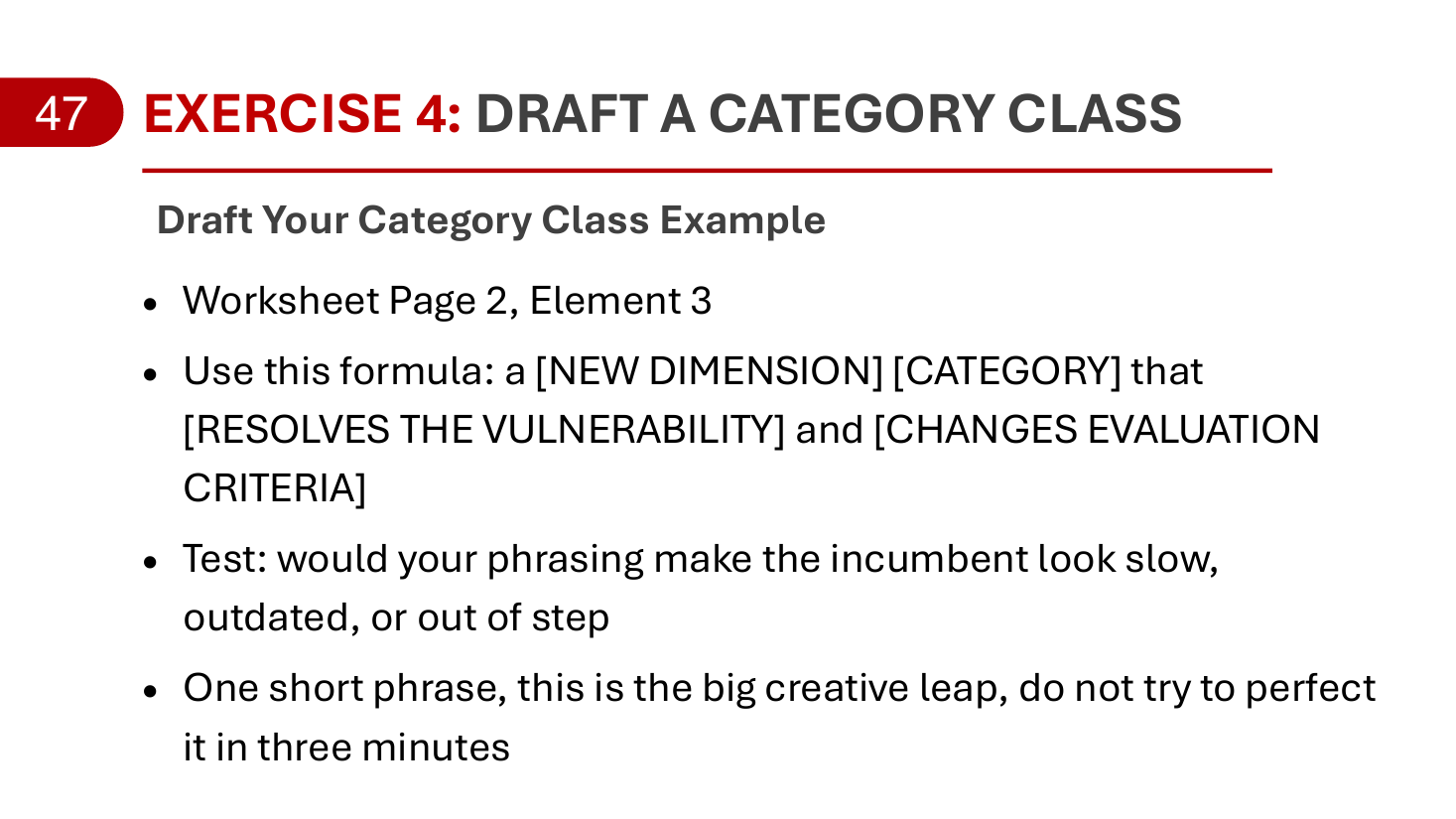
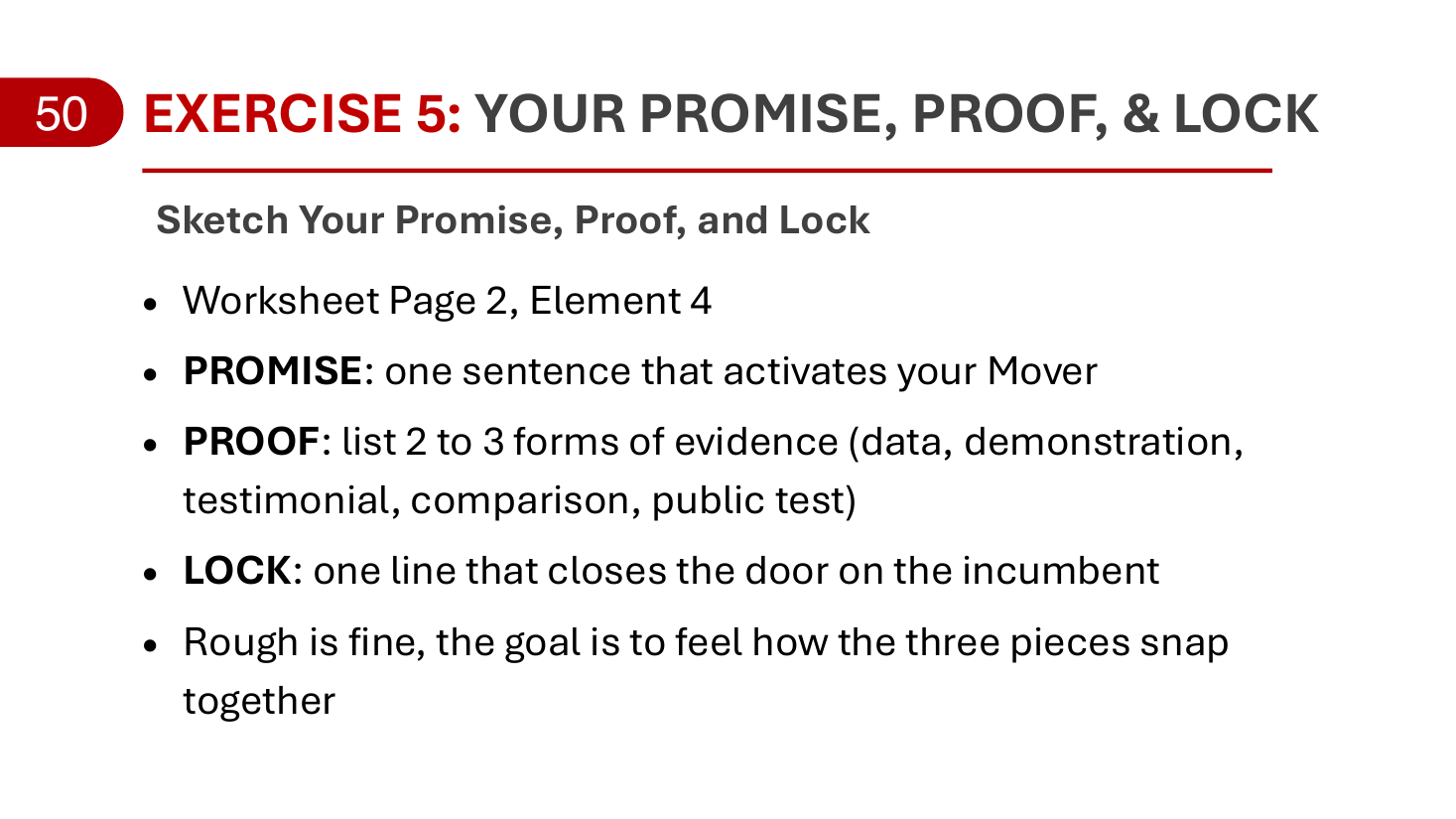
- Page 2: the Four Elements (vulnerability sentence, circle DOUBT or DISSATISFACTION, draft category class, sketch Promise / Proof / Lock).
- Category Class formula: "a [NEW DIMENSION] [CATEGORY] that [RESOLVES THE VULNERABILITY] and [CHANGES EVALUATION CRITERIA]."
- Displacement Mechanism: PROMISE = one sentence that activates your mover and points at the vulnerability; PROOF = 2 to 3 forms of evidence that is not just you; LOCK = one line that closes the door on the incumbent and prevents re-binding.
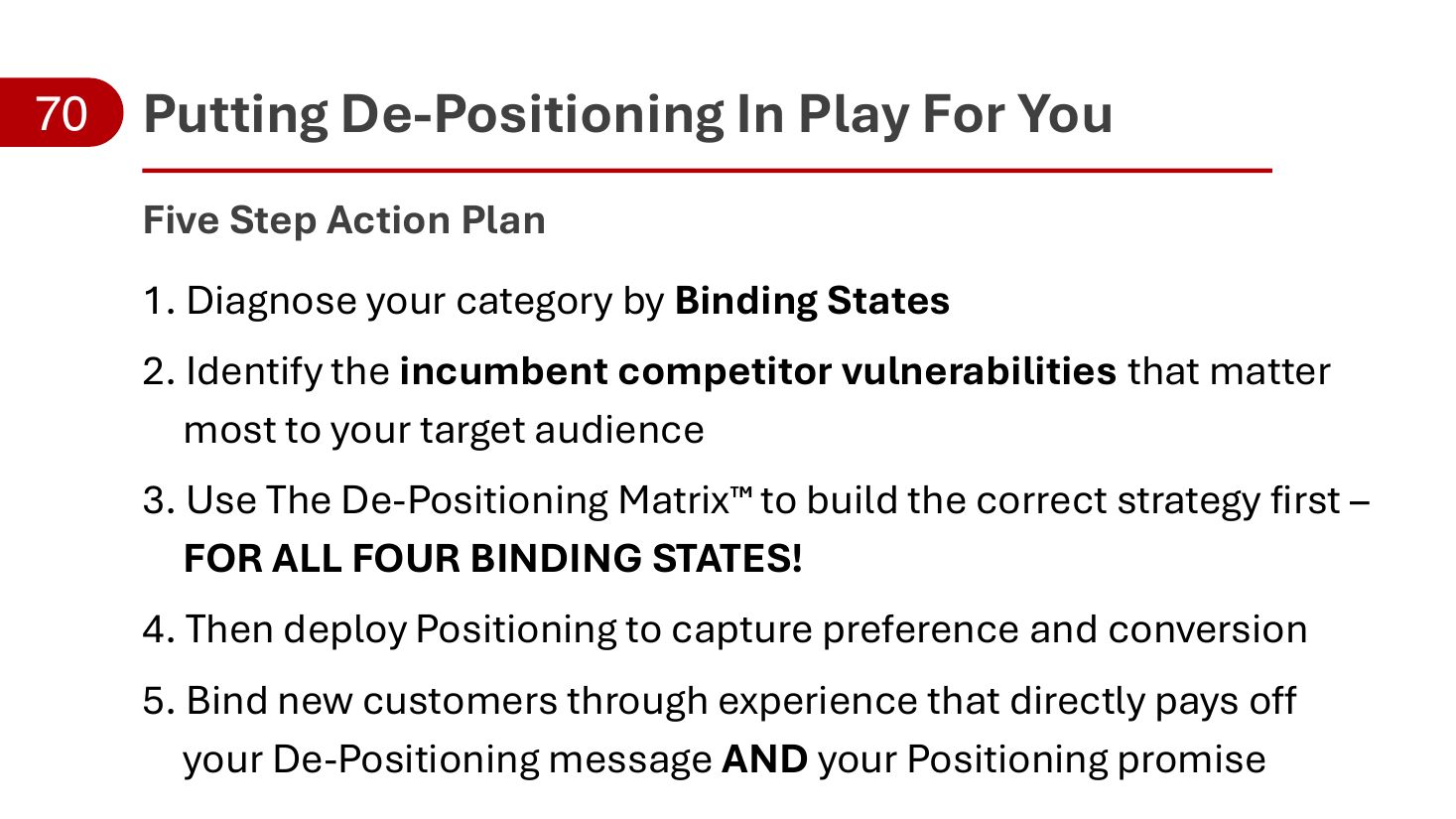
- Five-step deployment plan: (1) diagnose your category by binding states; (2) identify the vulnerabilities that matter most to the target; (3) use the matrix to build strategy for all four states; (4) deploy positioning; (5) bind new customers through an experience that pays off the message.
Slides
Slides (81)





Source
Slide deck: SEOST MARTY DE-POSITIONING WORKSHOP MARTY MARION.pdf (rendered as the 81 slides above). Talk delivered on Day 1 of SEO Spring Training; transcript source SEO ST DAY 1 PART 1-full.txt. The full session knowledge folder is not published to this site.